The CDC certification for high-risk countries cannot be issued retroactively after your dog leaves the US. Get it before departure or your dog faces quarantine on return.

Dog Passport: What US Pet Owners Actually Need (2026)
11 min readdocuments

Marcus Reid
Former Airline Operations
Your dog doesn't need a passport. The United States has no pet passport — no booklet, no card, no government-issued travel document for animals.
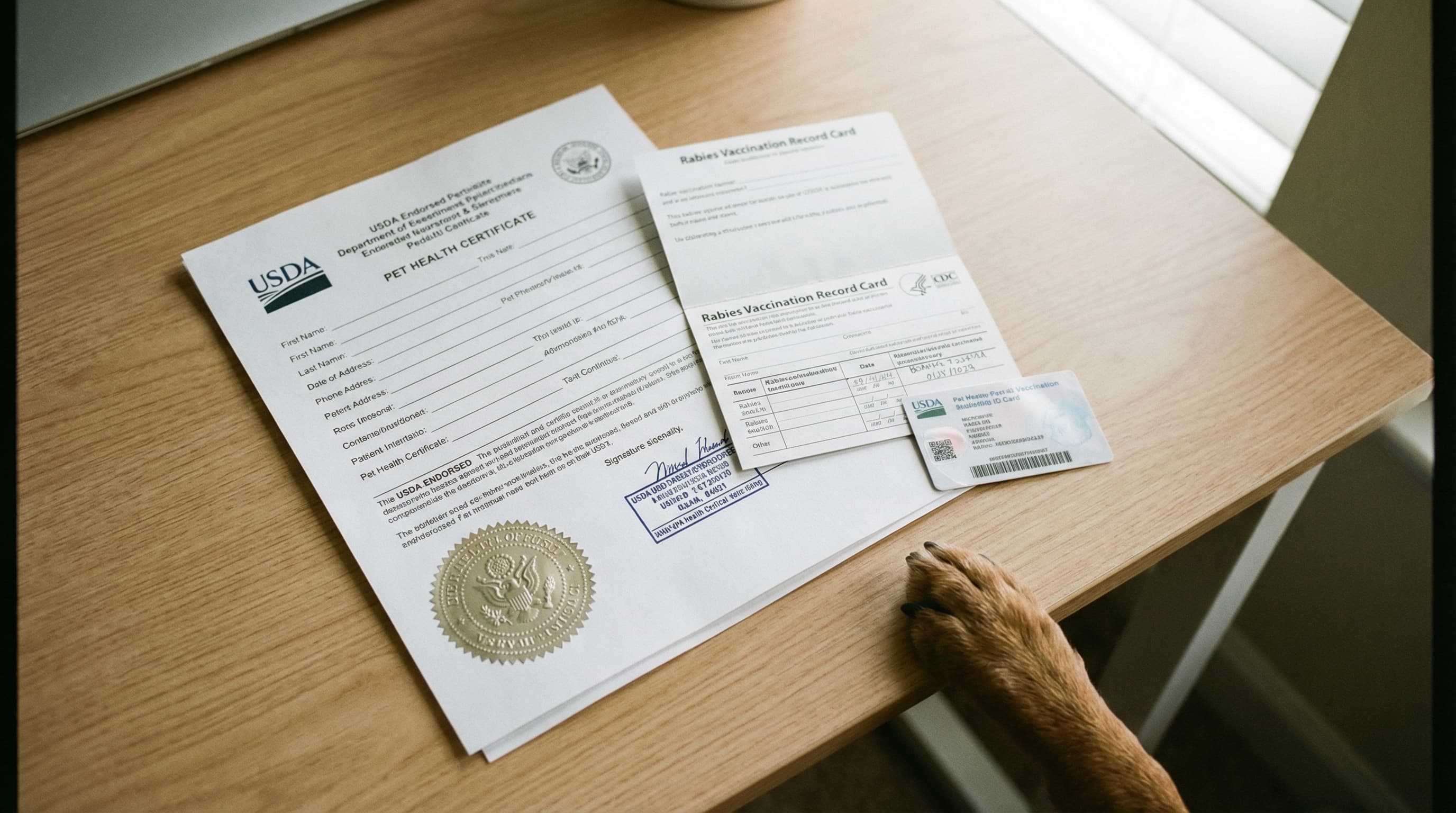
What your dog or cat needs instead is a set of 4–6 specific documents that together prove identity, vaccination status, and health. Think of it as your pet's travel file rather than a single passport.
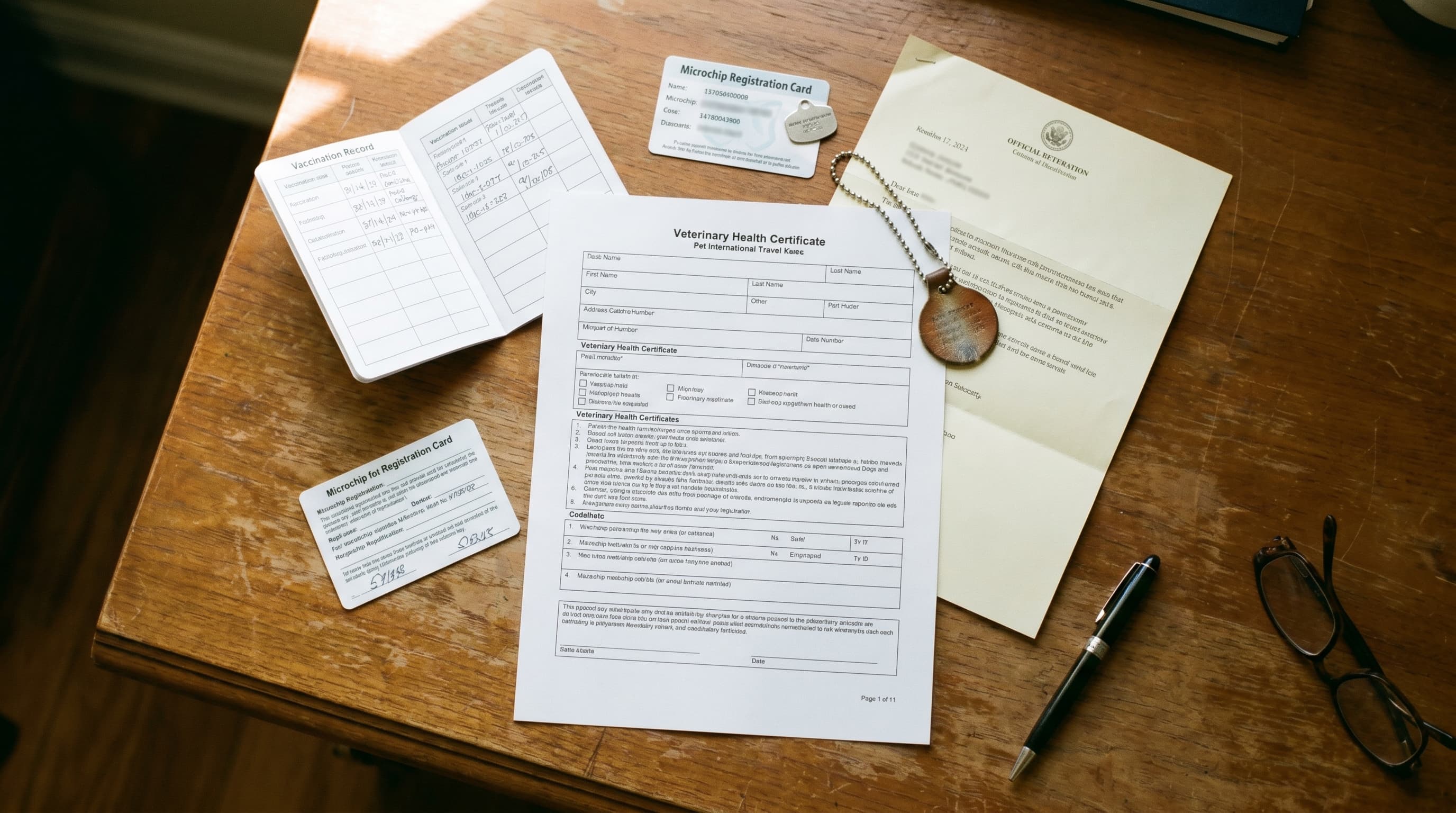
This guide explains what "pet passport" actually means, which documents US travelers need, what they cost, and how far in advance to start.
Does Your Dog Need a Passport to Fly?
For domestic flights within the US mainland: no documents required. Airlines don't ask for a health certificate, rabies proof, or any paperwork for cabin pets on domestic routes.
Bring vaccination records anyway — some airlines ask to see them, and your destination state may have its own rules.
For flights to Hawaii, Puerto Rico, or the USVI: you need a health certificate and rabies documentation. These are US territories with their own animal import rules.
For international flights: you need the full document stack — microchip, rabies vaccine, health certificate, USDA endorsement, and potentially destination-specific permits. This is what people mean when they search for "dog passport."
What a Pet Passport Actually Is
The phrase "pet passport" comes from Europe. The EU pet passport is a real, physical document — a blue booklet that EU-resident veterinarians issue to dogs, cats, and ferrets living in the European Union.
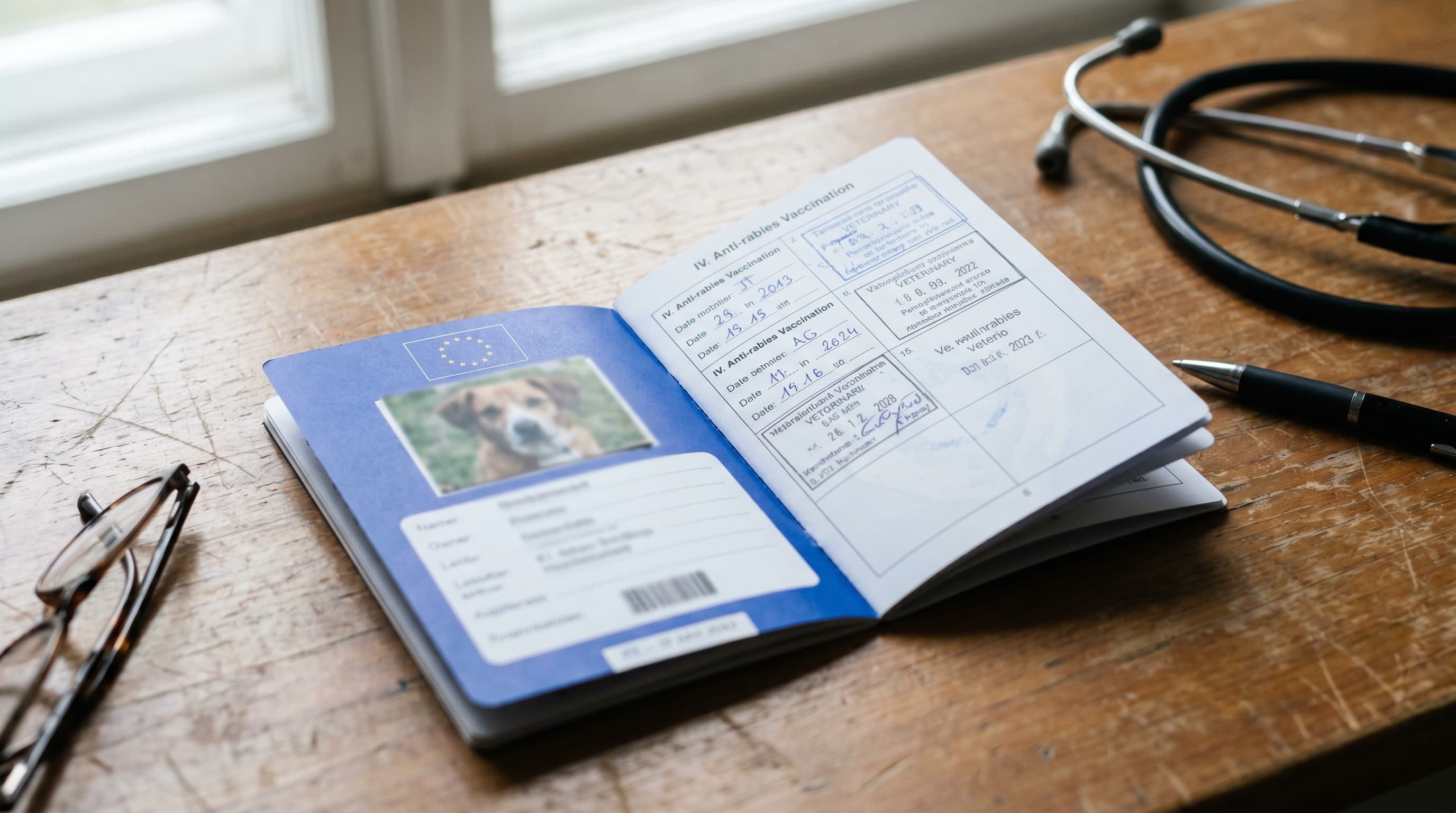
It contains the pet's microchip number, rabies vaccination history, clinical exam records, and owner information. It's valid for life as long as the rabies vaccine stays active.
If you live in Berlin with your dog, your German vet issues a pet passport. You use it to cross into France, Spain, or any EU country without extra paperwork.
US pets cannot get an EU pet passport. It's only issued by authorized veterinarians within the EU to EU-resident pets.
US travelers going to the EU need an EU Animal Health Certificate instead — a different document that does the same job for your initial entry but expires after 4 months. Our EU pet passport guide covers the full process.
What About "Pet Passport" Products?
Companies sell booklets, cards, and apps branded as "pet passports." These are record organizers — a place to keep your pet's vaccination dates, vet contacts, and microchip number in one spot.
They have zero official standing. No customs officer, airline agent, or border vet will accept a commercial pet passport as a travel document.
Fine as personal organizers, but they don't replace any of the documents listed below.
The Documents Your Pet Needs
Every document that makes up your pet's international travel file, in the order you'll get them.
1. ISO Microchip
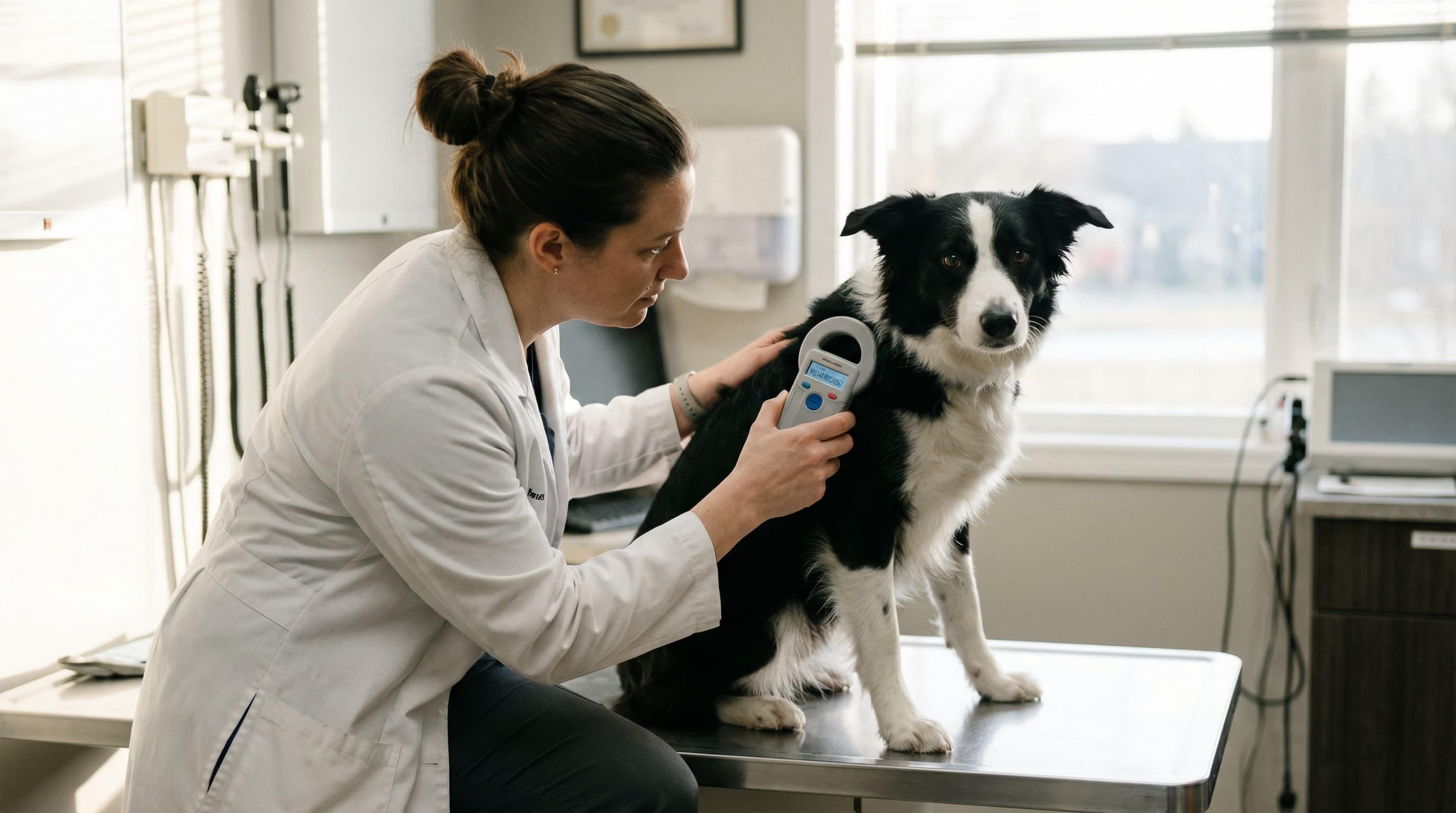
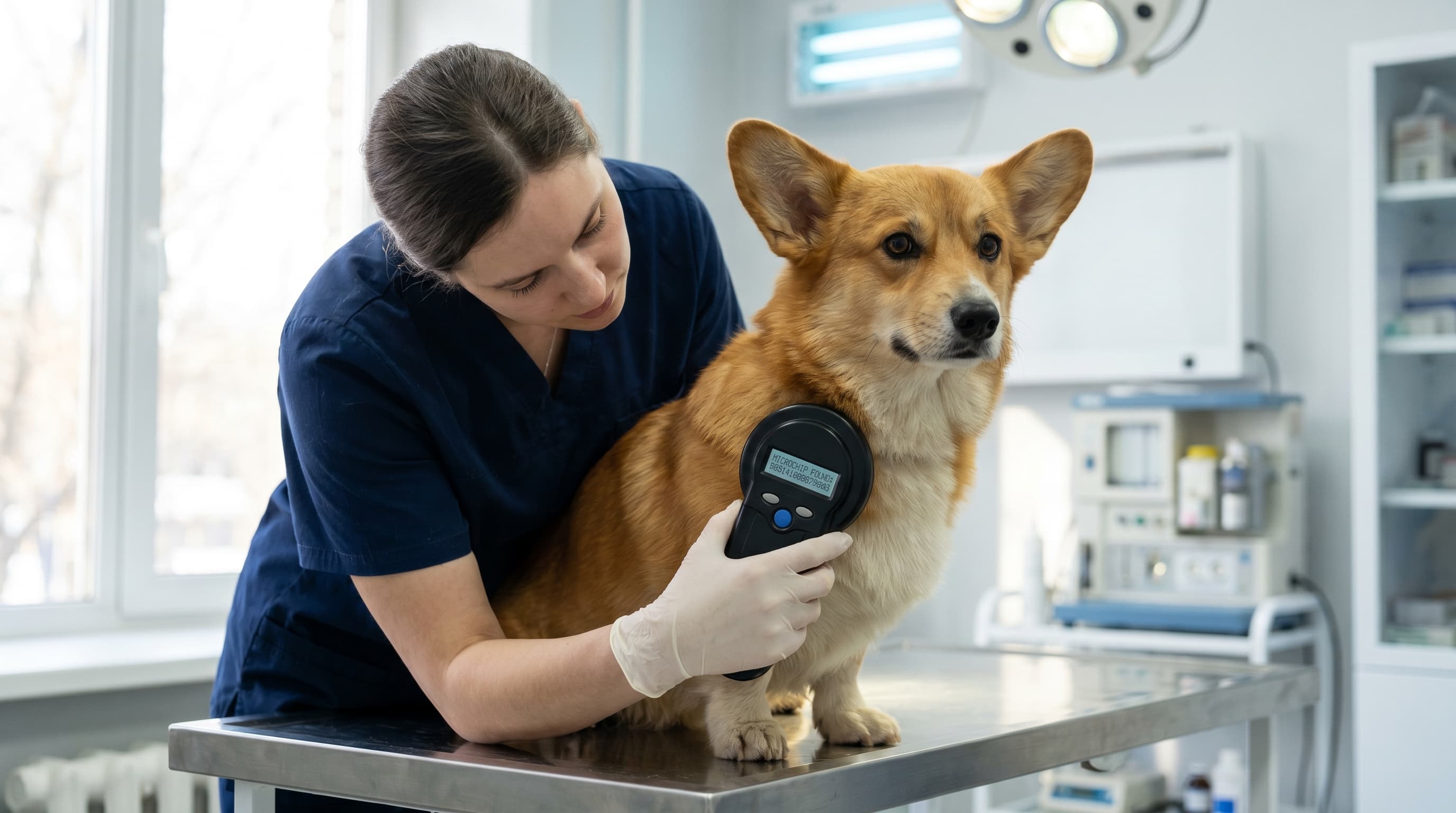
A 15-digit ISO microchip (134.2 kHz) implanted under your pet's skin. This is your pet's permanent ID — every other document references this number.
Must be implanted before the rabies vaccine. If your pet gets the vaccine first, some countries won't recognize it because the vaccine record can't be linked to a verified identity.
Cost: $25–50. Our microchip guide covers standards, compatibility, and what to do if your pet has an older 9-digit chip.
2. Rabies Vaccination
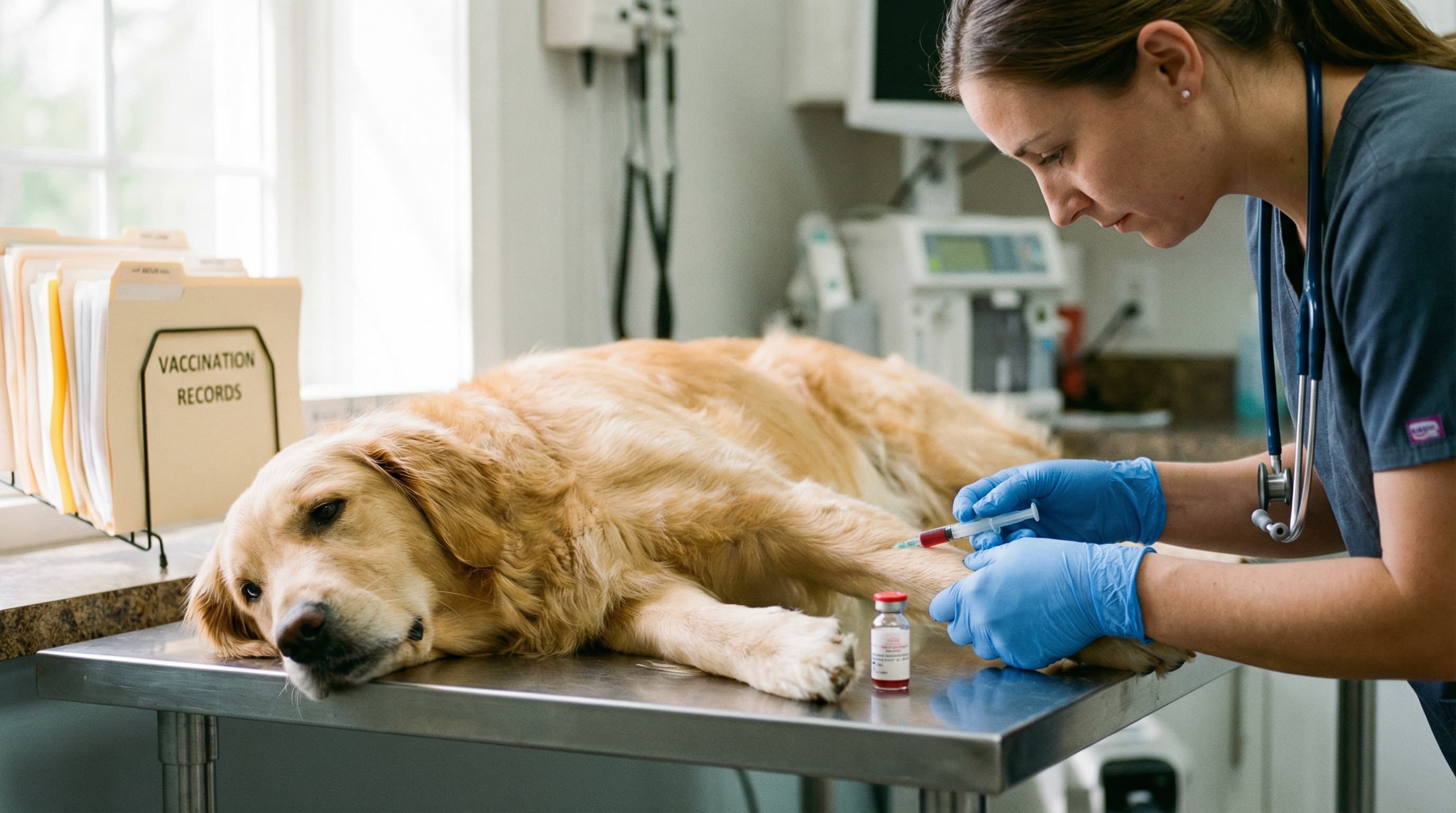
An active rabies vaccine administered after the microchip. Most countries require at least 21 days between the first rabies shot and travel. Boosters count immediately — no waiting period.
Your pet must be at least 12 weeks old at the time of vaccination. The vaccine must be active (not expired) on your travel date.
Cost: $15–35.
3. Health Certificate
An official veterinary document signed by a USDA-accredited vet confirming your pet is healthy, microchipped, vaccinated, and meets the destination country's entry requirements.
This is the core of your pet's travel paperwork. Most countries require it within 10 days of travel — get it too early and it expires before you fly.
Cost: $100–350 (vet exam + certificate completion). Full process in our health certificate guide.
4. USDA Endorsement
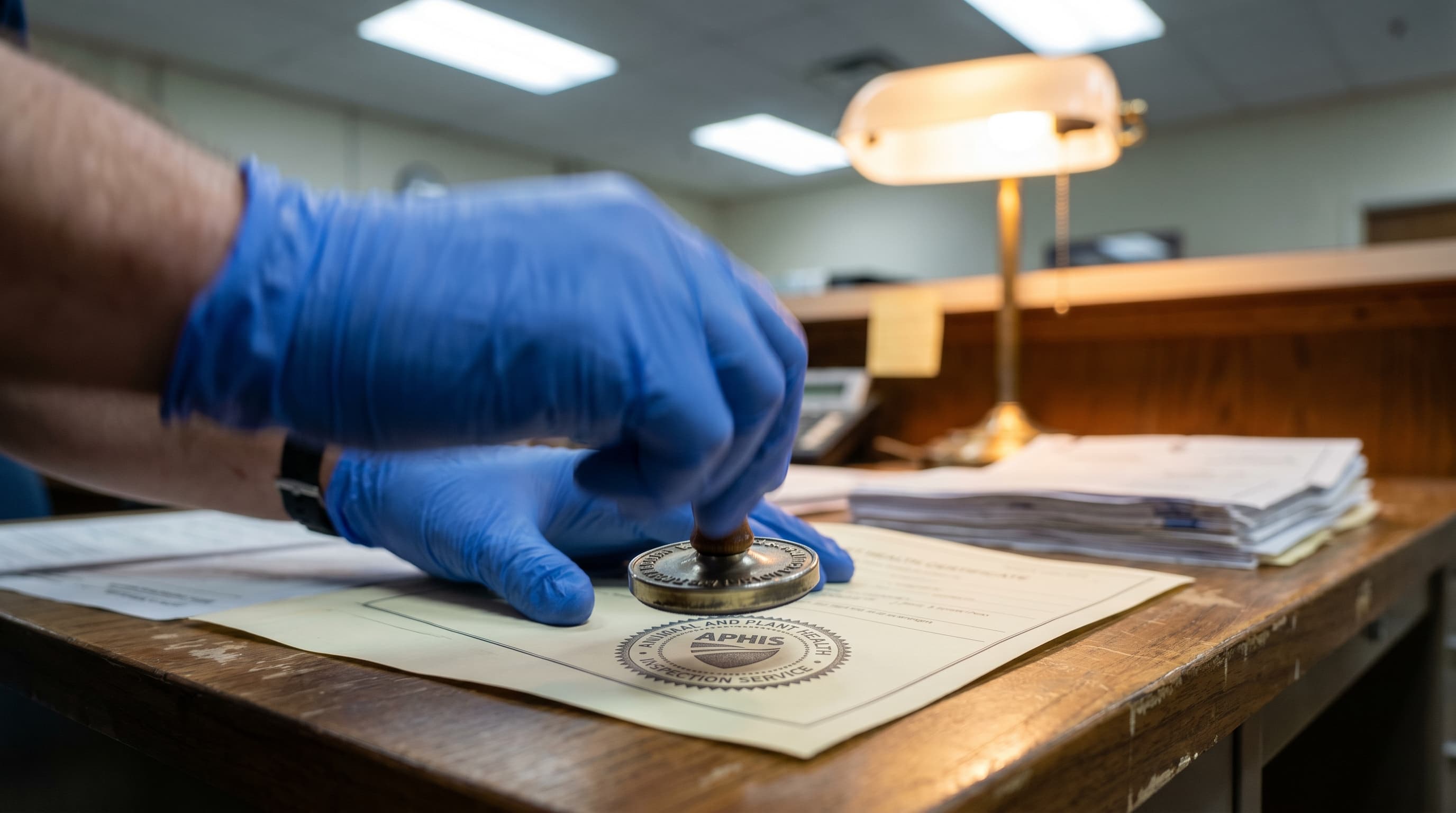
The APHIS stamp on your health certificate. Your vet writes the certificate; USDA validates it with an official seal that foreign governments recognize.
Without this stamp, most countries reject the health certificate at the border — even if everything on it is correct. Airlines check for it at the counter too.
Cost: $101. Takes 1–3 business days. Full process in our USDA endorsement guide.
5. Destination-Specific Requirements
Some countries require additional documentation beyond the standard stack:
- EU countries: EU Animal Health Certificate form (specific format). See our EU pet passport guide.
- Japan, Australia, Singapore: Rabies titer test with a 3–6 month waiting period after blood draw.
- UK: Tapeworm treatment for dogs within 1–5 days of arrival.
- Some countries: Import permits applied for in advance from the destination government.
Check your destination's requirements in our country guides.
6. CDC Dog Import Form (Dogs Only)
Since August 2024, every dog entering the United States — including your own dog coming home — needs a completed CDC Dog Import Form. It's free, completed online, and takes about 5 minutes.
Dogs must be at least 6 months old and microchipped. Dogs returning from high-risk rabies countries need a separate Certification of U.S.-Issued Rabies Vaccination completed by your USDA-accredited vet before you leave.
Watch Out
This requirement applies to dogs only. Cats have no federal re-entry requirements. See our re-entry guide for the full process.
7. Airline Documentation
Your airline's pet reservation confirmation. This isn't a government document, but without it your pet doesn't board.

Reserve your pet's spot by phone (most airlines) or online (a few allow it). Fees range from $50–200 each way for cabin travel. Our airline guides cover policies, fees, and carrier requirements for every major US airline.
What It Costs
| Document | Cost | Who Provides It |
|---|---|---|
| ISO microchip | $25–50 | Any vet |
| Rabies vaccine | $15–35 | Any vet |
| Health certificate + exam | $100–350 | USDA-accredited vet |
| USDA endorsement | $101 | USDA APHIS |
| CDC Dog Import Form | Free | CDC (online) |
| Rabies titer test | $150–300 | Lab (if destination requires) |
| Airline pet fee | $50–200 | Airline |
| Total (simple destination) | $300–550 | |
| Total (titer test required) | $450–850 |
Cats are often cheaper — no CDC Dog Import Form, and some destinations have simpler cat requirements.
When to Start
Work backward from your travel date.
8+ weeks before: Get the microchip implanted if your pet doesn't have one. Schedule the first rabies vaccine if needed — you need at least 21 days before travel after the initial shot.
6 weeks before: If your destination requires a rabies titer test, get the blood draw now. Labs take 2–3 weeks, and some countries require a waiting period after the results.
7–10 days before: Visit your USDA-accredited vet for the health certificate exam. The vet examines your pet, completes the certificate, and submits it to USDA APHIS for endorsement.
Allow 1–3 business days for the endorsement to come back.
CriticalDon't schedule the health certificate too early. Most certificates are valid for only 10 days from the exam date. If your flight is 3 weeks out, the certificate will expire before you travel.
3–5 days before: Complete the CDC Dog Import Form online (dogs only). Print the receipt or save it to your phone.
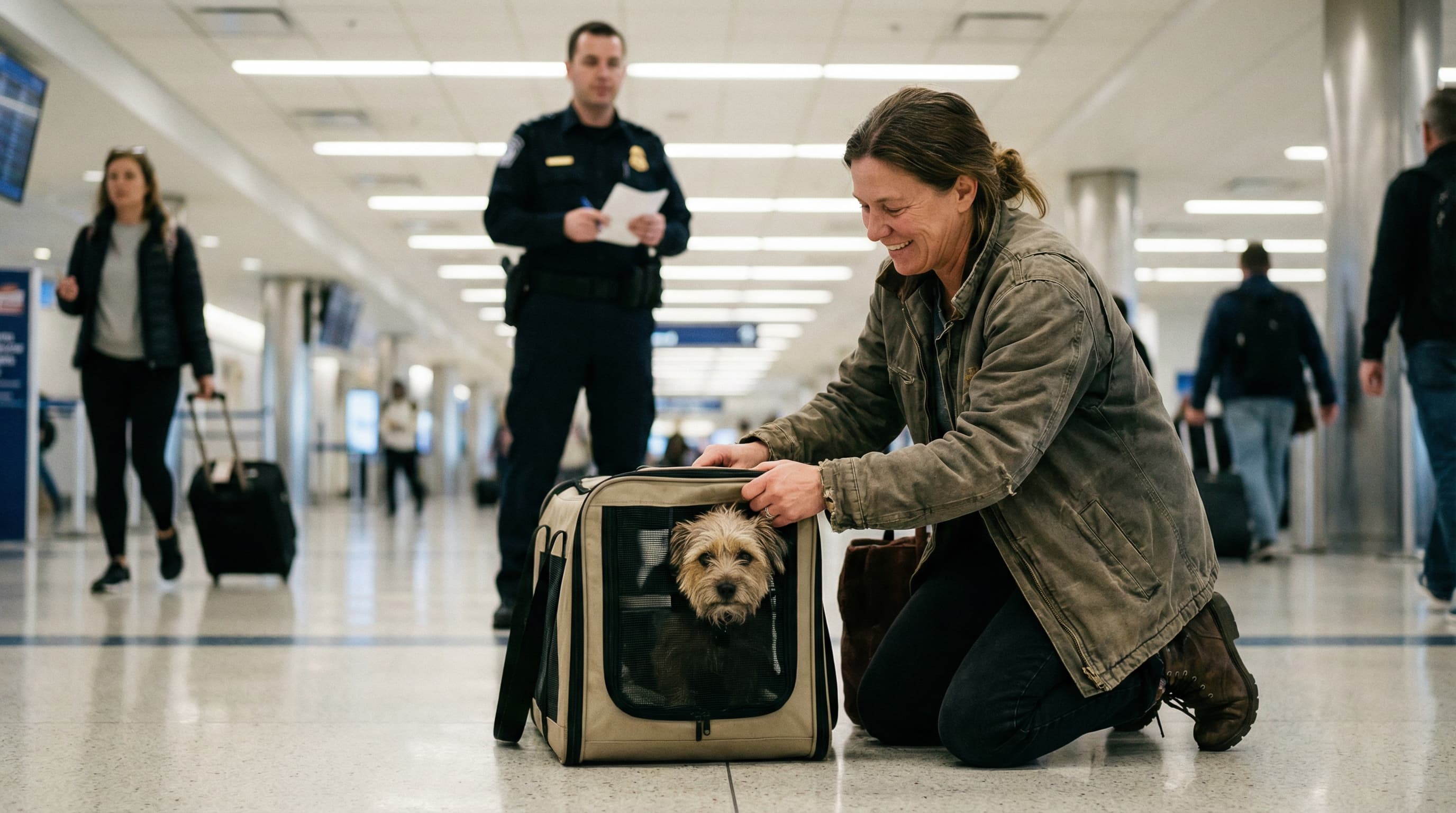
Day of travel: Carry every document in your carry-on. The airline checks them at the counter. Customs checks them when you land. If they're in checked luggage, you can't produce them.

Dogs vs. Cats: The Re-Entry Difference
The biggest species difference isn't leaving the US — it's coming back.
Dogs: The CDC regulates all dog imports into the United States, including your own dog returning from a trip. Since August 2024, every dog needs a CDC Dog Import Form, must be at least 6 months old, and must have a microchip.
Dogs returning from high-risk rabies countries face additional certification requirements.
Cats: The CDC does not regulate cat imports at the federal level. No CDC form, no age minimum, no federal microchip requirement for re-entry. Individual states may require an active rabies vaccine, but there's no federal checkpoint.
Cat owners have a simpler return trip. Dog owners need to plan the CDC paperwork before they leave.
Common Mistakes
FAQ
Your next step: Check your destination's requirements in our country guides, then find a USDA-accredited vet near you. The vet appointment is the bottleneck — everything else works around that date.