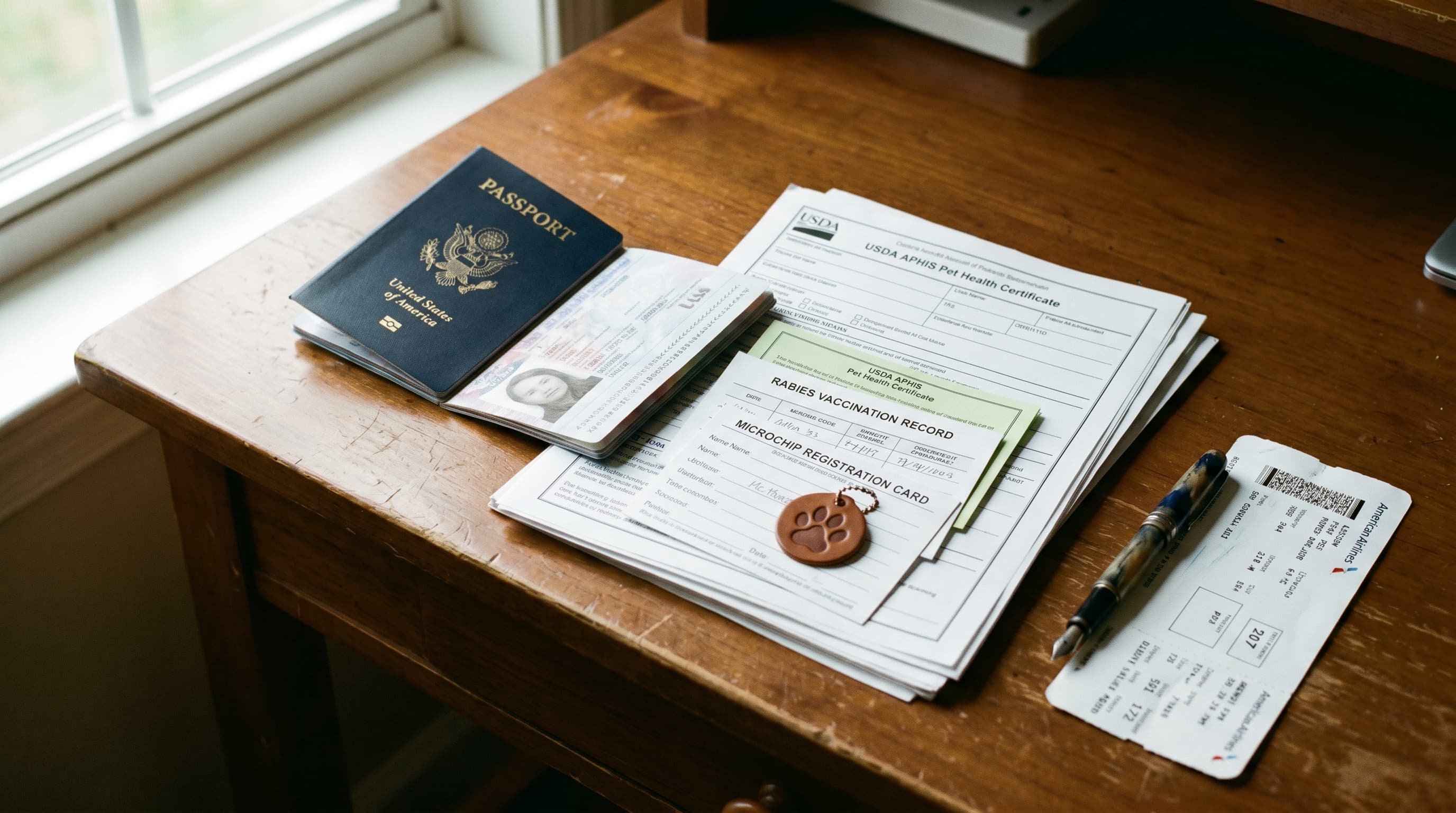
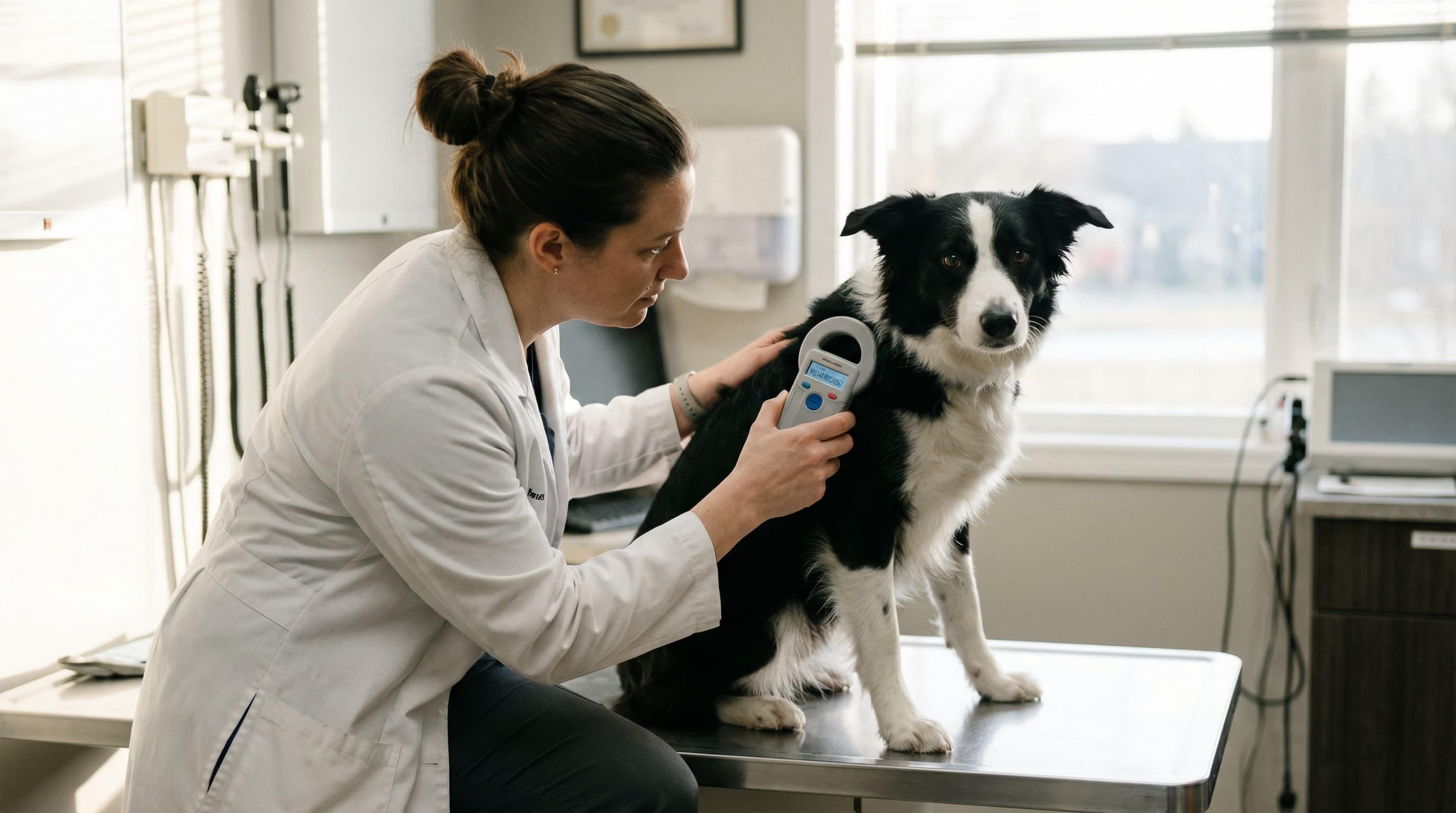
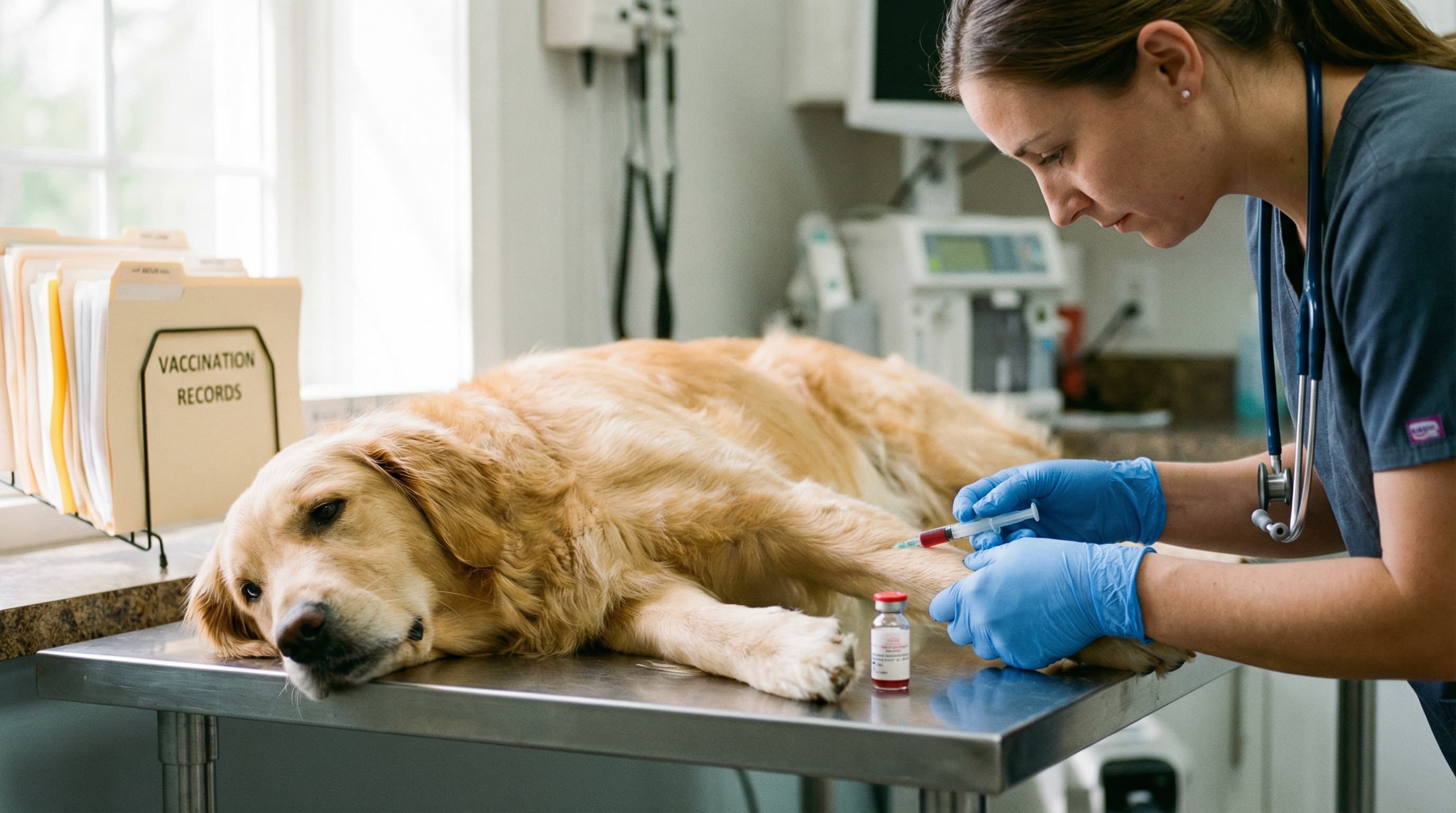
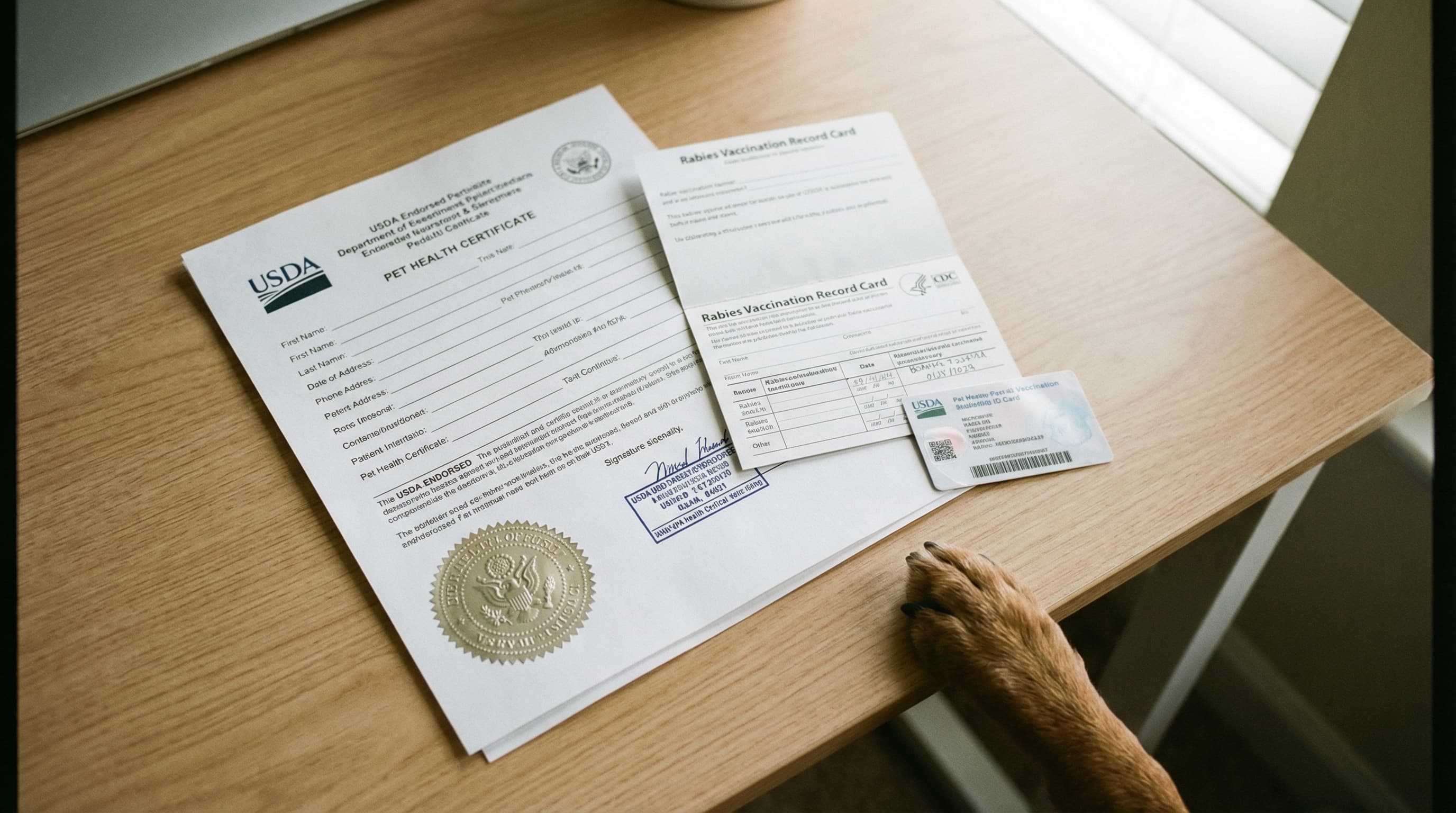
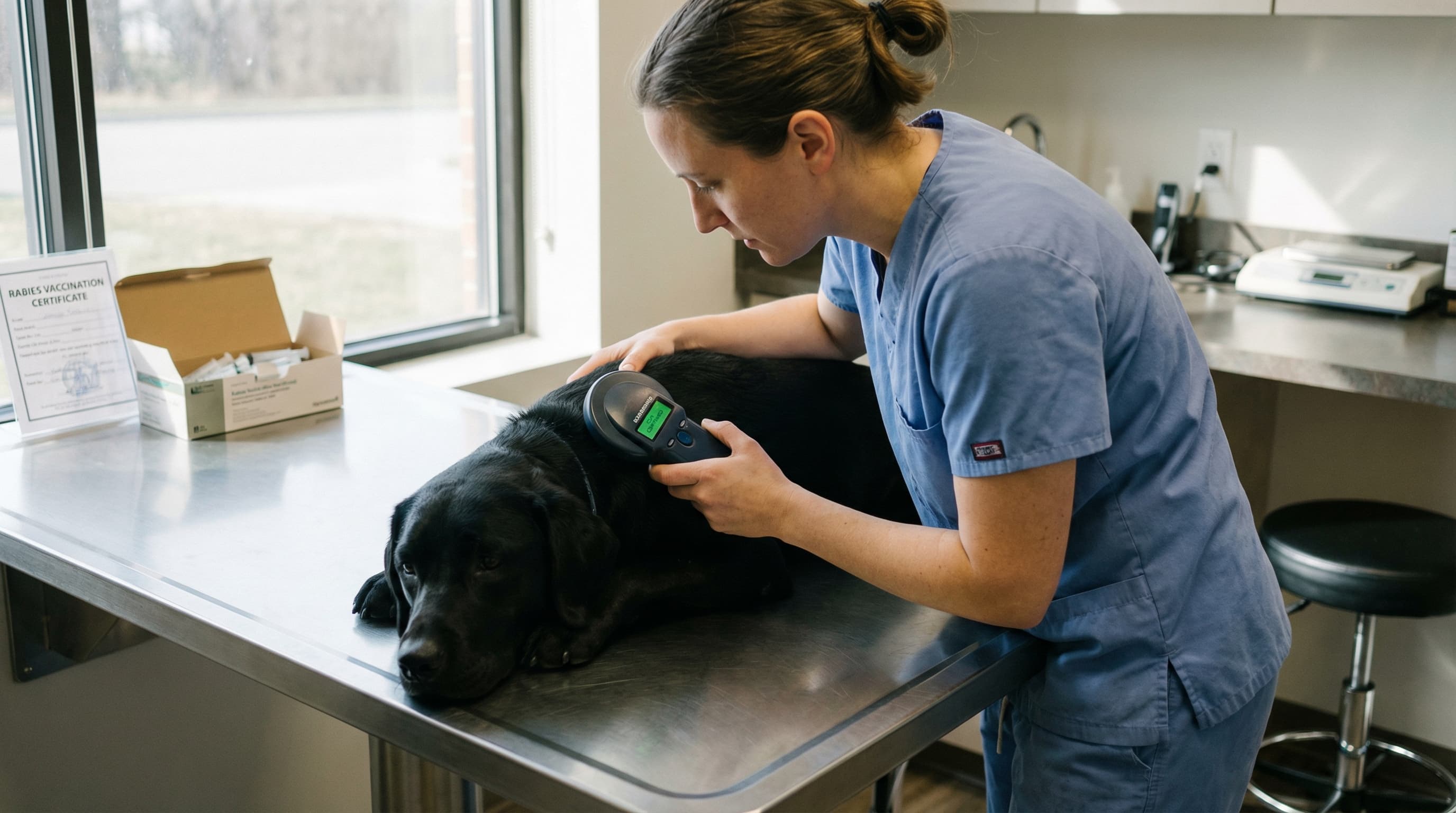
The microchip must be implanted before the rabies vaccination. If your dog got its rabies shot first and then its chip, CDC does not count that vaccination. You'd need a new rabies shot after the chip is in. This catches people who adopted rescue dogs where the vaccine came before the chip.
Bringing Your Pet Back to the US: 2026 Re-Entry Guide
16 min readdocuments

Lisa Carter
International Pet Relocator
Quick answer: Dogs need a CDC Dog Import Form receipt (free, 5 minutes online) plus a microchip — that's it if your dog only visited low-risk countries like Western Europe, Canada, Mexico, or Japan. If your dog visited one of the 110+ high-risk countries (including Brazil, Thailand, India, Colombia, and most of Africa), you need more paperwork and must plan weeks ahead. Cats have almost no federal re-entry rules — they just need to appear healthy.
The rules changed on August 1, 2024, and they're stricter for dogs than anything that came before. Plan your return before you leave.
What Changed and Why It Matters
CDC overhauled dog import rules on August 1, 2024. The goal: keep canine rabies out of the US (which has been rabies-free in domestic dogs since 2007).
The old system was a patchwork of paperwork that varied by situation. The new system splits every dog into one of three tracks based on a single question: has your dog been in a high-risk country for dog rabies in the past 6 months?
If no — your return is simple. If yes — it gets complicated fast.
Cats were not affected by the 2024 changes. Federal re-entry rules for cats are still minimal.
Dogs: Which Track Are You On?
Everything depends on where your dog has been — not where it lives or where it was born.
| Your dog's situation | Track | Advance planning needed |
|---|---|---|
| Only visited low-risk countries in the past 6 months | Track 1 | Minutes |
| Visited a high-risk country — vaccinated in the US before travel | Track 2 | 4–6 weeks before departure |
| Visited a high-risk country — vaccinated abroad | Track 3 | 60+ days |
Low-risk countries (not on the CDC list) include:
- Europe: All EU/EEA countries, the UK, Ireland, Iceland, Switzerland, and microstates (Andorra, Monaco, San Marino, etc.). Notably, Ukraine, Russia, Belarus, Georgia, Armenia, Azerbaijan, and Moldova are high-risk.
- Americas: Canada, Mexico, Costa Rica, Panama, Argentina, Chile, Uruguay, Paraguay, Nicaragua, Jamaica, Bahamas, Trinidad and Tobago, Bermuda, and most smaller Caribbean islands. But Brazil, Colombia, Peru, Ecuador, Bolivia, Venezuela, Guatemala, Honduras, El Salvador, Belize, Cuba, Dominican Republic, Haiti, Guyana, and Suriname are high-risk.
- Asia-Pacific: Japan, South Korea, Taiwan, Hong Kong, Macau, Australia, New Zealand, and most Pacific Islands. But China (mainland), Thailand, India, Philippines, Vietnam, Indonesia, Malaysia, Cambodia, Laos, Myanmar, and most of South/Southeast Asia are high-risk.
- Middle East: Israel (including the West Bank and Gaza) is high-risk — along with every other Middle Eastern country on the list. There are no low-risk countries in the Middle East.
If your destination isn't on the CDC high-risk list (110+ countries), it's low-risk.
What Every Dog Needs (All Three Tracks)
Before getting into track-specific rules, four things are universal:
- CDC Dog Import Form receipt. Free, submitted online, takes about 5 minutes. You show the receipt (printed or on your phone) to the airline at check-in and to CBP when you land.
- A microchip readable by a universal scanner. If the scanner can't read it at the border, your dog is denied entry and sent back at your expense. AVID chips — common in US rescue dogs — are not ISO-standard and may not be readable. If your dog has an AVID chip, ask your vet whether it needs a second ISO chip before travel.
- At least 6 months old at the time of entry. No exceptions, no workarounds.
- Appears healthy on arrival. A visibly sick dog triggers a veterinary hold at your expense.
Critical
Track 1: Low-Risk Countries (Europe, Canada, Japan, etc.)
This is the track most US travelers returning from vacation will use. It's straightforward.
What you need: The CDC Dog Import Form receipt. That's it — plus the universal rules above (microchip, 6+ months, appears healthy).
How to get it: Fill out the CDC Dog Import Form online. The receipt arrives by email within about 15 minutes. It's valid for 6 months and multiple entries, as long as your dog doesn't visit a high-risk country in that window.
What happens at the border: The airline checks for the receipt at departure. CBP at US arrival visually confirms your dog matches the form and may scan the microchip. In practice, enforcement has been inconsistent at land and sea crossings — some CBP officers ask about the form verbally but don't require you to show it. At airports, the process is more structured.
CDC does not require proof of rabies vaccination for this track. But carry your vaccination records anyway — airlines sometimes ask, and if anything goes sideways, having records prevents delays.
Track 2: US-Vaccinated Dog from a High-Risk Country
If your US dog traveled to a high-risk country and you vaccinated it in the US before leaving, you need two documents:
-
CDC Dog Import Form receipt — same as Track 1, but answer "yes" when asked about high-risk countries. This receipt is single-use and tied to a specific arrival date and airport.
-
Certification of US-Issued Rabies Vaccination — a specific CDC form (not a regular rabies certificate). A USDA-accredited vet completes it, and USDA must endorse it before your dog leaves the US.
The certification must be done before departure — it cannot be issued after you return. This is the most common planning failure on this track. Build the USDA endorsement timeline into your pre-departure schedule.
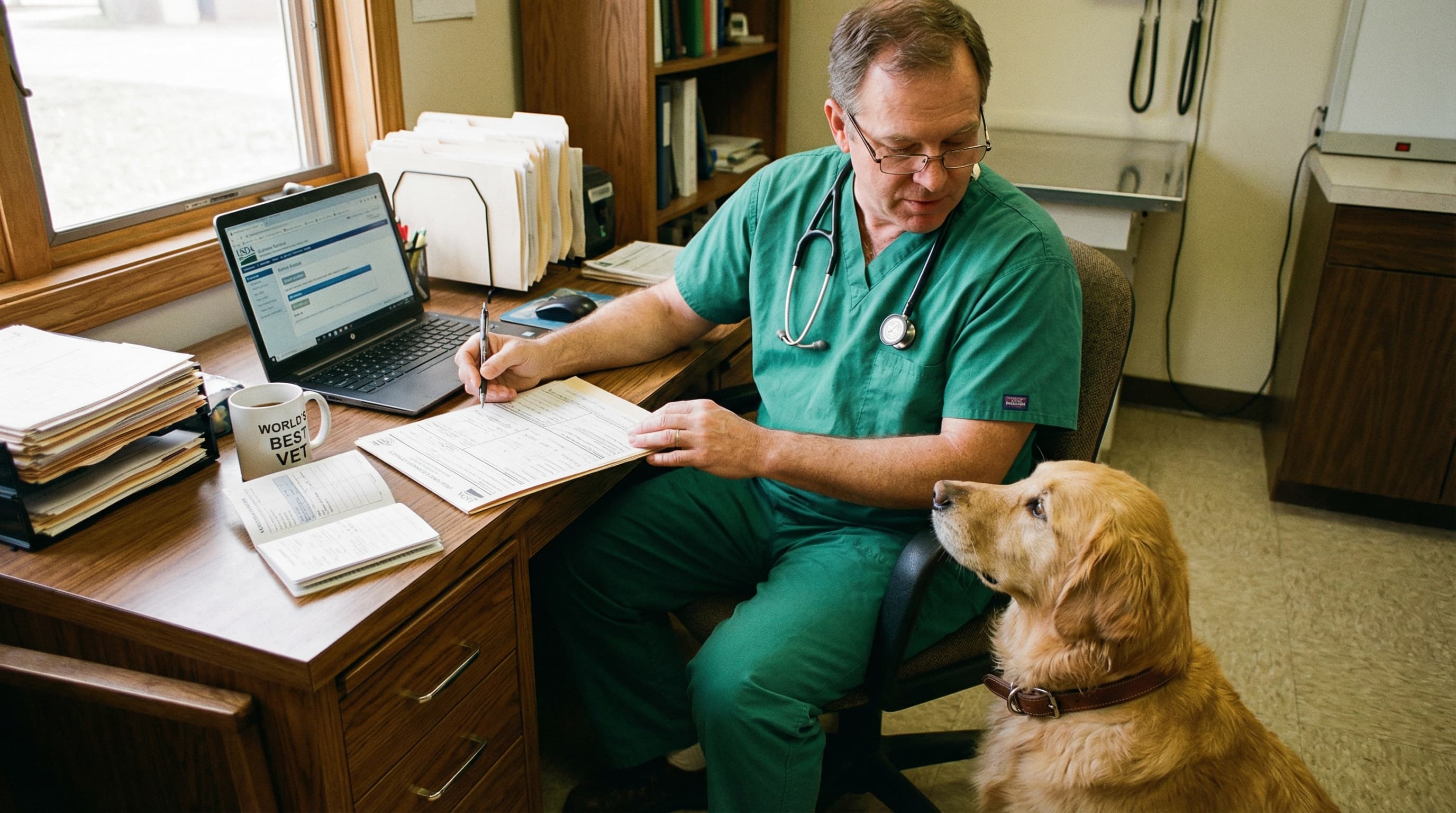
Timeline: Start 4–6 weeks before departure. Confirm your vet is USDA-accredited, schedule the certification appointment, and allow time for USDA endorsement (1–3 business days via VEHCS, longer by mail).
What changed: Through July 31, 2025, a standard USDA-endorsed export health certificate worked as a substitute. That transition period is over. Only the CDC-specific Certification of US-Issued Rabies Vaccination form is accepted now.
Not every vet can do this. The vet must be USDA-accredited, have access to the VEHCS portal, and have administered or directly verified your dog's rabies vaccination in their own records. Many small-animal vets aren't accredited — large-animal (farm) vets tend to be. Forum reports show costs ranging from $150 to over $600 for this paperwork alone.
Watch OutStart calling vets early. Find an accredited vet near you and confirm the clinic handles the CDC certification form — not all accredited vets are familiar with it yet.
Track 3: Foreign-Vaccinated Dog from a High-Risk Country
This is the most complex and expensive track. It applies to dogs vaccinated abroad (not in the US) that have been in a high-risk country. Start at least 60 days before travel.
You need four things:
- CDC Dog Import Form receipt — must include your dog's microchip number and a photo
- Certification of Foreign Rabies Vaccination and Microchip — completed by a licensed vet in the country of origin, endorsed by an official government veterinarian. Valid 30 days only, single use, must be a printed paper copy
- Rabies titer test from a CDC-approved lab — blood drawn at least 30 days after the first valid rabies vaccine and at least 28 days before US entry. Passing results last your dog's lifetime as long as the vaccination never lapses
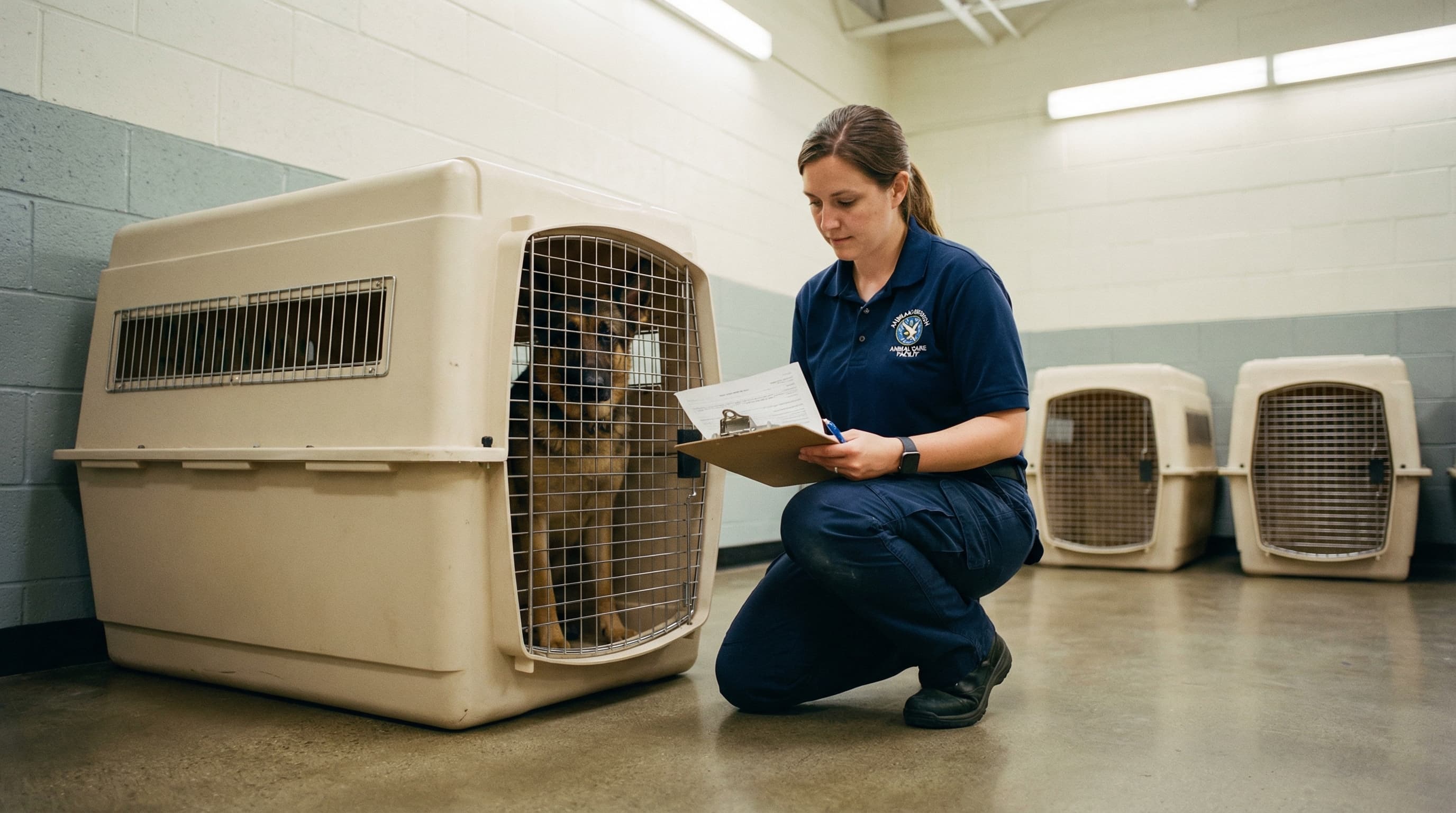
- A reservation at a CDC-registered Animal Care Facility (ACF) — your dog must be examined at the facility on arrival. Without a passing titer, your dog faces 28 days of quarantine at the ACF at your expense
Your dog must arrive at one of six airports:
| Airport | Facility | Quick Release (with titer) | 28-Day Quarantine |
|---|---|---|---|
| Philadelphia (PHL) | Gateway ACC | ~$500 + broker | ~$3,500 + broker |
| Washington Dulles (IAD) | Pender Pet Retreat | $971 (broker included) | $4,046 (broker included) |
| Atlanta (ATL) | Pets Connect | ~$900–$1,200 | Not published |
| Miami (MIA) | Pet Limo | ~$1,300 + broker | Not published |
| New York JFK | ARK Pet Oasis | ~$1,400–$1,600 (min. 1 overnight stay) | ~$3,961 |
| Los Angeles (LAX) | Kennel Club LAX / Rue's Kennels | $1,400–$1,850 | Quote-based |
Prices are from published facility pages and community reports as of early 2026. Customs broker fees (where not included) add $200–$400. After-hours and weekend arrivals add $250–$750 depending on the facility.
No domestic connections are allowed until after the ACF inspection clears your dog. If you're heading to Chicago, you still fly into one of these six airports first.
Book your ACF reservation at least 35 days before arrival — facilities fill up, and last-minute appointments are essentially impossible at busy periods.
Mexico: The Screwworm Certificate
If your dog is entering the US from Mexico, you need one more document on top of your CDC track: a screwworm-free certificate.
Since November 22, 2024, Mexico is classified as screwworm-affected. A vet must inspect your dog within 5 days before departure and certify it's free of screwworm. In Mexico, a clinical veterinarian authorized under the MVRA program can issue the certificate — it doesn't have to be a government vet.
Your dog will also be physically inspected at the US port of entry.
Cats: Almost Nothing at the Federal Level
This is the part that surprises people. Federal re-entry rules for cats are minimal:
- No CDC Dog Import Form (it's dog-only — the name says it)
- No federal rabies vaccination rule — CDC recommends it but doesn't mandate it
- No federal health certificate needed
- APHIS has no rules at all for importing pet cats
- Cat must appear healthy on arrival — that's the only federal rule
Your cat clears CBP by looking healthy. That's genuinely it.
But don't skip the paperwork entirely. Two things still create friction:
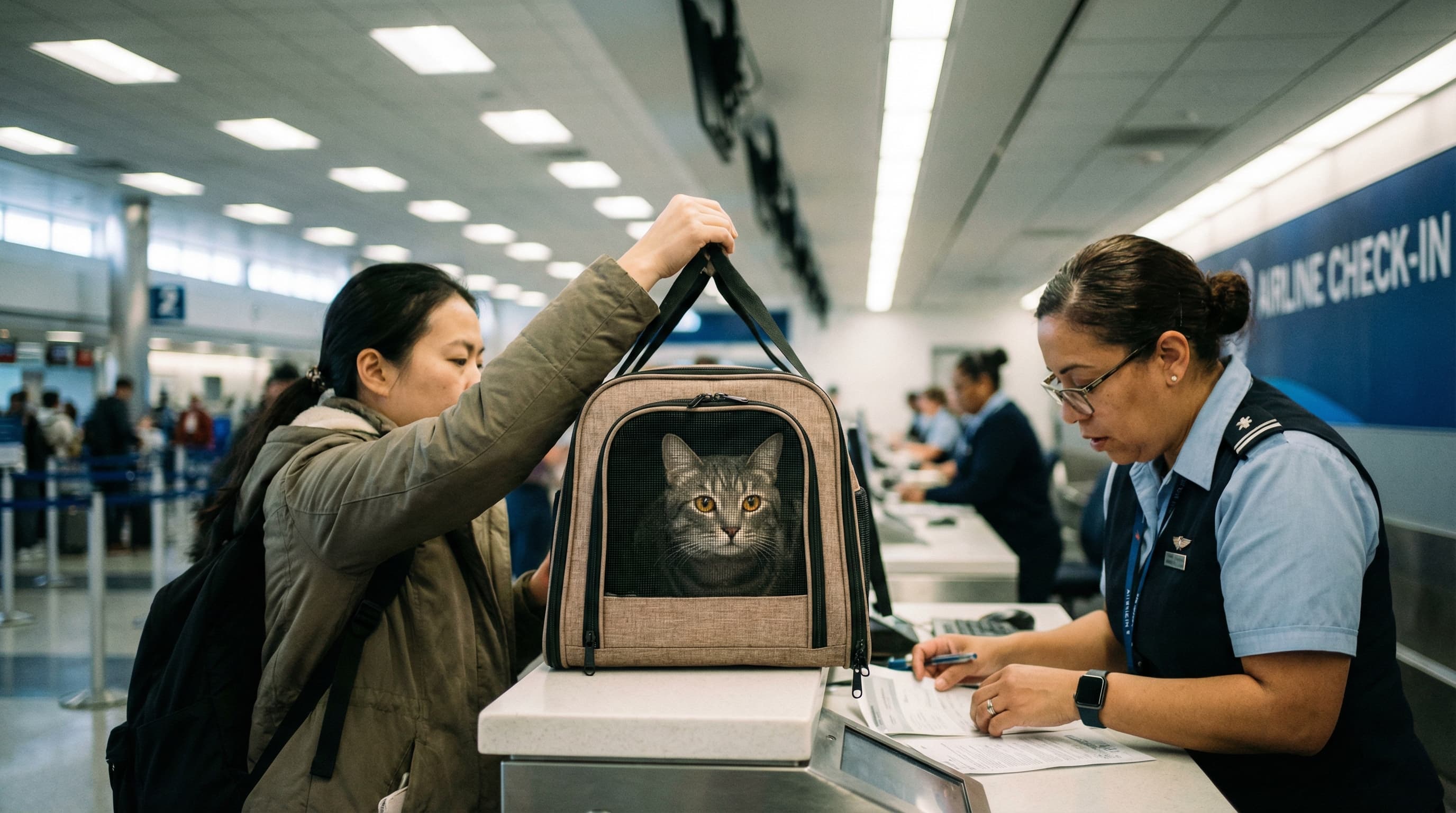
Airlines require a health certificate for international flights regardless of what the federal government says. Get one from a USDA-accredited vet within 10 days of travel. For international routes, get it USDA-endorsed.
Most US states require rabies vaccination for cats by state law. The federal government doesn't — but Texas, Washington, Maine, and most other states do. Check your destination state's rules before assuming your cat is covered.
Hawaii and Guam: The Exceptions
Hawaii and Guam are rabies-free territories with their own quarantine laws that apply to both dogs and cats — including pets coming from the US mainland.
Hawaii requires either 120-day quarantine or completion of the 5-Day-Or-Less program: two lifetime rabies vaccinations, an OIE-FAVN titer test, microchip, and a USDA-endorsed health certificate. Direct airport release costs $185–$244. Plan at least 4–6 months ahead — FAVN labs are running 1–2 months behind on processing.
Guam requires an Entry Permit ($65, non-refundable) for all cats and dogs regardless of origin. Similar tiered quarantine programs based on titer results. Pets from Hawaii, Japan, Australia, New Zealand, or the British Isles may qualify for an inspection-only exemption.
These are state and territorial rules — completely separate from the CDC system. Contact Hawaii's Animal Quarantine Station at rabiesfree@hawaii.gov or Guam's CQA at quarantine@cqa.guam.gov for current details.
What Actually Happens at the Border
Two checkpoints stand between your pet and home:
Checkpoint 1 — the airline (at departure). Airlines are legally required to check your CDC Dog Import Form receipt before boarding any dog on a US-bound flight. If they board a non-compliant dog, the airline must return it to the departure country at its own expense within 72 hours. This liability is why airlines take document checks seriously — and why Lufthansa temporarily halted all dog transport to the US in August 2024 rather than risk it.
For cats, airlines check their own health certificate rules — not CDC (which doesn't apply to cats).
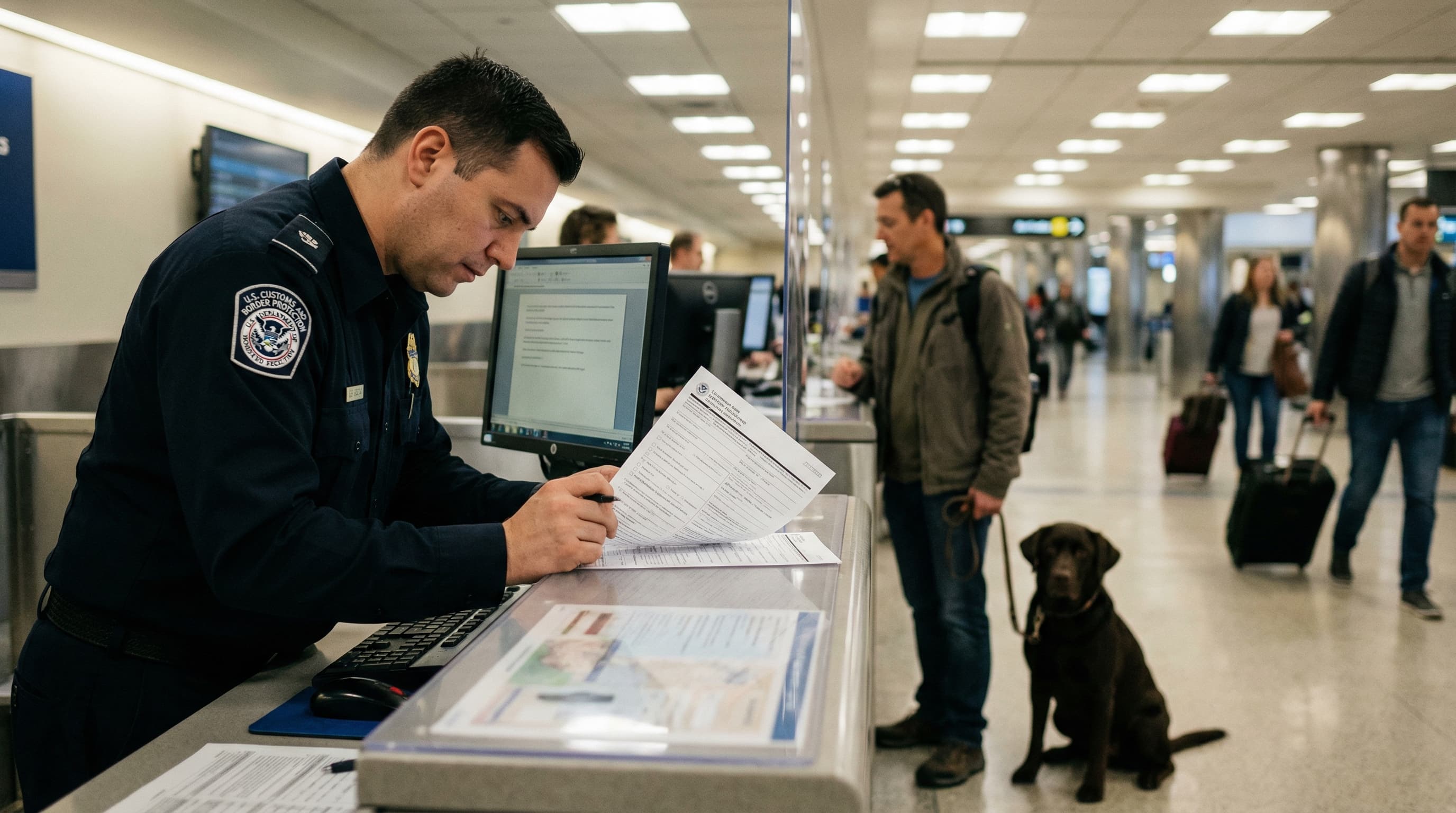
Checkpoint 2 — CBP (at US arrival). Customs and Border Protection inspects your documents again. For dogs, a CBP officer visually confirms your dog matches the form description and may scan the microchip. For Track 3 dogs, the ACF facility staff take custody and handle the inspection. For cats, CBP checks that the animal appears healthy.
If anything is missing or doesn't match, your pet is denied entry and returned to the departure country at your expense. There's no fix-it-at-the-border option.
Cost Summary
| Item | Dogs | Cats |
|---|---|---|
| CDC Dog Import Form | Free | N/A |
| Microchip (if needed) | $25–$75 | Not federally required |
| Health certificate (vet exam) | $50–$200 | $50–$200 (airlines need this) |
| USDA endorsement | $101–$275 | $101–$275 (if airline requires) |
| Certification of US-Issued Rabies Vaccination (Track 2) | $150–$600+ (vet + USDA) | N/A |
| Titer test (Track 3) | $150–$300 | N/A |
| ACF facility fee (Track 3) | $500–$1,850 | N/A |
| 28-day quarantine (Track 3, no titer) | $3,500–$4,046 | N/A |
Track 1 dogs (low-risk country): Free to $0 — just the online form.
Track 2 dogs (US-vaccinated, high-risk): $250–$875+ total for the certification and endorsement.
Track 3 dogs (foreign-vaccinated, high-risk): $800–$2,450+ with a titer, or $4,000–$5,000+ without one.
Cats (continental US): $0 federally. Airlines typically require a health certificate, so budget $50–$200 for a vet visit.

Common Mistakes
FAQ
Figure out which track your dog is on — that's the first step. If it's Track 1, the form takes 5 minutes and you're done. If it's Track 2, get the certification before you leave the country. If it's Track 3, start the ACF reservation and titer process at least 60 days out. And if you're traveling with a cat, your airline's health certificate rule is the only real hurdle.