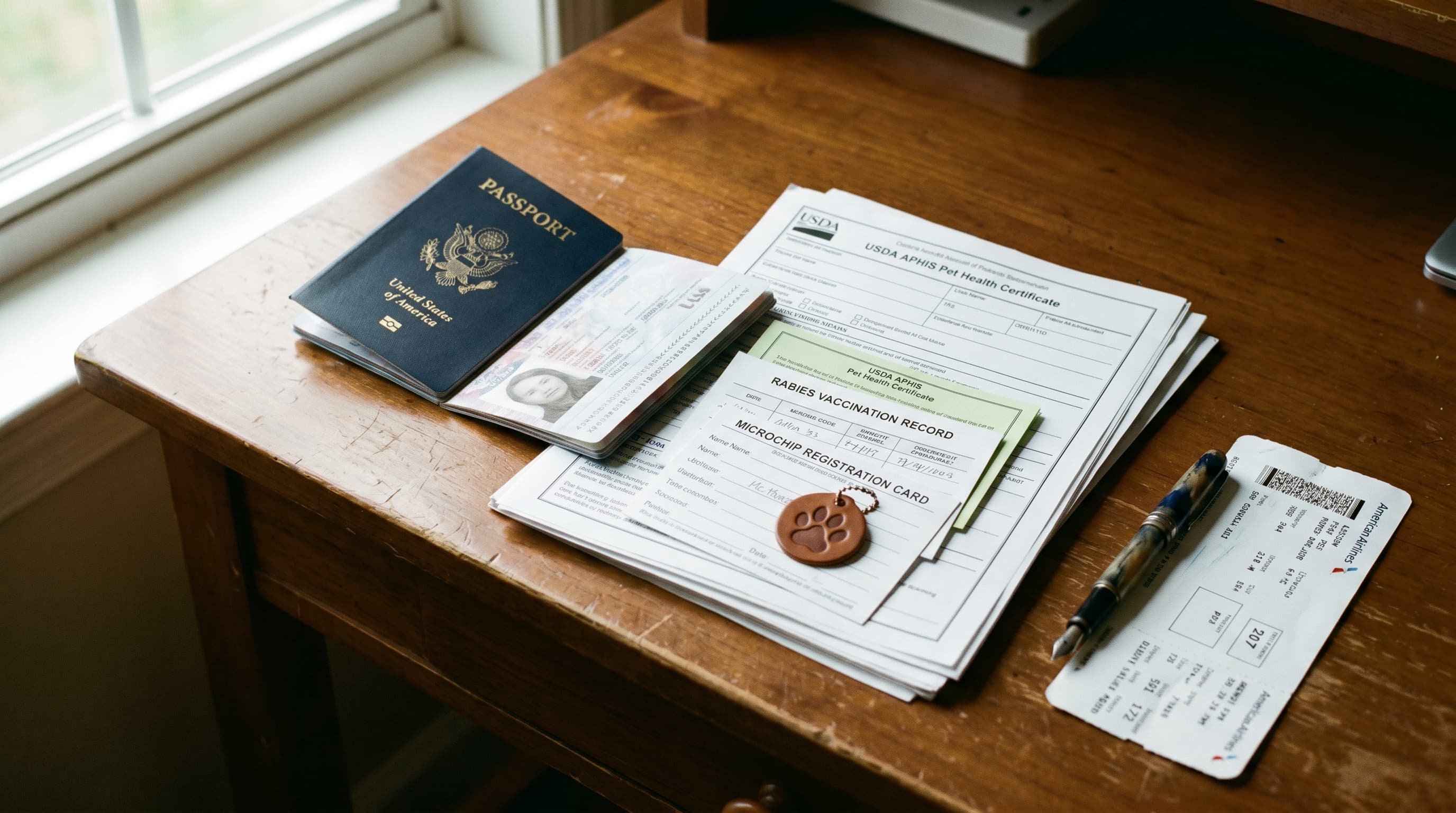
The health certificate validity clock starts the moment your vet signs it — not when APHIS stamps it. A 10-day window means you must travel within 10 days of the vet visit, not 10 days of getting the endorsement back. Build the mail time into your schedule.

USDA Endorsement for Pet Travel: How to Get It — 2026 Guide
11 min readdocuments

Lisa Carter
International Pet Relocator
Quick answer: USDA endorsement is the official APHIS stamp on your vet's health certificate that most countries require for pet import. It costs $101 for most pets and takes 1-3 business days by mail, or same/next business day through VEHCS. Your vet handles the health certificate — APHIS handles the stamp.
What USDA Endorsement Is (and Why You Need It)
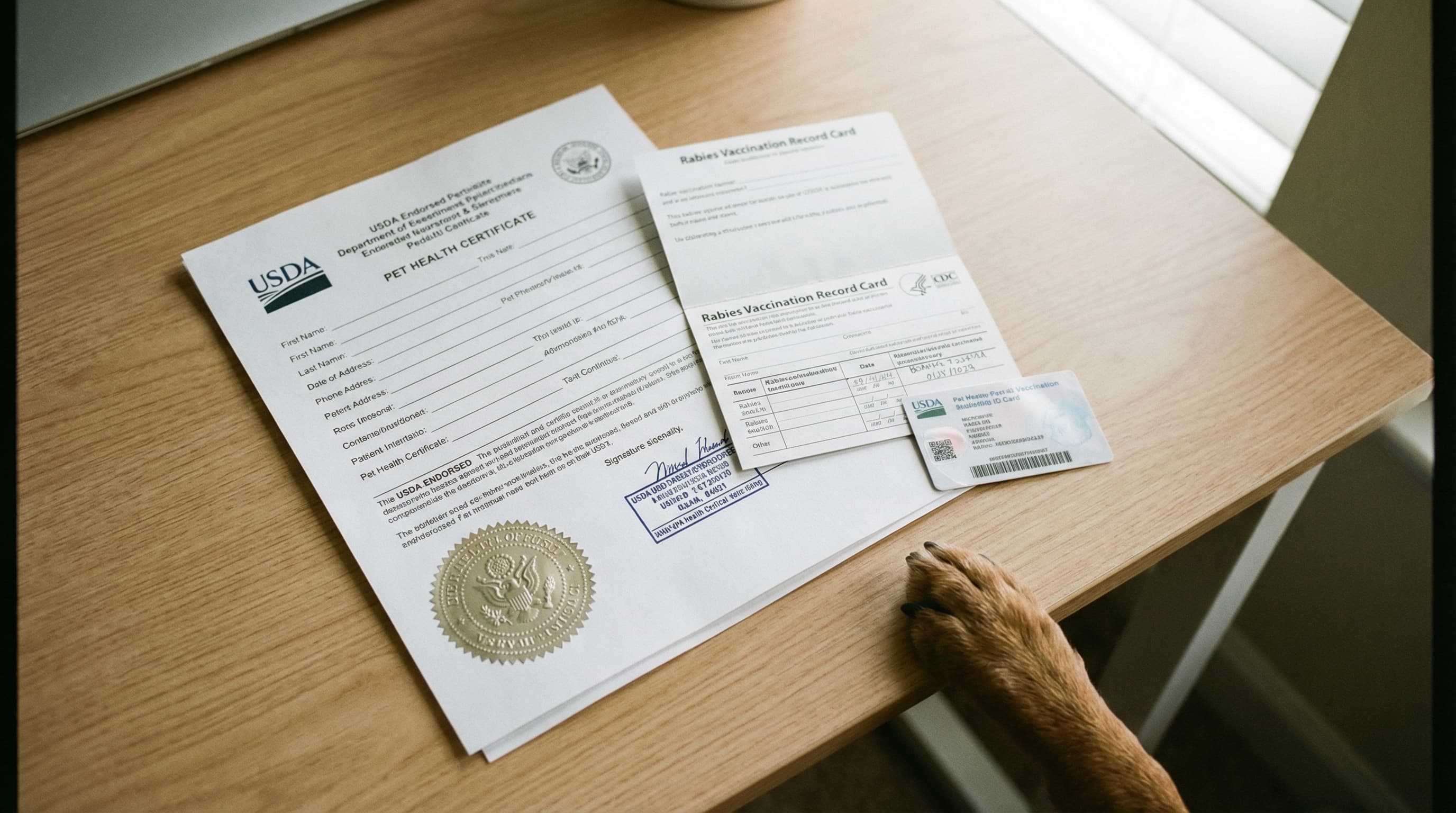
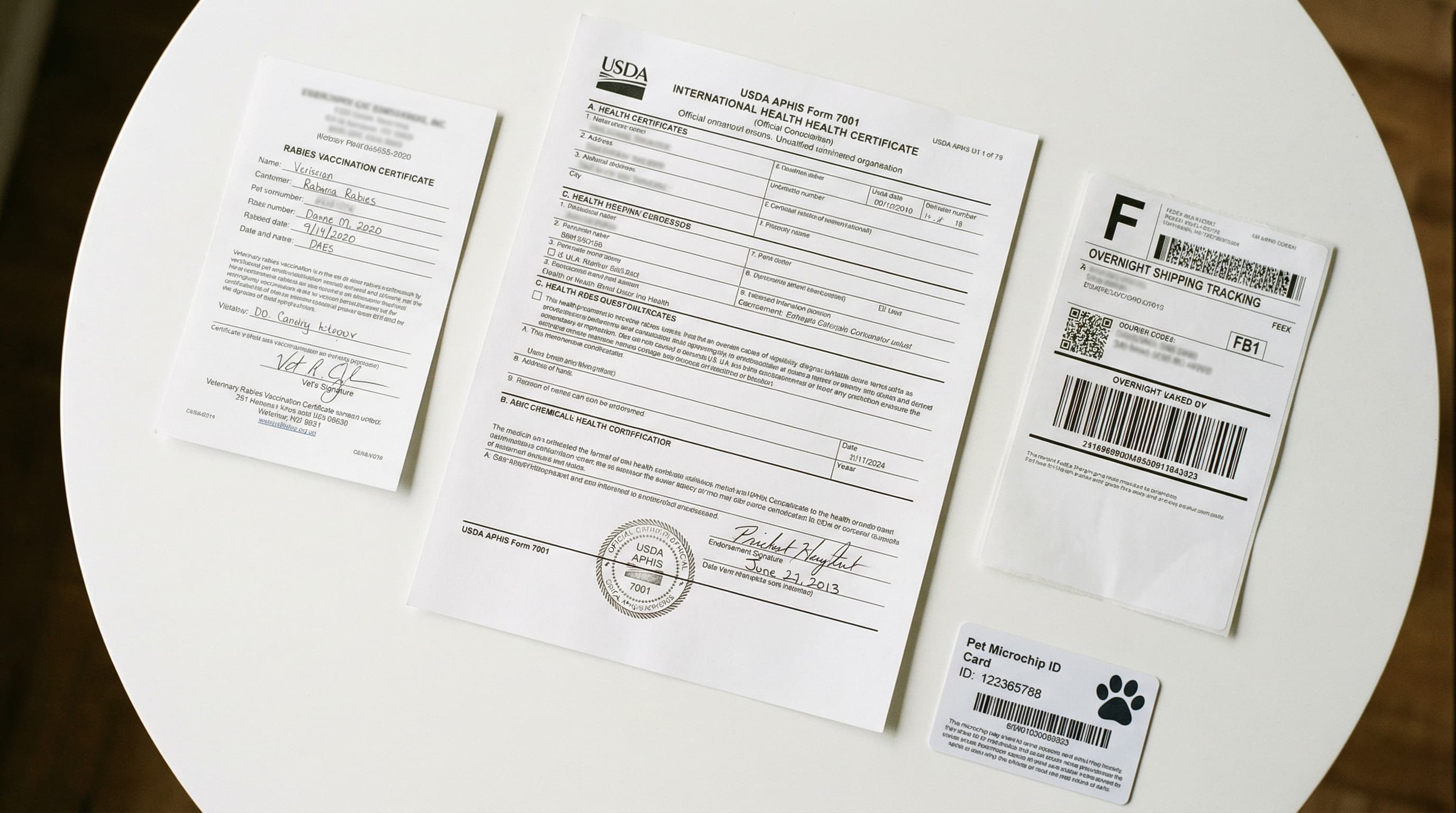
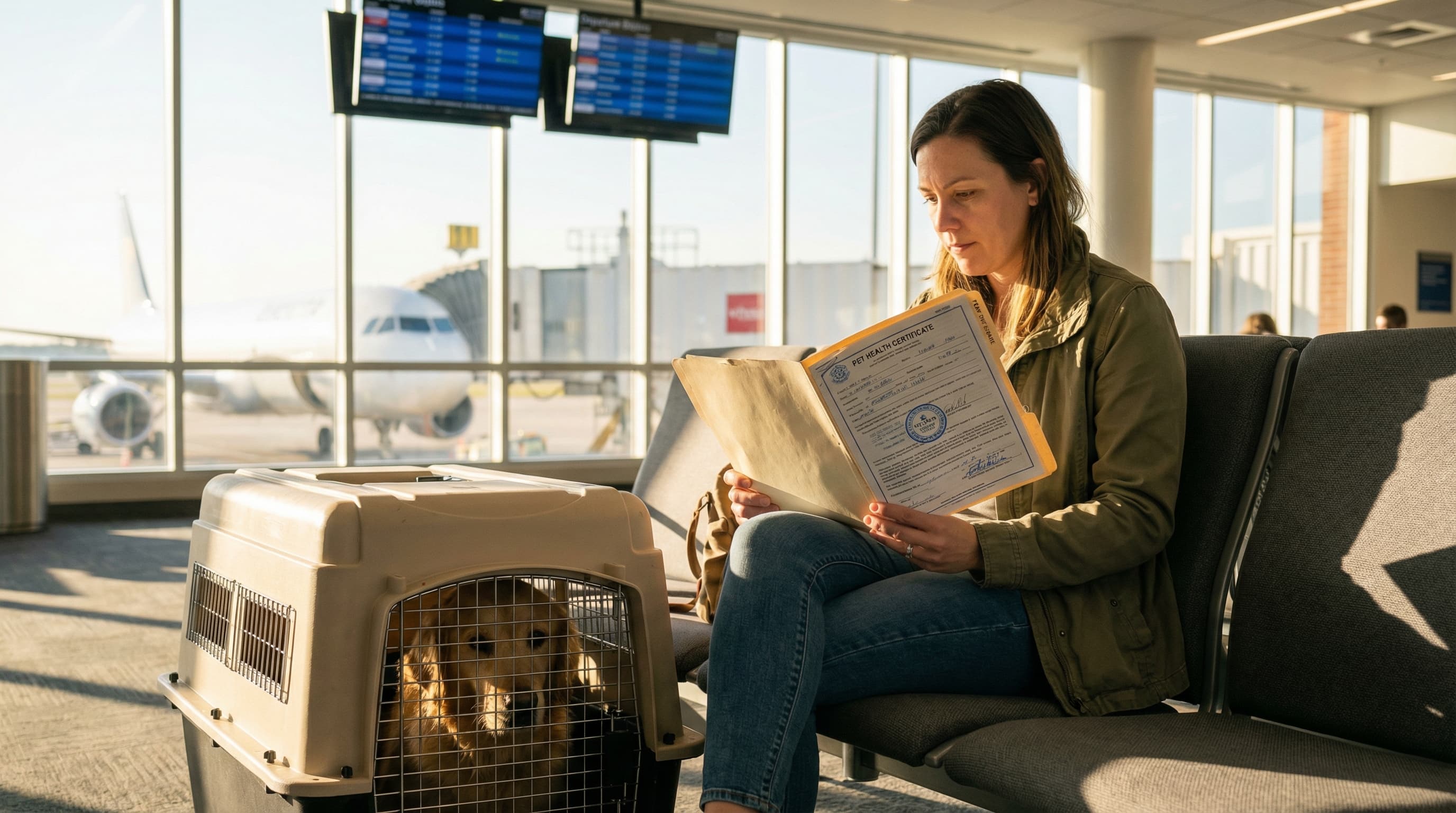
Your vet can write a health certificate, but that alone isn't enough for most international destinations. APHIS — the Animal and Plant Health Inspection Service — has to approve and emboss it with an official stamp.
That step is called endorsement.
Without it, border officials in most countries will reject the certificate and deny your pet entry.
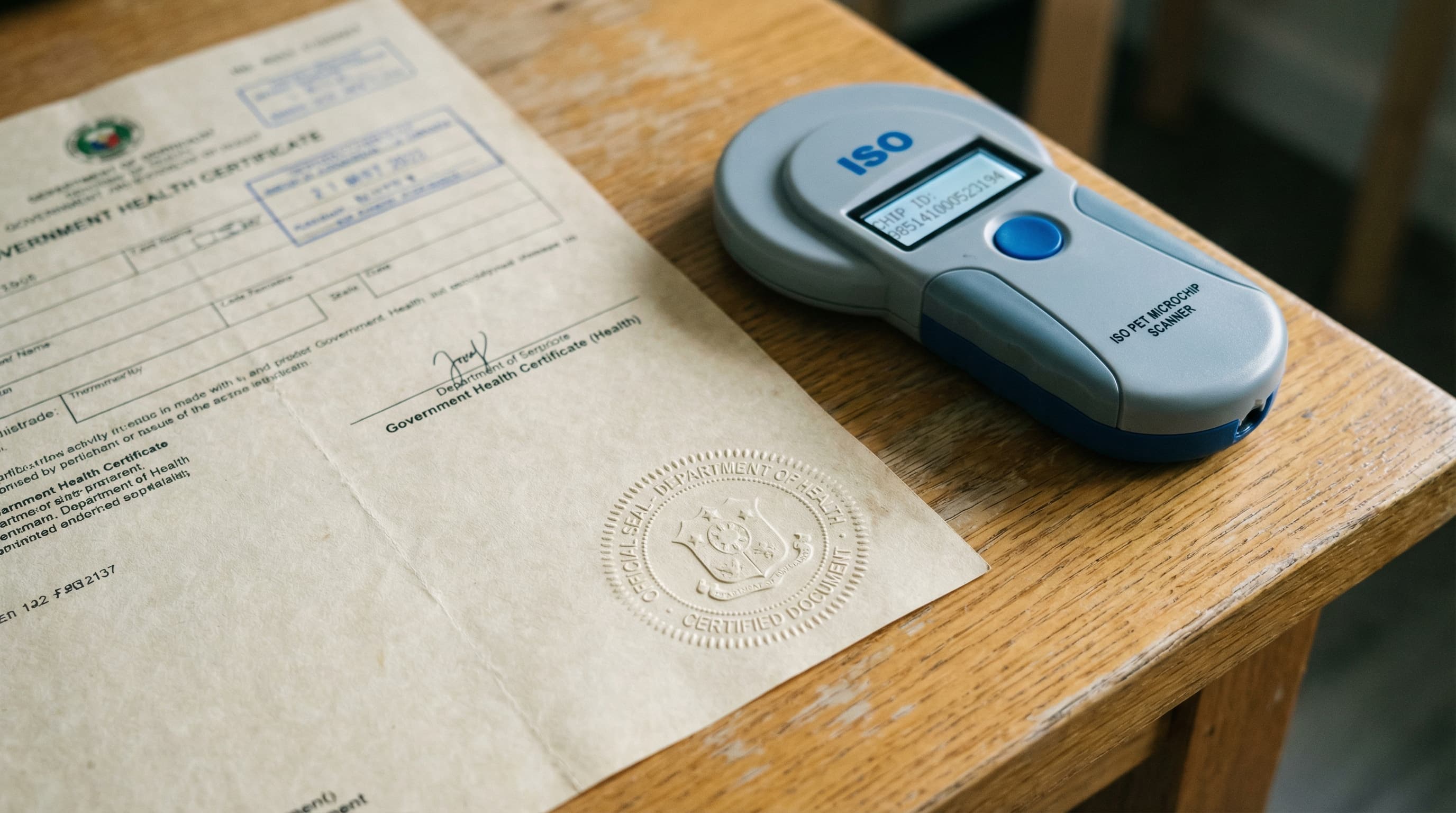
They're not looking at the vet's signature; they're checking for the APHIS seal. This is the most common reason health certificates fail at the border even if they are medically correct.
The endorsement confirms that the issuing vet is USDA-accredited. Airlines check this at the counter too — a vet-signed cert without an APHIS stamp is incomplete paperwork.
What You Need Before You Start
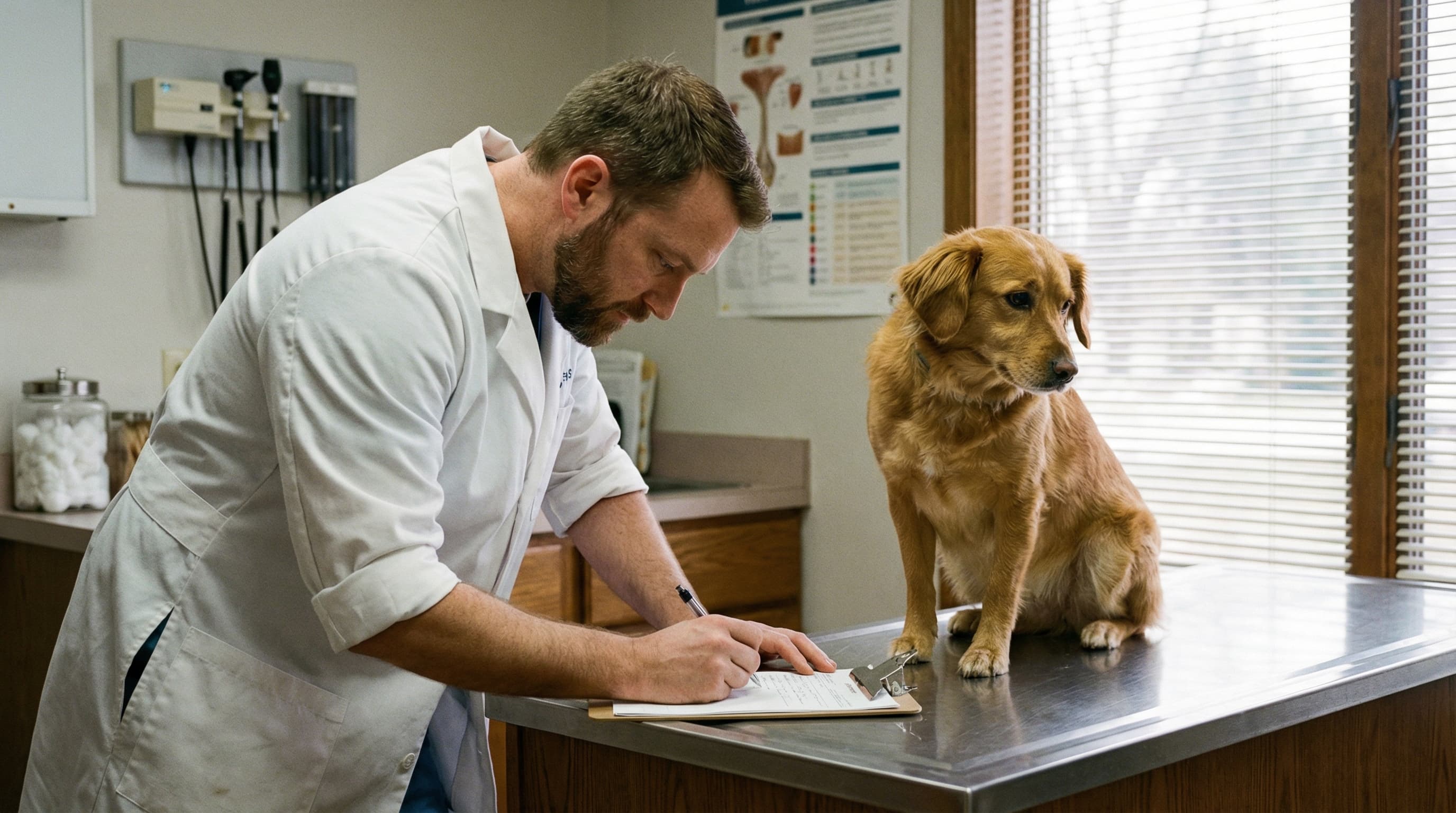
- A USDA-accredited vet — specifically accredited in the state where they're issuing the certificate. Accreditation in one state doesn't carry over to another. Find one near you.
- A completed health certificate — issued within your destination country's validity window. Most countries require it within 10 days of travel; check your specific destination's rules.
- Any required tests or vaccines done first — APHIS endorses after the certificate is complete, not before. If your destination requires a rabies titer test, it needs to be done and documented before the vet writes the certificate.
- Knowledge of what your destination needs — some countries require lab tests (not just vaccines), which affects the endorsement fee.
Critical
How to Get USDA Endorsement
Two paths: VEHCS (recommended) or mail. Your vet's setup determines which option is realistic.
Option 1: VEHCS (Recommended)
VEHCS — the Veterinary Export Health Certification System — is APHIS's online system where vets create, sign, and submit health certificates electronically. APHIS then endorses them through the same system.
Step 1: Confirm your vet uses VEHCS. Not all accredited vets are registered in the system. Ask before your appointment. If your vet isn't set up, either ask them to register (it takes a few days) or use the mail route.
Step 2: Your vet completes and submits the certificate in VEHCS. You don't do anything in the system. Your vet handles the entire submission on their end.
Step 3: APHIS endorses it. Processing runs Monday through Friday, 7:00 AM to 4:30 PM Central Time, excluding federal holidays. Same-day or next-day is common for complete submissions.
Step 4: Check the VEHCS Country Acceptance List. This is the step most people miss. Just because your vet submitted via VEHCS doesn't mean your destination accepts a digital endorsement. For the 48 countries that accept digital pet certificates — including Australia, Canada, Brazil, Costa Rica, and India — you get a fully digital certificate.
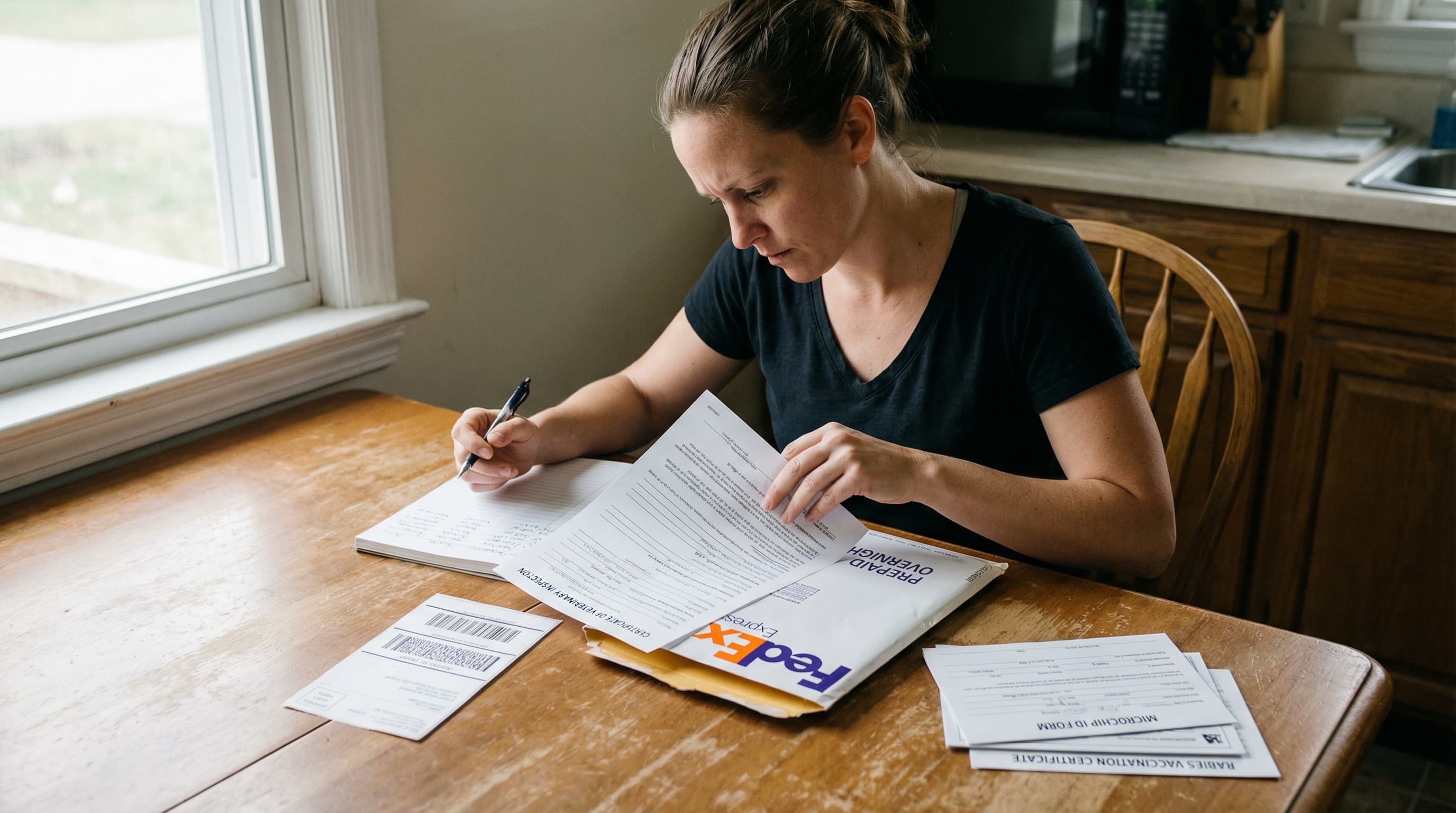
For every other country, APHIS prints the certificate, physically signs and embosses it, and mails it back to your vet. Your vet must upload a prepaid return shipping label before submitting.
Most major pet travel destinations are not on the acceptance list. The EU, UK, Japan, New Zealand, Singapore, and most of Asia require the physical paper. If you're traveling to Europe, expect to receive a mailed paper certificate even when using VEHCS.

Option 2: By Mail
-
Get the completed, signed health certificate from your vet. The vet cannot mail it directly to APHIS — you handle the submission.
-
Find your regional APHIS endorsement office. Look up your state on the APHIS endorsement offices page to get the mailing address. Call 1-844-820-2234 (Mon–Fri, 8:30 AM–5:00 PM ET) or email askvets@usda.gov for questions about your submission.
-
Prepare your package. Include the health certificate, supporting documents your destination requires (test results, rabies certificate), payment, and a prepaid return shipping label. APHIS strongly recommends overnight return shipping with Saturday delivery where available so the endorsed certificate arrives before your travel date.
-
Pay the endorsement fee. Check, money order, credit/debit card, or an APHIS user fee account. See the cost table below.
-
Mail everything overnight to your regional office. Use a trackable carrier. A submission arriving without all required documents will cause delays — APHIS won't process an incomplete package.
-
APHIS endorses and returns your certificate, typically within 1-3 business days after receiving a complete package. Add two days of shipping time (one each way) when planning your schedule.
VEHCS vs. Mail: Which to Use
| Situation | Use |
|---|---|
| Your vet is registered in VEHCS | VEHCS |
| Your destination is on the VEHCS acceptance list | VEHCS (get digital cert) |
| Your destination requires physical paper (EU, UK, Japan, etc.) | Either — VEHCS still faster even if physical cert is mailed back |
| Your vet isn't in VEHCS and won't register | |
| You're cutting it close on timing | VEHCS — fewer shipping days |
Cost Breakdown
The fee depends on whether your destination requires lab tests. Vaccines (rabies, DHPP, etc.) don't count as lab tests.
| Lab tests on certificate | 1 pet | Each additional pet |
|---|---|---|
| None | $101 | $101 total (flat fee) |
| 1–2 tests | $160 | +$10 per pet |
| 3–6 tests | $206 | +$18 per pet |
| 7+ tests | $275 | +$21 per pet |
ADA service dogs don't pay the fee. Emotional support animals do.
Mail route only: Add $30-50 for overnight return shipping each way.
Most pet owners traveling with one or two dogs or cats pay $101. If your destination requires a rabies titer test — Australia requires one for both dogs and cats — you'll pay $160.

Timeline
| Method | Processing | Add Time For |
|---|---|---|
| VEHCS + digital acceptance | Same/next business day | Nothing — certificate is digital |
| VEHCS + physical mail back | 1-3 business days | Shipping time for return delivery |
| Mail to APHIS | 1-3 business days after receipt | Overnight shipping both ways (~2 days) |
Plan with extra time. If APHIS receives your package on a Thursday and takes 3 business days, you won't have the endorsed certificate until the following Tuesday. Federal holidays add more time. For a travel date 2 weeks out, start the health certificate process 10-12 days before departure.
Common Mistakes
Watch OutAPHIS doesn't process submissions on federal holidays. If your travel falls around a holiday weekend, your 1-3 business day estimate could stretch to 5-6 calendar days. Check the federal holiday calendar when setting your timeline.
Who Doesn't Need USDA Endorsement
Mexico: Mexico has not required a health certificate for dogs and cats from the US since December 16, 2019. SENASICA inspects pets at the border OISA office — they check for signs of disease, fleas, ticks, and other parasites, and wounds, and require a clean carrier. No endorsed certificate needed. Note that airlines may still require one for their own policies, and dogs re-entering the US from Mexico face additional screwworm checks as of November 2024.
ADA service dogs: No endorsement fee at any destination. The process is the same — you just don't pay.
Most other international destinations — including all EU countries, the UK, Japan, Australia, New Zealand, and most of Asia — require an APHIS-endorsed health certificate. Check your destination's rules on the APHIS Pet Travel website before assuming endorsement applies.
FAQ
Your next step: Confirm your vet is USDA-accredited in your state and ask whether they use VEHCS. Book the health certificate appointment so the timing lines up with your travel date — the endorsement itself is fast, but the health certificate window is where most people run out of time.