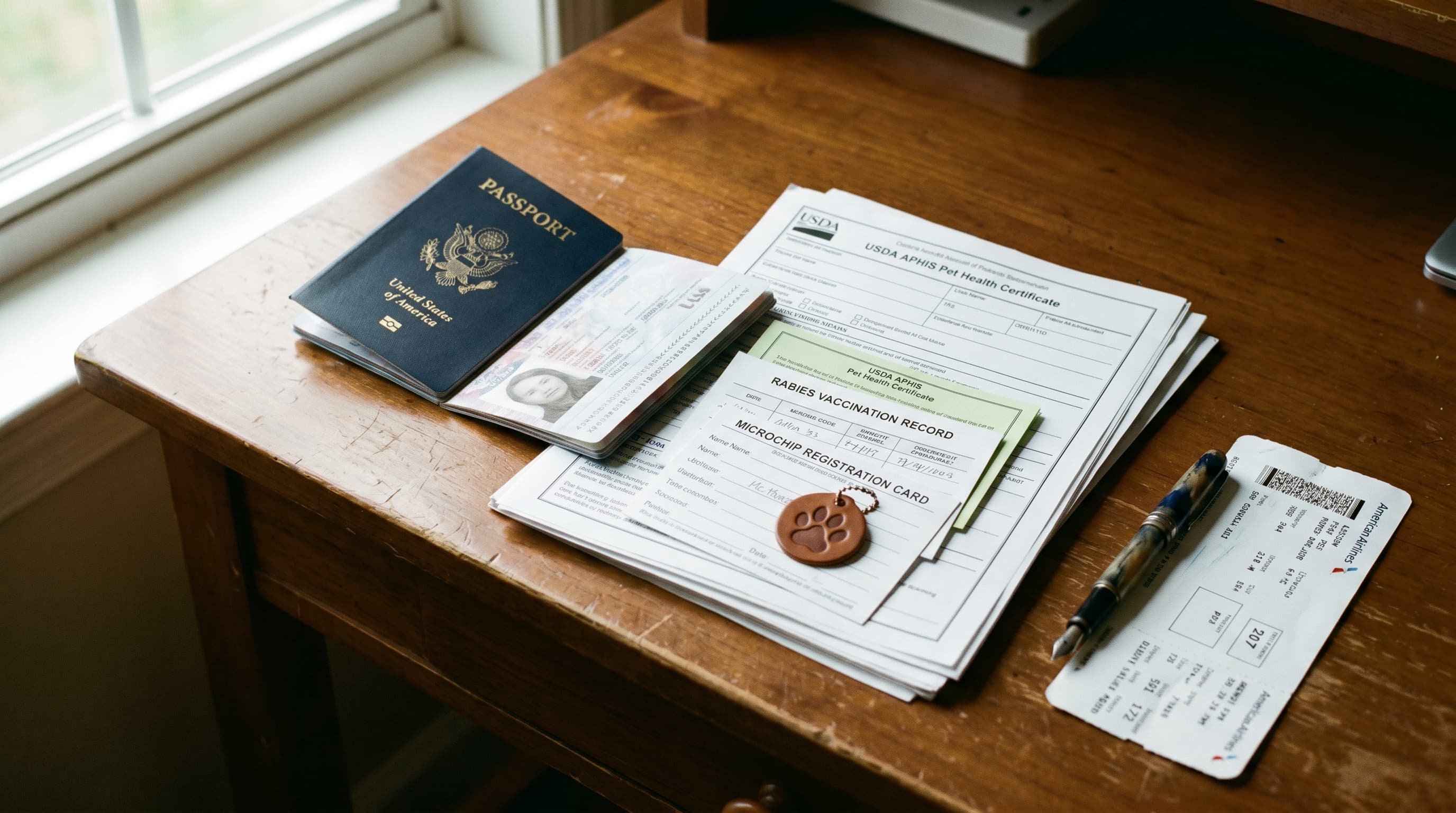
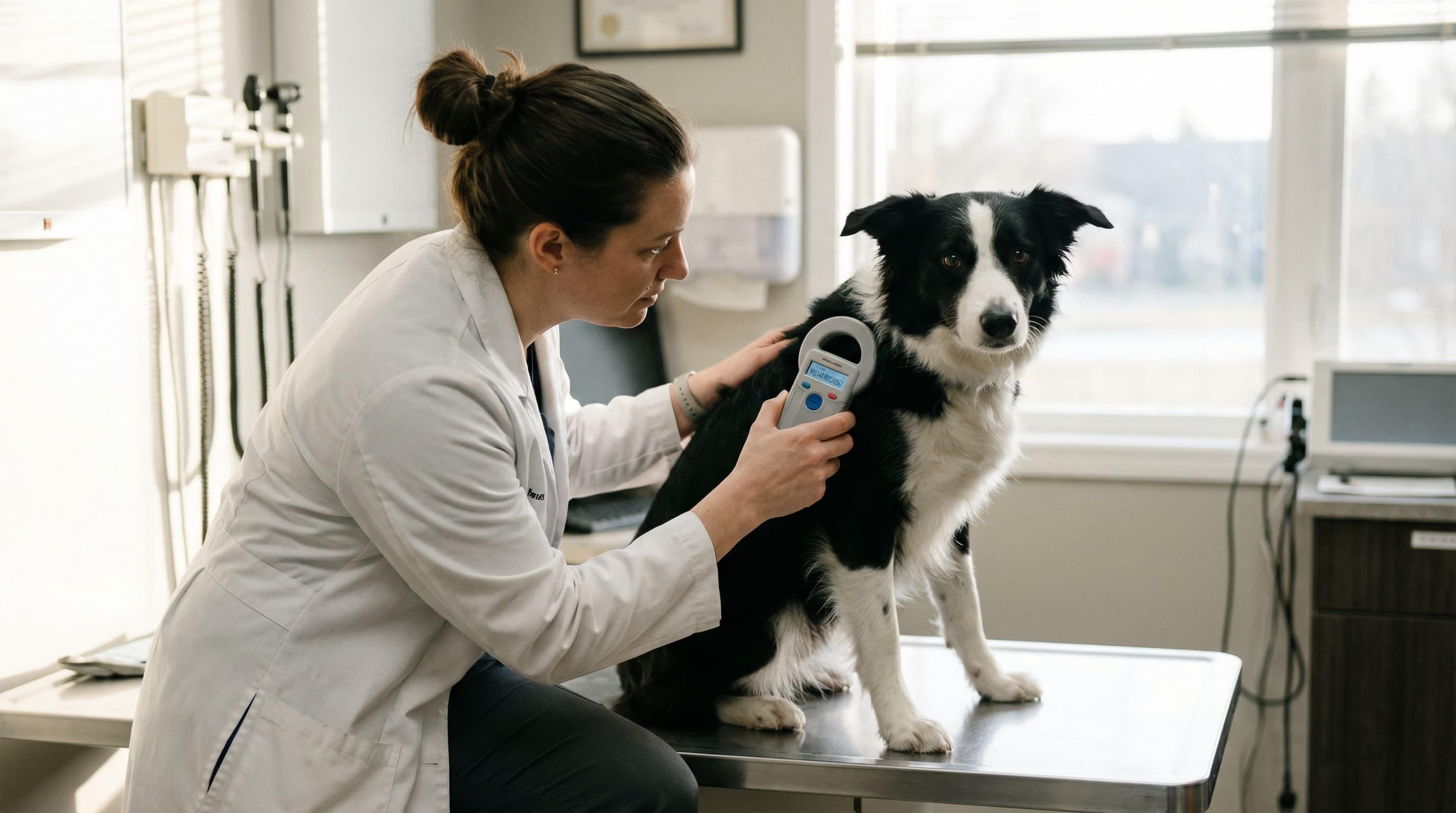
Chip before vaccine — not the other way around. If you vaccinate first and chip second, many countries won't count that vaccination toward the titer process. You'd need to revaccinate and restart the 30-day wait.
Rabies Titer Test for Pet Travel: 2026 Step-by-Step Guide
12 min readdocuments

Dr. Sarah Chen
Travel Veterinarian
Quick answer: The rabies titer test is a blood test that confirms your dog or cat has enough rabies antibodies to enter a rabies-controlled country. It costs $200–$400 total, takes 3–6 weeks to get results, and must be started at least 8 weeks before departure — much earlier for Japan or Australia.
What the Rabies Titer Test Is
The titer test measures rabies antibodies in your pet's blood. A passing score of ≥0.5 IU/mL proves your pet's immune system responded to the vaccine and can neutralize the rabies virus. Countries use this number to confirm your pet won't introduce rabies before allowing entry.
The specific test used for international travel is called the FAVN test (Fluorescent Antibody Virus Neutralization). It's the WOAH-approved standard for pet travel and the only test accepted by Japan, Australia, and most strict destinations. Kansas State University also offers the RFFIT test as an alternative for pets that can't receive standard rabies vaccines.
Both dogs and cats go through the same process. The threshold is the same. The labs are the same.
Which Countries Require the Rabies Titer Test
For US-based pets, the titer test is required by:
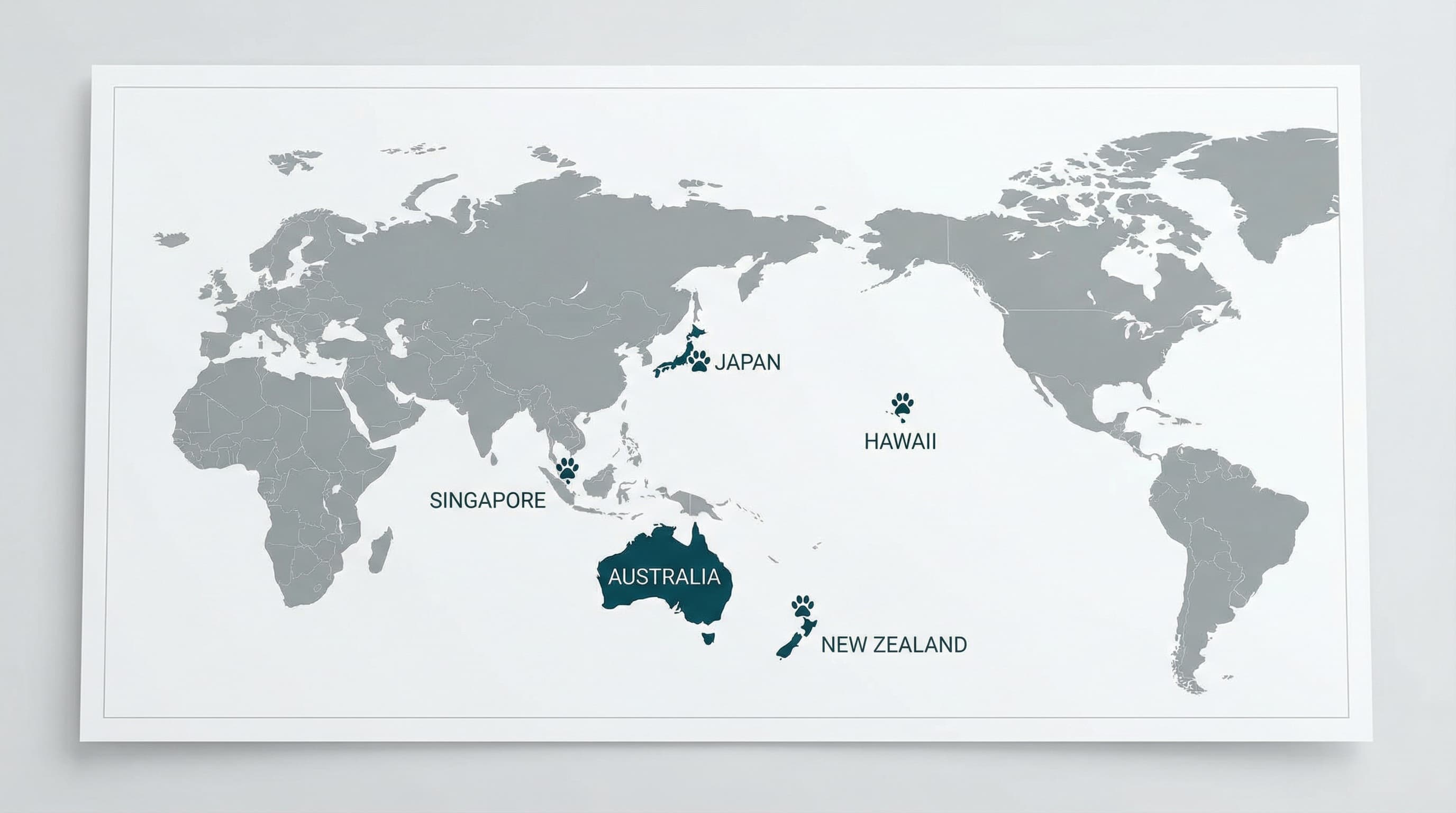
| Destination | Wait before entry | Titer valid for |
|---|---|---|
| Japan | 180 days from blood draw | 2 years* |
| Australia | 180 days continuous residency | 12 months |
| New Zealand | 180 days | 12 months |
| Singapore | Test ≥ 3 months before arrival | 6 months |
| Hawaii | 30 days min, 36 months max before arrival | 36 months |
| China | Varies by route | Varies |
| South Korea | Varies | Varies |
| Israel | Varies | Varies |
| UAE | Varies | Varies |
| Iceland | Varies | Varies |
*Japan: valid 2 years from blood draw date, provided rabies vaccinations stay active and never lapse.
Who skips this: US pets traveling directly to EU countries or the UK generally do not need a titer test. The US is classified as an approved country under both EU and UK pet import rules, so the titer requirement doesn't apply. Most guides that list "EU" as requiring a titer are describing rules for pets coming from high-risk countries, not from the US. If you're headed to France, Germany, or another EU country, check the health certificate requirements for that destination instead.
Before You Start: What Must Already Be in Place
You need three things before the blood draw:
Documents and Medical Prep
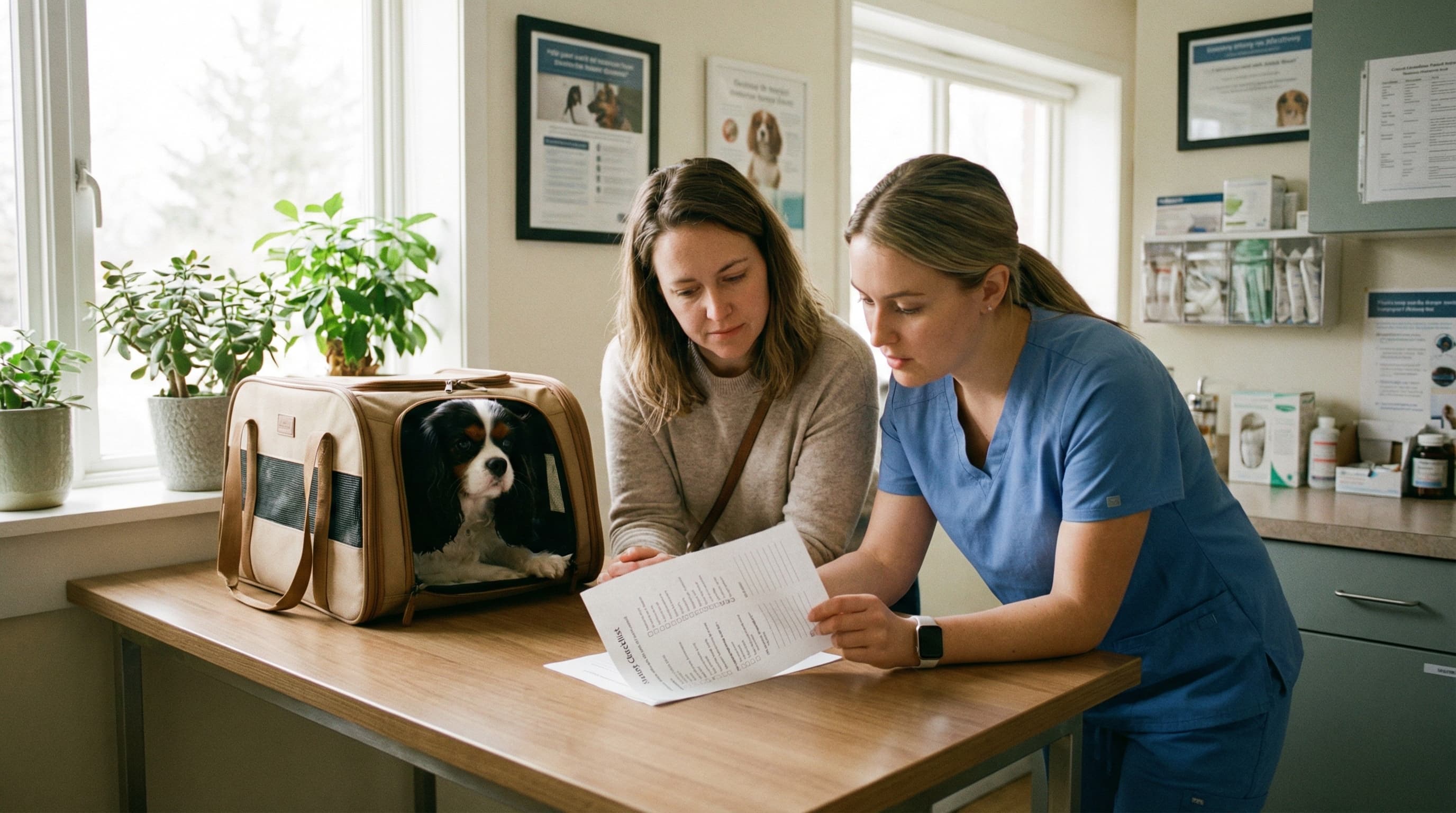
- ISO microchip: implant it before the rabies vaccine. Labs reject samples if the microchip number isn't on the submission form.
- Active rabies vaccination: given after the microchip is in place, using a brand approved in your destination country.
- USDA-accredited veterinarian: most destination countries require one. Not every vet holds this accreditation. Find one near you and call ahead to confirm before booking.
The order matters: chip first, vaccine second, blood draw third. Reversing the first two steps can invalidate the vaccination for some destinations and mean starting over.
Critical
How to Get the Rabies Titer Test, Step by Step
Step 1: Get your pet microchipped
Use a 15-digit ISO chip. If your pet is already chipped, confirm the number before the appointment: you'll need to put it on the lab submission form. Cost: $25–$75.
Step 2: Give or confirm the rabies vaccine
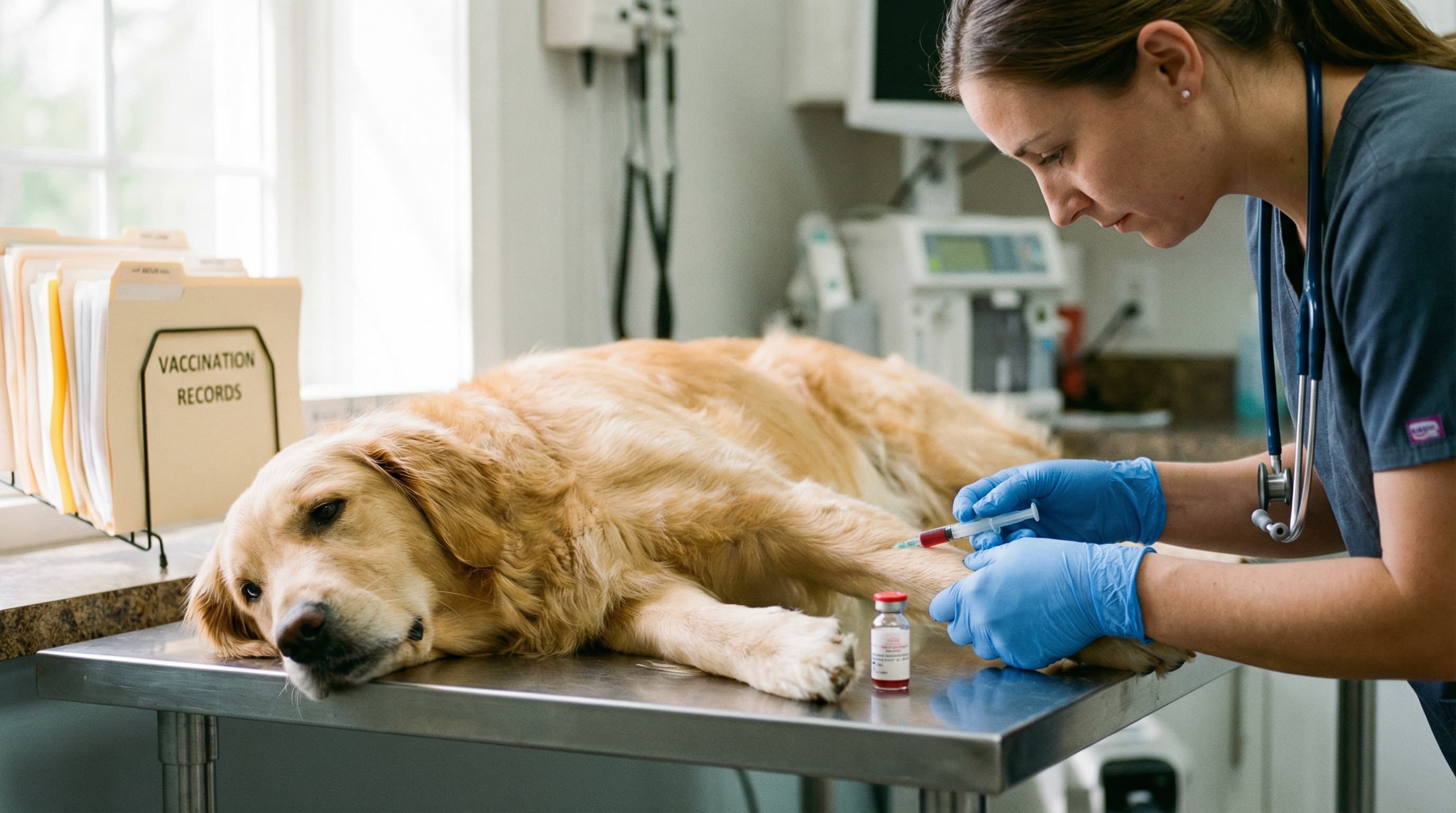
Your USDA-accredited vet administers an approved rabies vaccine. If your pet already has an active rabies vaccine on record and an ISO microchip, you may be able to skip to the blood draw, but check your destination's rules first. Japan requires two lifetime rabies vaccinations before the titer test.
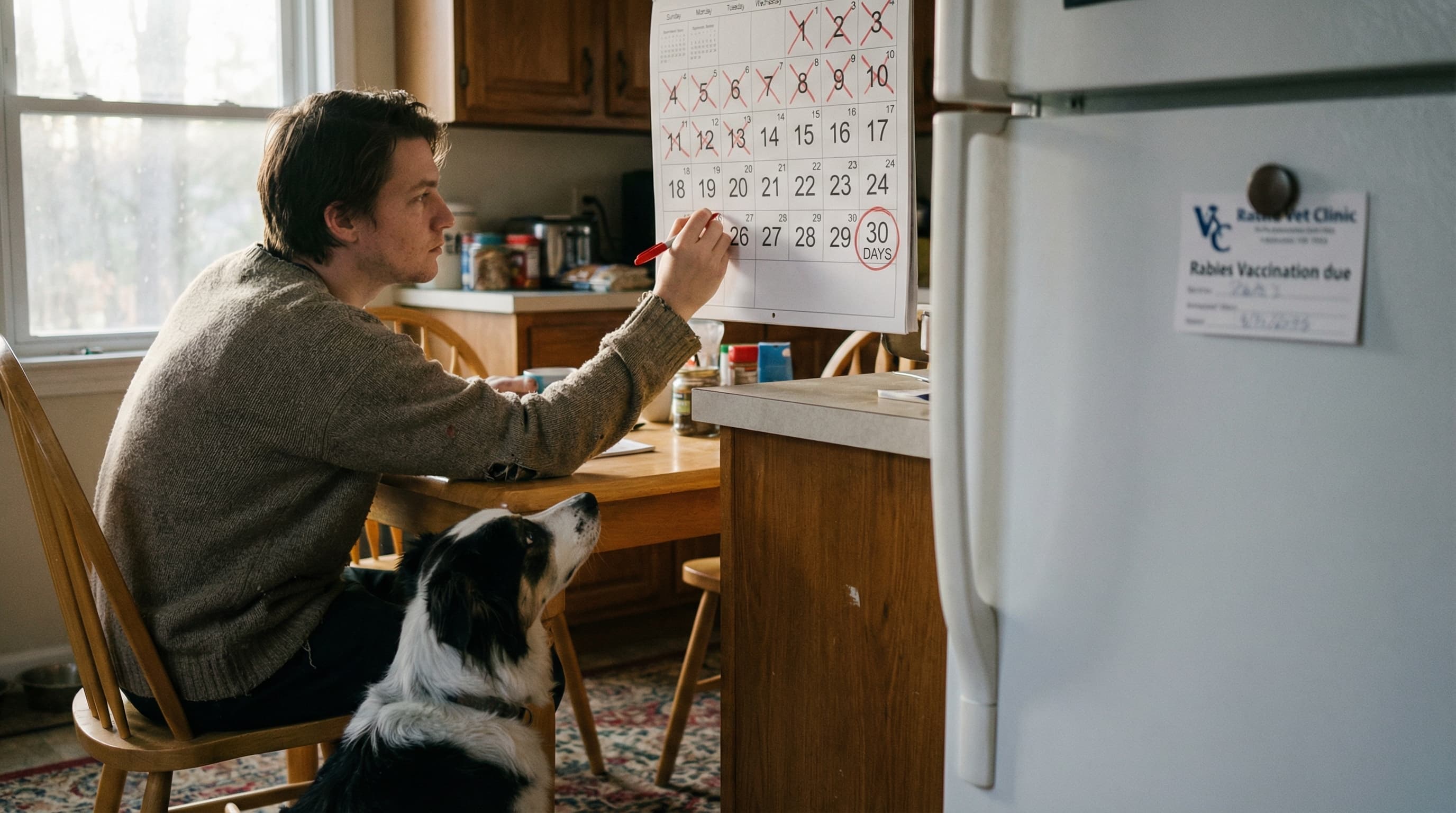
Step 3: Wait at least 30 days
Antibodies need time to develop after vaccination. Most destination countries require the blood draw to happen at least 30 days after the vaccine — and biologically, 21–30 days post-vaccination is when antibodies peak.
Step 4: Blood draw at your USDA-accredited vet
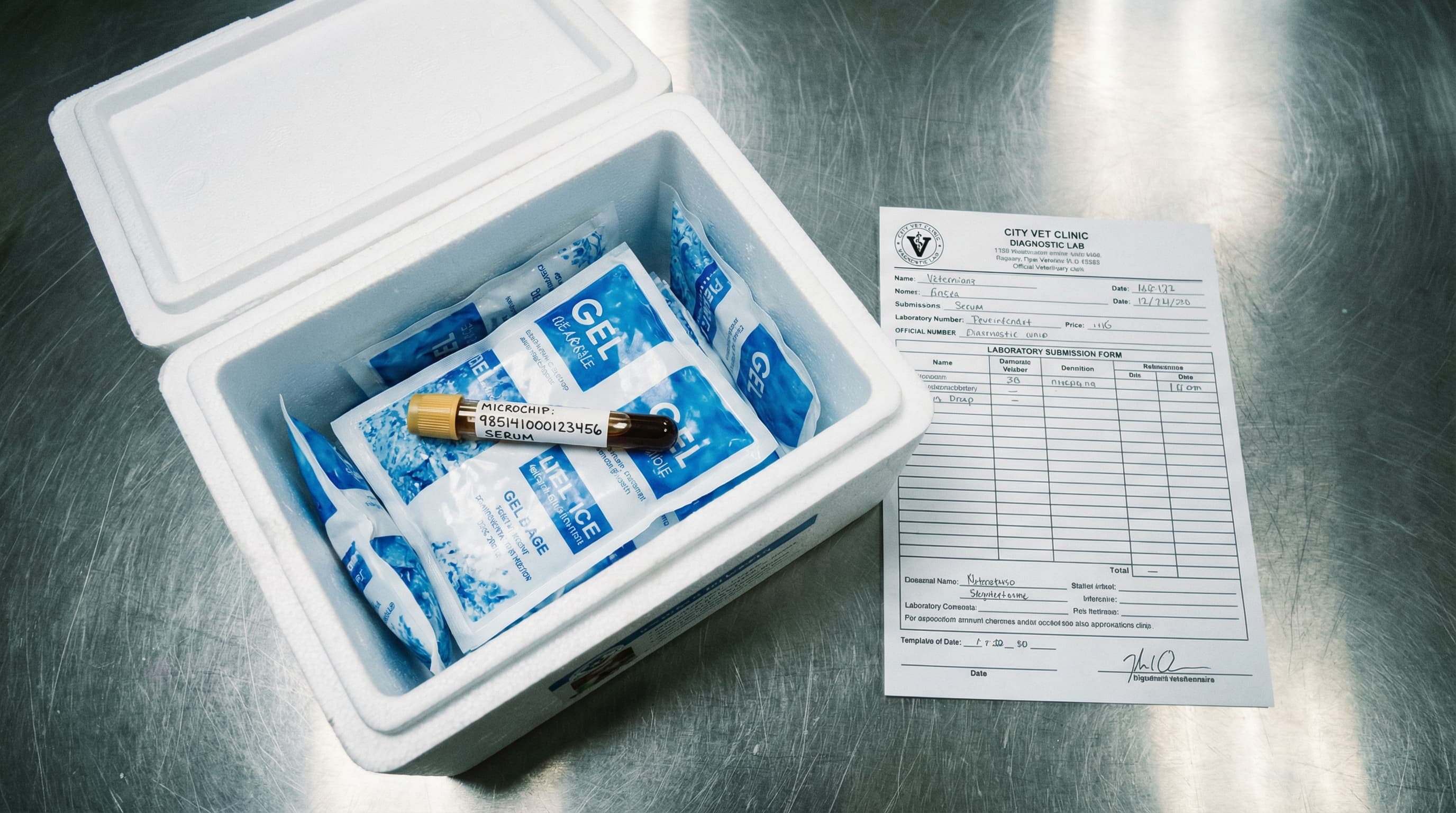
Your vet draws 0.5–2.0 mL of blood and separates the serum. Label the tube with your pet's microchip number — unlabeled samples get rejected because the lab can't match the blood to your pet without it. The submission form also needs the microchip number and your vet's signature; missing either field gets the whole submission cancelled.
Step 5: Ship the sample overnight to an approved lab
The clinic ships the serum overnight on ice to your chosen lab. The completed submission form goes with it. Turnaround time varies by lab: see the comparison table below.
Step 6: Get the result and check your score
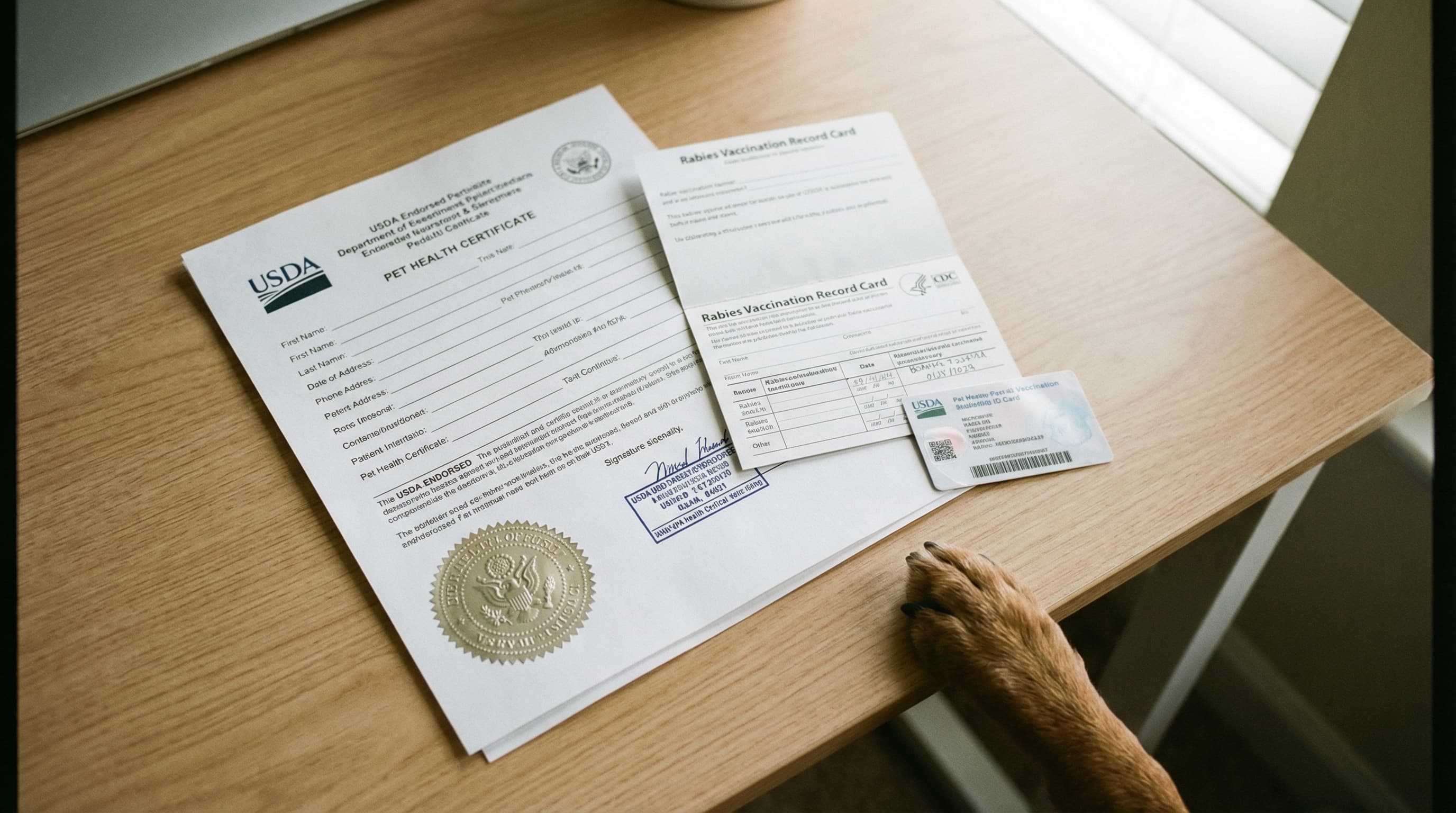
A score of ≥0.5 IU/mL is passing. The lab sends a report with your pet's name, microchip number, blood draw date, and numerical result on official letterhead.
Keep the original. Most countries want the original document at border entry, not a copy or digital version.
Australia only — one more step: Australia needs a signed and stamped RNATT declaration from an official government veterinarian, in addition to the lab report. Your USDA-accredited vet completes this using your lab results and submits it as part of the import permit application. This is separate from the health certificate and USDA endorsement — Australia requires all three.
Which Lab to Use
Three labs in the US accept FAVN samples for international pet travel:
| Lab | Cost* | Standard turnaround | Expedited | Japan accepted |
|---|---|---|---|---|
| Kansas State University (KSU) | ~$84 | 3–4 weeks | No | Yes |
| Auburn University | ~$84 | 3–4 weeks | 1–2 weeks | No |
| University of Missouri (MU) | $79 | 7–10 business days | No | No |
*MU price confirmed on official site. KSU and Auburn prices from reported costs: check official sites for current rates.
Going to Japan: Use KSU. Japan does not accept results from Auburn or Missouri. This is a well-documented trap — Auburn is popular because of its expedited service, but for Japan it's the wrong lab entirely. Results from the wrong lab can't be used; you'd need to retest through KSU.
Going to Australia, New Zealand, or most other destinations: Any of the three works. MU's 7–10 business day turnaround is significantly faster than KSU's 3–4 weeks at a lower cost.
Need results fast (not Japan): Auburn's 1–2 week expedited service is the only option in the US.
All three labs are CDC-approved and USDA-recognized. Results must come directly from the testing lab: CDC rules prohibit using results forwarded through a third-party service.
Cost Breakdown
| Item | Cost range |
|---|---|
| Microchip (if needed) | $25–$75 |
| Vet visit + blood draw | $75–$175 |
| Lab fee (FAVN test) | $79–$84 |
| Overnight shipping to lab | $30–$60 |
| Total | $200–$400 |
If your pet fails and needs revaccination plus a second test, add another $200–$300 and 6–10 weeks to the timeline.
Australia adds one more line item: the RNATT declaration from an official government veterinarian. Ask your vet whether they can prepare this document before you assume they can.
Timeline
Week 1: Microchip implanted and rabies vaccine given at your USDA-accredited vet. The chip must be in place before the vaccine.
Week 5+: Blood draw: wait at least 30 days after the vaccine.
Weeks 6–9: Results arrive. MU: 7–10 business days. KSU/Auburn: 3–4 weeks.
After results: Hawaii needs 30 days from the blood draw date. Singapore needs 3 months.
Japan and Australia: 180 days from blood draw date before entry. Start the whole process 8 months before your travel date.
What Happens If Your Pet Fails
A score below 0.5 IU/mL means the test failed. Your vet gives a booster vaccination, waits at least 14 days, then draws blood again. The second test goes through the same process.
Most failures come from one of two causes: blood drawn too soon after vaccination (before antibodies peaked), or a weak initial immune response to the vaccine. The second test passes most of the time after revaccination.
Watch OutFor Japan and Australia, a failed test doesn't just delay your timeline: it can reset the 180-day clock entirely. If your pet needs revaccination, the new titer draw date becomes day zero. A summer travel date you've been building toward can easily push to the following year.
Common Mistakes
FAQ
Your next step: Book the microchip and vaccine appointment. For Japan and Australia, the 180-day window means that appointment needs to happen at least 8 months before departure — everything else follows from there.