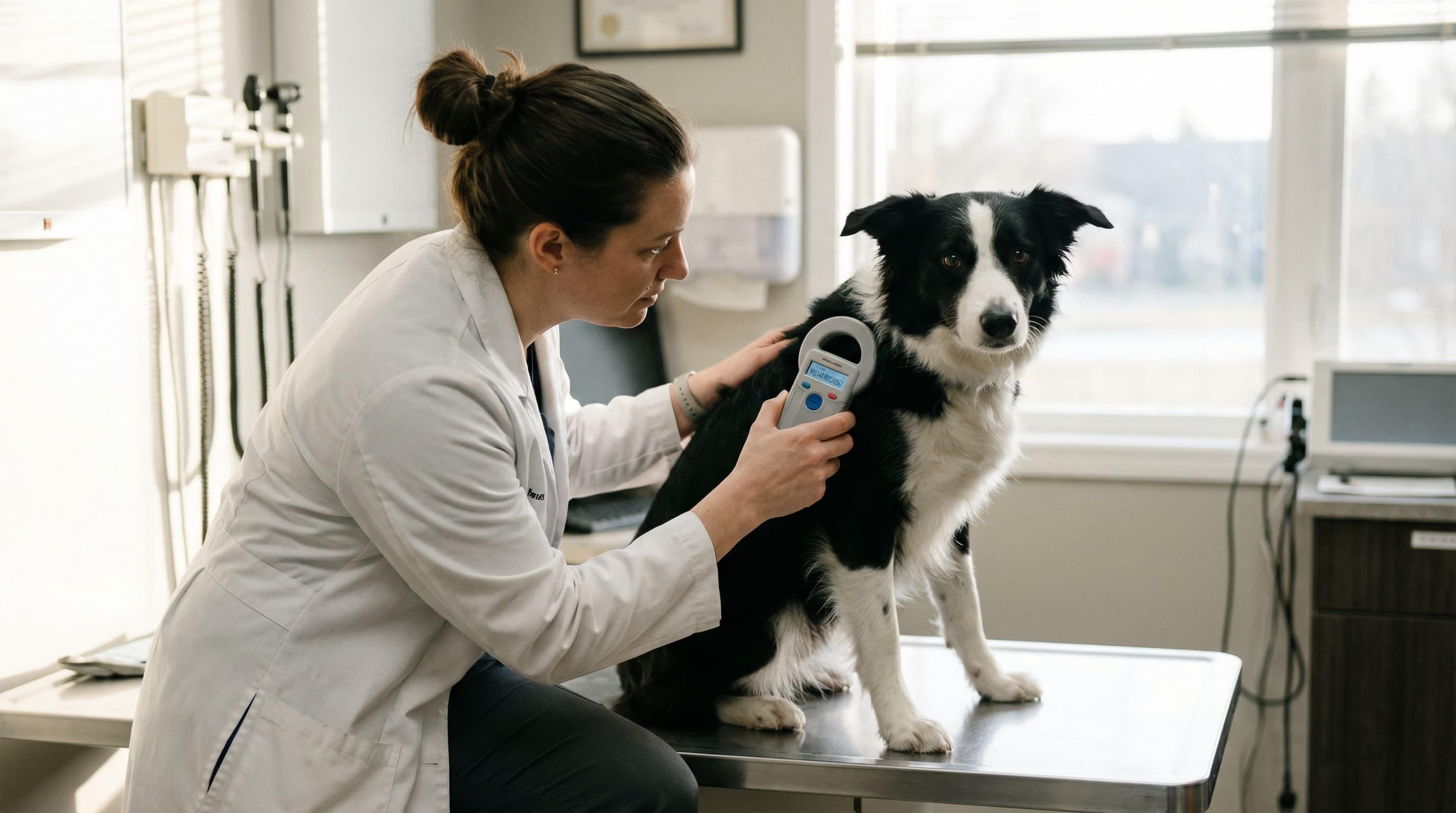
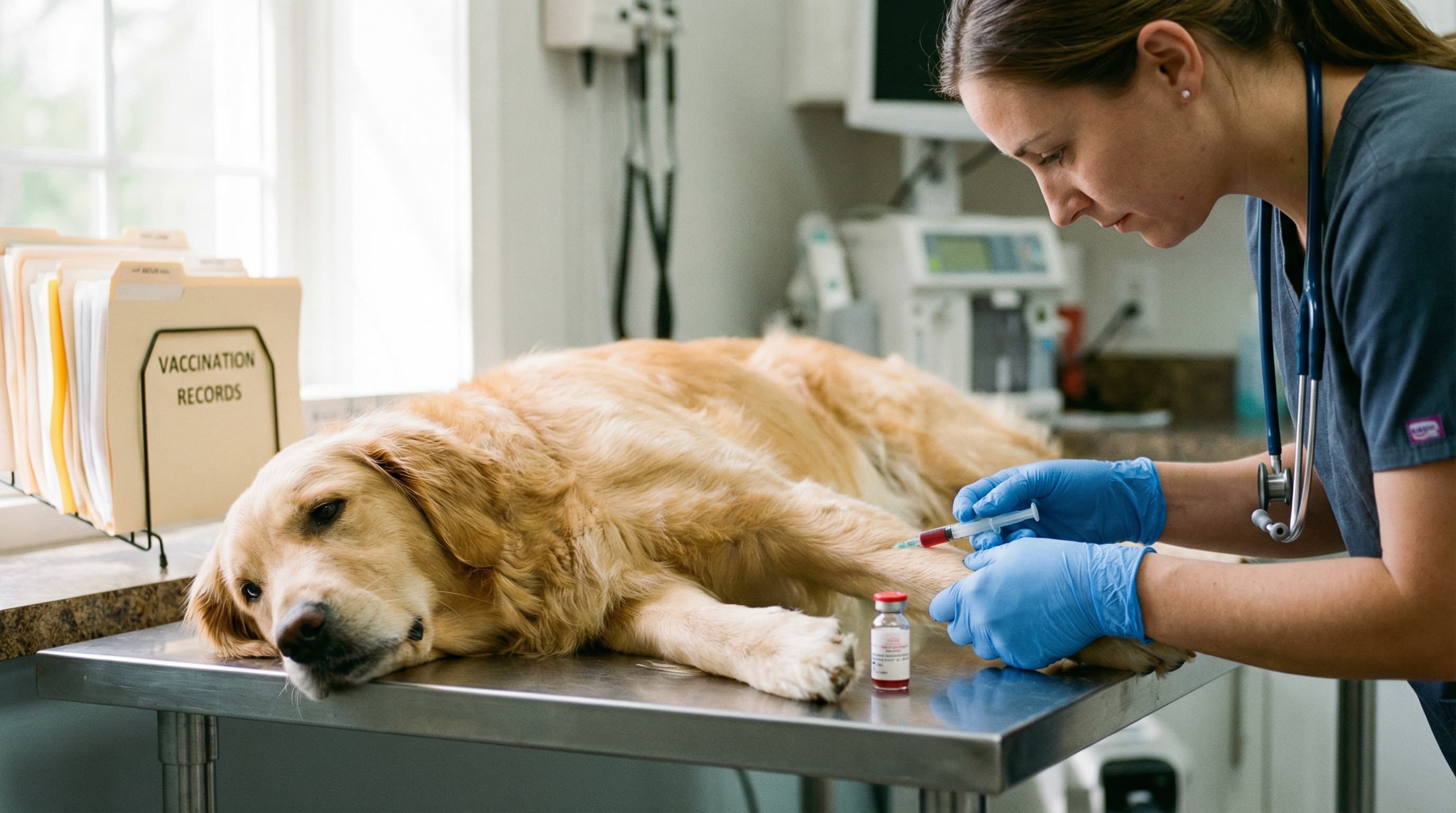
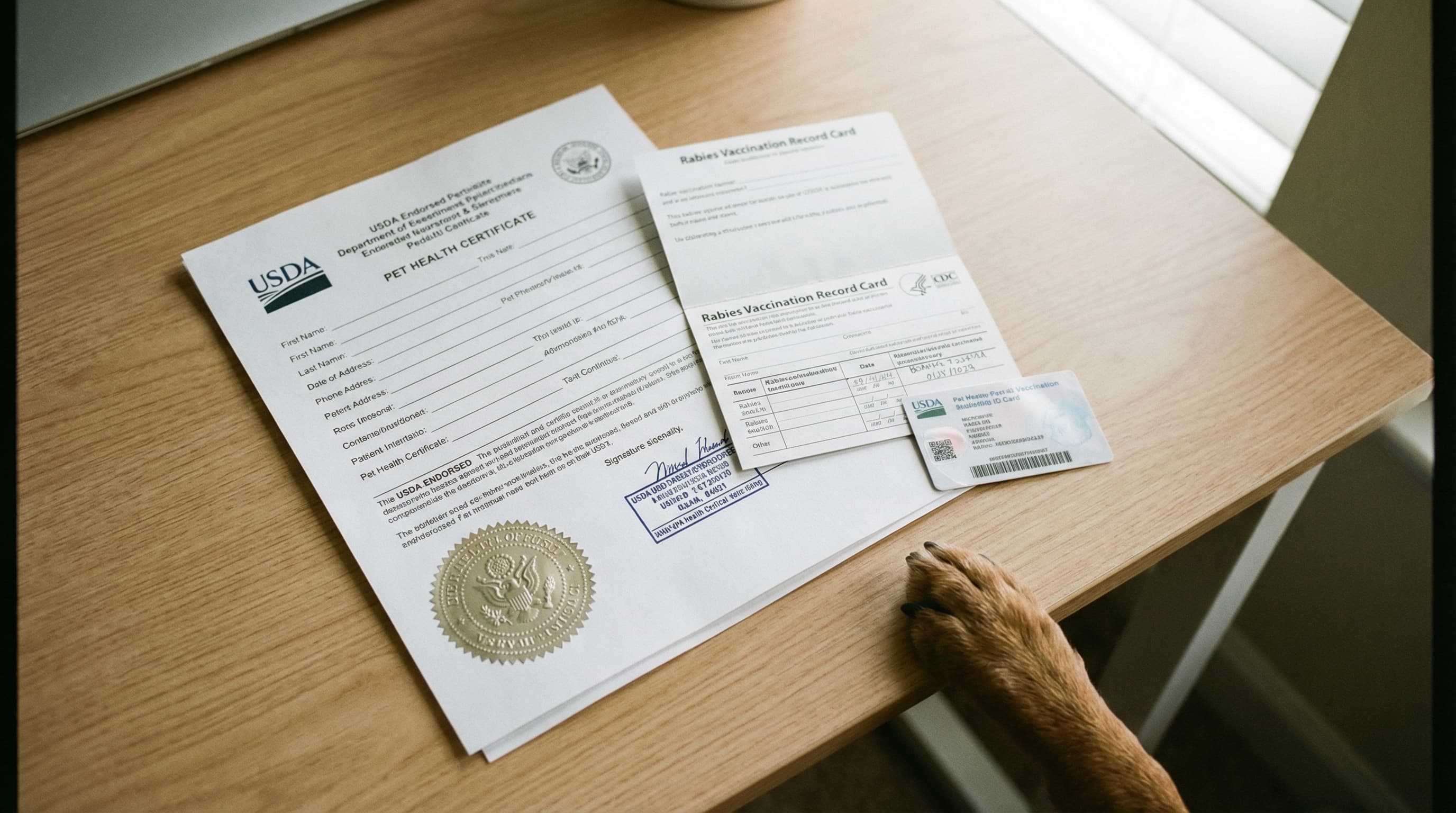
Chip before vaccination — always. If your dog's chip was implanted after its rabies shot, that vaccination is invalid for US import. Get a new shot after the chip is in, wait the required time, then travel.

CDC Dog Import Form 2026: What It Is and How to Submit
12 min readdocuments

Lisa Carter
International Pet Relocator
Quick answer: Every dog entering the US — including US dogs returning home — needs a CDC Dog Import Form receipt: free, takes 5 minutes, receipt arrives by email. Whether you need anything else depends on where your dog has been in the past 6 months — cats don't need this form at all.
What the CDC Dog Import Form Is
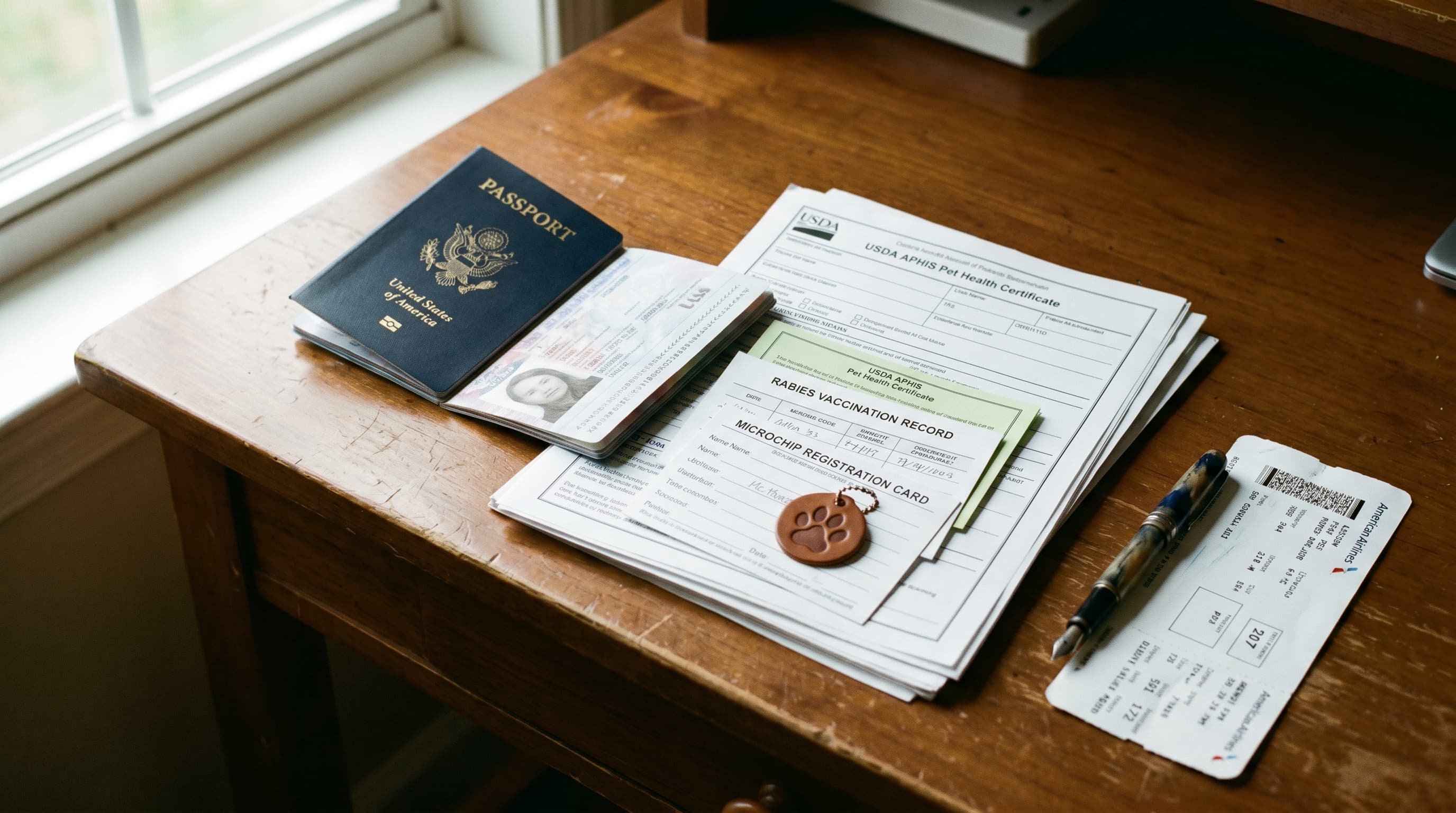
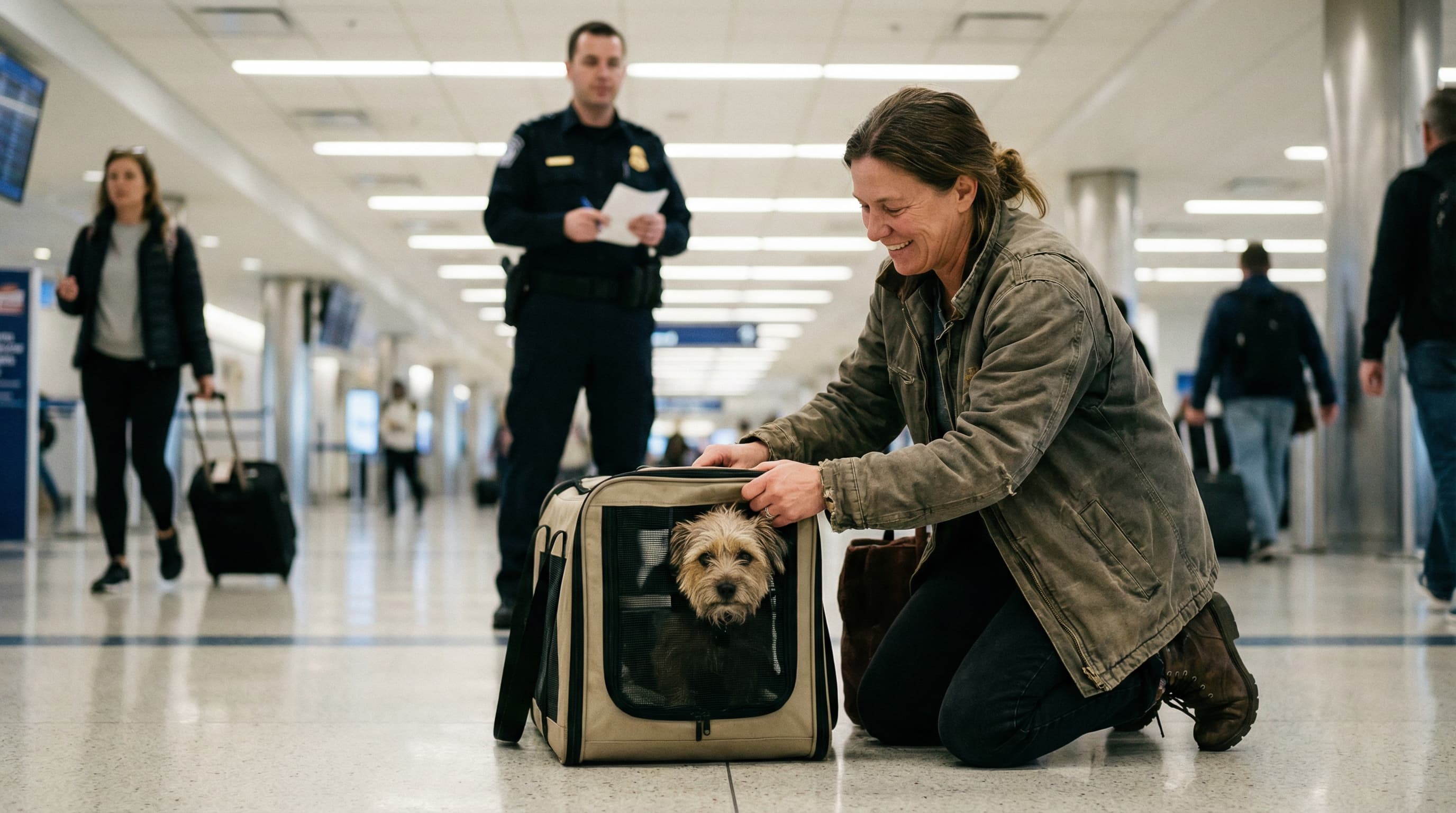
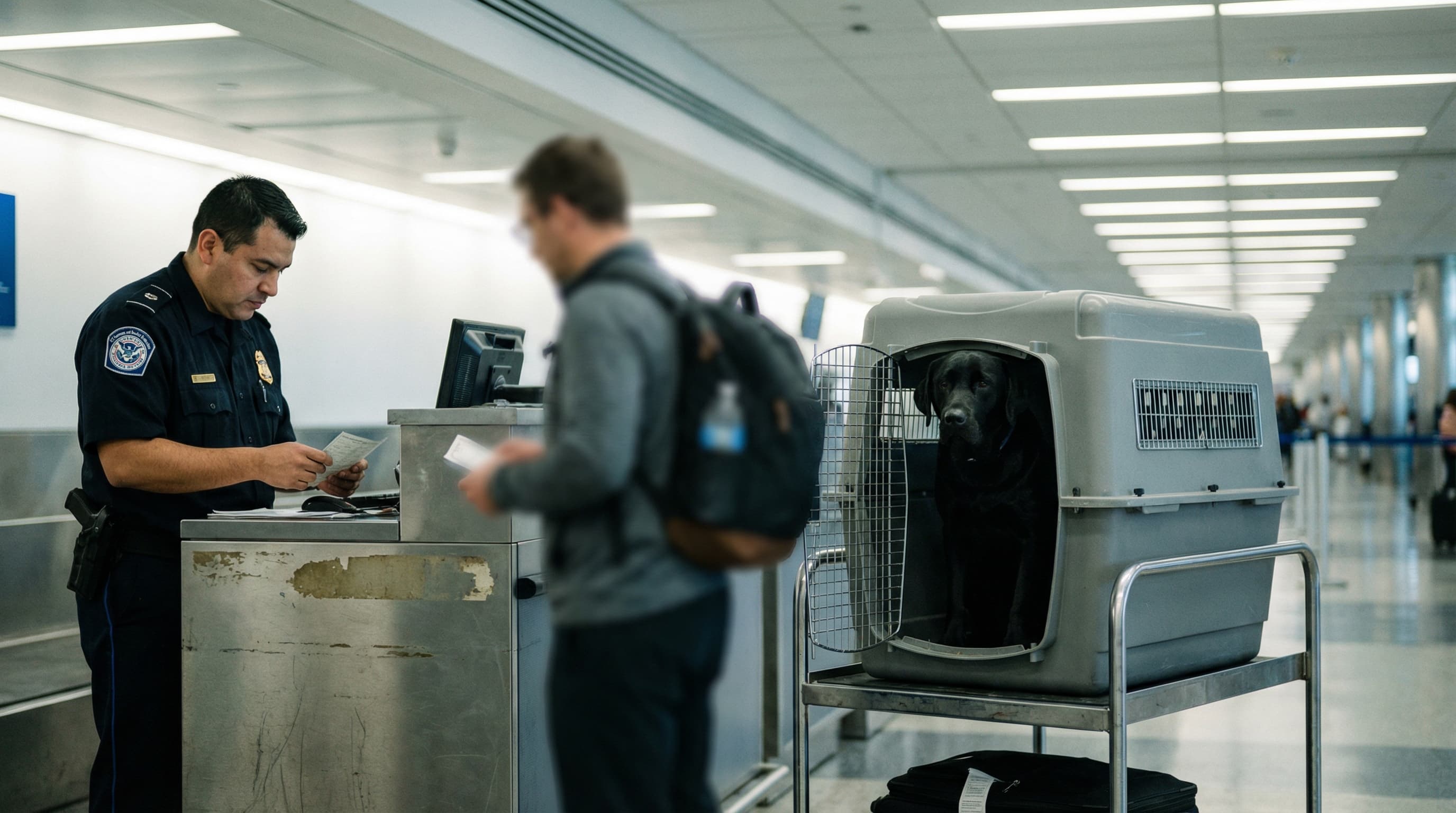
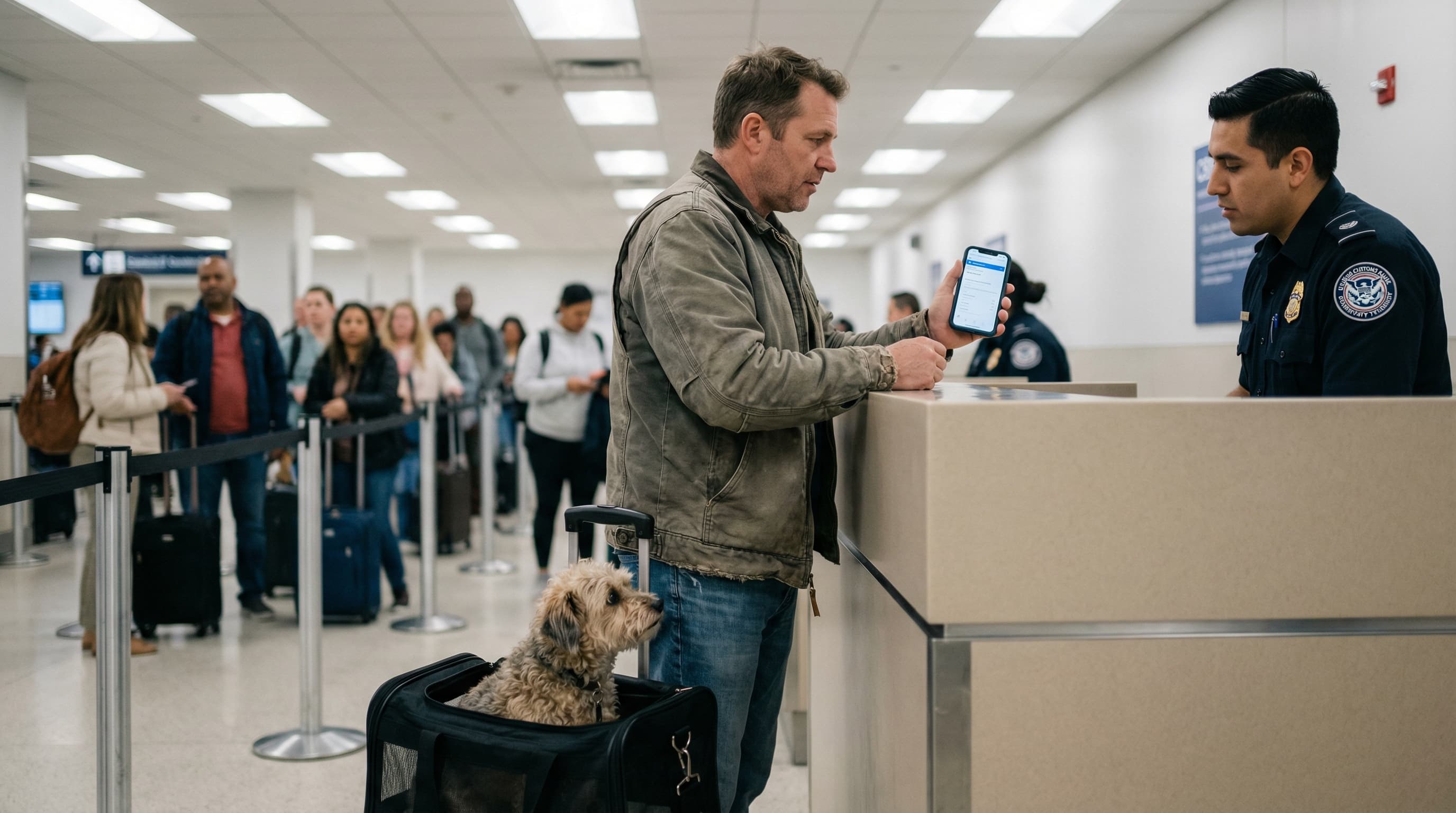
The CDC Dog Import Form is an online questionnaire that the CDC uses to track dogs entering the US. You submit it before travel, get a receipt by email, and show that receipt to US Customs and Border Protection when you arrive.
It covers the basics: who you are, your dog's description, where you're traveling from, and whether your dog has been in a country the CDC considers high-risk for dog rabies.
This form is dog-only. Cats have no equivalent federal form. If you're traveling with a cat, skip this article.
What Every Dog Needs
Before getting into which path applies, three things are universal — every dog needs all of them:
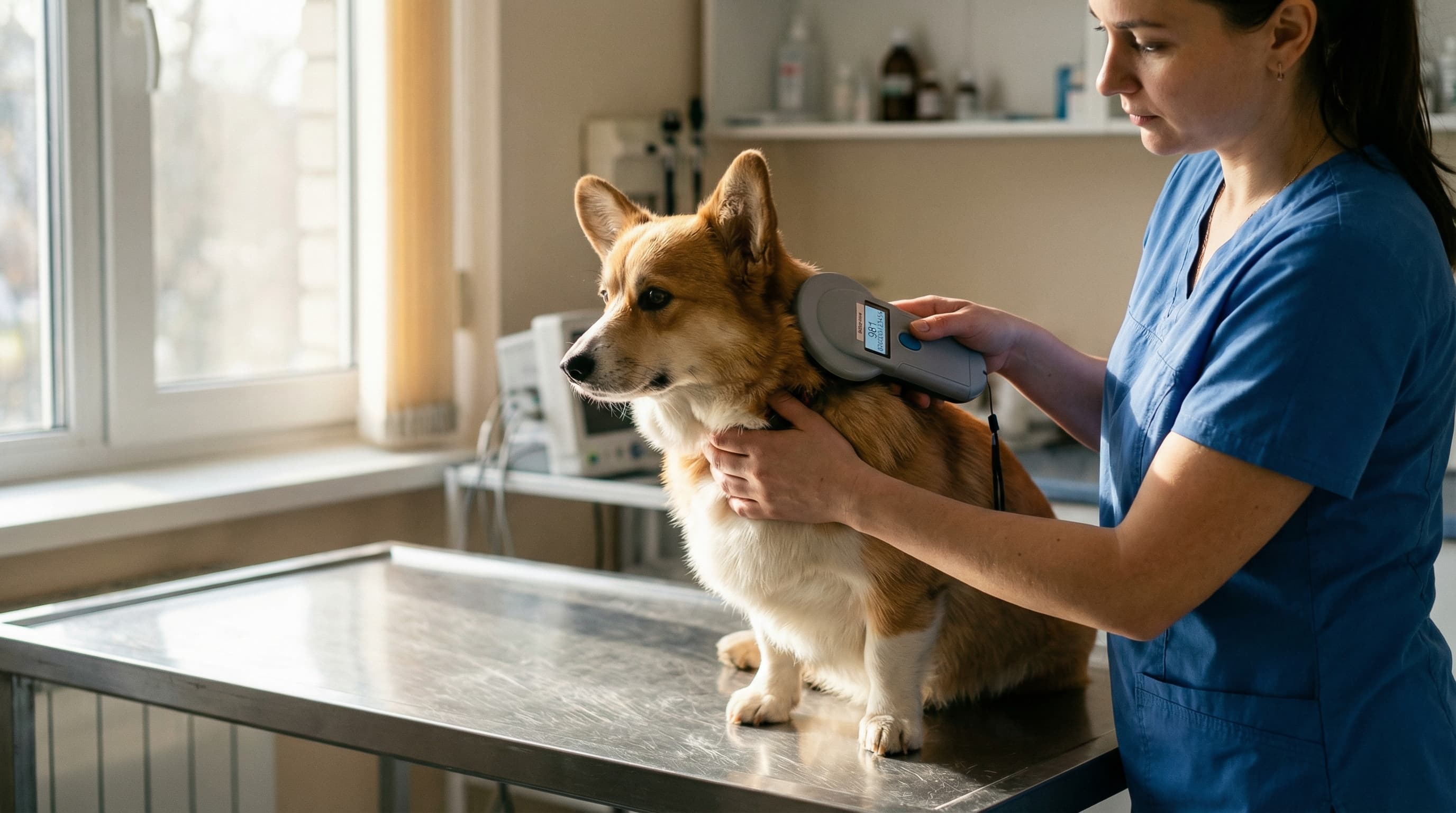
- A detectable microchip. Must be readable by a universal scanner. If the scanner can't read it at the port of entry, your dog will be denied entry and returned to the last country of departure at your expense.
- At least 6 months old at the time of entry. No exceptions.
- Appears healthy on arrival.
Critical
Which Path Applies to Your Dog
Everything else depends on where your dog has been in the last 6 months, not where it lives.
The CDC maintains a list of high-risk countries for dog rabies. If your country isn't on that list, it's low-risk. Most of Western Europe, Canada, Australia, Japan, New Zealand, and the UK are low-risk. Most of Africa, South and Southeast Asia, Central and South America, the Middle East, the Caribbean, and Eastern Europe are high-risk (around 110+ countries in total).
| Your dog's situation | What you need |
|---|---|
| Has only been in low-risk countries in the past 6 months | CDC form receipt only |
| Has been in a high-risk country — vaccinated in the US before travel | CDC form + Certification of US-issued Rabies Vaccination |
| Has been in a high-risk country — vaccinated abroad | CDC form + foreign vaccination cert + titer test + ACF airport |
Path 1: Low-Risk Country Dog
If your dog has only been in low-risk countries in the past 6 months, the CDC form receipt is the only document you need (plus the universal microchip, age, and health requirements).
How to complete the form:
- Go to the CDC Dog Import Form. It's free.
- Section A — your details: name, date of birth, one form of ID (passport number, driver's license number, or air waybill), email address, and phone number. Double-check the email — the receipt goes there.
- Section B — your dog's details: name, age, sex, breed, color and markings, and the purpose of import (personal pet, commercial, service animal, government, or research/exhibition).
- Section C — travel details: how you're traveling (air, land, or sea), the country your dog is departing from, expected arrival date, and port of entry. The departure country must match where your dog actually leaves from — not where it lives. If your dog has been in Mexico and you're departing from Mexico, select Mexico.
- Section D — signature: type your full name and today's date in DD/MM/YYYY format.
- Submit. You'll get a confirmation email first; click the link to verify your address. The receipt arrives within about 15 minutes. Check your spam folder.
The receipt is valid for 6 months and multiple entries from the same country, as long as your dog doesn't visit a high-risk country or a different low-risk country in that time. If your dog travels to a different low-risk country, you need a new form listing the new departure country.

Path 2: US-Vaccinated Dog from a High-Risk Country
If your dog lives in the US, was vaccinated here, and then traveled to a high-risk country, you need two documents to return:
- CDC Dog Import Form receipt — same process as Path 1, but answer "yes" when asked if your dog has been in a high-risk country. Crucial: You must upload a clear photo of your dog (face and body) to the form. If your dog is under 1 year old, the photo MUST be taken within 15 days of your arrival in the US.
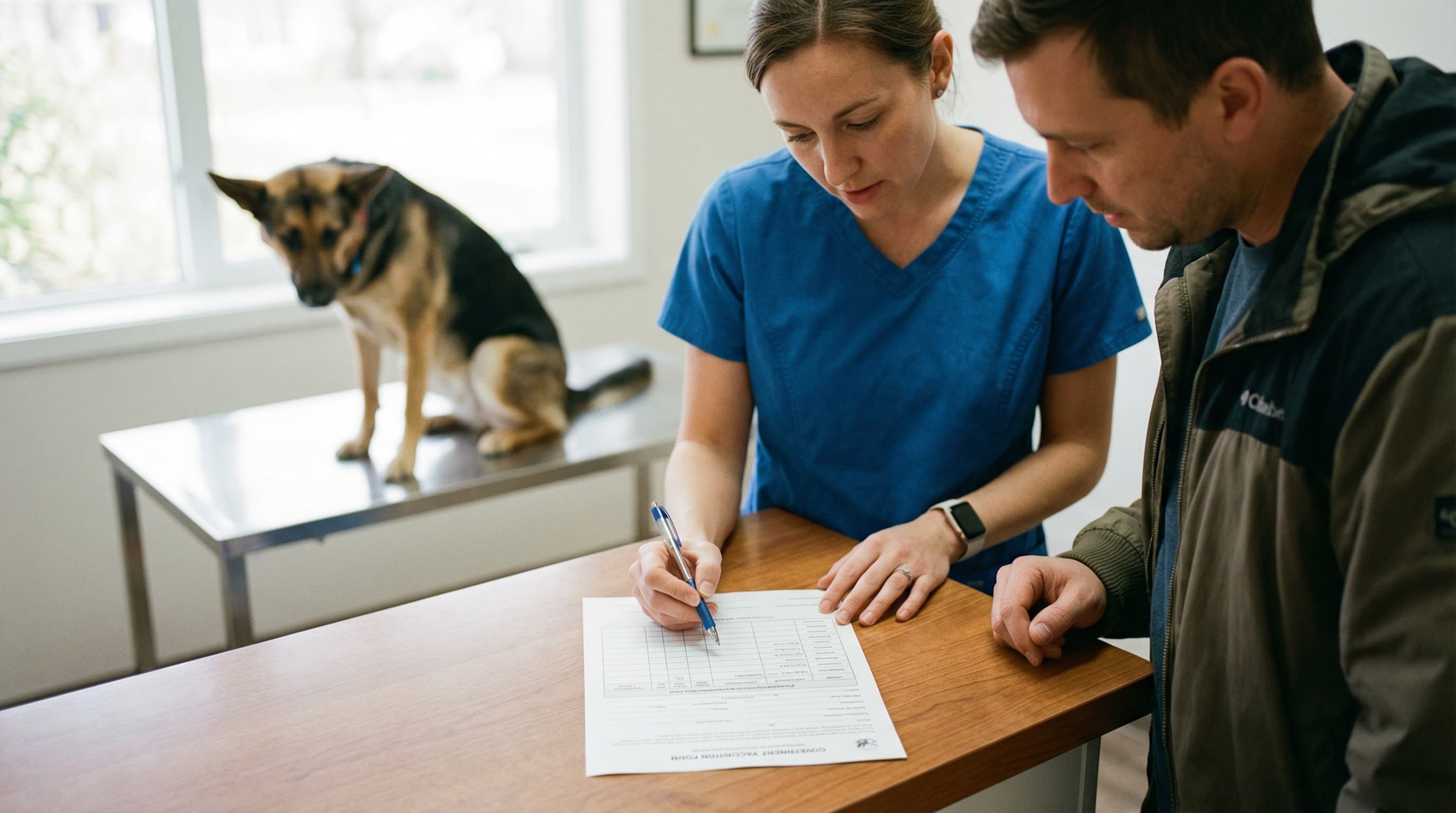
- Certification of US-issued Rabies Vaccination — this is a specific CDC form, not a regular rabies certificate. Your USDA-accredited vet completes it, and USDA must endorse it before your dog leaves the US. (The endorsement process is the same as getting a USDA endorsement for any other health document.)
As of August 1, 2025, the old USDA-endorsed export health certificate is no longer accepted for new departures. Certificates issued on or before July 31, 2025 remain valid for their original trip. For any new travel after that date, only the Certification of US-issued Rabies Vaccination form works for re-entry.
Timing constraint: Your dog must be at least 12 weeks (84 days) old to receive its first rabies vaccination. After that first shot, you must wait at least 28 days before re-entering the US. Plan travel dates around that window. And the chip must be in before the shot.
The form must be completed and USDA-endorsed before your dog departs — not when you return. Build the endorsement timeline into your pre-departure planning.
Path 3: Foreign-Vaccinated Dog from a High-Risk Country
This is the most complex path. It applies to dogs that were vaccinated abroad (not in the US) and have been in a high-risk country. Allow at least 60 days before travel to start.
You need four things:
- CDC Dog Import Form receipt — answer "yes" to the high-risk country question and include your dog's microchip number in Section B. Every dog on this path requires a photo upload (.jpg/.jpeg/.png, max 10 MB) showing their face and body. If your dog is under 1 year old, the photo MUST be taken within 15 days of arrival.
- Certification of Foreign Rabies Vaccination and Microchip — completed by a licensed vet in the country of origin, then endorsed by an official government veterinarian. Valid for a single entry within 30 days after signing. Must be a printed paper copy — not digital.
- Rabies serology titer test from a CDC-approved laboratory — blood drawn at least 30 days after your dog's first valid rabies vaccination, and at least 28 days before entry to the US. Passing results last your dog's lifetime, as long as the vaccination never lapses and the lab remains CDC-approved at the time of entry. If the vaccination lapses, the titer resets and you need to start over.
- A reservation at a CDC-registered Animal Care Facility (ACF) — if your dog doesn't have a passing titer, a 28-day quarantine at an ACF is the alternative.
Your dog must arrive at one of six designated airports:
| Airport | Facility |
|---|---|
| Atlanta (ATL) | Dandie Scottie Kennel |
| Los Angeles (LAX) | Kennel Club LAX / Rue's Kennels |
| Miami (MIA) | Pet Limo |
| New York JFK | The ARK Pet Oasis |
| Washington Dulles (IAD) | Pender Pet Retreat |
| Philadelphia (PHL) | Gateway Animal Care Center |
No domestic connections are allowed until after the ACF inspection. Plan your routing accordingly: if you're heading to Chicago, you still fly into one of these six airports first.
All ACF costs are your responsibility. Contact the facility for current pricing.
Watch OutService dogs meeting the federal definition (14 CFR 382.3) are partially exempt — they can skip the ACF entirely if arriving by sea, or use any ACF airport if arriving by air. Emotional support animals don't qualify for this exemption. Make arrangements with the ACF in advance.
Mexico-Specific: Screwworm Certificate
If your dog is entering the US from Mexico, you need one more document on top of your CDC path above: a screwworm-free certificate.
As of November 22, 2024, Mexico is considered a screwworm-affected country. The certificate must state that your dog was inspected within 5 days before departure and found free of screwworm — or was treated until clear if infestation was found.
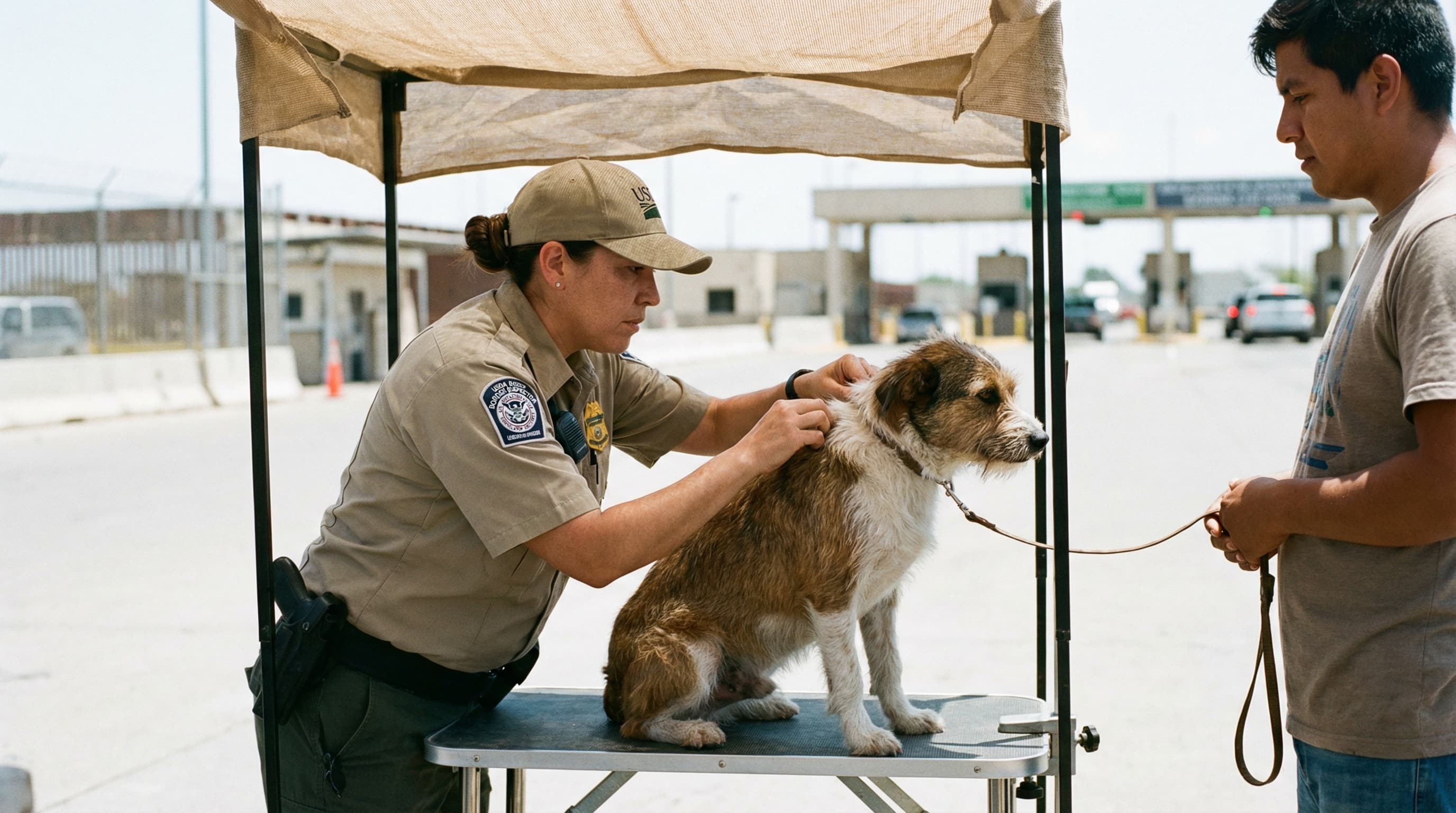
In Mexico specifically, a clinical veterinarian authorized under the MVRA program can issue the certificate (not only a government-salaried vet). Your dog will also be physically inspected at the port of entry when you return.
There's no required APHIS form — a standalone certificate or one incorporated into a Mexican export health certificate both work.
Cost Breakdown
| Item | Cost |
|---|---|
| CDC Dog Import Form | Free |
| Microchip (if needed) | $25–$75 |
| Rabies vaccination (if needed) | $15–$40 |
| Certification of US-issued Rabies Vaccination (vet + USDA endorsement) | $150–$300+ |
| Rabies titer test — CDC-approved lab (Path 3) | $150–$300 |
| ACF facility fees (Path 3) | Varies — contact facility |
Timeline
| Path | Start | Key Deadlines |
|---|---|---|
| Path 1 (low-risk) | Day before travel | Form receipt valid 6 months |
| Path 2 (US-vaccinated, high-risk) | 4–6 weeks before departure | Chip before shot; 28-day wait after first vaccine; Certification endorsed before departure |
| Path 3 (foreign-vaccinated, high-risk) | 60+ days before departure | Blood draw ≥30 days post-vaccination; titer ≥28 days before entry; cert valid 30 days only |
Common Mistakes
FAQ
Your next step: Identify your path — that's the bottleneck. If your dog has only been in low-risk countries, the form takes 5 minutes and you're done. If your dog has been in a high-risk country, confirm which certification you need and start well before departure. Last-minute paperwork for Paths 2 and 3 is the most common reason dogs get denied at the border.