Hawaii needs original certificates with original vet signatures for both vaccinations. Photocopies and digital signatures get rejected at the airport inspection — no exceptions.
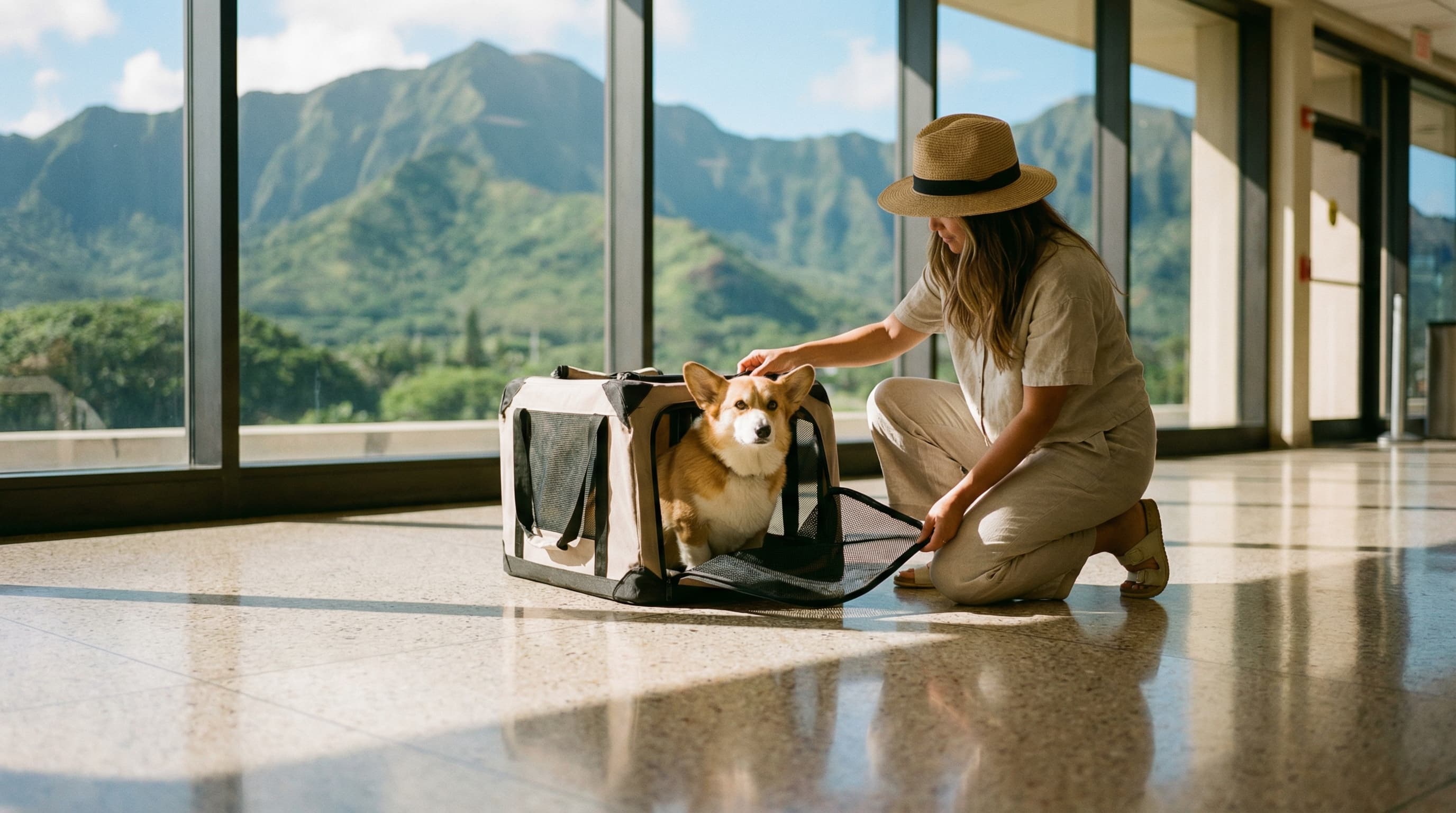
Bringing a Pet to Hawaii: Skip the 120-Day Quarantine (2026)
15 min readdomestic

Marcus Reid
Former Airline Operations
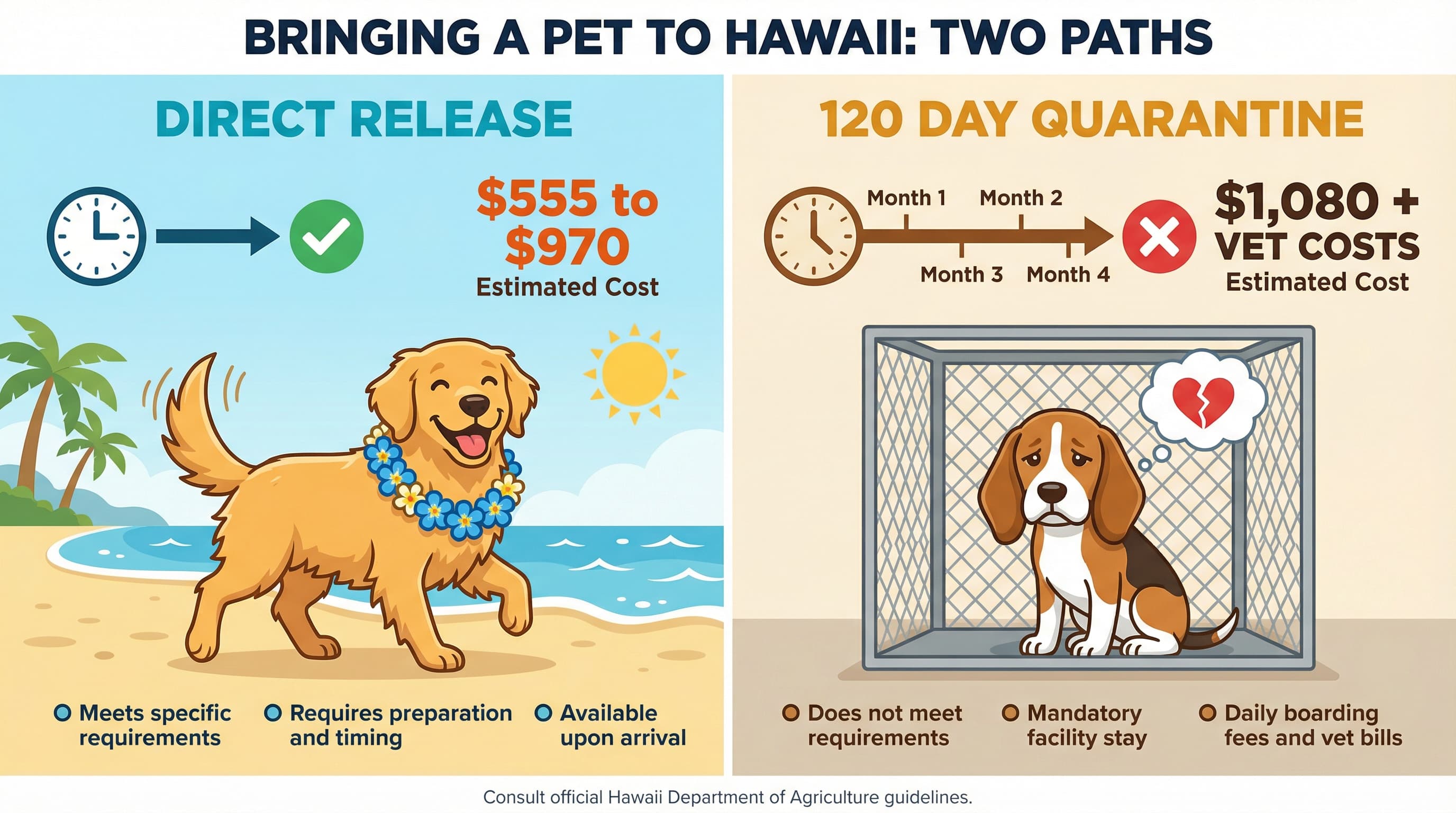
Quick answer: Every dog and cat entering Hawaii faces a quarantine inspection — 120 days in a state kennel ($1,080) unless you complete the "5 Day Or Less" program. Do it right and your pet walks out of Honolulu airport with you the same day. Direct release costs $555–$970 total, and you need to start at least 4 months before travel. The rules are identical for dogs and cats.
Why Hawaii Quarantines Pets
Hawaii is the only rabies-free state in the US. It has never had a single indigenous case of rabies — and the quarantine system, running since 1912, is how it stays that way.
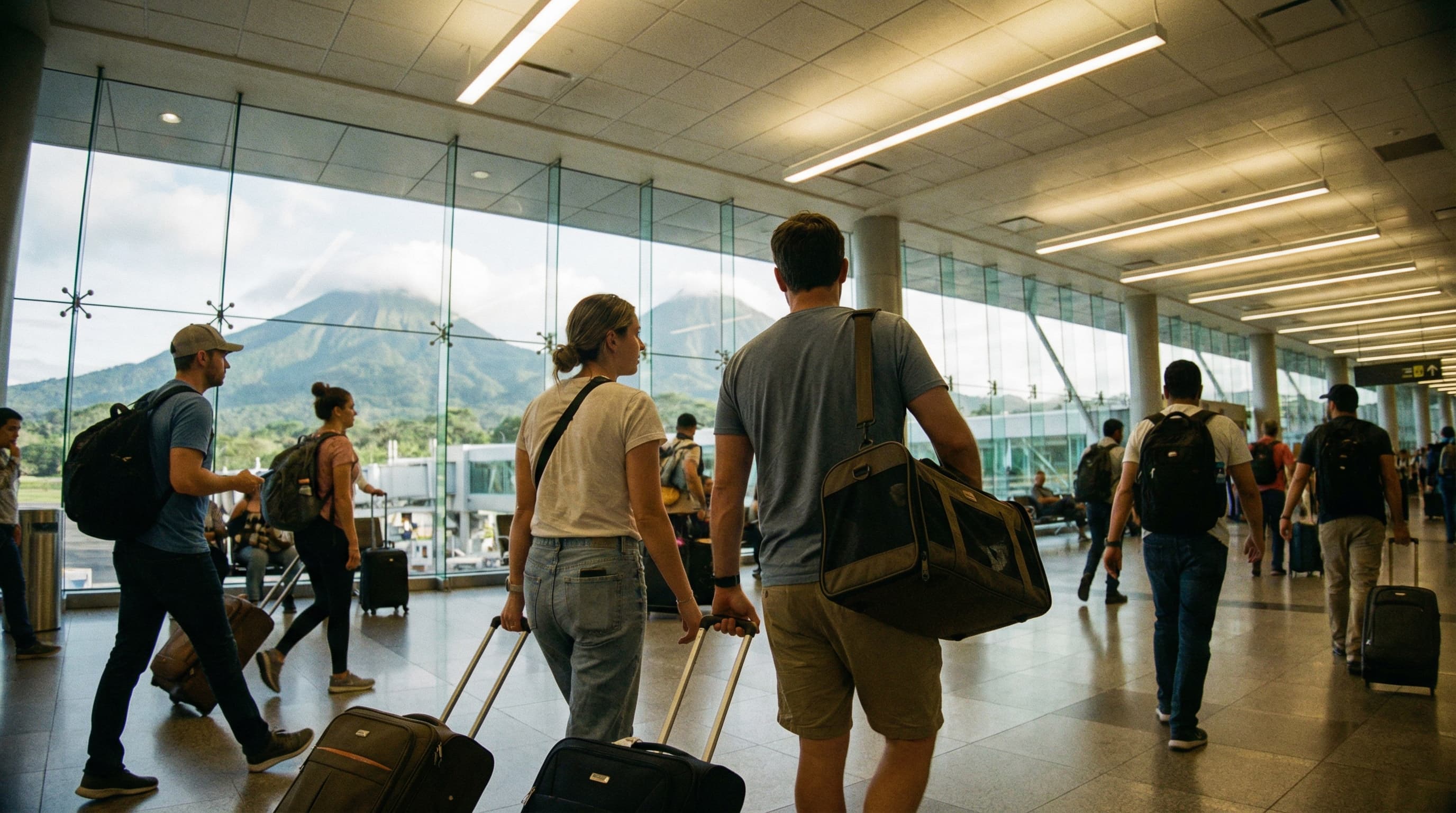
Every dog and cat arriving in Hawaii goes through an inspection at the Airport Animal Quarantine Holding Facility in Honolulu. What happens next depends entirely on whether you did the prep work.
Direct Release vs. 5-Day vs. 120-Day Quarantine
Hawaii runs three quarantine programs. You want the first one.
| Program | What happens | Fee | Who qualifies |
|---|---|---|---|
| Direct airport release | Pet released to you at Honolulu airport, same day | $185 (docs on time) or $244 (docs late) | Pets meeting all 6 steps below with documents received 10+ days early |
| 5 Day Or Less | Pet held at quarantine station up to 5 days | $244 + $17.80/day after day 5 | Pets meeting the steps but with document or timing issues |
| 120-day quarantine | Pet held in a state kennel for 4 months | $1,080 | Everyone else |
The 5 Day Or Less program and direct airport release share the same medical steps. The difference is paperwork timing — get your documents to Hawaii's Animal Quarantine Station (AQS) at least 10 days before your pet arrives, and you qualify for direct release. Miss that window and your pet waits at the quarantine station while they process.
The 6 Steps to Direct Airport Release
These steps apply equally to dogs and cats. The order matters — get the sequence wrong and you start over.
Here's the full timeline working backwards from your travel date:
| When | What to do |
|---|---|
| 4–6 months before | Step 1: Microchip + Step 2: First rabies vaccine (if needed) |
| 3–5 months before | Step 2: Second rabies vaccine (30+ days after first) |
| 3–4 months before | Step 3: FAVN blood test (allow 1–2 months for lab results) |
| 30+ days after lab gets blood | Waiting period — your pet can't enter Hawaii until this passes |
| 10+ days before travel | Step 4: Mail AQS-279 form + documents + payment to AQS |
| Within 14 days of travel | Step 5: Vet visit for health certificate + tick treatment (tick treatment must be within 14 days) |
| Travel day | Step 6: Fly to Honolulu, arrive by 3:30 PM |
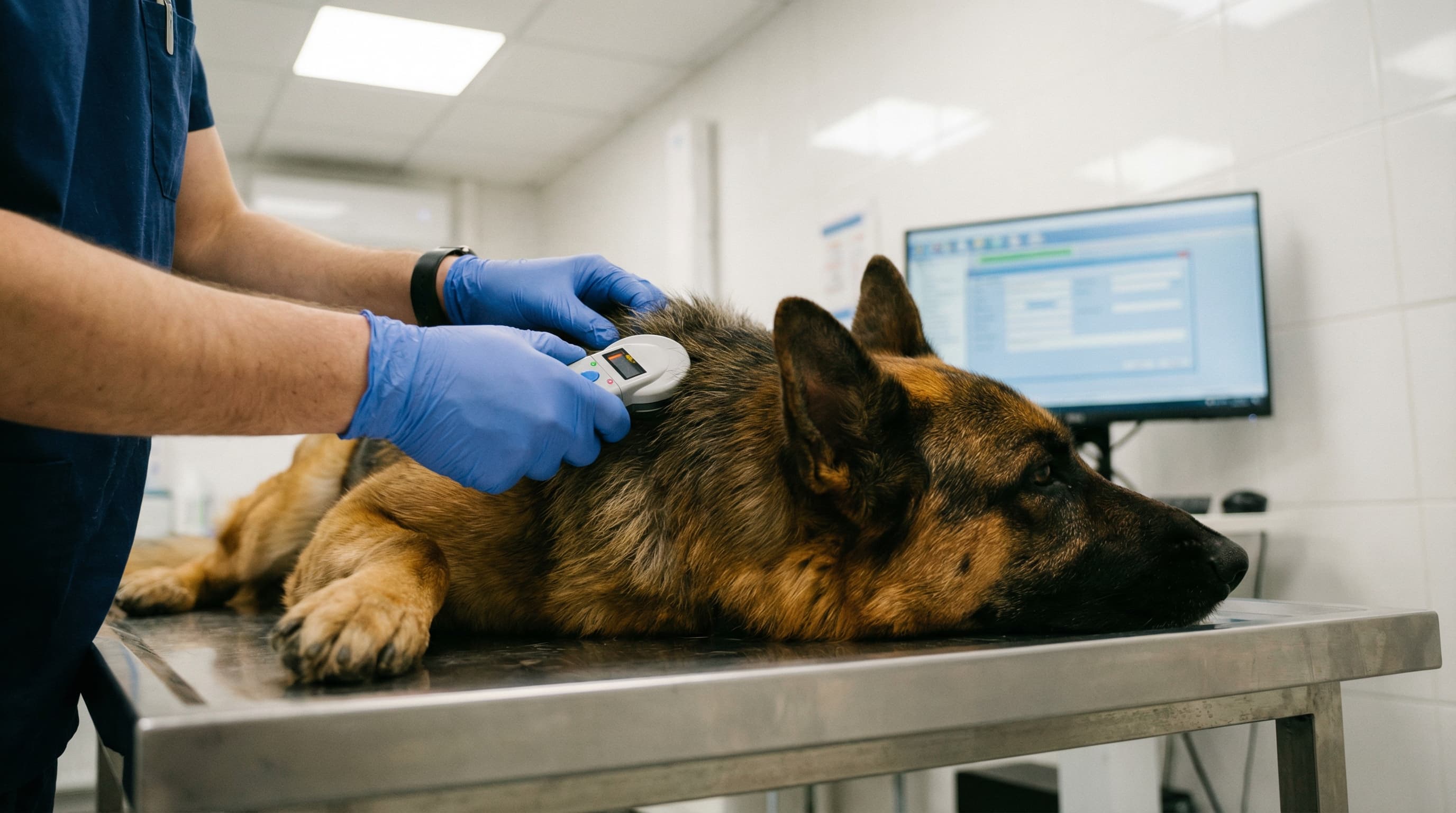
Step 1 — Microchip
Your pet needs a microchip before anything else. The microchip links your pet to its blood test results — without it, Hawaii has no way to match the animal at the airport to the lab work on file.
Get the chip implanted before the FAVN blood draw (Step 3). If you do it in the wrong order, the blood test is invalid and you start over.
Any microchip works as long as Hawaii's scanner can read it. If your pet already has one, ask your vet to scan it at the next visit.
Step 2 — Two Rabies Vaccinations
Hawaii needs proof of two rabies vaccinations in your pet's lifetime, given at least 30 days apart.
If your pet already has two documented rabies shots on record, check the timing window for the most recent one:
- 1-year vaccine: Given 30 days to 12 months before your arrival in Hawaii
- 3-year vaccine: Given 30 days to 36 months before arrival
If your pet only has one documented vaccine, schedule a booster at least 30 days after the first. That booster then needs to be at least 30 days old by your arrival date.
Critical
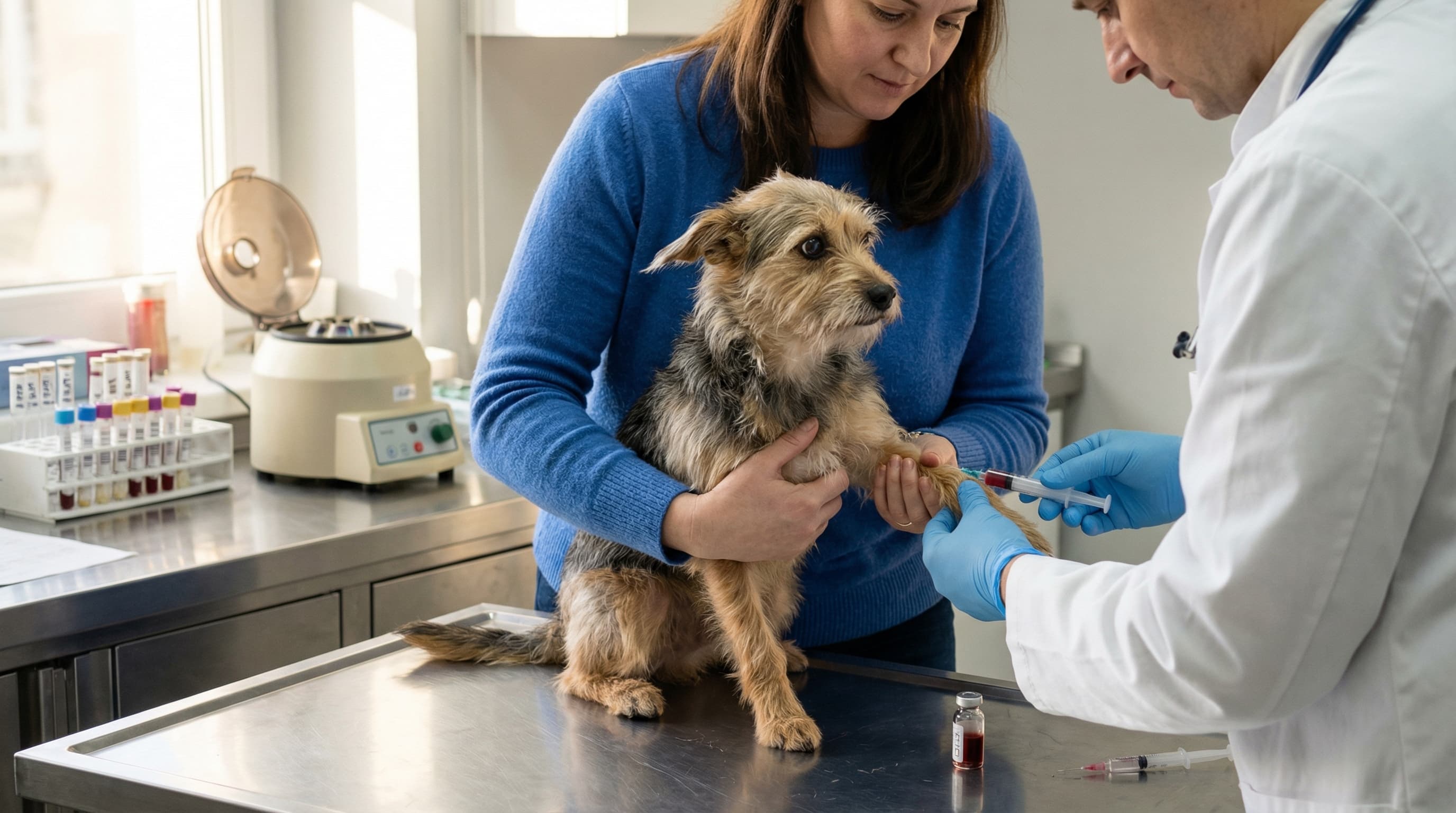
Step 3 — OIE-FAVN Blood Test
This is the step that makes or breaks your timeline. The OIE-FAVN test measures rabies antibodies in your pet's blood — your pet needs a result above 0.5 IU/ml to qualify. It's a specific type of rabies titer test that only a few labs run.
Three civilian labs in the US do this test:
| Lab | Turnaround | Notes |
|---|---|---|
| Kansas State University | 4–8 weeks (currently delayed) | Most commonly used; list "HAWAII" as destination on the submission form |
| Auburn University | 4–6 weeks | Phone: 334-844-2659 |
| University of Missouri | 1–2 weeks | Fastest option; submission instructions here |
Military families can also use the DOD Laboratory (DoD beneficiaries only).
Your vet draws the blood and ships it to the lab. Two things to watch:
The 30-day waiting period. After the lab receives your pet's blood sample, you must wait at least 30 days before arriving in Hawaii. This isn't 30 days after results come back — it's 30 days after the lab logs receipt of the sample. Arrive one day early and your pet goes into 120-day quarantine.
If the test fails. A result below 0.5 IU/ml means your pet needs another rabies booster, a re-test, then another 30-day wait. This can add 3–4 months to your timeline. There's no shortcut.
The FAVN result stays valid for 36 months from the date the lab received the blood — as long as your pet's rabies vaccination doesn't lapse. If the vaccination expires before you travel, the FAVN result expires with it.
Watch OutKansas State also offers a "Micro Screen Rabies Screen Test" (Micro RFFIT). Hawaii does not accept it — only the full OIE-FAVN. Confirm the correct test with your vet before they submit.
Step 4 — Submit Form AQS-279 and Documents
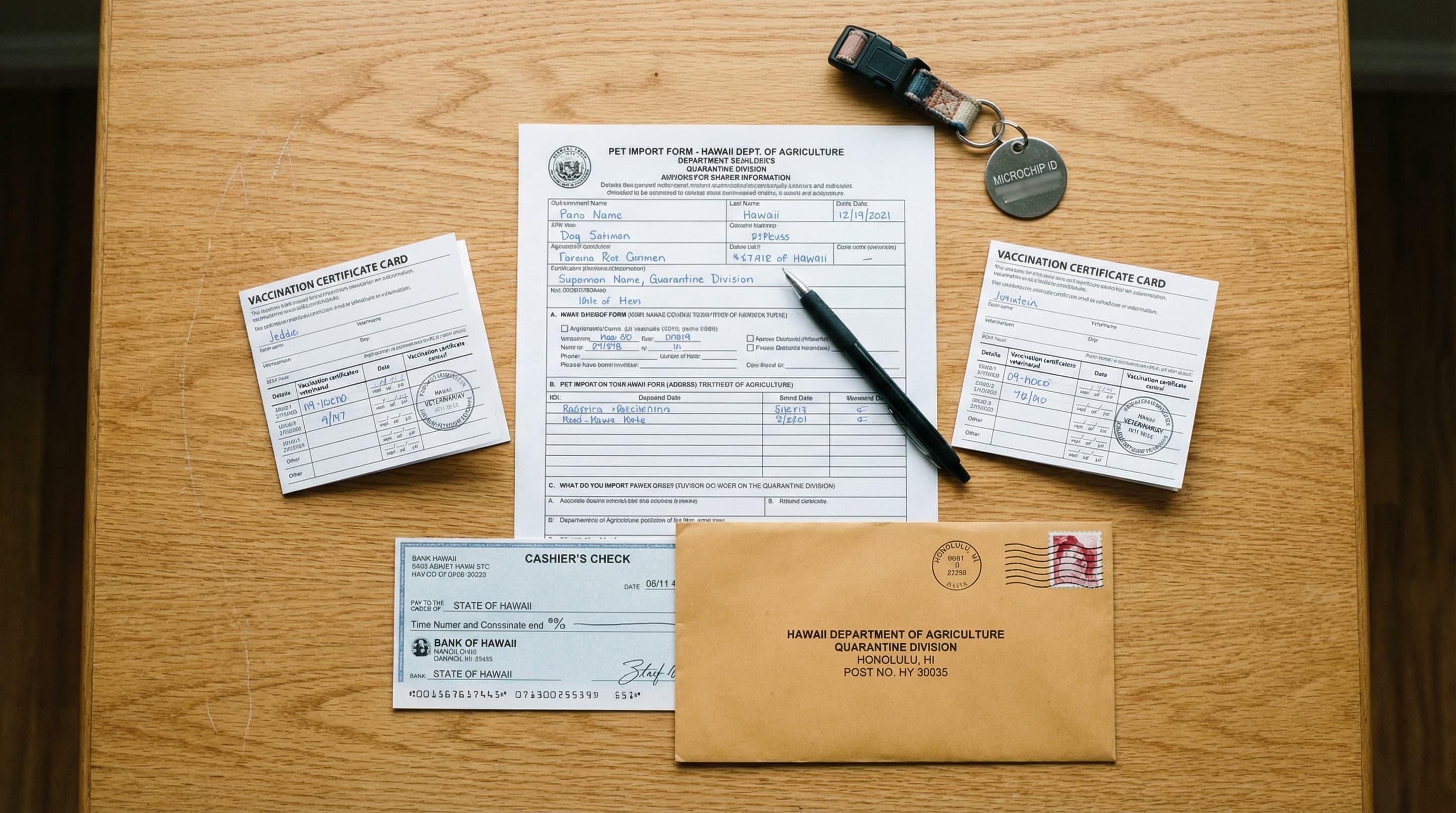
At least 10 days before your pet arrives, mail the following to Hawaii's Animal Quarantine Station:
- Completed AQS-279 form — one per pet
- Original rabies vaccination certificates for both shots (original signatures)
- Payment — cashier's check or money order for $185 per pet, payable to "Department of Agriculture & Biosecurity"
Mail to: Animal Quarantine Station, 99-951 Halawa Valley Street, Aiea, Hawaii 96701
The health certificate can go with this package if you have it ready. Most people bring the original on travel day instead, since it has to be issued within 14 days of arrival anyway.
Miss the 10-day deadline and you'll still qualify for the 5 Day Or Less program, but the fee jumps to $244 and you may lose same-day release.
Check your pet's status. After the lab processes the FAVN test, you can look up your pet's eligibility on Hawaii's microchip search page. Search the PDF by microchip number. Results take about 3 weeks to post and update roughly weekly.
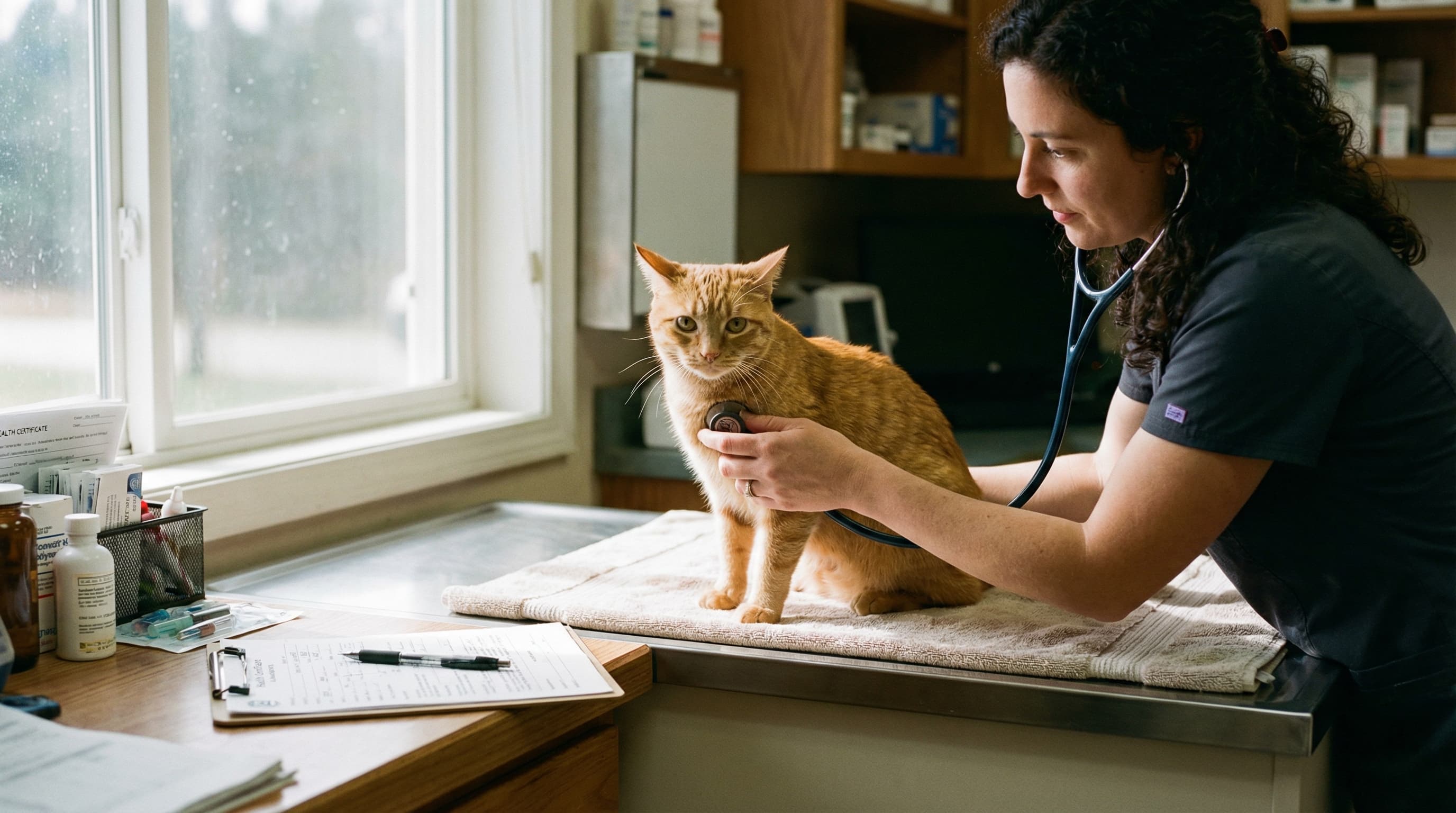
Step 5 — Health Certificate and Tick Treatment
Within 14 days of your arrival in Hawaii, visit your vet for two things:
Health certificate. Your vet examines your pet and issues a certificate confirming the animal is healthy. The certificate must be issued no more than 30 days before arrival. This is a standard interstate health certificate — no USDA endorsement needed, since Hawaii is a US state and this is domestic travel.
Tick treatment. Your vet applies a long-acting product that kills ticks — Fipronil (Frontline), Bravecto (Fluralaner), NexGard (Afoxolaner), or Simparica (Sarolaner) — and documents it on the health certificate. The tick treatment must be applied within 14 days of arrival.
Two products that trip people up:
- Revolution (Selamectin): Hawaii specifically rejects it. It's one of the most common flea-and-tick products in the US, which is exactly why this catches people.
- K-9 Advantix: Accepted for dogs only. Toxic to cats — if you have a cat, stick with Fipronil or one of the approved oral treatments mentioned above. Check Hawaii's full approved list for more options.
Step 6 — Fly to Honolulu
All pets entering Hawaii must arrive at Daniel K. Inouye International Airport in Honolulu — even if your final destination is Maui, Kona, or Kauai. (There's a workaround for neighbor islands — covered below.)
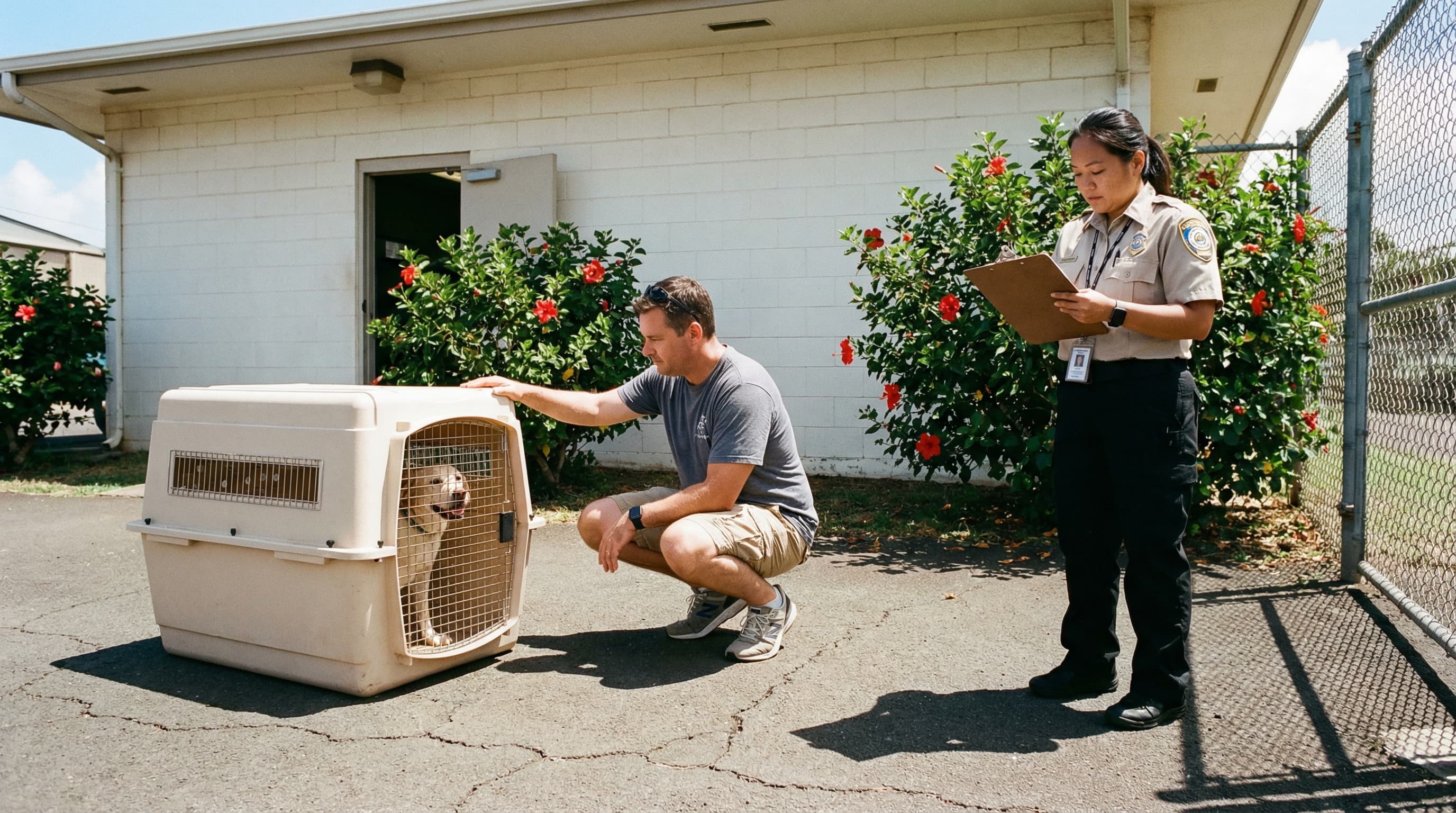
Book a flight that lands by 3:30 PM. The Airport Animal Quarantine Holding Facility runs 8:30 AM to 4:30 PM daily, including weekends and holidays. Airlines can take up to an hour to deliver your pet from the aircraft to the facility. Arrive after 4:30 PM and your pet stays overnight — you pick them up the next morning by 10:00 AM or pay an extra $59.
What happens when you land:
- Your airline brings your pet directly to the quarantine facility (this includes cabin pets — the airline takes them after landing)
- Inspectors scan your pet's microchip and match it against the FAVN results on file
- They check your health certificate, vaccination records, and tick treatment
- If everything matches, your pet is released curbside in its crate
The whole process takes about an hour. Longer if there's a paperwork discrepancy.
One airport rule: you can't open your pet's crate anywhere on airport property. Drive a vehicle that fits the intact crate.
What It Costs
| Item | Cost |
|---|---|
| Microchip (if needed) | $25–$75 |
| Rabies vaccinations x2 (if needed) | $30–$80 |
| OIE-FAVN blood test | $150–$300 |
| Health certificate (vet exam) | $50–$150 |
| Tick treatment | $15–$30 |
| Airline pet fee (cabin, one-way) | $100–$150 |
| Direct release inspection fee | $185 |
| Total (direct release, docs on time) | $555–$970 |
If your pet already has a microchip and two rabies vaccinations on record, the cost drops to about $400–$630.
For comparison: 120-day quarantine costs $1,080 in state fees alone — plus you're still paying for all the vet work above. Four months without your pet, and a bill that's higher than doing it right the first time.
The US DoD reimburses active duty military up to $550 per family for quarantine-related expenses.
Flying to Maui, Big Island, or Kauai
If your final destination isn't Oahu, you have two options.
Option 1: Route through Honolulu. Fly to Honolulu, clear the quarantine inspection, then catch a connecting inter-island flight. Allow at least 4–5 hours between your mainland arrival and the inter-island departure.
Option 2: Neighbor Island Inspection Permit (NIIP). For $165, you can have your pet inspected at an approved vet facility on your destination island. This skips the Honolulu layover but takes more planning:
- Submit all standard documents plus a letter requesting your preferred airport — at least 30 days before arrival
- Reserve a spot at an approved vet facility on the island (they confirm directly with AQS)
- AQS emails the permit to the address on your AQS-279 form
- Your airline won't board the pet without the permit
Available airports: Kona/KOA (3 approved vet clinics), Kahului-Maui/OGG (8 clinics), Lihue-Kauai/LIH (2 clinics). No direct release on Molokai or Lanai — those pets must go through Honolulu.
One timing note: pets arriving at a neighbor island on Thursday or Friday may not be transferred until Monday if the vet facility isn't open over the weekend.
If You Already Live in Hawaii
Hawaii residents taking a pet on a trip to the mainland face different rules for the return. Use Checklist 3 (returning via Honolulu) or Checklist 4 (returning to a neighbor island).
The critical difference: you must complete the FAVN test and rabies vaccinations before you leave Hawaii — not before you return. Leave without a passing FAVN on file and your pet faces up to 120 days of quarantine when you come back.
The re-entry fee is lower than a first arrival: $98 (docs on time) or $130 (docs late), as long as your pet's previous FAVN result and vaccination are still valid within the 36-month window.

Common Mistakes
FAQ
Your next step: Get the FAVN blood test scheduled — that's the bottleneck. Everything else fits around it, but lab processing times are running 1–2 months right now. The sooner your vet draws the blood, the sooner the 30-day clock starts.