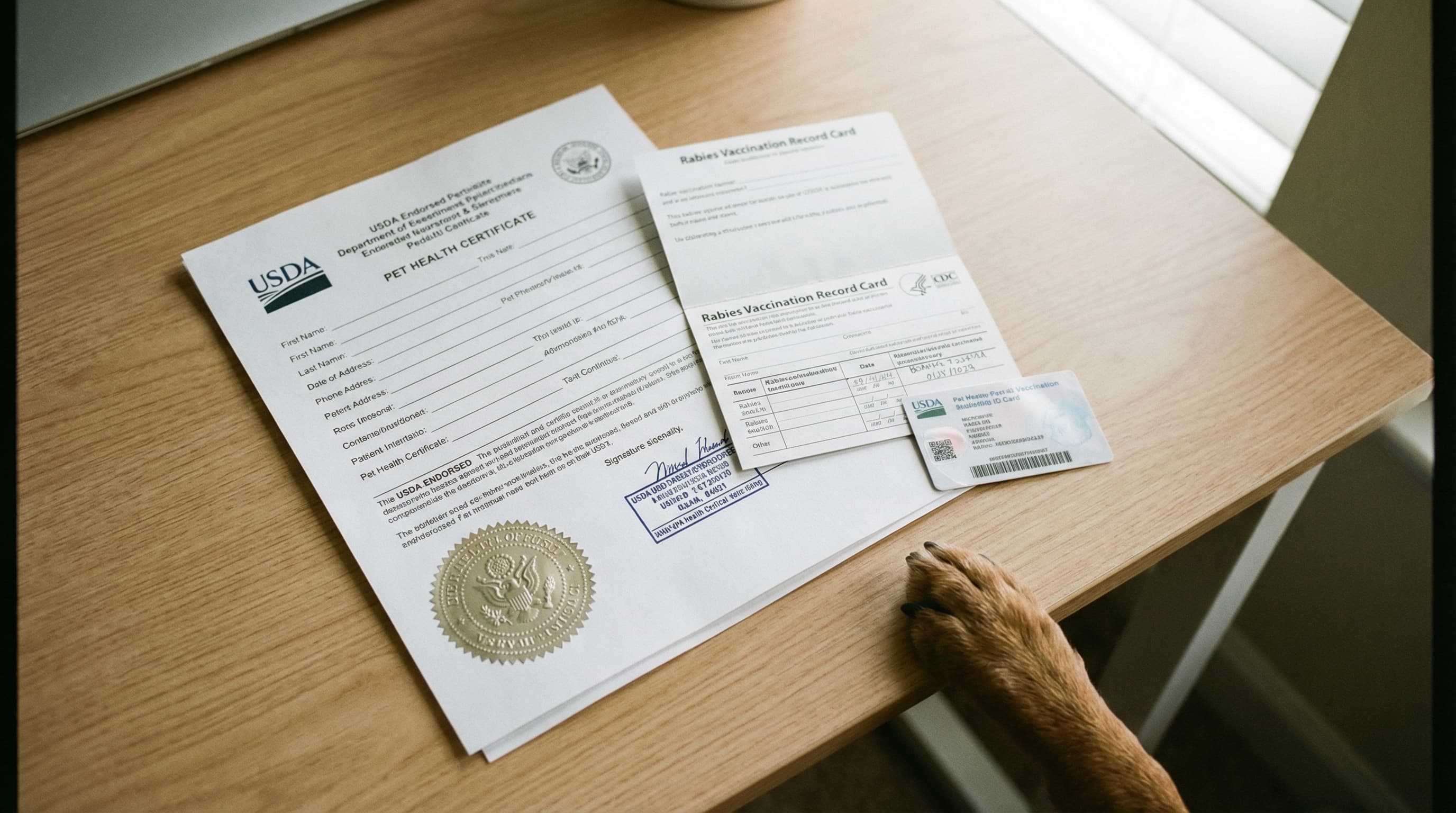
If your pet got its rabies vaccine before the microchip, you need a new rabies shot — given after the chip is in place — plus a fresh 21-day waiting period before the health certificate. For destinations like Japan that require a titer test, reversing this order can add months.
Pet Microchip for Travel: ISO Requirements 2026
10 min readdocuments

Dr. Sarah Chen
Travel Veterinarian
Quick answer: Nearly every international destination requires your pet to have an ISO microchip — a 15-digit chip operating at 134.2 kHz that border scanners worldwide can read. Cost: $25–$75 at any vet, and the chip must go in before the rabies vaccine or the vaccine doesn't count for travel.
What an ISO Microchip Is and Why Travel Requires It
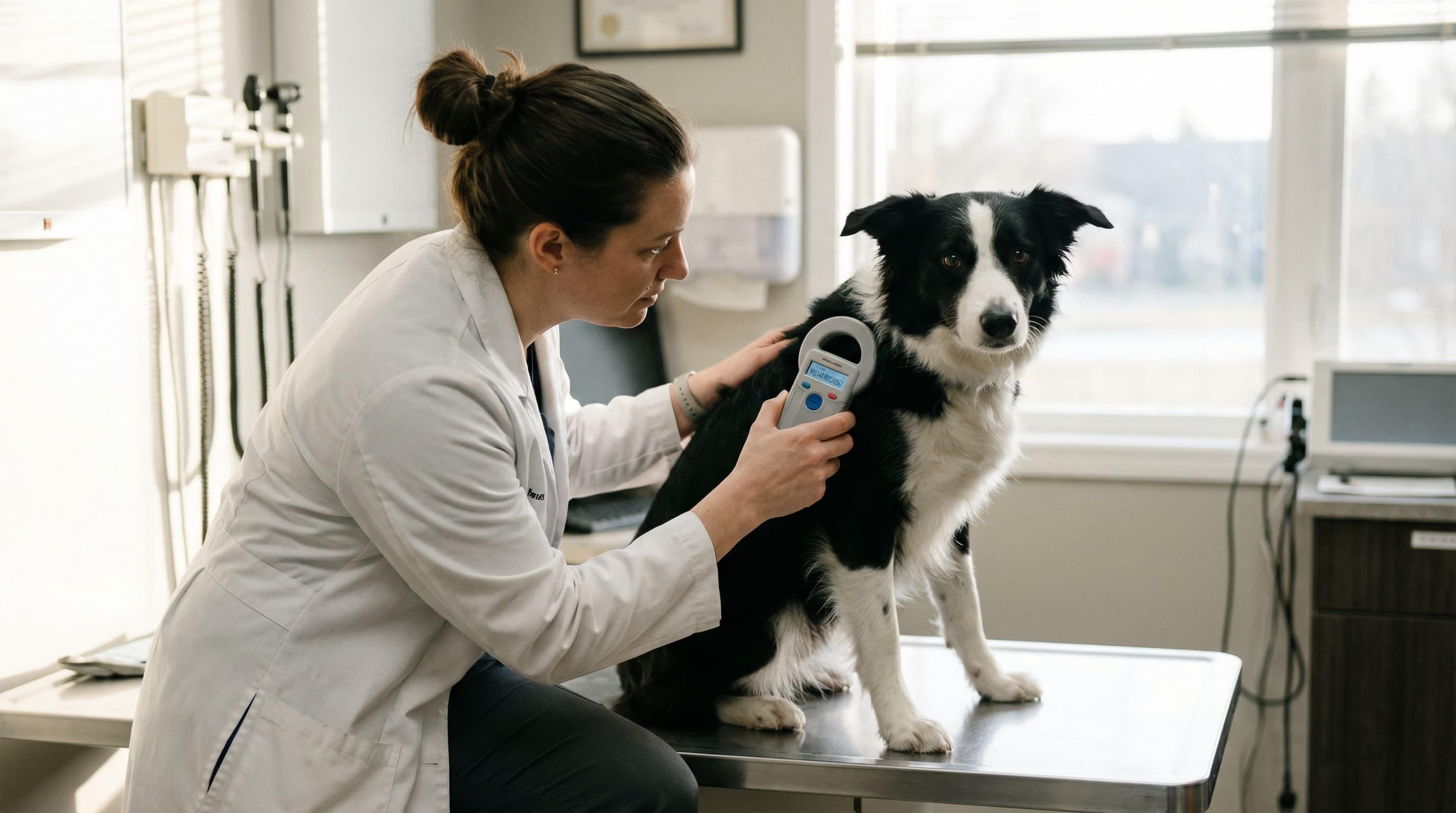
An ISO microchip is a rice-grain-sized transponder that sits under your pet's skin between the shoulder blades. It has no battery — a scanner activates it with radio waves, and the chip transmits a unique 15-digit identification number. The international standard is ISO 11784/11785, operating at 134.2 kHz.
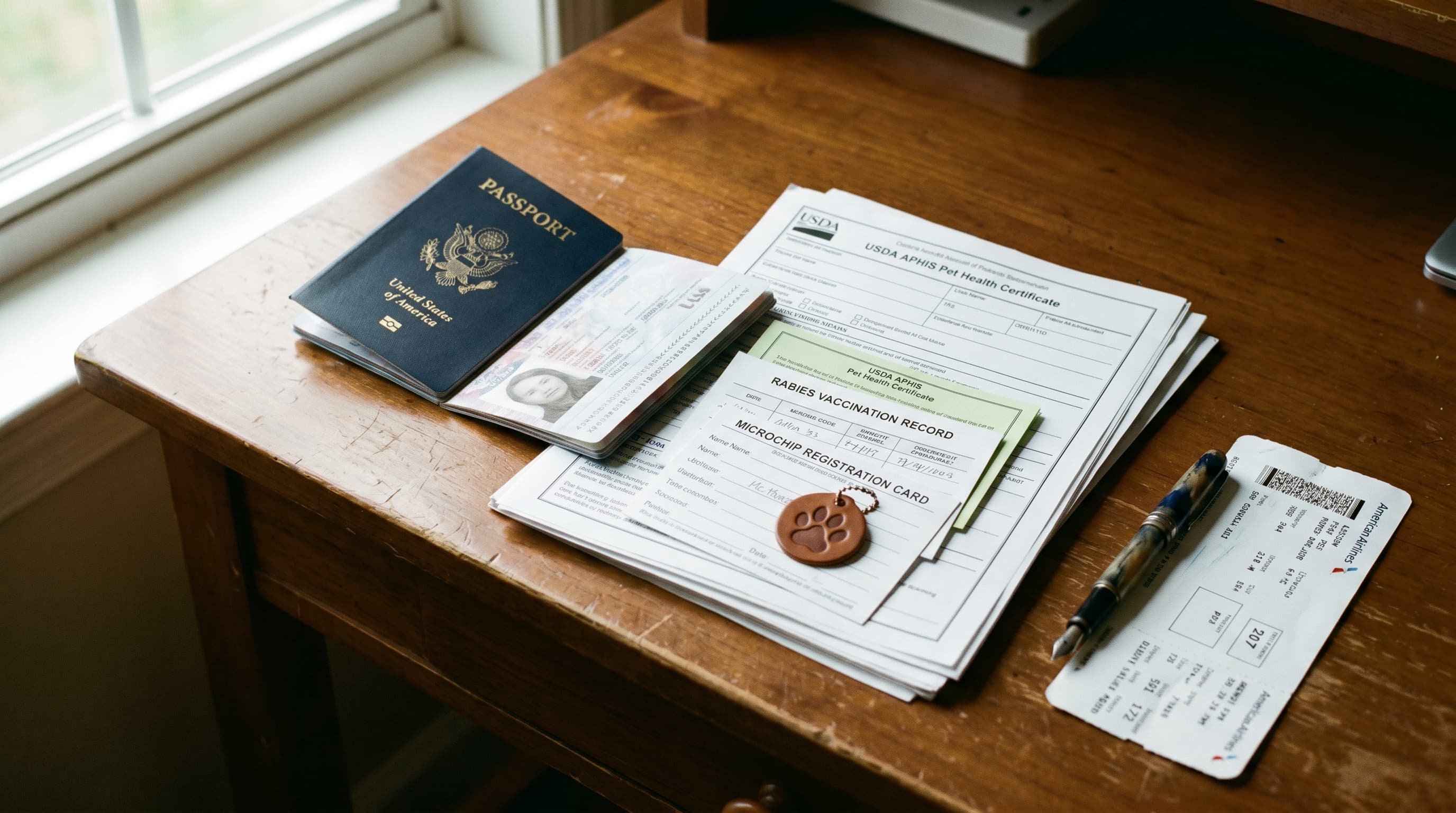
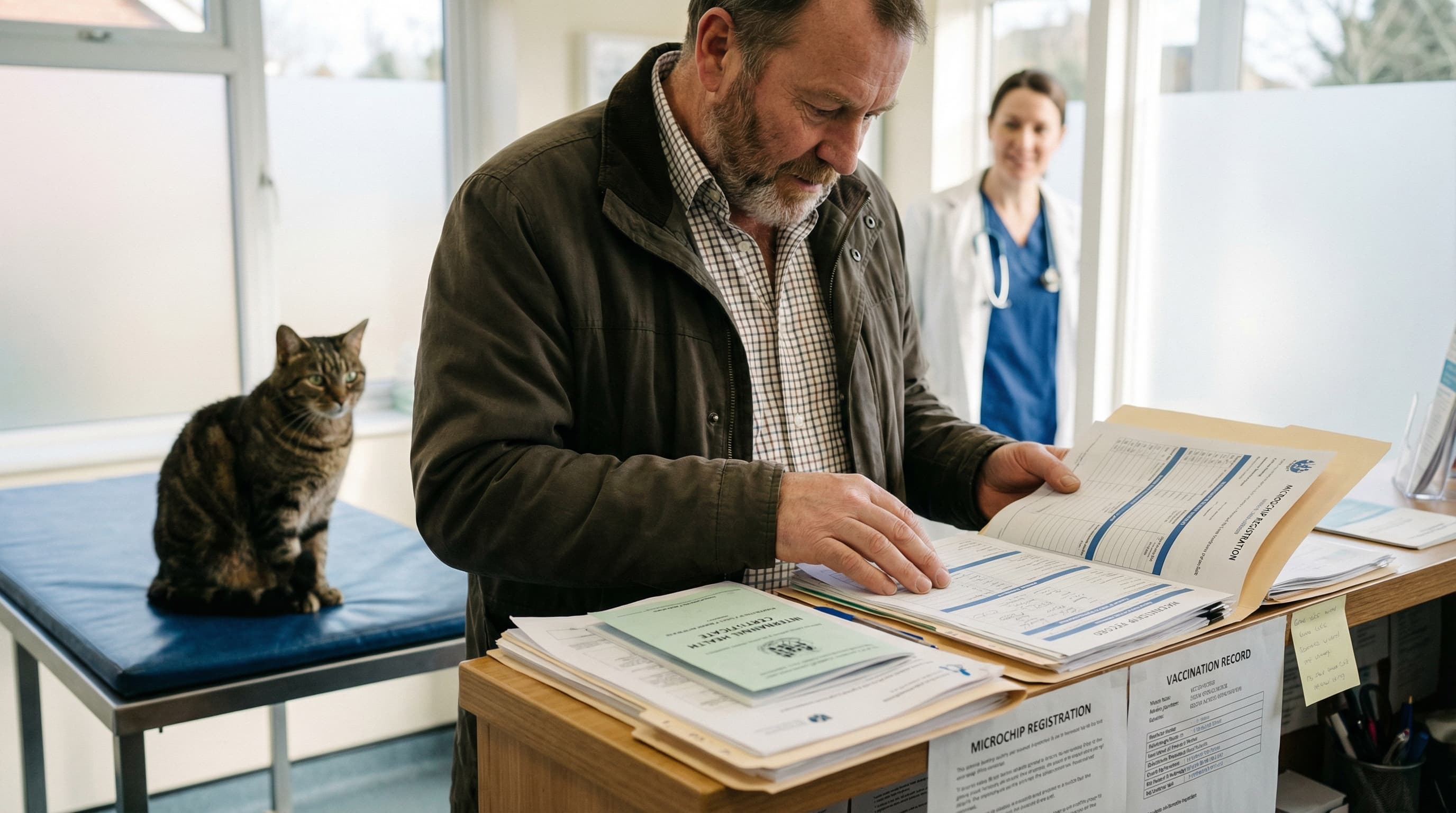
Border officials at airports scan this chip and match the number against your pet's health certificate, vaccination records, and import paperwork. Every document in the chain carries the same 15-digit number.
If the numbers don't match — or the scanner can't read the chip — your paperwork is meaningless.
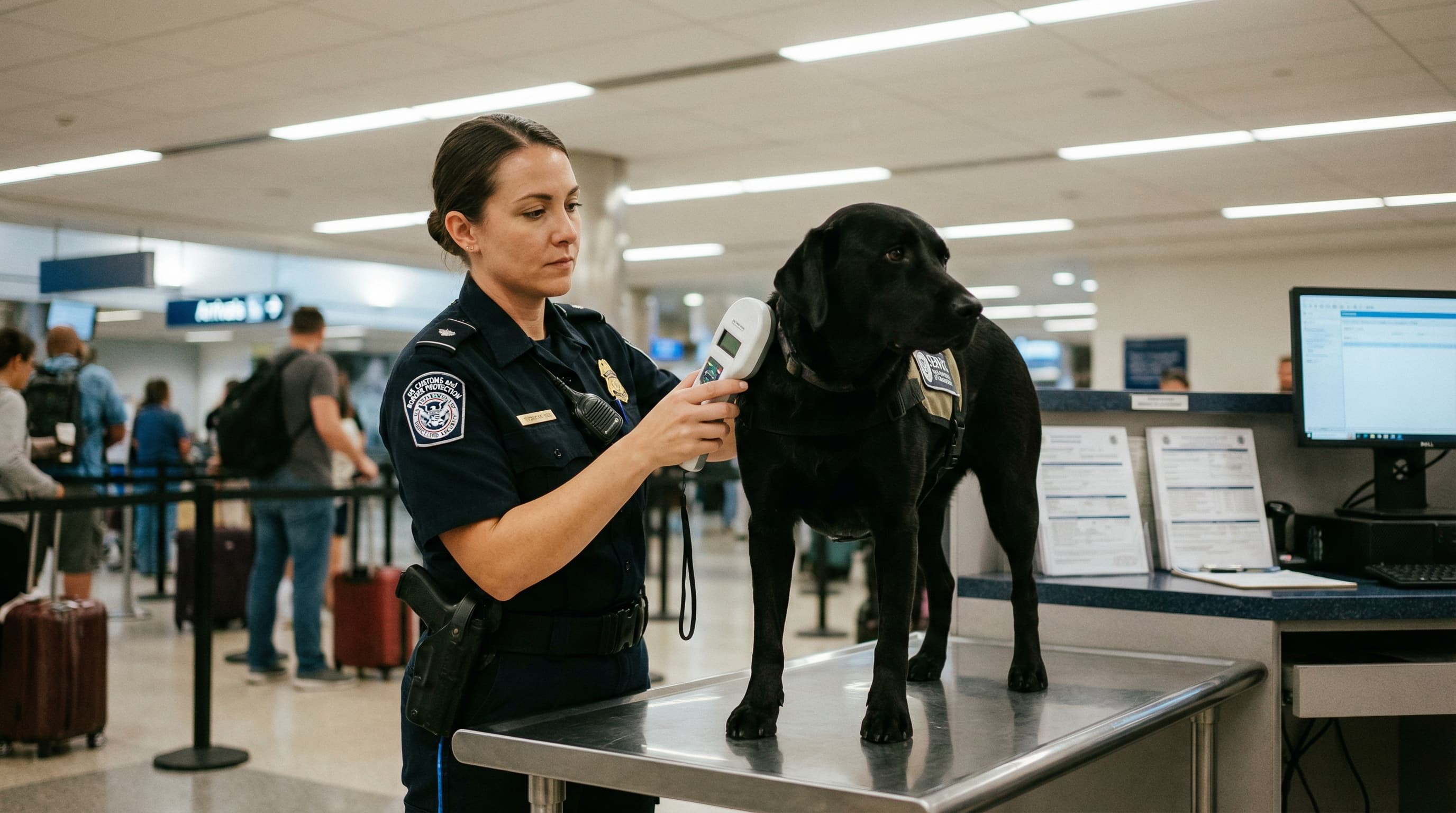
The US uses three microchip frequencies: 125 kHz, 128 kHz, and 134.2 kHz. Only 134.2 kHz is the ISO standard. International scanners at borders are designed for this frequency. A 125 kHz chip might not register at all.
If a border scanner can't detect your pet's chip, the destination country can deny entry and return your pet to the country of departure — at your expense.
Is Your Pet's Microchip ISO Compatible?
Many US pets already have a microchip, but not all chips work for international travel. Here's how to tell.
Check the number. Have your vet scan the chip and read the number. A 15-digit number starting with 956, 0006, 0007, or 0008 is almost certainly ISO compatible at 134.2 kHz.
A 9- or 10-digit number (or an alphanumeric code) means a non-ISO chip running at 125 kHz. International scanners won't reliably read it.
| Chip brand | Digits | Frequency | ISO compatible? |
|---|---|---|---|
| AKC Reunite (starts with 956) | 15 | 134.2 kHz | Yes |
| HomeAgain WorldChip | 15 | 134.2 kHz | Yes |
| Datamars | 15 | 134.2 kHz | Yes |
| AVID FriendChip (9-digit) | 9 | 125 kHz | No |
| AVID EuroChip (10-digit) | 10 | 125 kHz | No |
| Older HomeAgain (10-digit) | 10 | 125 kHz | No |
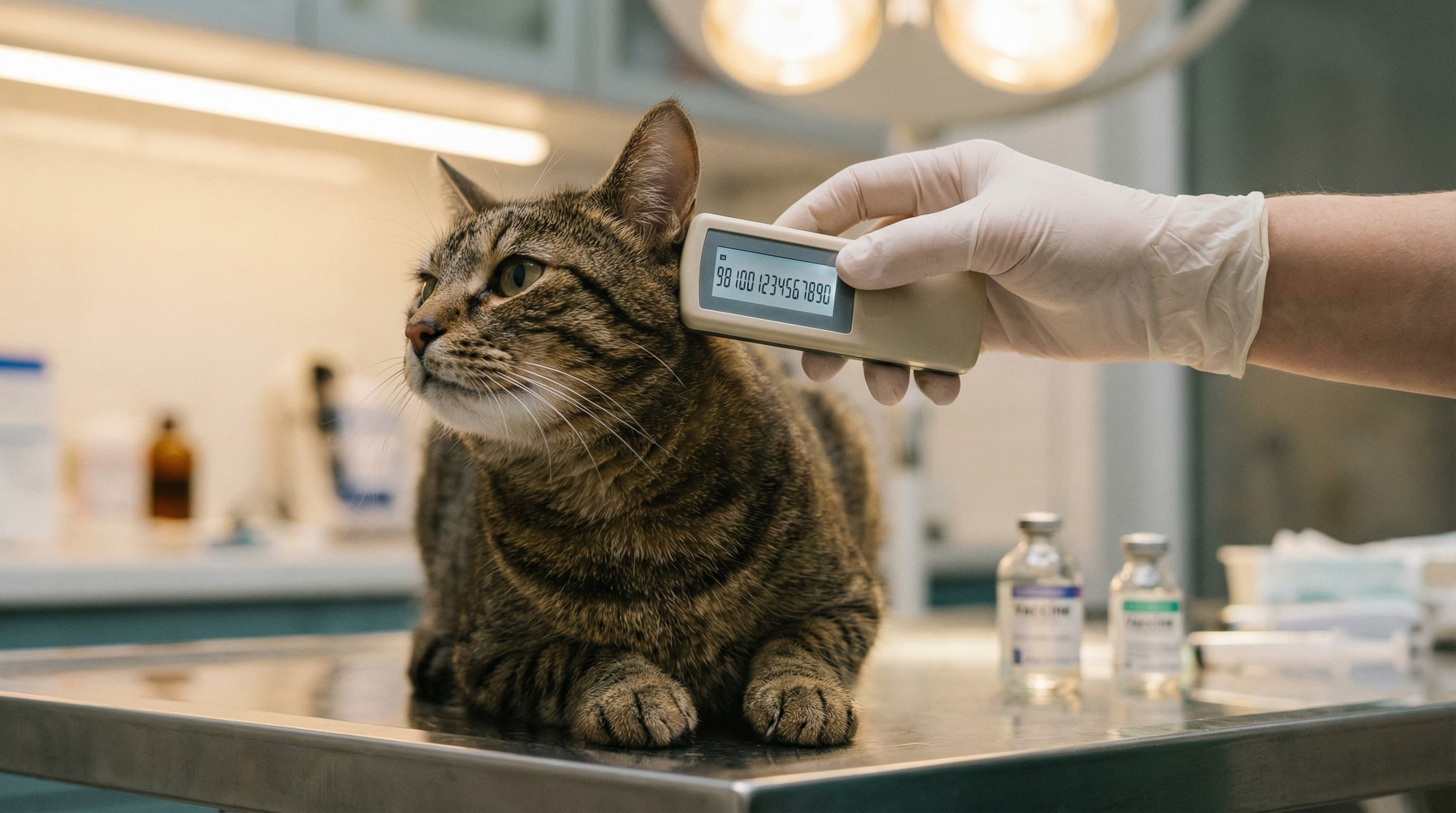
If your chip isn't ISO: Get a second ISO chip implanted. Two chips coexist safely — they don't interfere with each other. The AVMA confirms this is routine. Your pet keeps the old chip for domestic identification and gets an ISO chip for travel.
Don't bother trying to bring your own scanner to read a non-ISO chip at the border. Some countries technically allow it, but in practice, border officials use their own equipment. A $40 ISO chip is simpler and more reliable than explaining non-standard hardware at customs.
The Chip-Before-Vaccine Rule
The ISO microchip must be implanted before the rabies vaccine. If the order is reversed, the vaccine doesn't count for travel.
This applies to the EU, UK, Japan, Australia, and the CDC's rules for dogs re-entering the US. The logic is straightforward: officials need certainty that the animal getting vaccinated is the same one listed on the paperwork. The chip is the only way to make a positive ID.
Critical
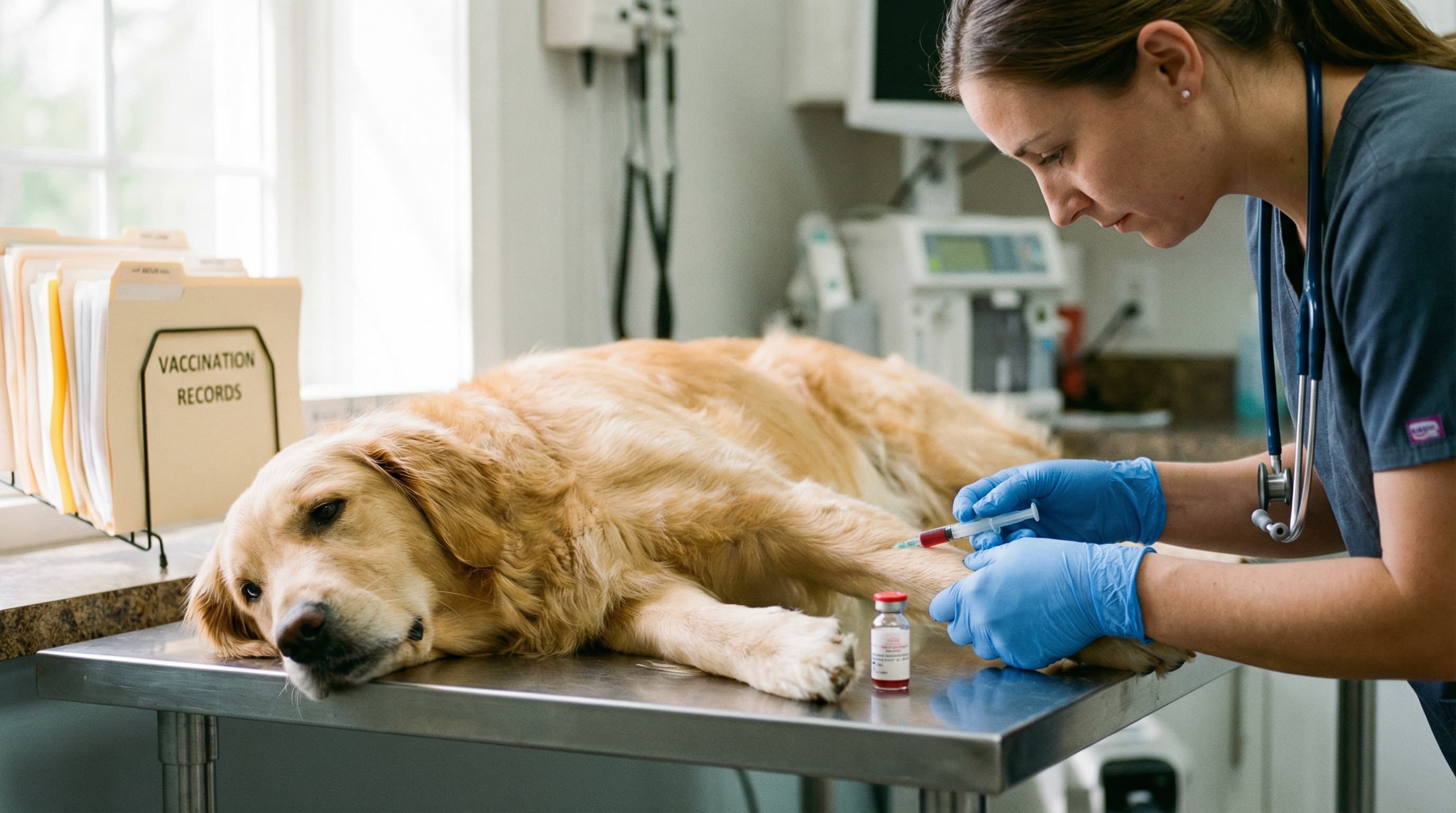
The good news: chip and vaccine can happen in the same vet visit. Your vet implants the chip, scans it to confirm it reads, records the 15-digit number, then gives the rabies shot. One appointment, done.
This catches people who got their pet chipped years ago at a shelter and are now getting a new rabies vaccine for travel. Before that vaccine appointment, confirm the existing chip is ISO. If it's a 9-digit AVID, get the ISO chip implanted first — then the new rabies vaccine counts.
How to Get Your Pet Microchipped for Travel
Step 1: Check your pet's existing chip. If your pet is already chipped, ask your vet to scan it at your next visit. Write down the number. If it's 15 digits and starts with 956, 0006, 0007, or 0008 — you have an ISO chip and can skip to step 4.
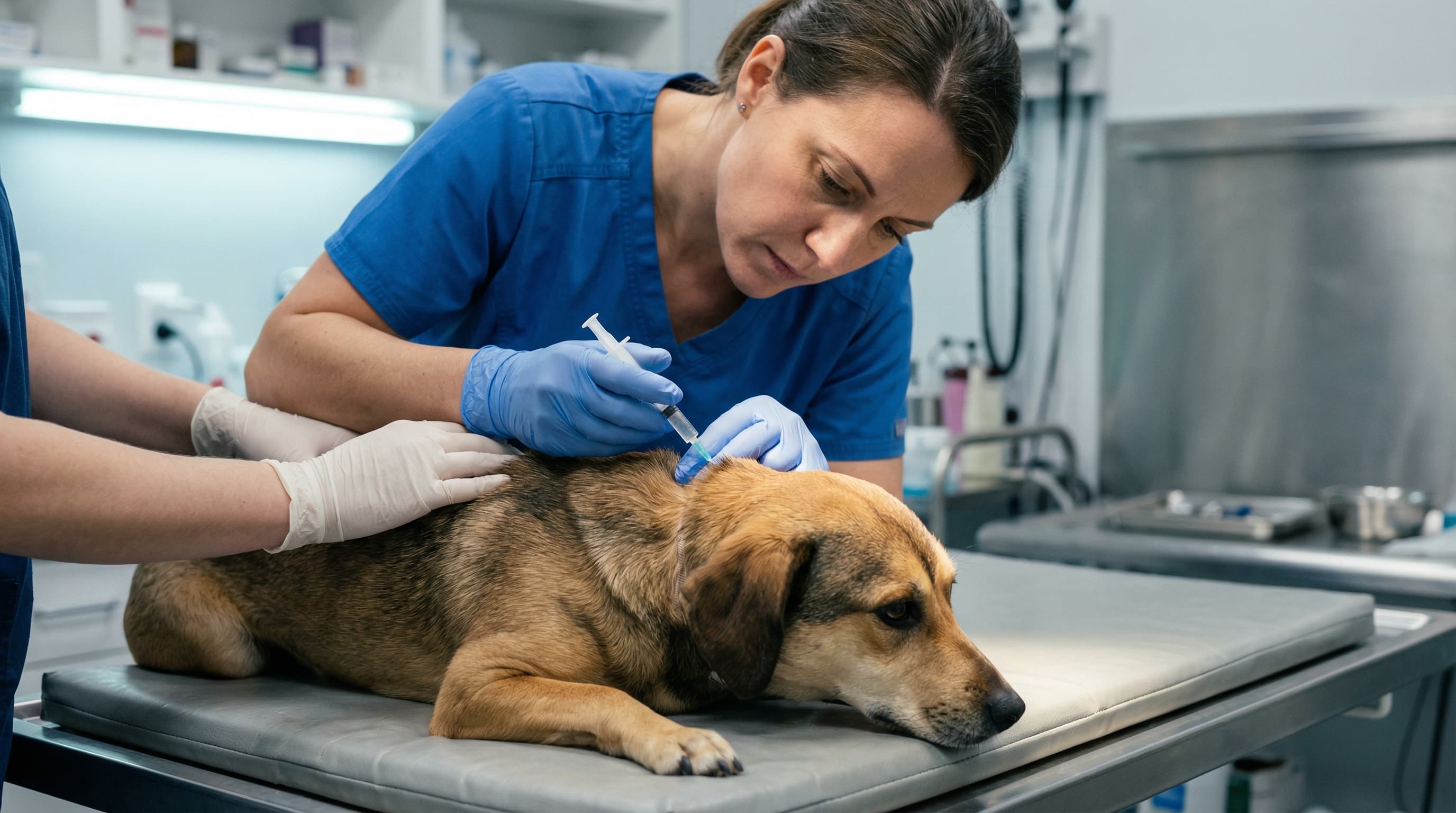
Step 2: Get an ISO chip implanted. Any vet can do this. It takes seconds — a needle injects the chip under the skin between the shoulder blades. No anesthesia needed. No recovery time. Your pet can be chipped at any age.
Step 3: Scan and record. Your vet scans the new chip immediately to confirm it reads, then records the 15-digit number in your pet's medical file. Write this number down yourself. You'll need it on every travel document.
Step 4: Get the rabies vaccine. Same appointment. Now that the chip is confirmed, the rabies shot links to that chip number in your pet's records. This is the sequence that counts for travel.
Step 5: Register the chip. Register with the chip manufacturer's database (AKC Reunite, HomeAgain, or whichever brand your vet uses). Registration is for lost-pet recovery, not a travel requirement — but if your pet escapes the carrier at Heathrow, a registered chip is the only way anyone can contact you.
TipHave your vet scan the chip at your pre-travel health certificate appointment — even if it was implanted years ago. Chips rarely fail, but they can migrate slightly and become harder to detect. Finding out the chip doesn't read at the airport is too late to fix.
Cost Breakdown
| Item | Cost range |
|---|---|
| ISO microchip implant | $25–$75 |
| Office visit (if separate from other care) | $50–$75 |
| Registration fee | $0–$20 |
| Total | $25–$95 |
Most owners pay $40–$70 total when they bundle the chip with a vaccine visit or wellness exam. Community microchipping events run $15–$25 but may not carry ISO chips — call ahead and ask specifically for a 15-digit, 134.2 kHz chip.
Dogs vs. Cats: What's Different
Leaving the US: Most destination countries require an ISO microchip for both dogs and cats. Same chip, same standard, same process. The chip-before-vaccine rule applies equally to both species.
Coming home: Dogs and cats diverge. Since August 2024, every dog entering the US needs a microchip readable by a universal scanner, plus a CDC Dog Import Form. Cats have no federal microchip requirement for re-entry to the US.
Get your cat chipped anyway. Every country you're traveling to almost certainly requires it on the outbound side. And if your cat bolts from the carrier at Barcelona Airport, a microchip is the only way to prove it's yours.
Common Mistakes
FAQ
Your next step: Book a vet visit and ask them to scan your pet's existing chip — or implant a new ISO 15-digit chip if your pet isn't chipped yet. The microchip is the foundation that every other travel document builds on: health certificate, USDA endorsement, rabies titer test if needed. Get it confirmed first and the rest of the paperwork has something to attach to.