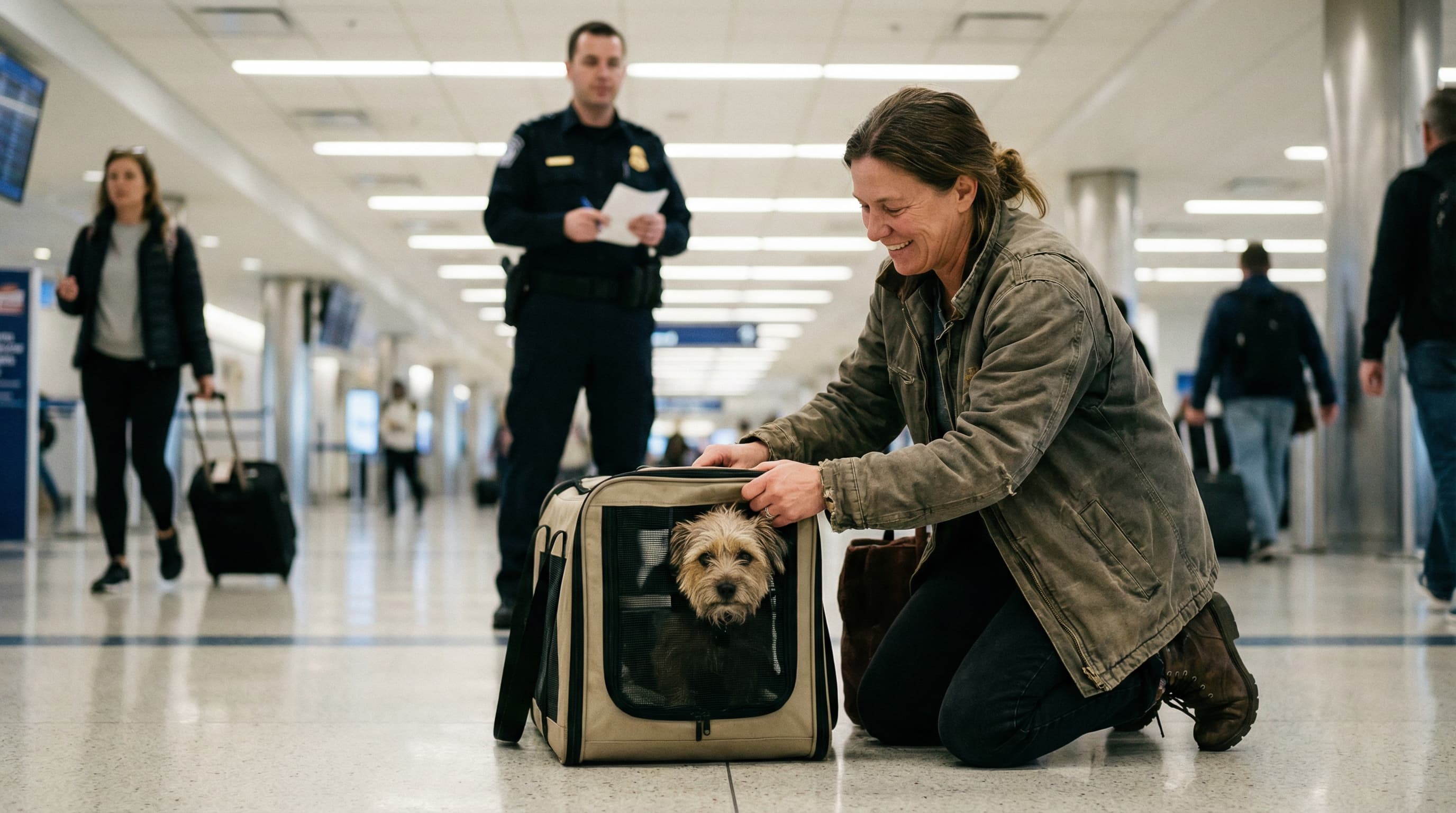
Puppies and kittens under 12 weeks old (or vaccinated but still within the 21-day waiting period) cannot enter the EU from the US. There's no exemption, no waiver, and no workaround. If your pet is too young, you have to wait.

EU Pet Passport: What US Travelers Actually Need — 2026 Guide
12 min readdocuments

James Harlow
Pet Relocation Consultant
Quick answer: You can't get an EU pet passport from the US — what you need instead is an EU Animal Health Certificate (AHC), issued by your USDA-accredited vet and endorsed by USDA APHIS. Cost: $200–$450 total; valid for initial entry and 4 months of EU travel after that.
EU Pet Passport vs. EU Animal Health Certificate
The EU pet passport is a blue booklet that EU-resident vets issue to pets already living in Europe. It holds the pet's microchip number, vaccination history, and clinical exam records in a standardized format that every EU country recognizes.
If you live in Paris with your dog, your French vet issues a pet passport and you use it to cross into Spain, Germany, or any other EU country without extra paperwork.
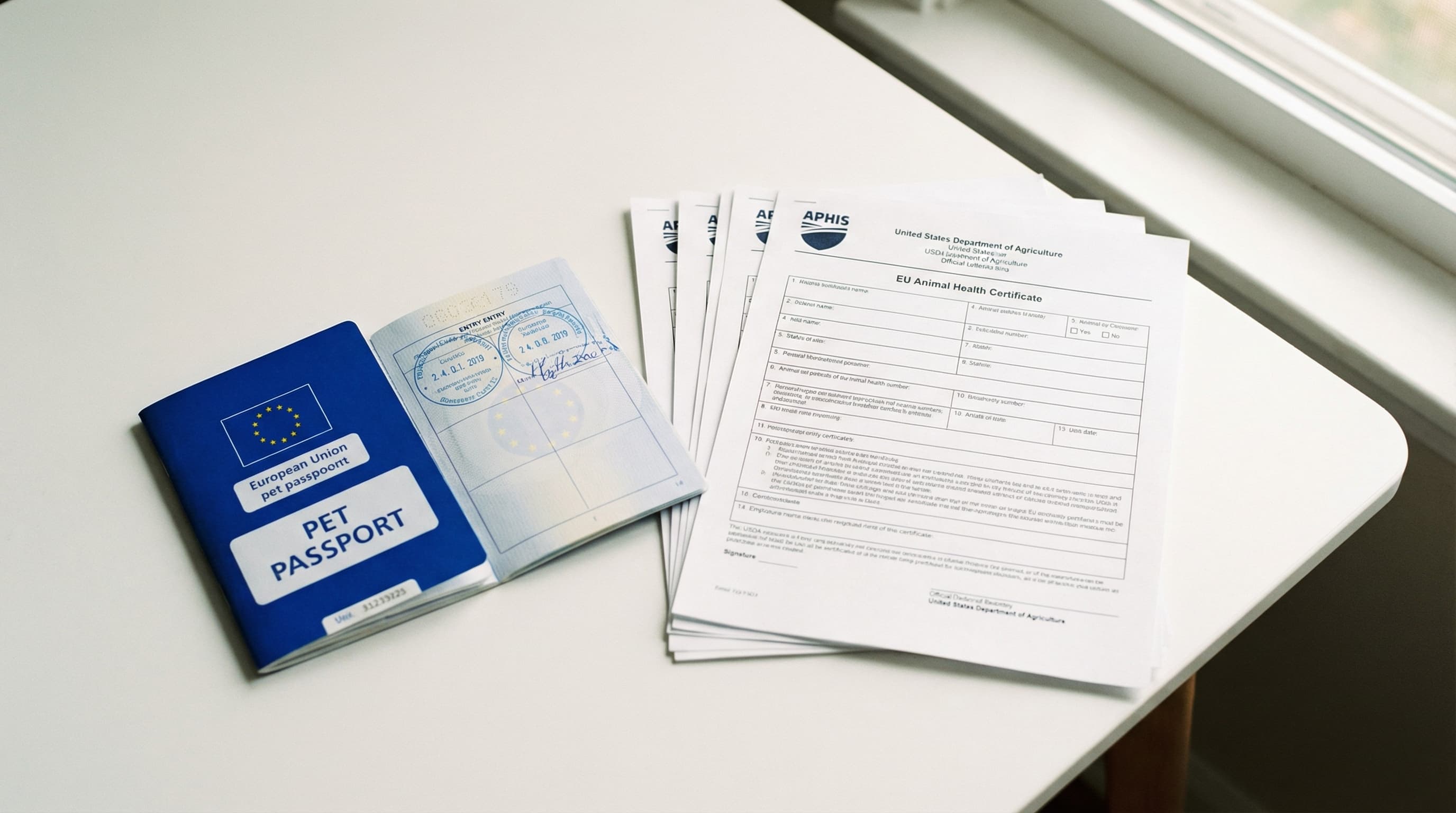
US travelers can't get this document before leaving. There's no US equivalent, and no way to apply from outside the EU.
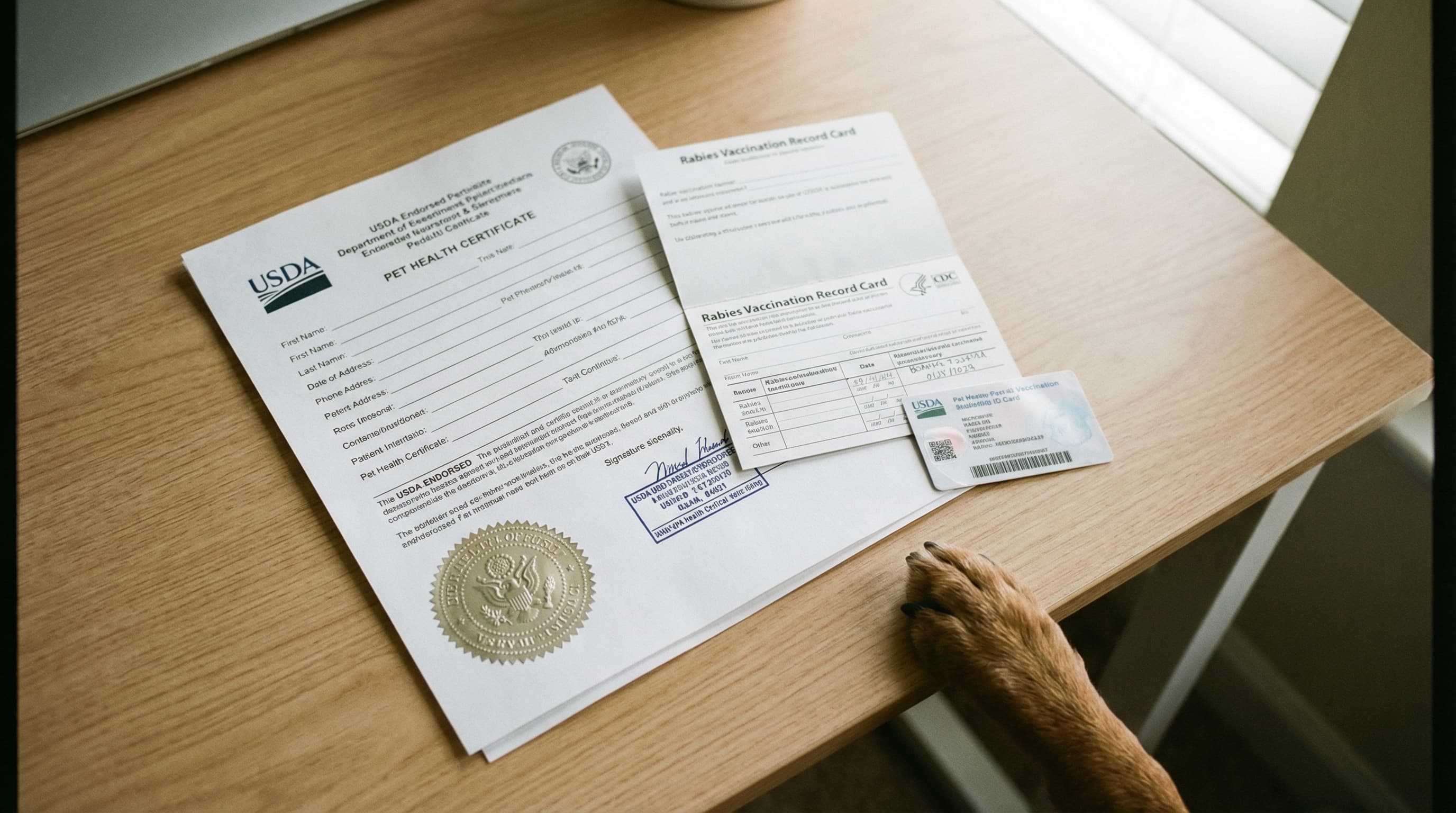
What you need instead is the EU Animal Health Certificate, an official veterinary document that proves your pet meets EU entry standards. It does the same job as the passport for your initial entry. The difference: the AHC has a limited validity window, while the passport works indefinitely (as long as vaccinations stay active).
Every forum thread asking "how do I get an EU pet passport" is really asking how to get the AHC. That's what this guide covers.
What You Need Before the Vet Visit
Have these in place before you schedule the health certificate appointment:
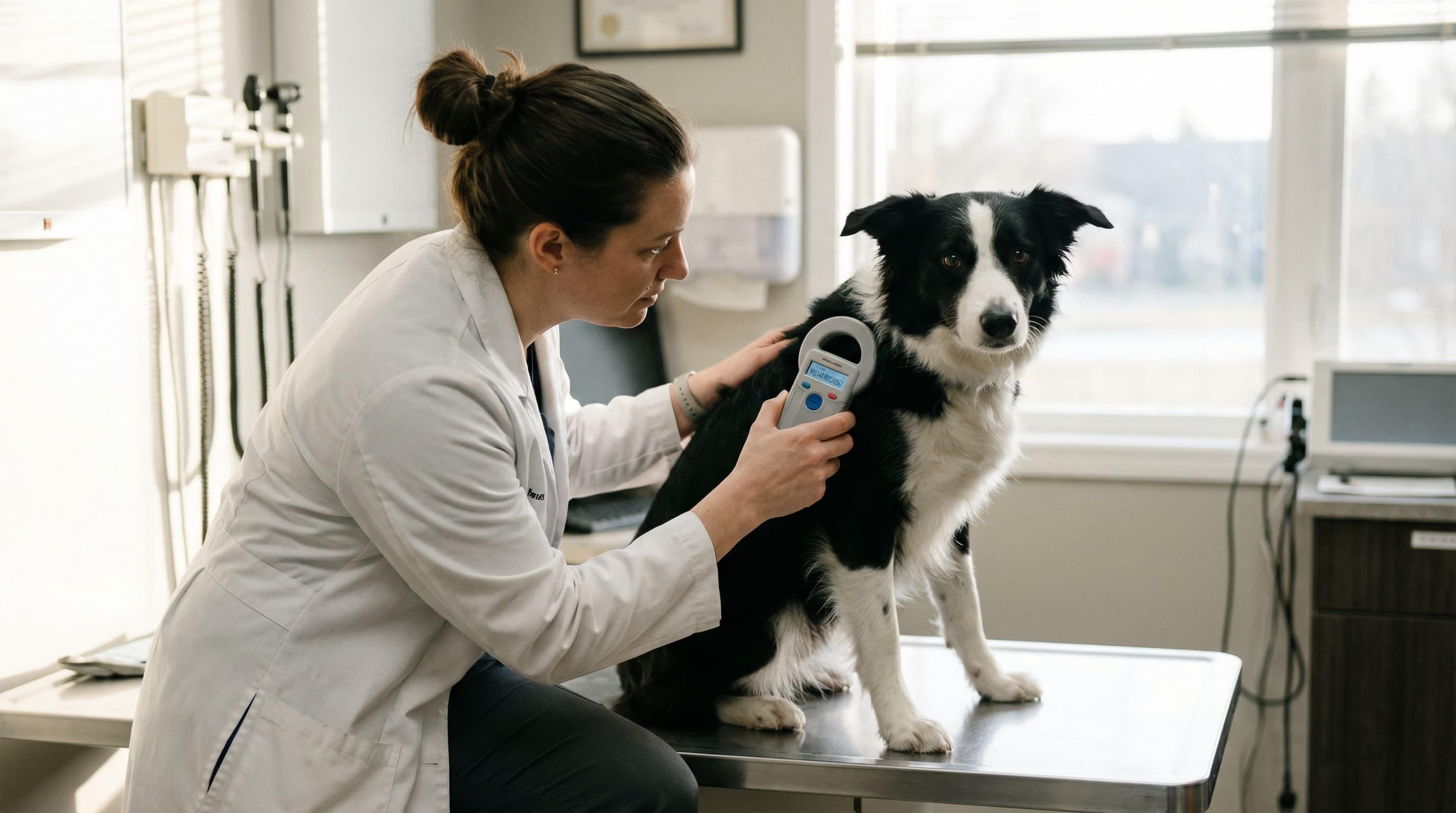
- ISO microchip: implanted before the rabies vaccine. A 15-digit chip at 134.2 kHz. If your pet has an older 9-digit chip, get a second ISO chip implanted first. See our microchip guide for details.
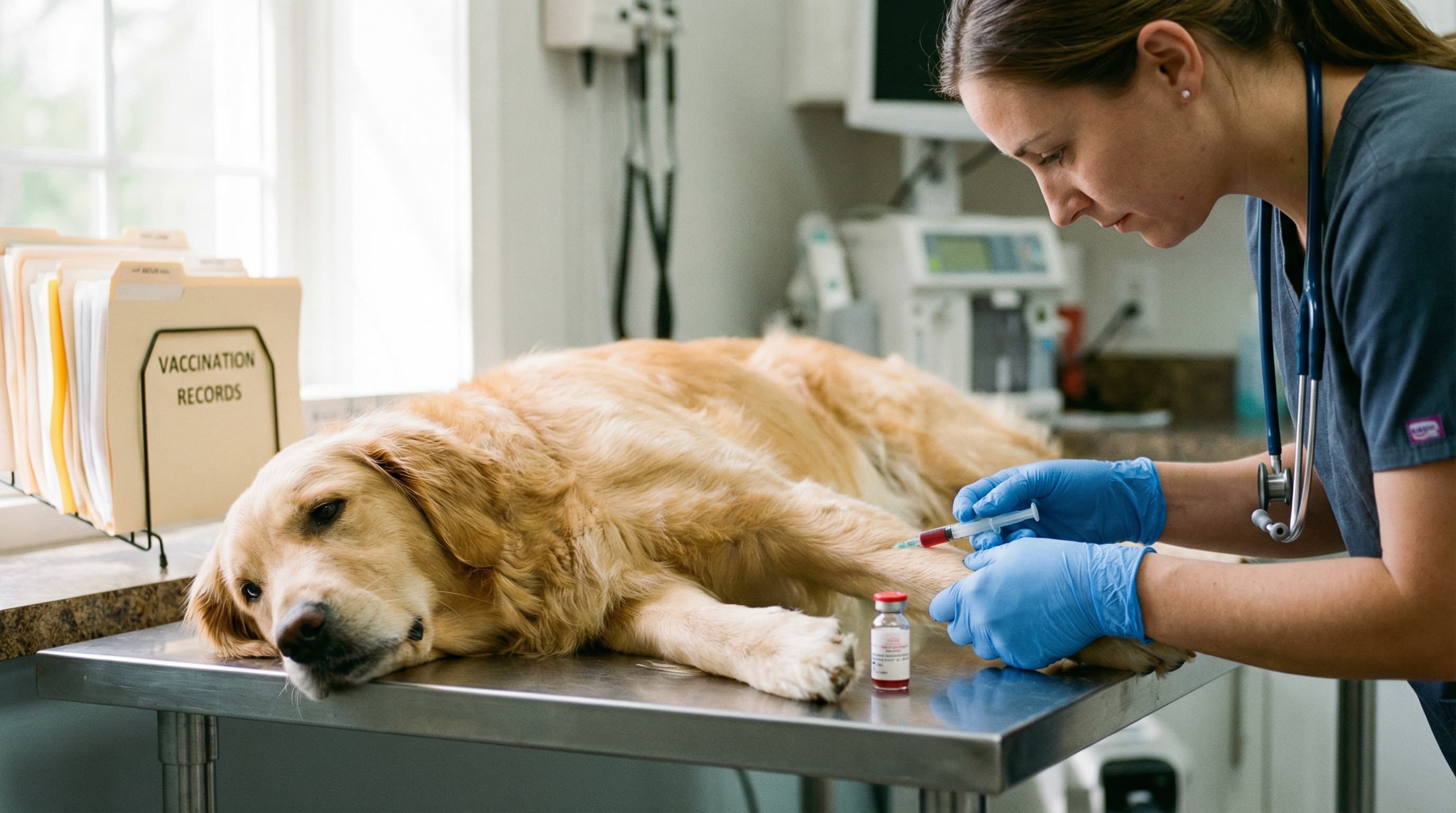
- Active rabies vaccine: given after the microchip, at least 21 days before travel. Your pet must be at least 12 weeks old at the time of vaccination. Boosters count immediately. Only the first-ever rabies vaccine triggers the 21-day wait.
- USDA-accredited veterinarian: not every vet holds this accreditation. You need one who can fill out the EU health certificate form and whose signature USDA APHIS will endorse. Find one near you.
No rabies titer test is needed. The US is on the EU's approved country list (Annex II), so the antibody test that countries like Japan and Australia require doesn't apply here.
Critical
How to Get the EU Animal Health Certificate
Step 1: Confirm the microchip and vaccine.
At your appointment, your vet scans the microchip and confirms the rabies vaccine is active with at least 21 days elapsed since the primary shot. If your pet needs a booster (expired or near-expiring), get it. Boosters don't require another 21-day wait.
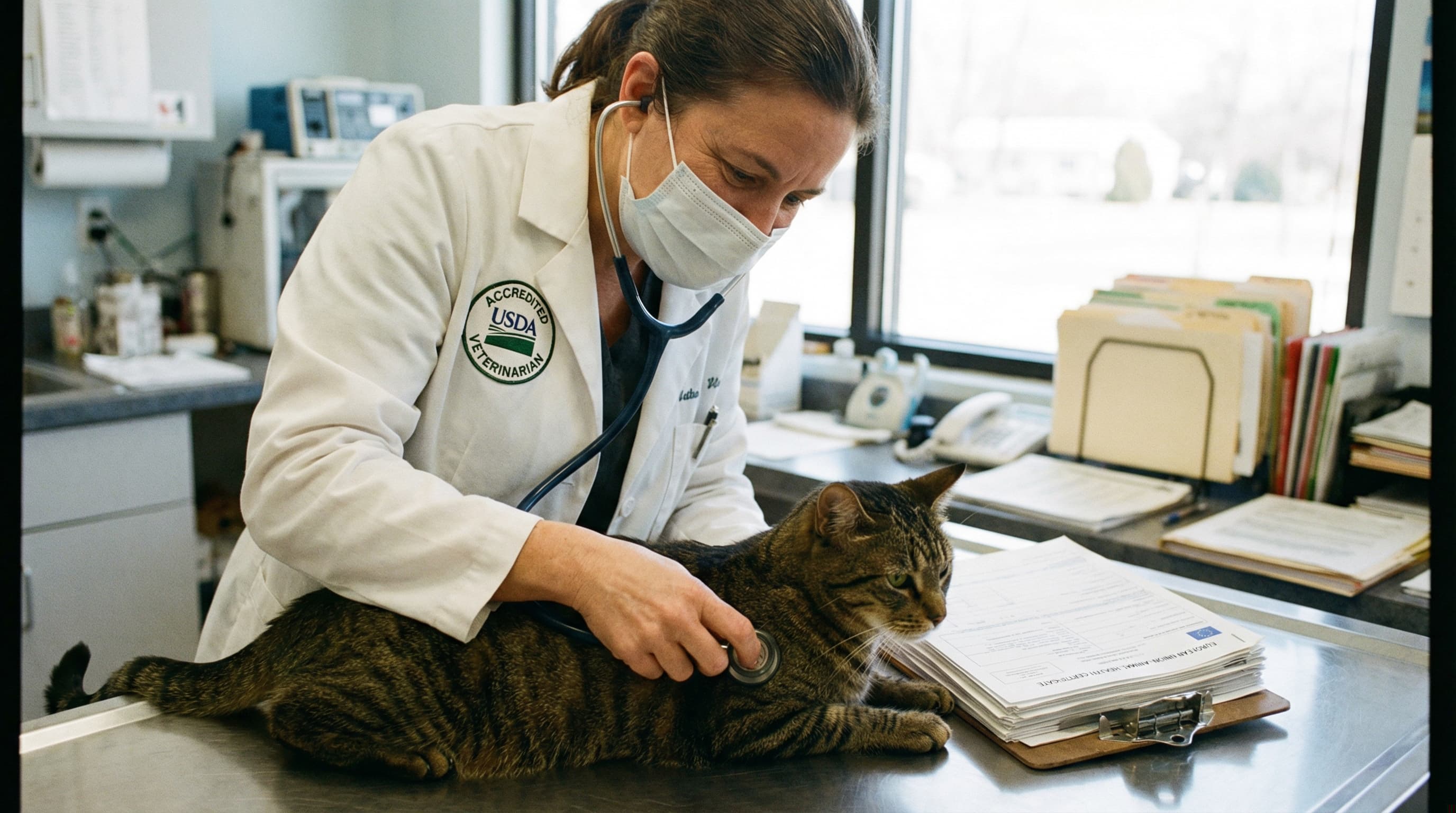
Step 2: Clinical examination and health certificate.
Your vet examines your pet, confirms it's healthy and fit to travel, and fills out the official EU health certificate form (Annex IV, Part 1). This is a specific multi-page form, not a generic USDA health certificate. It includes your pet's microchip number, vaccination dates, exam results, and your travel itinerary.
The form is available on the USDA APHIS pet travel page. Make sure your vet uses the correct version for your destination. The certificate is valid for 30 days after your vet signs it, so you have flexibility on when to schedule the appointment.
Step 3: Get USDA APHIS endorsement.
Submit the completed health certificate to your local USDA APHIS Veterinary Services office for endorsement. This is the federal stamp that makes your certificate valid for EU entry. Without it, border officials will reject the paperwork.
USDA endorsement takes 2–7 business days by mail, or same-day if you walk it in to a USDA office. Most vets submit electronically through VEHCS (Veterinary Export Health Certification System), which is faster.
Step 4: Arrive in the EU within 10 days of endorsement.
Your pet must enter the EU within 10 days of the USDA endorsement date — not the date your vet signed.
Watch OutThe 10-day clock starts from the USDA endorsement stamp, not the vet's signature. If you mail the certificate to USDA and it sits in a queue for a few days, those days count. Submit via VEHCS or walk it into a USDA office for same-day endorsement if your travel date is tight.
After entry, the certificate stays valid for 4 months of travel within the EU.
Tapeworm Treatment for Dogs
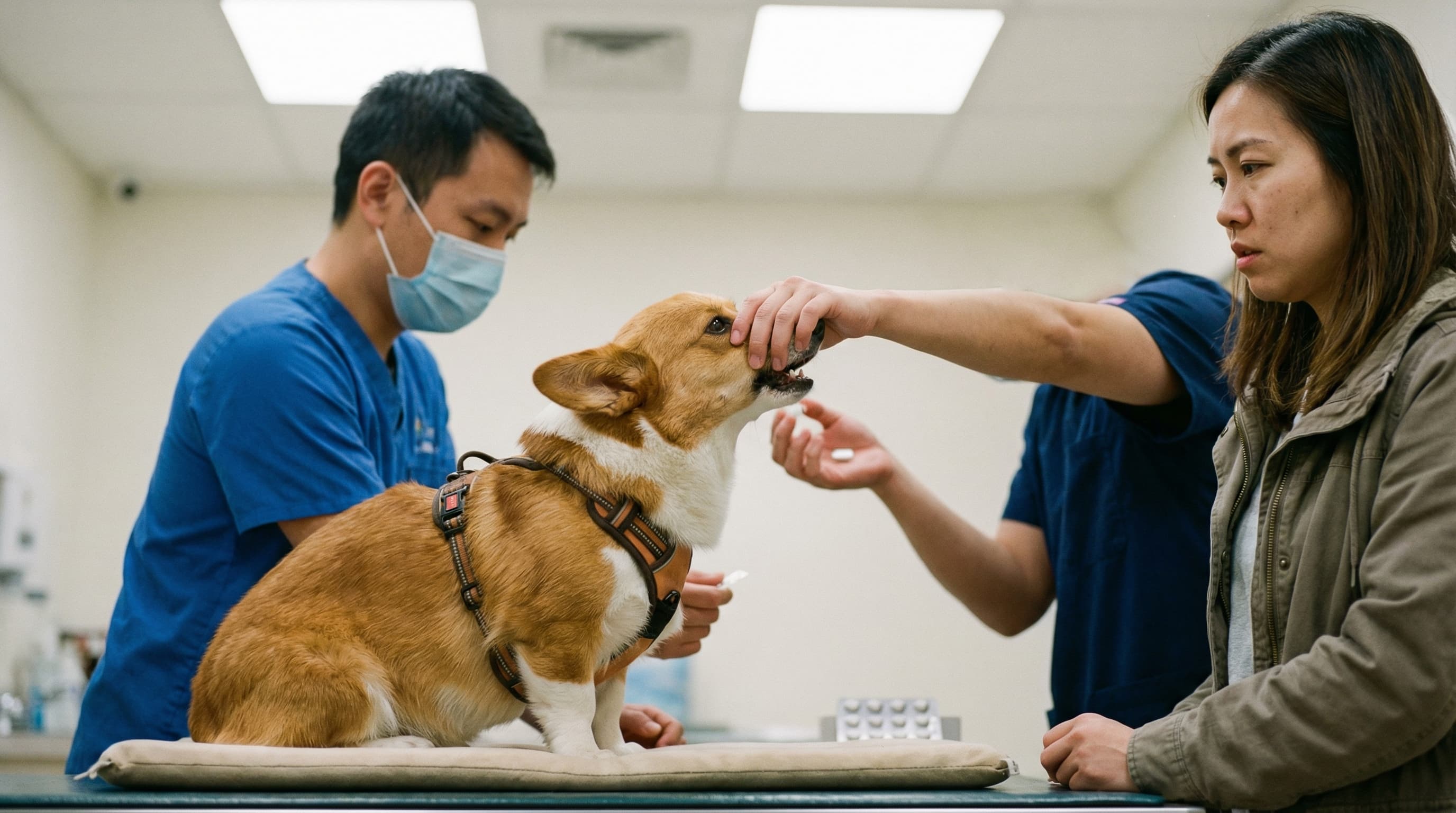
If you're flying to Finland, Ireland, Malta, Norway, or Northern Ireland, your dog needs an Echinococcus (tapeworm) treatment before arrival. Cats are exempt.
Your vet administers praziquantel (or an equivalent) and records the treatment on the health certificate. The treatment must be given 24 to 120 hours before your pet arrives at the destination. The clock is from arrival, not departure. On a direct flight, the difference is small. On a connection with an overnight layover, it matters.
This catches people flying through Helsinki or Dublin who didn't realize the final destination triggers the requirement. If you're connecting through Finland to reach Sweden, and you clear customs in Finland, the tapeworm treatment applies.
How Long the Certificate Lasts in Europe
The AHC has two validity windows:
For initial entry: 10 days from the date of USDA endorsement. Your pet must arrive in the EU within this window or the certificate expires.
For travel within the EU: Once you've entered, the certificate stays valid for 4 months from the date of the clinical exam (or until the rabies vaccine expires, whichever comes first). During those 4 months, you can cross between EU countries freely (France to Italy to Spain) without new paperwork.
After 4 months, you need either a new AHC (which means going back to the US or getting one from a non-EU country) or an EU pet passport issued by a local vet in Europe.
Can You Get an EU Pet Passport While in Europe?
Yes, sometimes. The EU pet passport can be issued by any authorized veterinarian in an EU member state. Some vets will issue one to non-EU residents who are already in the country with a valid AHC.
When it works, it takes one vet appointment: bring your pet, the AHC, and vaccination records to a local vet. They transfer the information into a passport booklet and it's done. Cost: roughly 20–30 EUR.
The catch: not every vet will do this for non-residents. It varies by country and even by individual practice. Spain and Portugal are reported as generally willing. Call ahead before counting on it.

Why bother? If you're staying in Europe longer than 4 months, or planning to travel between EU countries frequently, the passport replaces the need for a new AHC each time. One document, valid as long as the rabies vaccine stays active.
Cost Breakdown
| Item | Cost range |
|---|---|
| ISO microchip (if needed) | $25–$75 |
| Rabies vaccine (if needed) | $20–$50 |
| Vet exam + health certificate | $100–$250 |
| USDA APHIS endorsement | $101 per certificate |
| Tapeworm treatment (dogs to select countries) | $15–$30 |
| Total (dogs) | $200–$450 |
| Total (cats) | $185–$415 |
Cats skip the tapeworm treatment. Everything else is the same.
If you're getting the EU pet passport while in Europe, add 20–30 EUR for the vet visit and passport booklet.

Timeline
Before travel: Confirm ISO microchip. Give rabies vaccine after the chip is implanted (if not already active).
Day 21+: Earliest vet appointment for the health certificate. The 21-day wait applies only to the first-ever rabies vaccine. Boosters are immediate.
Up to 30 days before travel: Vet completes the EU health certificate form. You have 30 days from the signing date to use it.
After signing: Submit for USDA endorsement. Allow 2–7 business days by mail, same-day in person or via VEHCS.
After endorsement: 10-day window to arrive in the EU. Count forward from the endorsement stamp date, not the signing date.
After entry: Certificate valid 4 months within the EU. After that, get an EU pet passport from a local vet or return to the US to get a new AHC.
Common Mistakes

FAQ
Your next step: Find a USDA-accredited vet near you and get the EU health certificate filled out and endorsed by USDA within 10 days of your flight. The 21-day rabies wait is the real bottleneck — if your pet's vaccine isn't active yet, that's where your timeline starts.