If the vet finds any errors later, they must strike through the mistake and initial it. White-out on a health certificate is an automatic rejection by USDA. If corrections make the form illegible, start with a fresh certificate.
Pet Health Certificate for Travel: 2026 Guide
14 min readdocuments

Dr. Sarah Chen
Travel Veterinarian
Quick answer: A pet health certificate costs $150–475+ total (vet exam + USDA endorsement) and takes 3–7 business days from vet visit to endorsed certificate in hand. Your USDA-accredited vet examines your pet, fills out the health certificate, and submits it to USDA APHIS for endorsement.
The endorsed certificate must travel with your pet. Start 7–10 days before your flight — not sooner, because most certificates expire within 10 days.
What a Health Certificate Is and Why You Need One
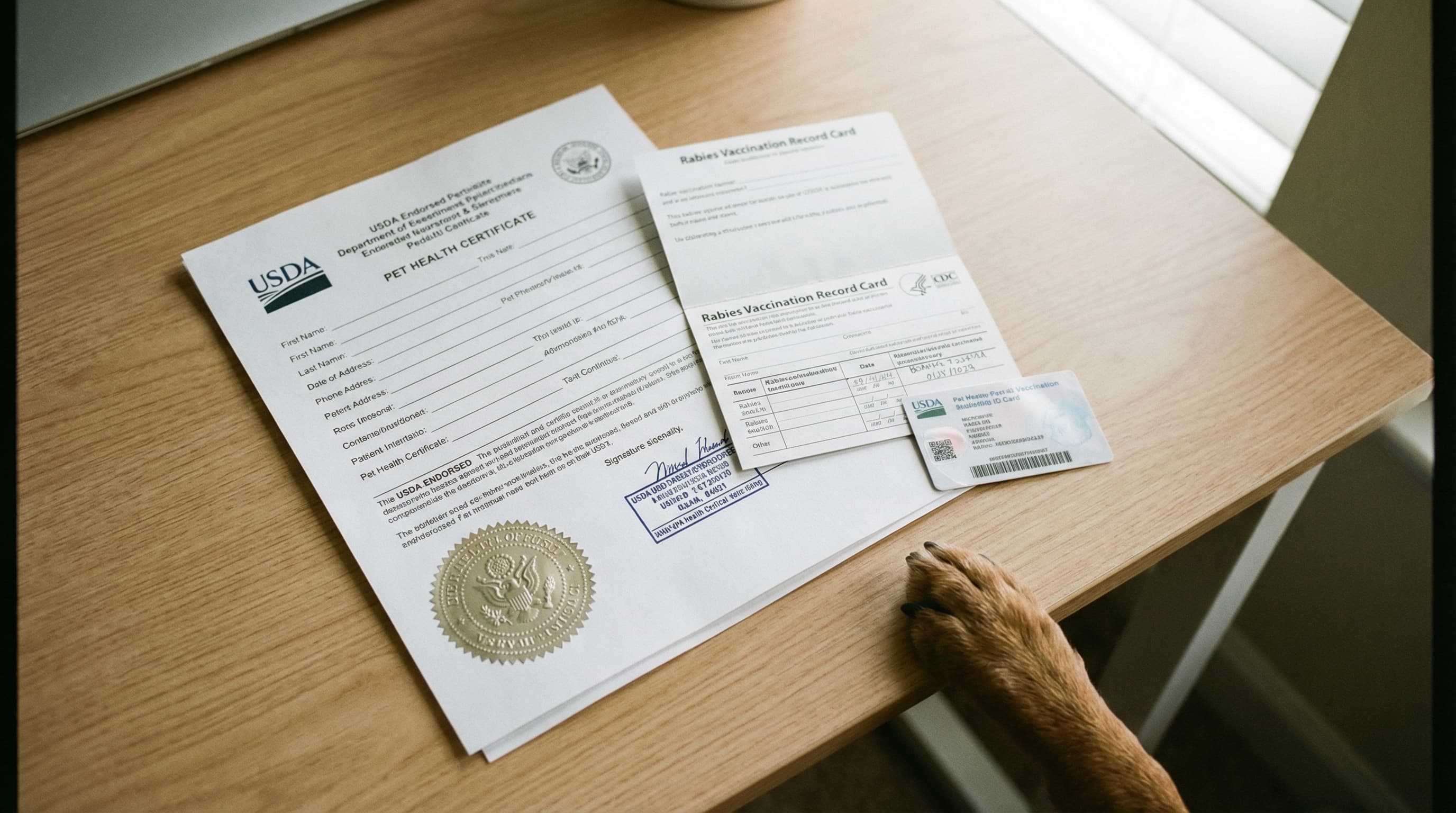
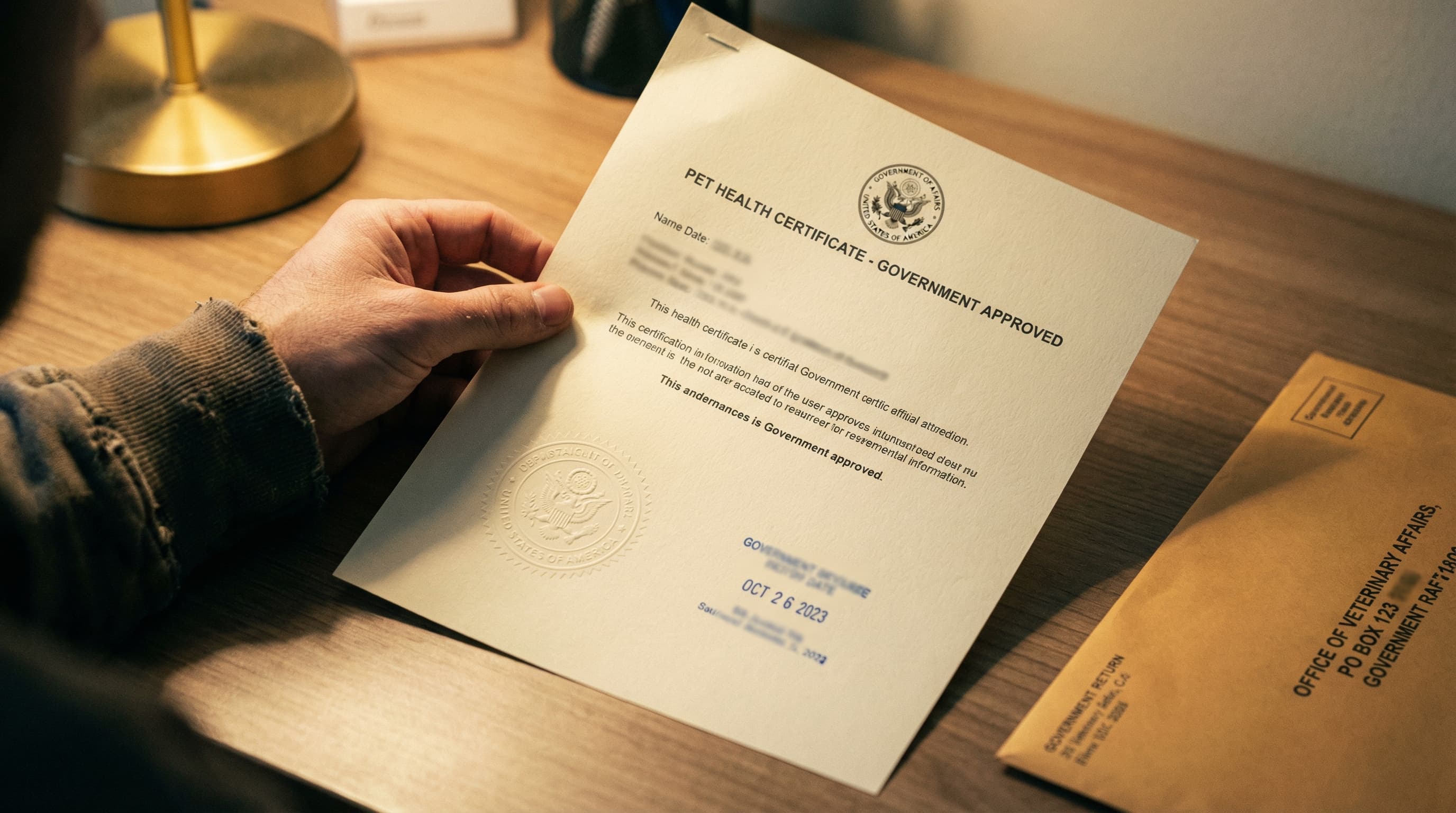
A health certificate is an official document signed by a USDA-accredited vet confirming your pet is healthy and meets the destination country's entry rules.
USDA APHIS then endorses it — adding a government stamp that tells the destination country "yes, a licensed US vet examined this animal, and we confirmed the paperwork."
Almost every country requires one for pet entry. Airlines check it at the counter before letting your pet board.
Customs officials check it when you land. Without it, your pet gets denied boarding or sent back at your expense.
The certificate covers your pet's identity (microchip number, breed, age), vaccination records, test results, and the vet's finding that your pet is healthy and free of contagious disease. It's the single most important document in international pet travel.
What You Need Before You Start
Before booking the vet appointment:
- A USDA-accredited veterinarian. Not every vet qualifies. Your vet must have completed USDA's National Veterinary Accreditation Program (NVAP). Find one near you — search by state and county. If your regular vet isn't accredited, they can still do vaccines and tests, but only an accredited vet can sign the health certificate
- Active rabies vaccination. Most countries require this. Your pet's rabies shot must be active (not expired) on the day the certificate is signed. Many countries also specify a minimum waiting period after vaccination (typically 21–30 days)
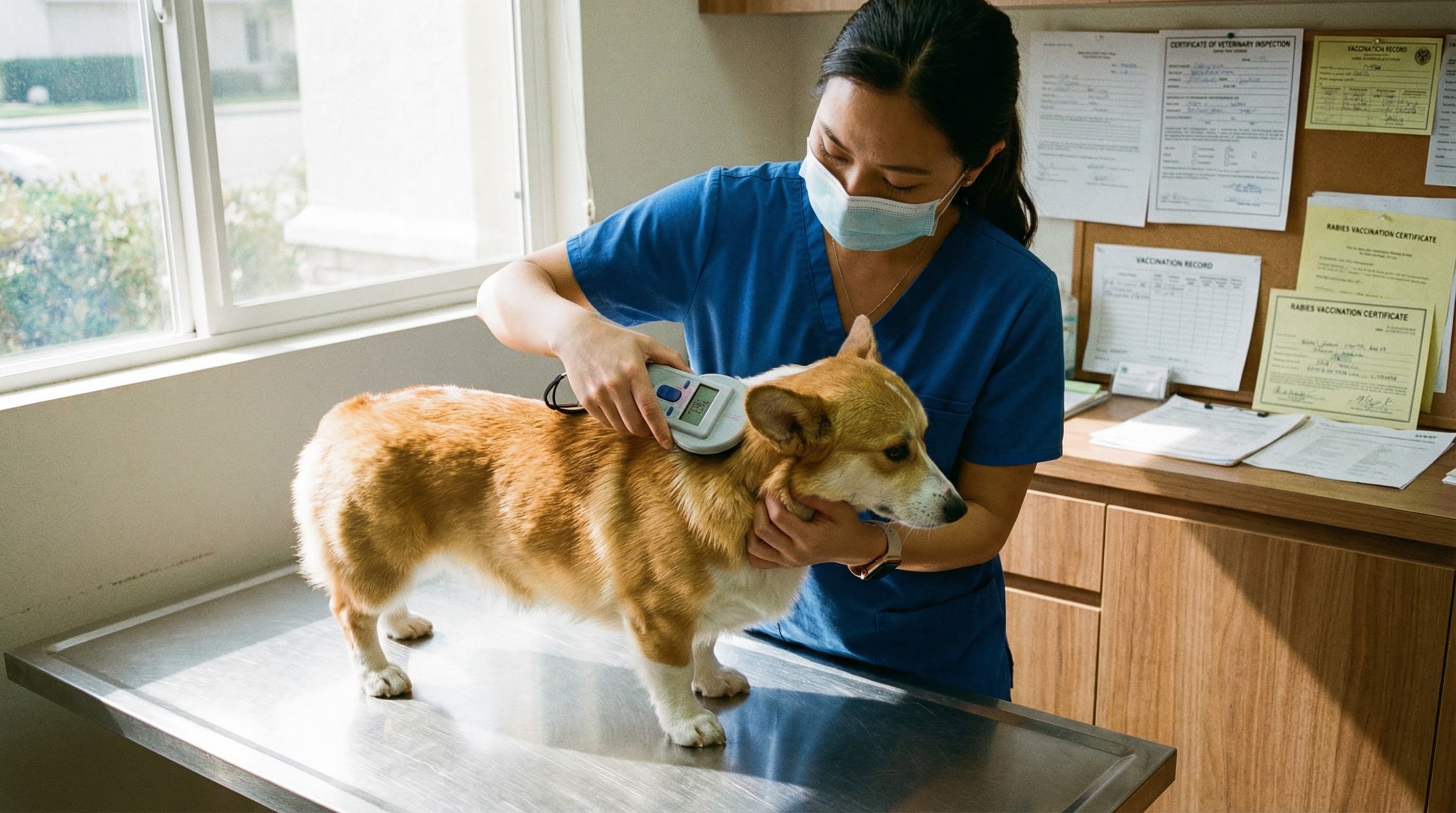
- ISO microchip (for most international destinations). The 15-digit chip must be implanted before the rabies vaccine so the vaccine record links to the chip number. If your destination doesn't require a chip, get one anyway — it's $25–50 and it's the only way to prove ownership if your pet gets loose at the airport
- Destination country requirements. Different countries need different things on the certificate. Some need titer test results, parasite treatments, or specific vaccines beyond rabies. Your vet should look up the requirements on USDA APHIS Pet Travel before your appointment
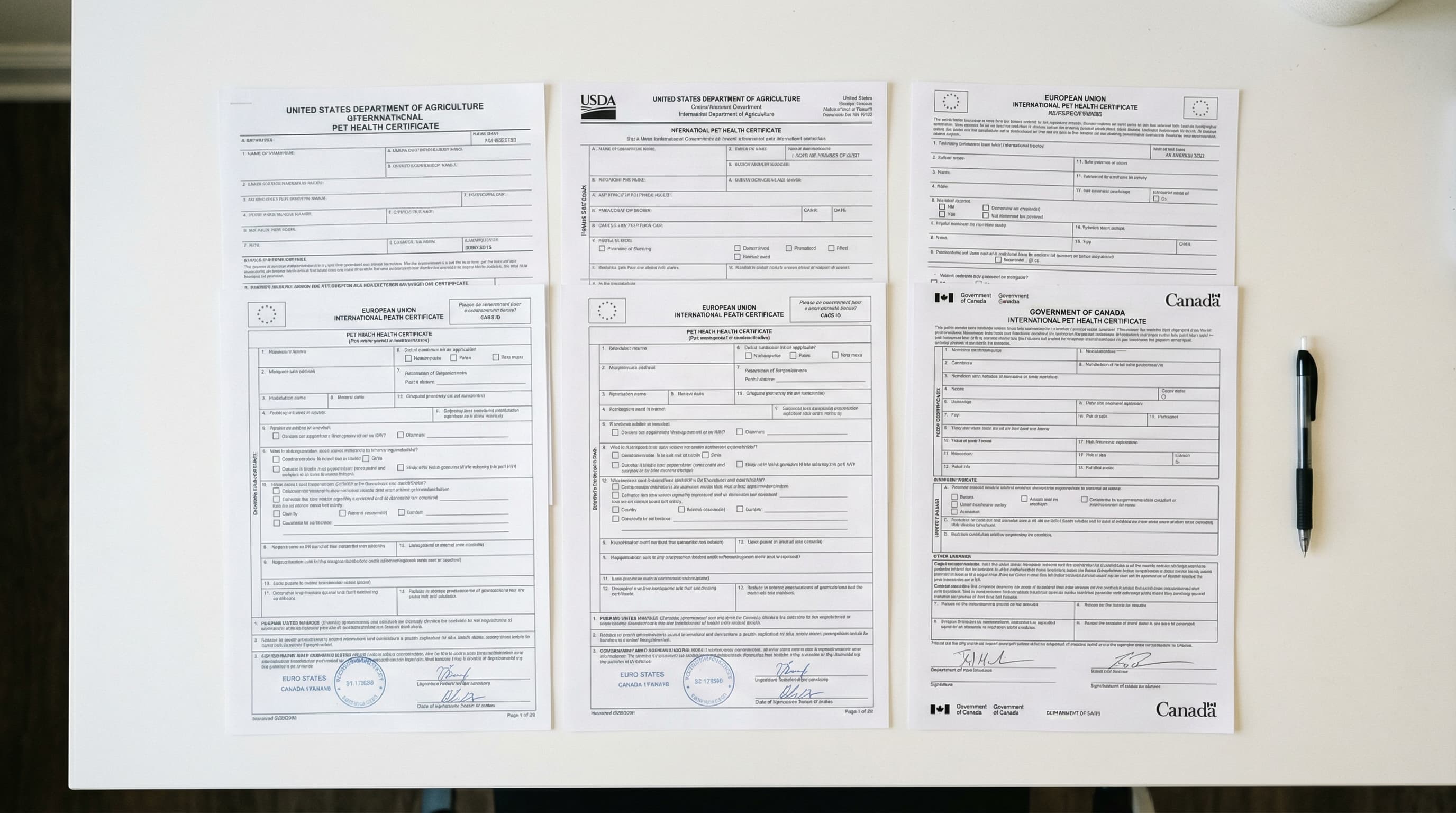
- The right form. This matters more than people think. The standard form is APHIS 7001 (International Health Certificate for Small Animals). But EU countries need a specific EU health certificate (based on Regulation 577/2013). Japan, South Korea, Iceland, and others have their own country-specific forms. Using the wrong form means starting over
The Health Certificate Process: Step by Step
Step 1: Find a USDA-Accredited Vet
Use AirPaws' vet finder to search by county, or browse by state. The vet must be accredited in the state where they're practicing — accreditation from another state doesn't count.
Not all accredited vets appear in the USDA's public directory (some opt out for privacy). If the search returns no results in your county, call clinics directly.
Step 2: Schedule the Appointment (Timing Is Everything)
Schedule your vet visit 5–7 days before your departure date. This gives you enough time for USDA endorsement while keeping the certificate fresh.
The certificate is typically valid for 10 days from the date the vet signs it. Some countries allow up to 30 days, but airlines almost universally enforce the 10-day window.
If you go too early, the certificate expires before you fly. Too late, and you won't have time for USDA to endorse it.
Count backward from your flight: travel day minus 5–7 days = vet appointment.

Step 3: The Vet Exam
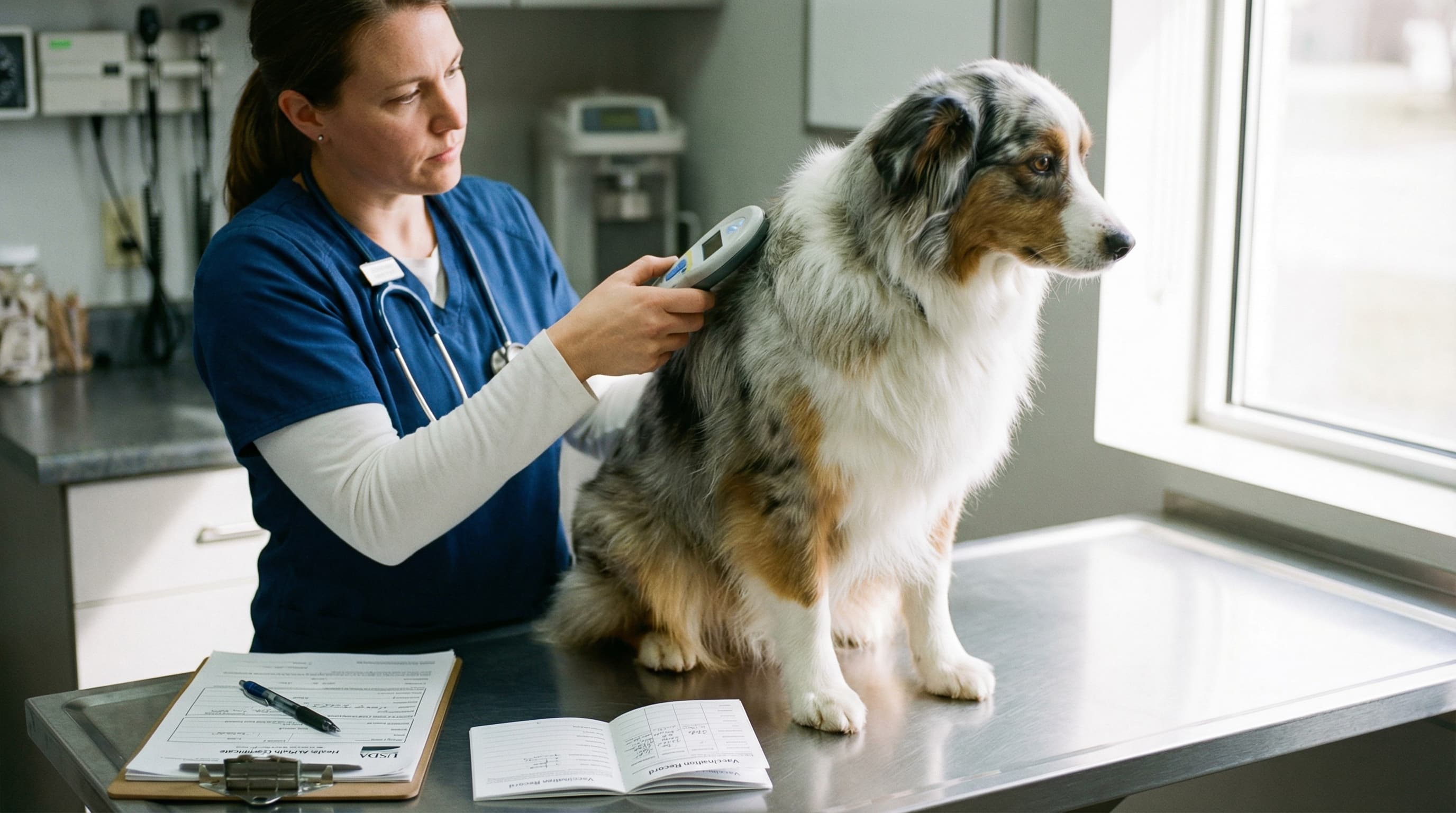
Your vet examines your pet and fills out the health certificate. The exam covers:
- Physical health check (no signs of contagious disease, external parasites, illness)
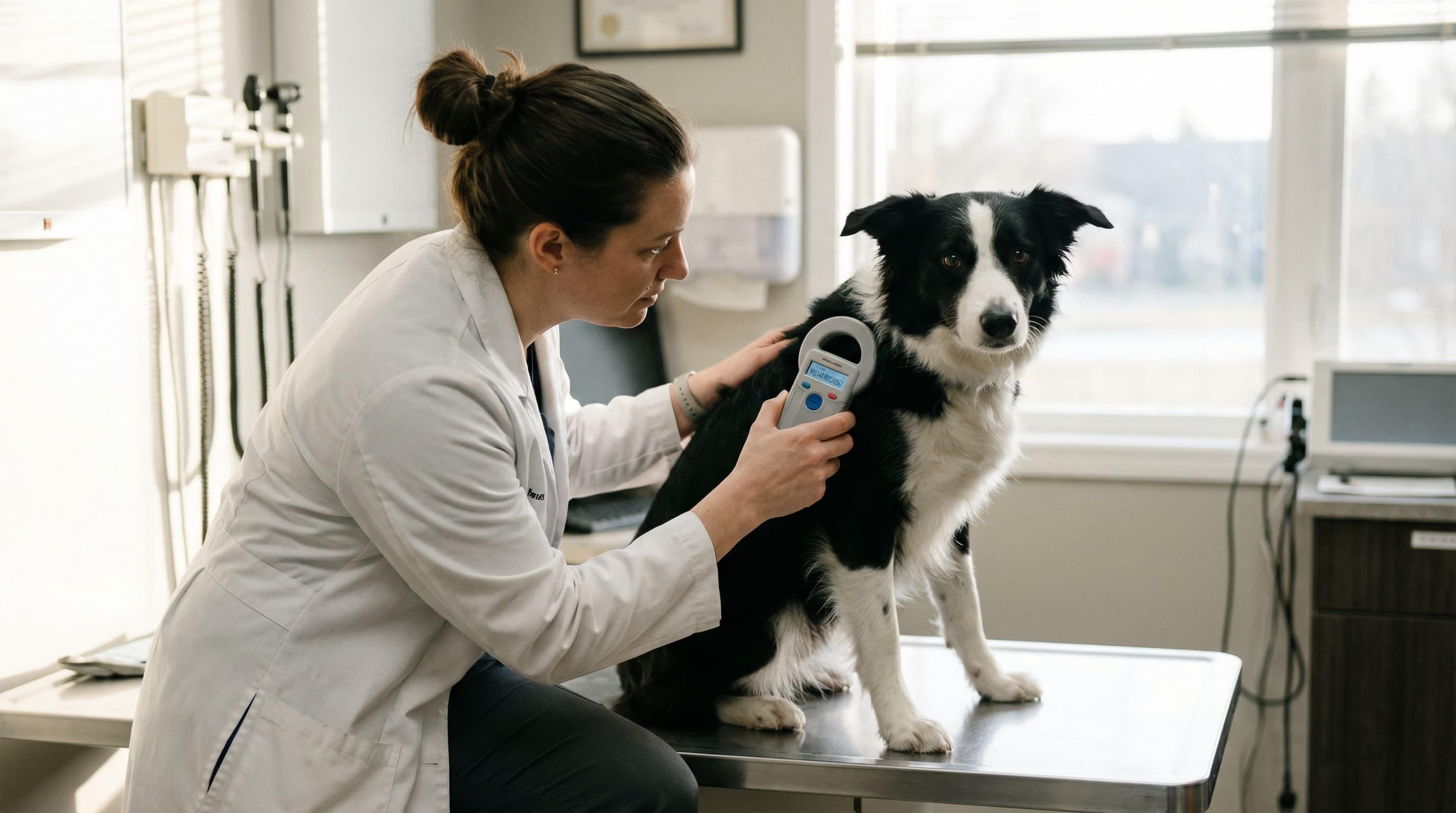
- Microchip scan to confirm the number matches all documents
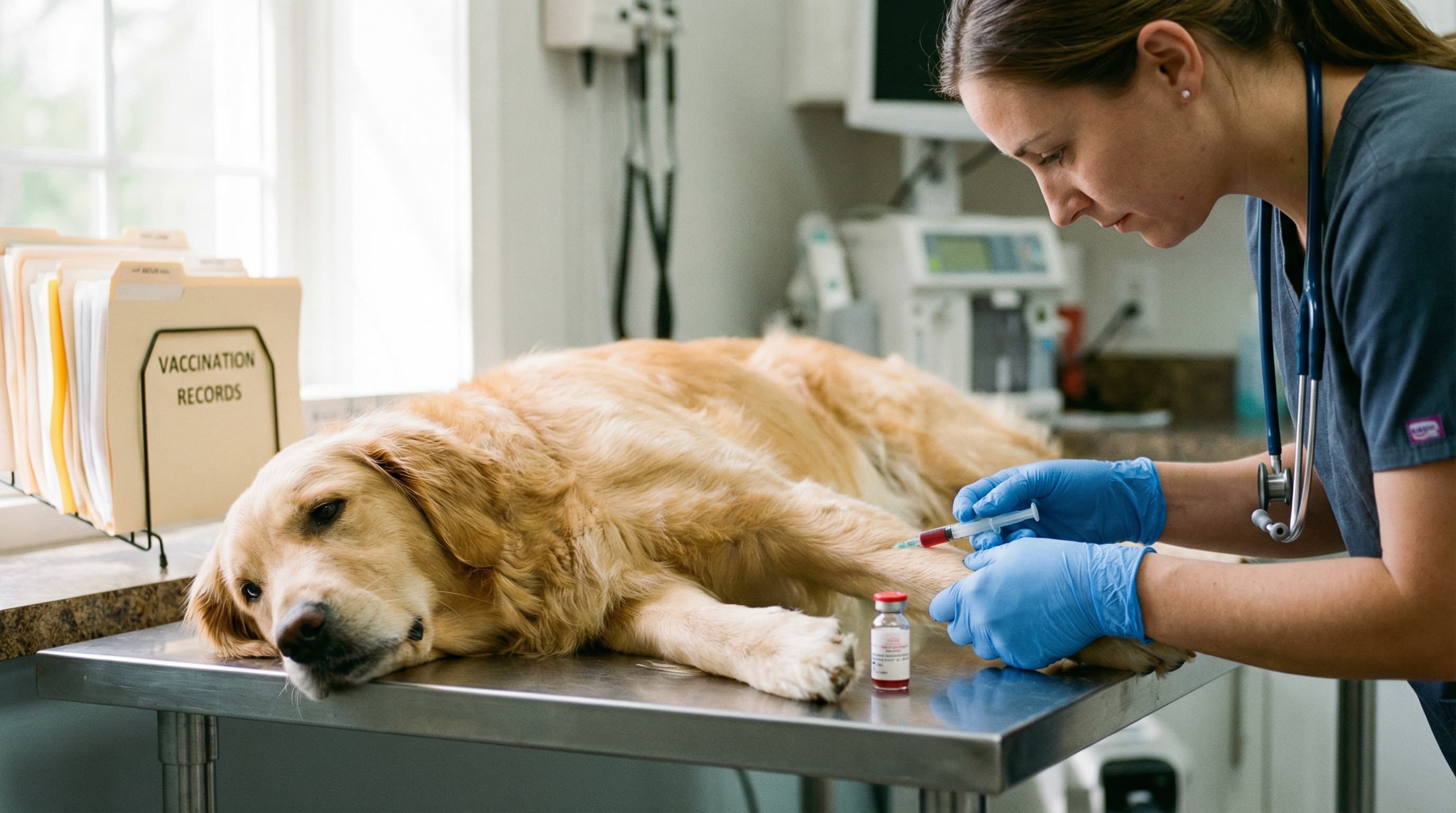
- Confirming that all vaccines are active and meet the destination's timing rules
- Review of any required test results (rabies titer, blood tests, fecal exams)
- The vet's signature, date, and license number
The vet signs the certificate. For paper submissions, NVAP guidance says to use a pen color other than black (blue ink is the standard choice) so the original can be distinguished from copies.
Critical
Step 4: Submit for USDA Endorsement
After the vet signs, the certificate goes to USDA APHIS for endorsement. There are two ways to submit:
Electronic (VEHCS) — fastest: Your vet creates and submits the certificate through VEHCS (Veterinary Export Health Certification System). For countries that accept digital endorsement, there's no mailing needed — your vet prints the endorsed certificate directly from VEHCS once APHIS approves it. VEHCS saves mailing time, though the review itself takes the same time as paper submissions.
Mail — slower but sometimes required: Your vet ships the paper certificate to the nearest USDA APHIS Endorsement Office. Include a pre-paid overnight return label.
Processing typically takes several business days after they receive it, plus shipping time both ways. In-person drop-off is not available — VEHCS and mail are the only two submission methods.
USDA offices operate Monday–Friday, 7:00 AM – 4:30 PM Central Time, excluding federal holidays. No weekend processing.
If you submit on Friday afternoon, expect the earliest return on Tuesday or Wednesday.
Not every country accepts electronic endorsement. USDA categorizes countries by a color-coded system:
| Color | What it means |
|---|---|
| GREEN | Fully electronic — digital endorsement, no embossed seal needed |
| ORANGE | Vet submits through VEHCS, but USDA prints and physically stamps/embosses. Needs return shipping label |
| PURPLE | Digital endorsement is commodity-specific — electronic for some species, physical for others |
| YELLOW | Both VEHCS issuance and digital endorsement are commodity-specific |
Most destinations fall under GREEN or ORANGE. Check your destination's color at USDA's VEHCS country list.

Step 5: Receive the Endorsed Certificate
USDA reviews the certificate, checks that everything matches the destination country's requirements, and endorses it. The endorsed certificate comes back to your vet (or is available to print from VEHCS for GREEN countries).
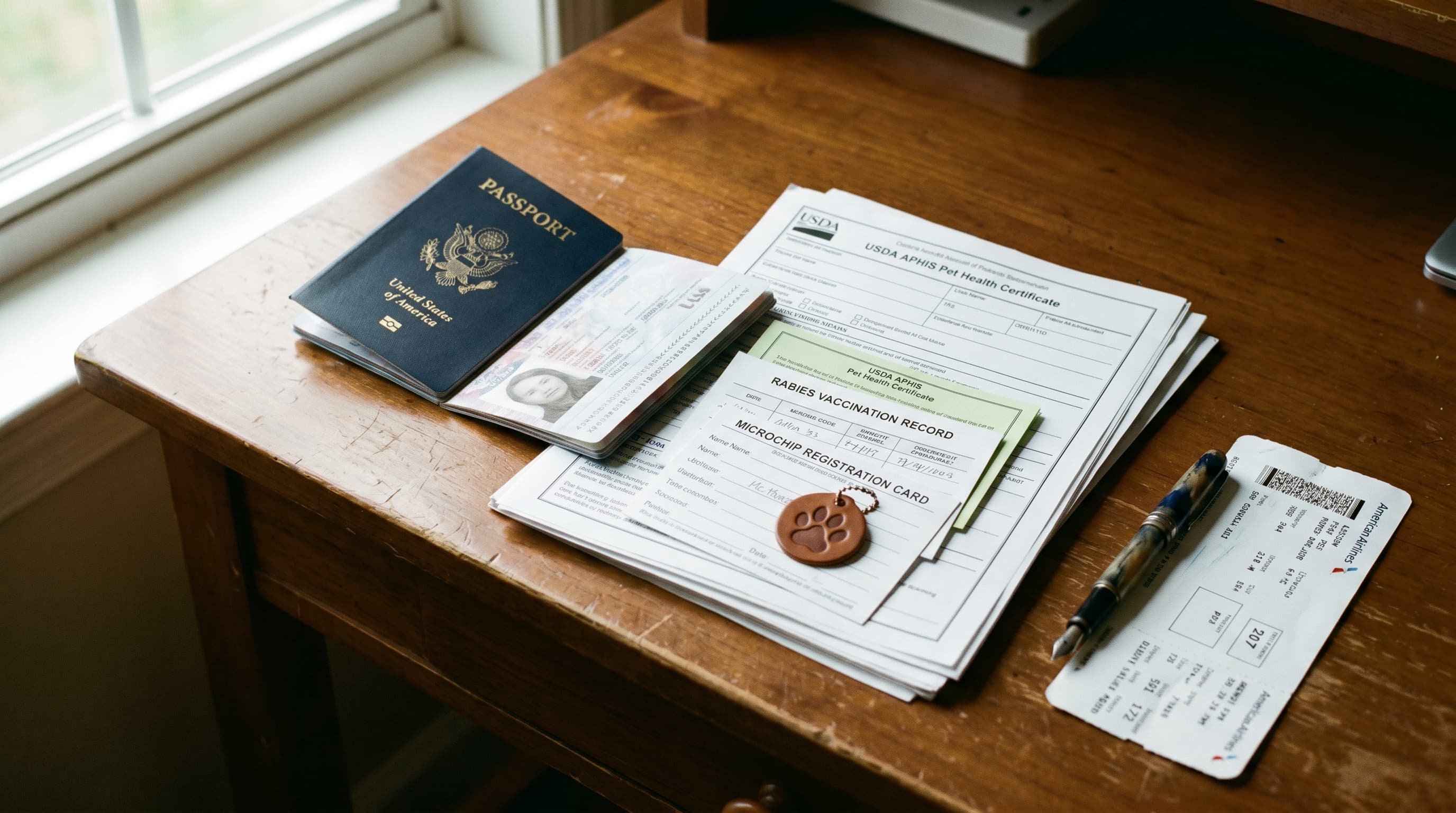
Even if the endorsement is digital, you must print a paper copy. The printed, endorsed certificate travels with your pet. Airlines and customs officials check the paper document.
Bring on travel day:
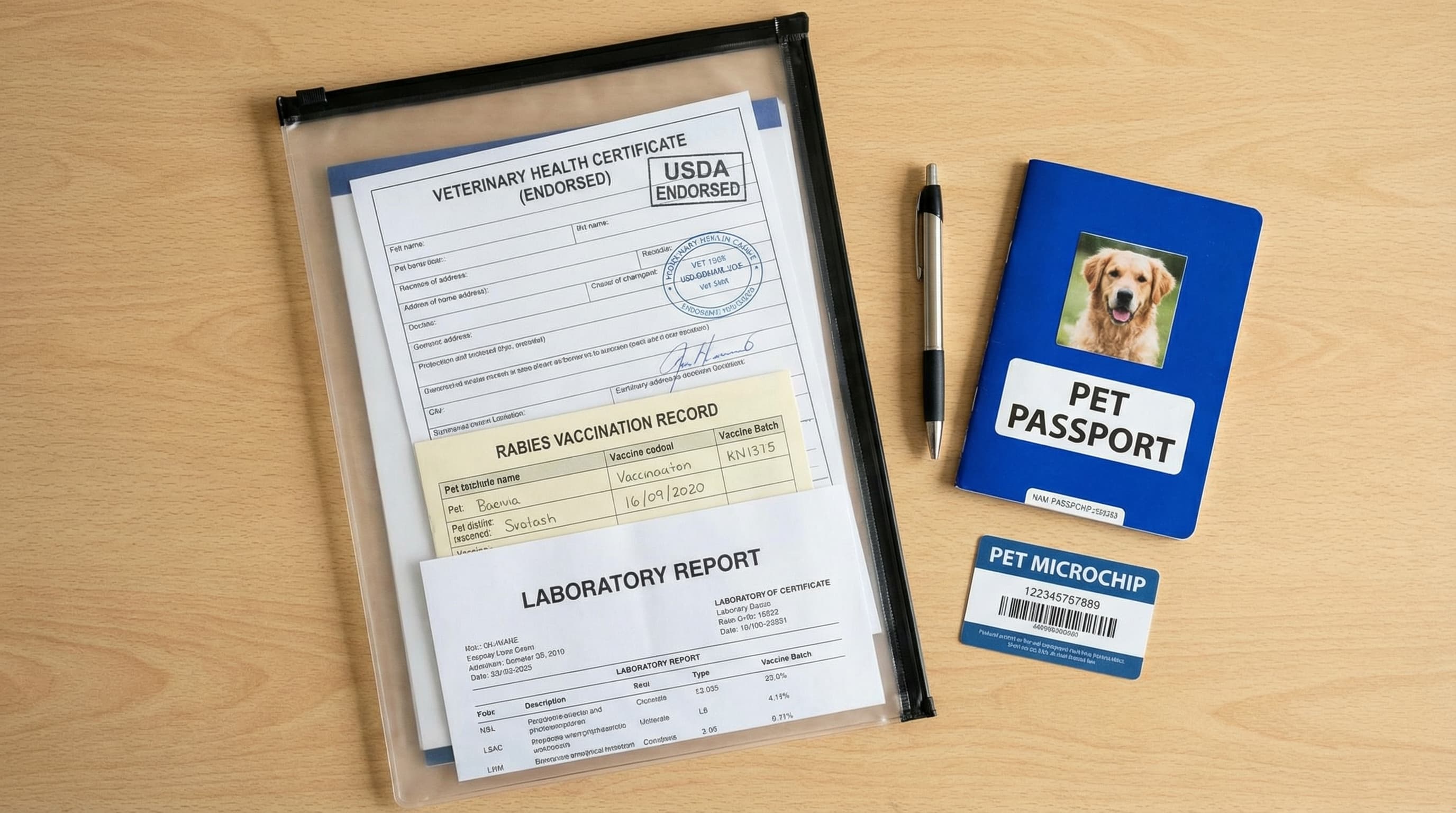
- Endorsed health certificate (original)
- Original rabies vaccination certificate
- Original lab reports (titer test, blood work, if applicable)
- Copies of everything as backup
Step 6: Travel
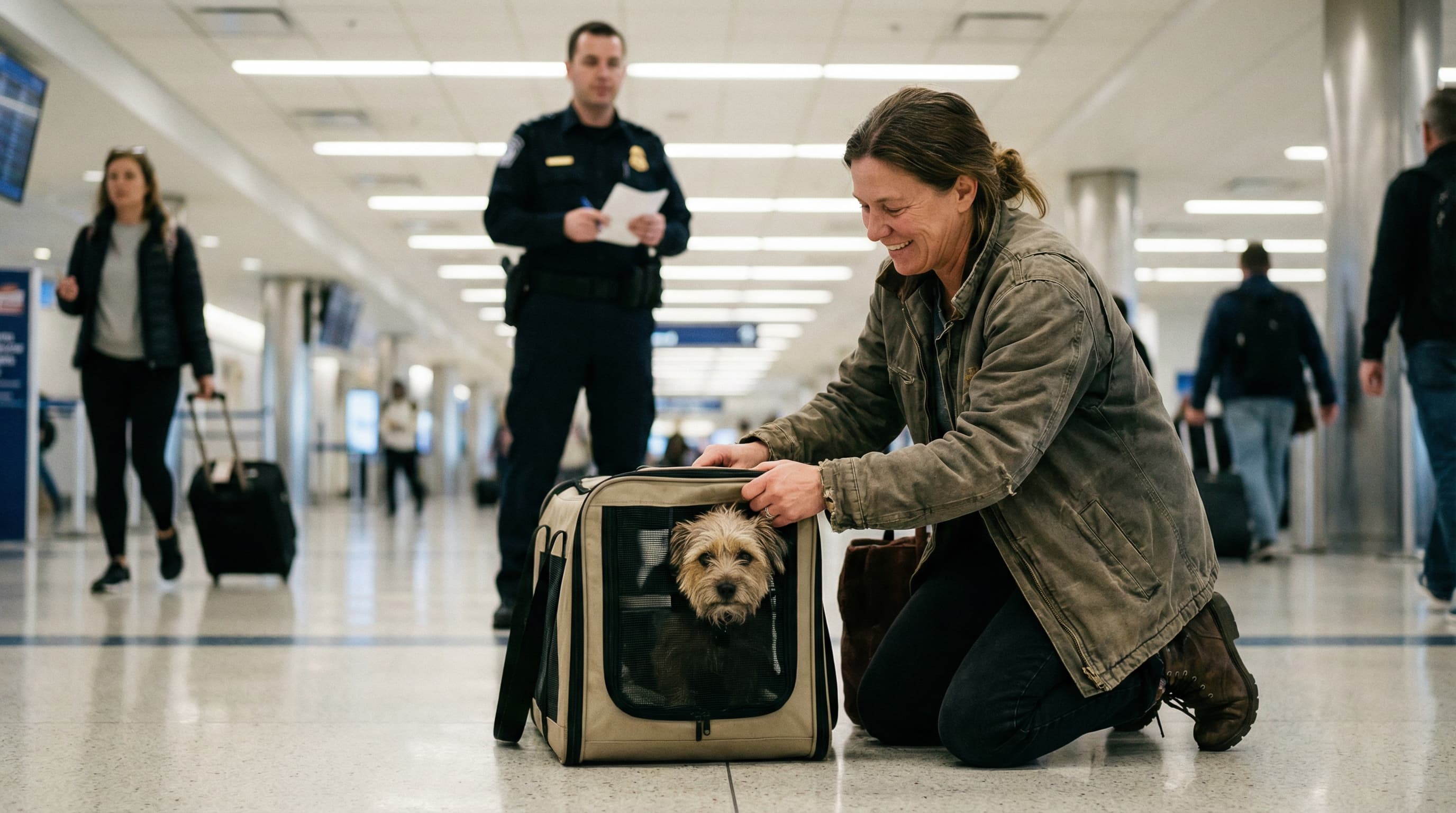
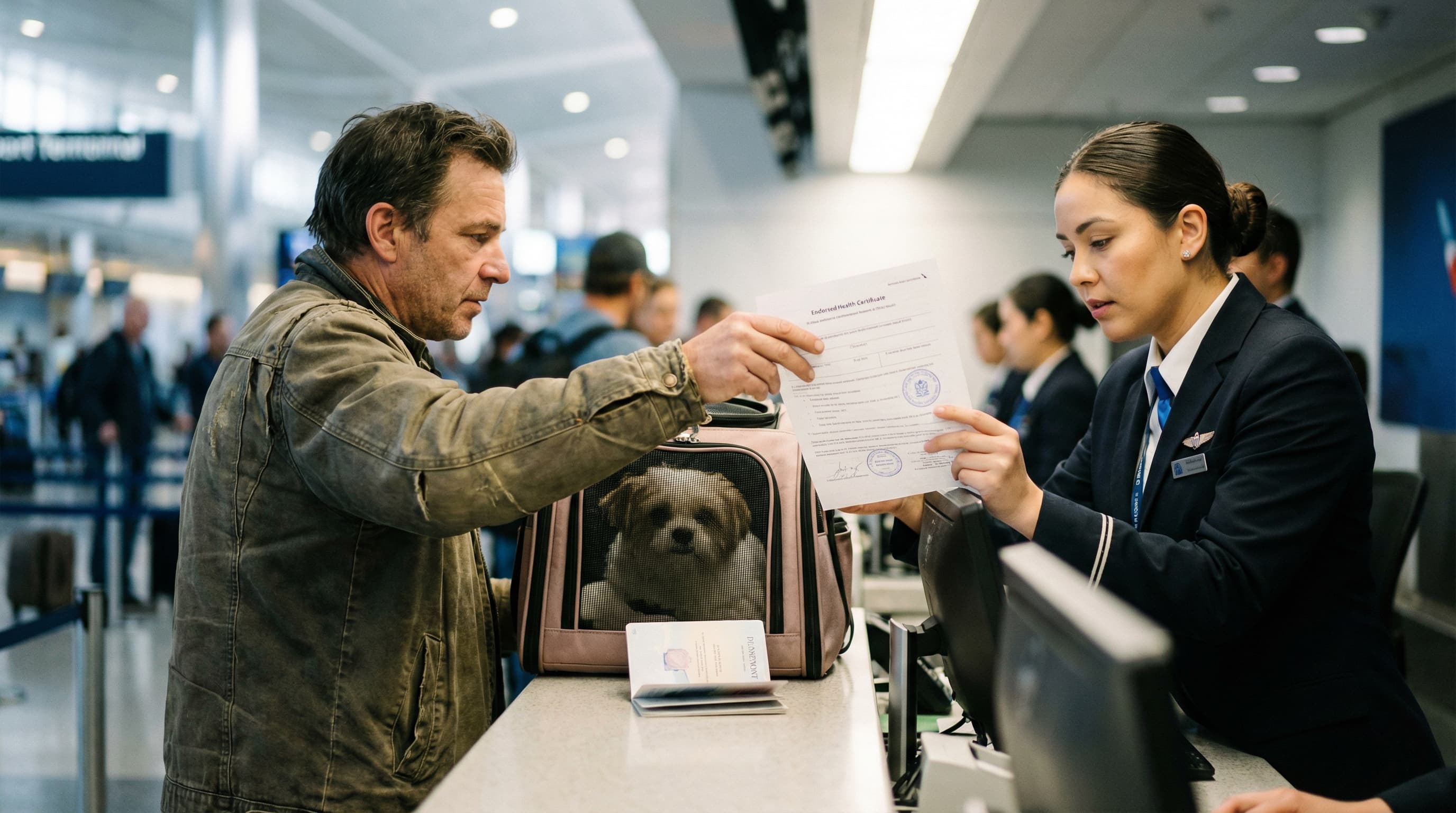
Airlines check the health certificate at the counter before issuing your boarding pass. At your destination, customs or agricultural inspectors check it again.
If anything is missing or expired, your pet doesn't board — or gets held at the destination.
Which Form Do You Need?
| Destination | Form | Notes |
|---|---|---|
| Most countries (general) | APHIS 7001 | Standard international health certificate |
| EU countries | EU pet health certificate (Annex IV, Reg. 577/2013) | EU-specific form |
| Japan | Form AC | Japan's own export certificate |
| South Korea | Korea-specific health certificate | With titer test results |
| Iceland | MAST forms (D2 for dogs, C2 for cats) | Sent directly to MAST, no USDA endorsement needed |
| UK | UK-specific health certificate | Pets enter via approved route as manifest cargo |
Your vet should check USDA APHIS Pet Travel for the exact form required by your destination. Using the wrong form is one of the most common reasons certificates get rejected.
USDA Endorsement Fees
USDA charges per certificate based on how many lab tests are on it. Vaccines don't count as tests.
| Lab tests on certificate | 1 pet | 2+ pets |
|---|---|---|
| 0 tests | $101 | $101 (flat) |
| 1–2 tests | $160 | $160 + $10 per extra pet |
| 3–6 tests | $206 | $206 + $18 per extra pet |
| 7+ tests | $275 | $275 + $21 per extra pet |
Source: USDA APHIS fee schedule, last updated January 2026.
Service animal exemption: USDA waives endorsement fees for ADA service dogs. Emotional support animals don't qualify for this waiver.
Payment: Fees must be paid before USDA endorses the certificate. Accepted: credit/debit card, check or money order (payable to USDA), or APHIS user fee account. For mailed submissions, include a completed credit card sheet in the package.
These fees do not include your vet's charges. The full cost breakdown:
| Vet exam + certificate | $50–200 | Varies by clinic and destination complexity |
| USDA endorsement | $101–275 | Based on number of lab tests |
| Total | $150–475+ | Per certificate, one pet |
Countries with extensive testing (Japan, South Korea, Iceland) push the endorsement fee to the higher tiers. Simple destinations (Mexico, Canada, most Caribbean) hit the lower end.

Timeline
7–10 days before departure: Schedule the vet appointment. Confirm your vet is USDA-accredited and has the correct form for your destination.
5–7 days before departure: Vet exam. Vet fills out and signs the health certificate. Submits to USDA through VEHCS (electronic) or ships overnight to the endorsement office (paper).
3–5 days before departure: USDA processes the endorsement. For VEHCS/GREEN countries, there's no mailing delay — just the review time. For paper submissions, add shipping time both ways.
1–2 days before departure: Receive endorsed certificate. Print if digital. Organize all originals in a waterproof folder.
Travel day: Bring the endorsed certificate, original rabies certificate, and all original lab reports. Airlines check these at the counter. Arrive early — paperwork review adds time to check-in.
TipIf you're flying on a Monday, don't schedule the vet visit the previous Wednesday and expect USDA to process over the weekend. They don't. Back-calculate from your departure date using business days only.
Common Mistakes
Dogs vs. Cats: Any Differences?
The health certificate process is the same for dogs and cats. Both need a USDA-accredited vet exam, the same forms, and the same USDA endorsement.
The differences are in what destination countries require on the certificate:
- Dogs often need more vaccines and tests than cats (titer tests, Brucella, canine influenza depending on destination)
- CDC re-entry rules differ: dogs need a CDC Dog Import Form and microchip to return to the US; cats have minimal federal re-entry requirements
- Some countries have breed restrictions for dogs that must be checked before starting the process
The vet visit, the endorsement, and the timeline work identically for both species.
Countries That Skip USDA Endorsement
A few countries don't require USDA endorsement at all:
- Iceland — uses its own MAST forms (D2/C2), sent directly to MAST for approval
- Mexico — no health certificate needed for land entry since December 2019. Airlines may still require one for air travel
- Canada — simplified requirements for dogs and cats with active rabies vaccination
For every other international destination, assume USDA endorsement is needed unless APHIS confirms otherwise for your specific country.
FAQ
Your next step: Find a USDA-accredited vet near you and confirm they have experience with international health certificates for your destination country.