The 180-day wait starts when the RNATT blood sample arrives at the laboratory, not when you get results back. There are no exceptions. Your pet must also have resided in a Group 3 country (like the US) for at least 180 days immediately before export. If the sample arrives January 1, the earliest your pet can leave for Australia is July 1.
Bringing a Dog or Cat to Australia from the US — 2026 Requirements
21 min readinternational

Lisa Carter
International Pet Relocator
| Applies to | Dogs and cats (dogs need extra tests from the US) |
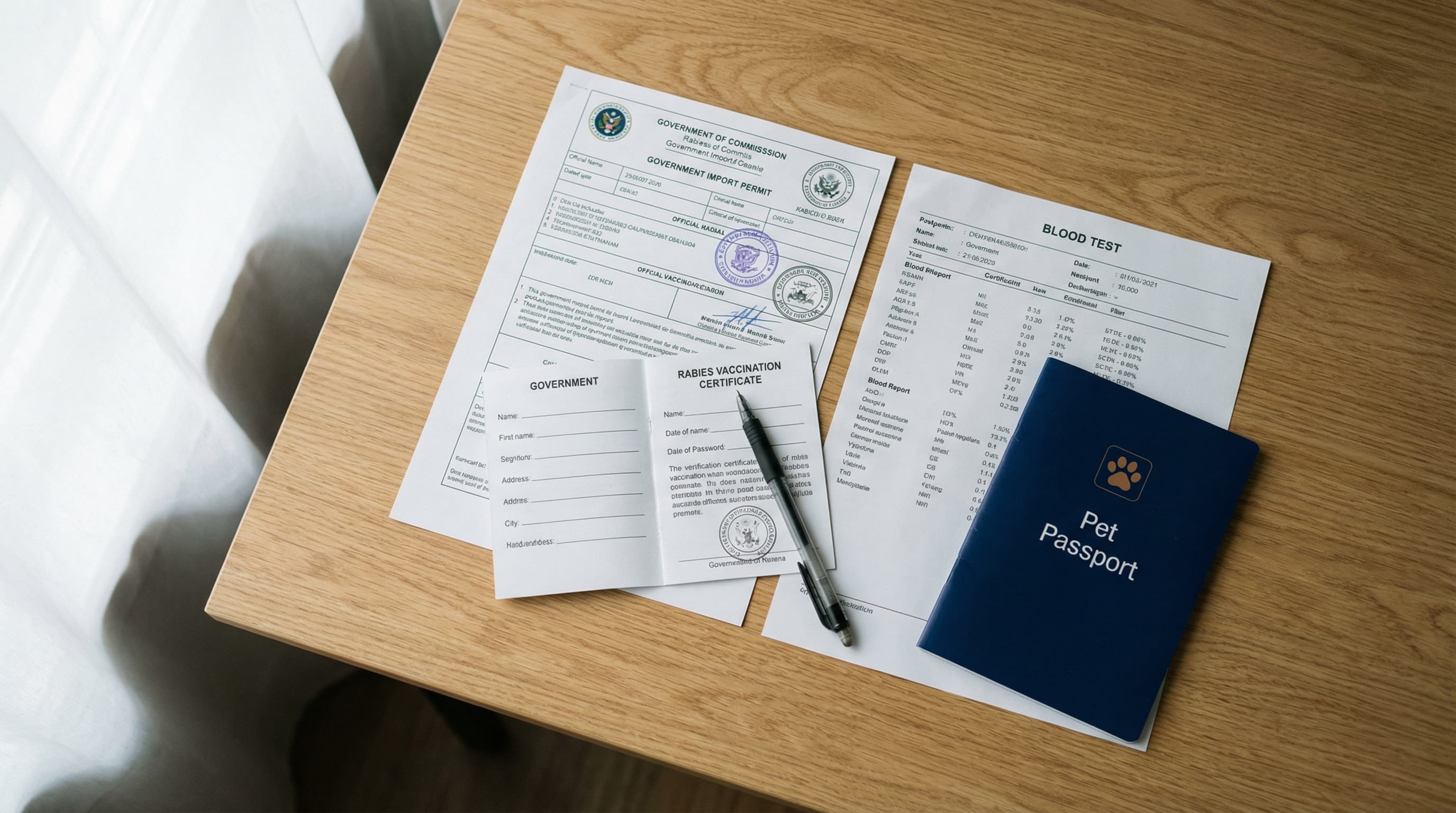
| Documents | Import permit (BICON) + health certificate + USDA endorsement + RNATT declaration + lab reports |
| Vaccines | Rabies (84+ days old). Dogs from US: also Canine Influenza (CIV) and Leptospira |
| Titer test | RNATT (FAVN or RFFIT), ≥0.5 IU/ml, 180-day wait from blood draw |
| Microchip | Required (ISO, 10 or 15-digit). 999-prefix chips not accepted |
| Quarantine | 10 days (with identity verification) or 30 days (without), at Mickleham only |
| Cost | $3,500–$8,500+ (dogs) / $2,700–$6,500+ (cats) |
| Timeline | Start 7+ months before travel |
| Difficulty | 🔴 Very Hard |
Flying to Australia from the US with your dog or cat costs $2,700–8,500+ and takes a minimum of 7 months. The US is a Group 3 country under Australia's biosecurity system.
Australia has the most restrictive pet import process of any English-speaking country: ISO microchip, rabies vaccination, a RNATT titer test with a 180-day wait, an import permit through BICON that takes up to 123 business days, and mandatory quarantine at Mickleham (outside Melbourne).
Your pet must fly as manifest cargo to Melbourne International Airport. No cabin, no other airport. Dogs from the US face extra tests that cats don't need, including canine influenza vaccination.
What You Need
Australia's Department of Agriculture, Fisheries and Forestry (DAFF) runs a 9-step import process. The US is classified as a Group 3 country, approved for import but with rabies-related testing and a waiting period.
Core rules for both dogs and cats:
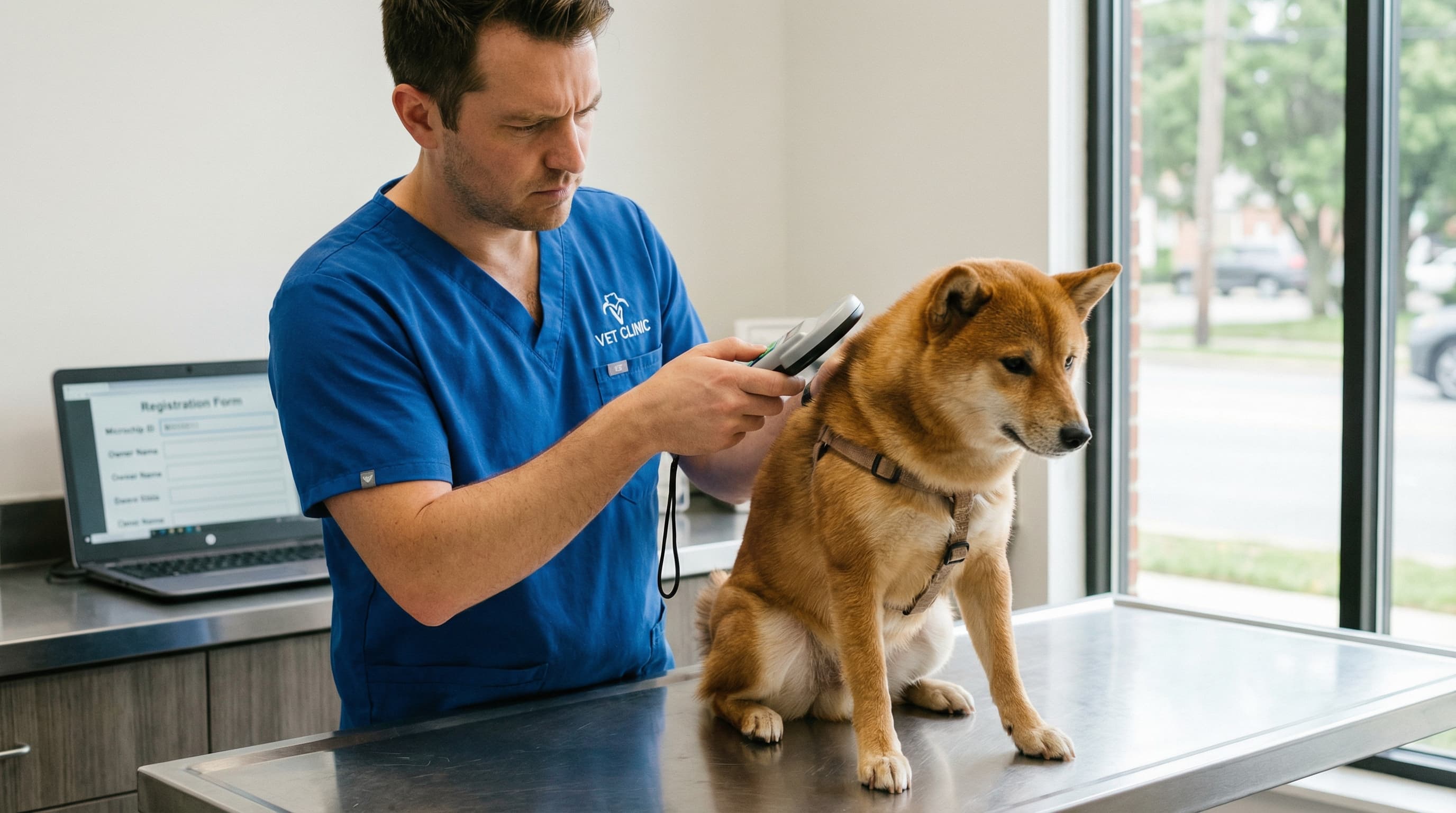
- ISO microchip: 10 or 15-digit ISO; implanted before all blood draws; 999-prefix chips not accepted
- Rabies vaccine + RNATT titer test: vaccine at 84+ days old; FAVN or RFFIT showing ≥0.5 IU/ml; 180-day wait from blood draw date at the lab
- Import permit via BICON: $603 AUD, non-refundable; apply after RNATT declaration; takes 20–123 business days
- Health certificate + USDA endorsement: USDA-accredited vet, within 5 days of export; parasite treatments at same visit
- Identity verification (strongly recommended): schedule with USDA APHIS before the RNATT blood draw; cuts quarantine from 30 to 10 days and saves $1,060 AUD
Travel logistics: Must fly as manifest cargo on a direct international flight to Melbourne International Airport (MEL). No cabin travel, no domestic transfers. Mandatory quarantine at Mickleham: 10 days (with identity verification) or 30 days (without).
Dogs from the US also need:
- Canine Influenza Virus (CIV) vaccine: fully vaccinated per manufacturer directions, primary course completed at least 14 days before export
- Leptospira canicola: vaccine (2-dose course with boosters) OR negative test within 45 days
- Brucella canis test: negative result within 45 days (only if your dog is not desexed)
- Leishmania infantum test: negative result within 45 days (IFAT or ELISA only; rapid/snap tests not accepted)
Cats skip all four of those tests. Cats have a simpler pre-export checklist: rabies vaccine, RNATT, parasite treatments, and the health certificate.
Critical
Rabies Vaccine and RNATT Titer Test
Your pet needs a rabies vaccine before the RNATT blood draw. The vaccine must be given at 84+ days old and must remain valid from the blood draw date through the date of export. If vaccination status lapses at any point, you restart the entire process: new vaccine, new blood draw, new 180-day wait.
RNATT process:
- Vaccinate for rabies (wait 3–4 weeks for first-time vaccination; regularly vaccinated pets may not need to wait)
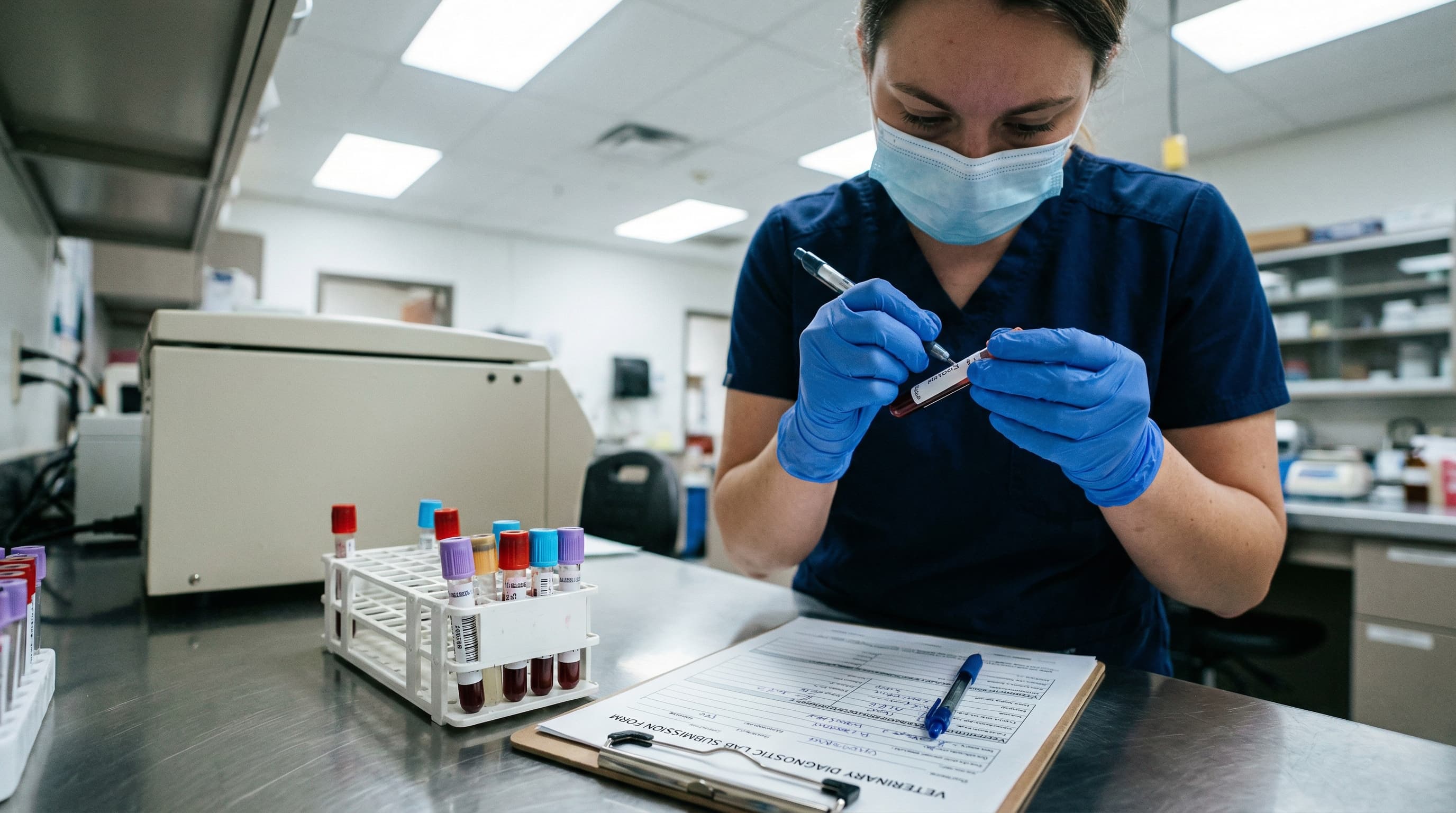
- Government-approved vet draws blood, scans the microchip, and records the chip number on the blood tube and lab submission form
- Blood sample sent to a recognized laboratory for FAVN or RFFIT testing
- Result must be ≥0.5 IU/ml. Below that, revaccinate and retest
- 180-day wait begins from the date the sample arrives at the lab
The RNATT is valid for 12 months from the blood draw. If it expires before your pet arrives in Australia, you repeat the test. If you retest before the 12-month mark, you avoid restarting the 180-day wait.
Unlike Japan, Australia doesn't designate specific labs. Any lab recognized by the competent authority in your country of export works.
In the US, Kansas State University (KSU) is the most common choice for FAVN tests, at about $86–91 per sample (2026 rate). Total cost through your vet including blood draw, serum prep, and overnight cold-chain shipping: $350–750. Results take 2–3 weeks.
After results come back, request an RNATT declaration from the USDA (your competent authority for the US). This is a separate document from the lab report; an official government veterinarian must sign and stamp it. You need both the lab report and the RNATT declaration to apply for an import permit.
Dog-Specific Tests
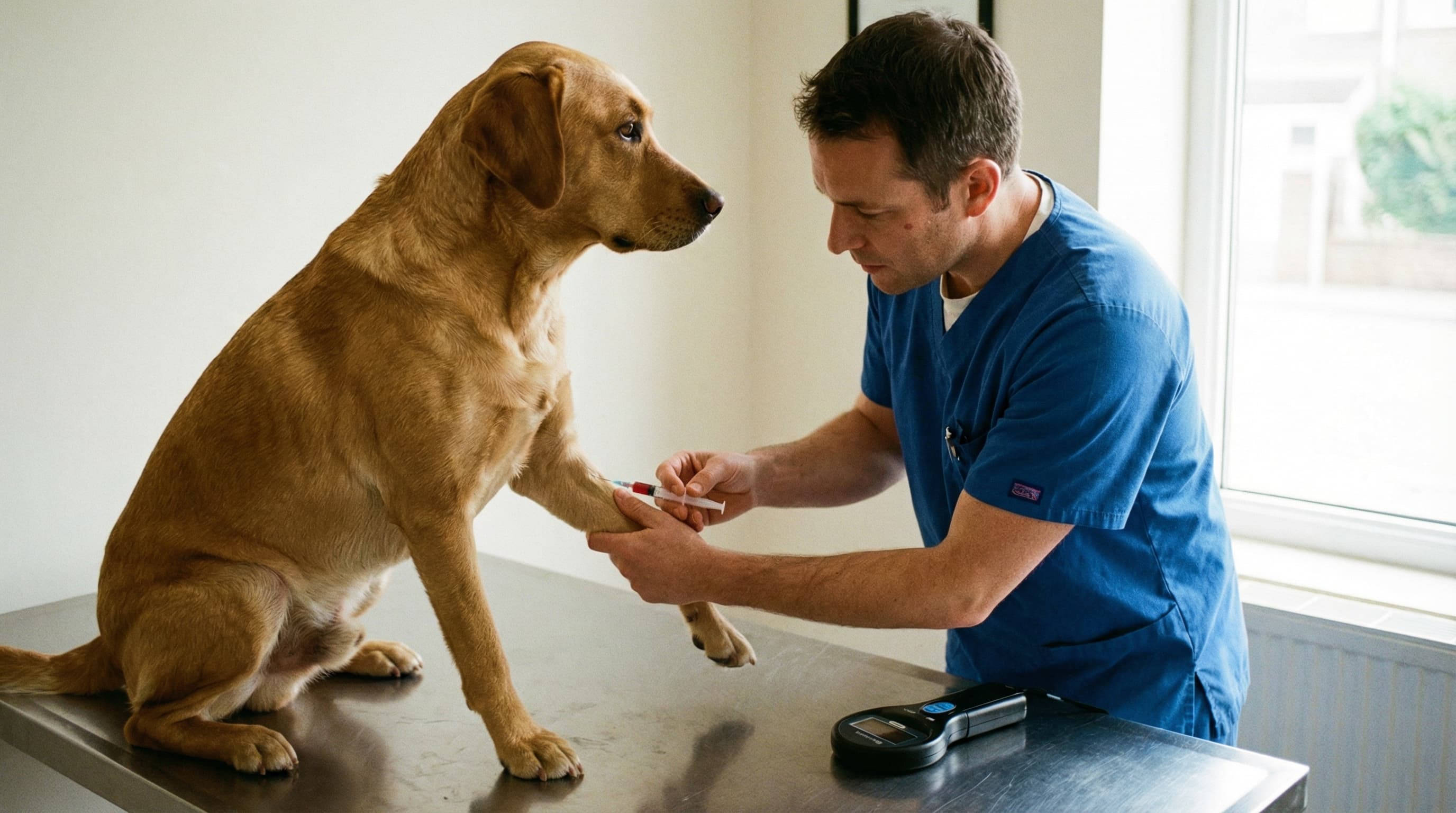
Dogs from the US face four extra tests. These must all be completed within 45 days of the export date, and your vet must scan the microchip before each blood draw.
Canine Influenza Virus (CIV): Your dog must be fully vaccinated against CIV using a vaccine registered for dogs in the US. For unvaccinated dogs, complete the primary course at least 14 days before export.
For dogs with an active CIV vaccination, the booster must be given between 12 months and 14 days before export. This is a US-specific and South Korea-specific requirement. Dogs from most other Group 3 countries don't need it.
Leptospira canicola: Either vaccinate (2-dose primary course, then yearly boosters per manufacturer directions) or test negative using a microscopic agglutination test (MAT) within 45 days of export.
Most vets recommend the vaccine route since it's simpler and leptospirosis vaccine is widely available in the US.
Brucella canis: Only if your dog is not desexed. Negative blood test within 45 days of export. Accepted tests: rapid slide agglutination test (RSAT), tube agglutination test (TAT), or indirect fluorescent antibody test (IFAT).
Australia does not accept 2ME-RSAT, 2ME-TAT, AGID, or the Multiplex Assay. Make sure your vet uses the right test.
Leishmania infantum: Negative blood test within 45 days. IFAT or ELISA only. Rapid or snap versions are not accepted. This catches some US vets by surprise — many clinics stock rapid kits, but Australia won't accept the results.
Watch OutThe 45-day window is tight when combined with the 5-day health certificate window and USDA endorsement. Work backward from your export date: final vet exam and second internal parasite treatment within 5 days of export, USDA endorsement within 5 days, and all blood tests collected within 45 days. Schedule your pre-export vet appointments early.
Microchip and Identity Verification
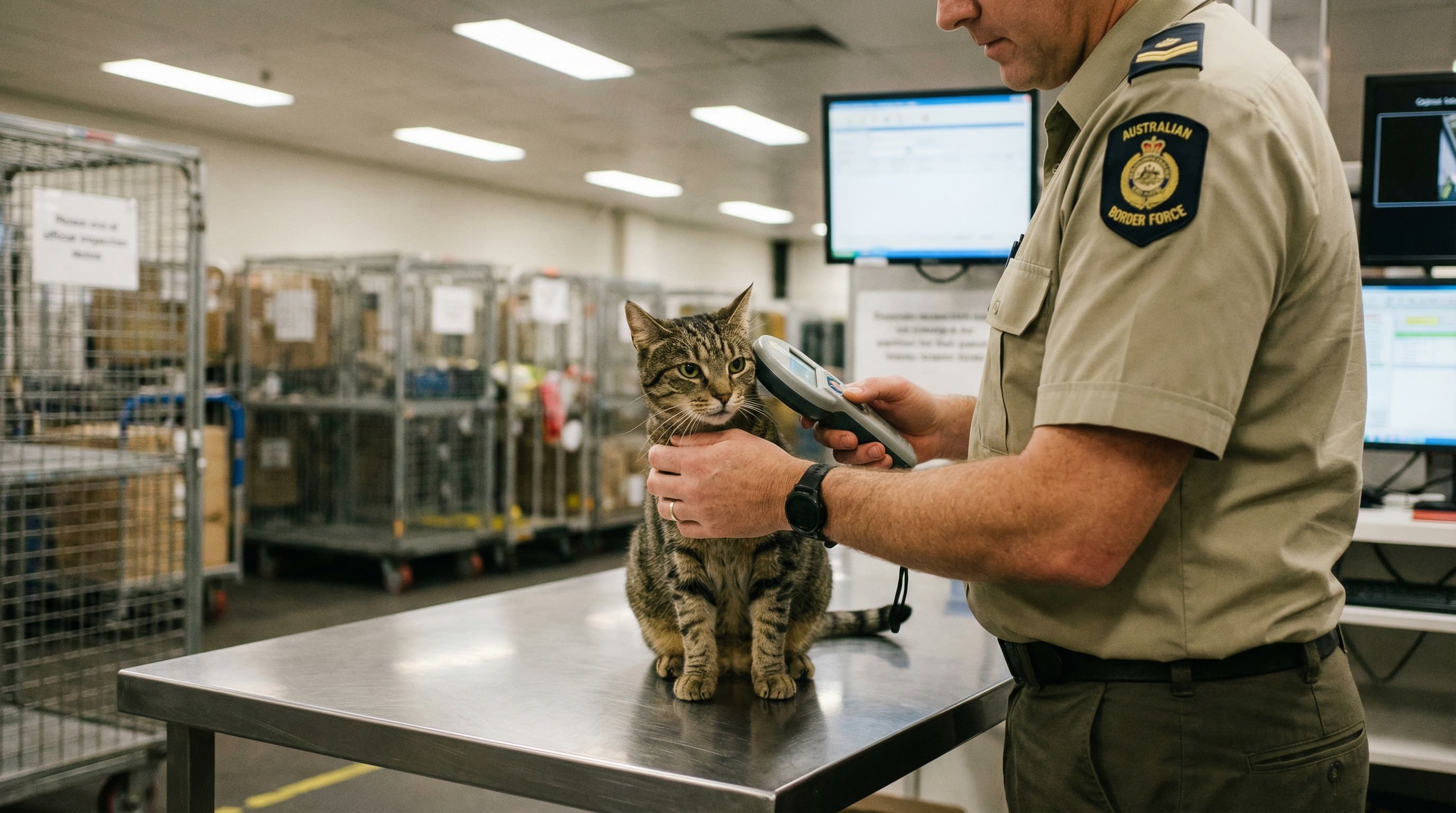
Australia accepts ISO microchips with 10 or 15 digits. Chips starting with 999 are not accepted because they're not unique. Your vet must scan the chip at every visit and record the number on every document and lab submission form. If the chip number is wrong on any document, or if Australia can't read the chip on arrival, your pet cannot be imported.
If your pet has two microchips, both numbers must appear on every document: permit application, lab reports, health certificate, RNATT declaration, and identity check.
Identity verification (strongly recommended): An official government veterinarian can verify your pet's identity before the RNATT blood draw. This step is optional, but it cuts quarantine from 30 days to 10 days, saving about $1,060 AUD in quarantine fees and 20 days of separation.
The identity check must happen before the RNATT blood draw and cannot be done at the same vet visit as the RNATT. A pet passport or vaccination card does not count.
In the US, USDA APHIS handles identity verification. Contact your USDA APHIS VS area office to arrange this before your vet draws blood for the RNATT.
Import Permit Through BICON
You must have a valid import permit before your pet can leave for Australia. Apply through DAFF's Biosecurity Import Conditions System (BICON) after you have the RNATT lab report and RNATT declaration in hand.
Cost: $603 AUD (about $380 USD) for the first pet, $288 AUD (about $180 USD) for each extra pet on the same consignment. Non-refundable.
Processing time: Most permits are issued in 20–40 business days. Complex cases can take up to 123 business days. Apply as soon as you can after getting the RNATT declaration. Do not wait until your 180-day period is almost up.
The import permit is valid until the RNATT expires (12 months from blood draw). If your RNATT is close to expiring, retest before it does and apply to vary the permit in BICON. This avoids restarting the 180-day wait.
If your permit is refused or you fail to meet conditions, your pet may be held longer, tested, re-exported, or euthanized. You pay all costs. Read every condition on the permit carefully and share it with your vet and transport agent.

Health Certificate and USDA Endorsement
A USDA-accredited vet must complete the health certificate within 5 days of your pet's export date. Not every vet holds this accreditation — find one near you. This is a bilateral document between DAFF and the USDA. Get a blank copy from USDA APHIS.
At the final exam, your vet should have:
- A valid import permit
- RNATT lab report
- All disease test lab reports (dogs: Leishmania, Brucella if intact, Leptospira if testing instead of vaccinating)
- CIV vaccination certificate (dogs from US)
- The blank veterinary health certificate
The vet examines your pet for external parasites and signs of illness, completes the health certificate, and gives the second internal parasite treatment (this can happen at the same visit).
After the vet visit, take the completed certificate and all lab reports to USDA APHIS for endorsement. An official government veterinarian must sign and stamp every page of the health certificate and every lab report. USDA endorsement through VEHCS typically takes 2–3 business days by mail. Cost: $38 for the first pet.
The endorsed health certificate must be an original with wet-ink stamps. Copies are not accepted. Each page must bear the original stamp of the competent authority.
Quarantine at Mickleham
Every pet entering Australia from a Group 3 country must spend time at the Mickleham Post Entry Quarantine facility near Melbourne. This is Australia's only pet quarantine facility.
Duration:
- 10 days minimum: an official vet verified your pet's identity before the RNATT blood draw
- 30 days minimum: without identity verification
Ten days is manageable. Thirty days is a significant separation, and the only way to reduce it is identity verification before the RNATT blood draw.
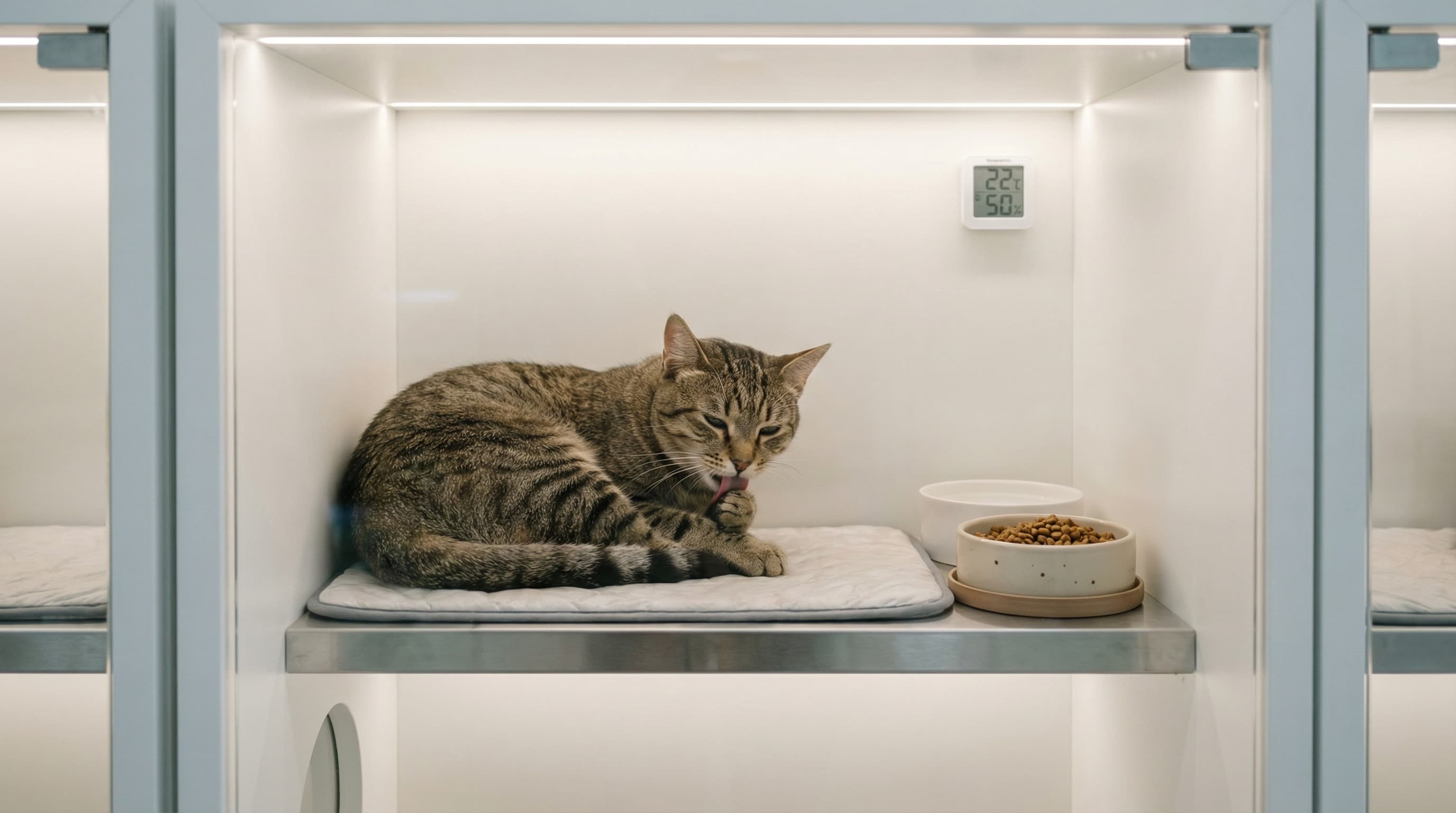
A biosecurity officer collects your pet at Melbourne airport and transports them to Mickleham. You'll get an email within 24 hours confirming safe arrival. Pets are housed in individual, climate-controlled enclosures with daily feeding and enrichment. DAFF sends health and wellbeing updates by email.
Do not put toys, medication, or valuables in the crate. Everything inside is destroyed as biosecurity waste on arrival.
Quarantine costs (AUD):
| Quarantine fee | AUD | USD (est.) |
|---|---|---|
| Reservation charge | $269 | ~$170 |
| Importation charge | $1,078 | ~$680 |
| 10-day quarantine | $530 ($53/day) | ~$335 |
| 30-day quarantine | $1,590 ($53/day) | ~$1,005 |
| Inspection/assessment | $80 per 30 min | ~$50 |
| Out-of-hours handling | $170–$180 | ~$110 |
| Release/airline handling | $170–$350 | ~$110–$220 |
You must pay all fees before your pet is released. Pay by credit card through the PEQ Reservations system.
Airline Rules and Getting to Melbourne
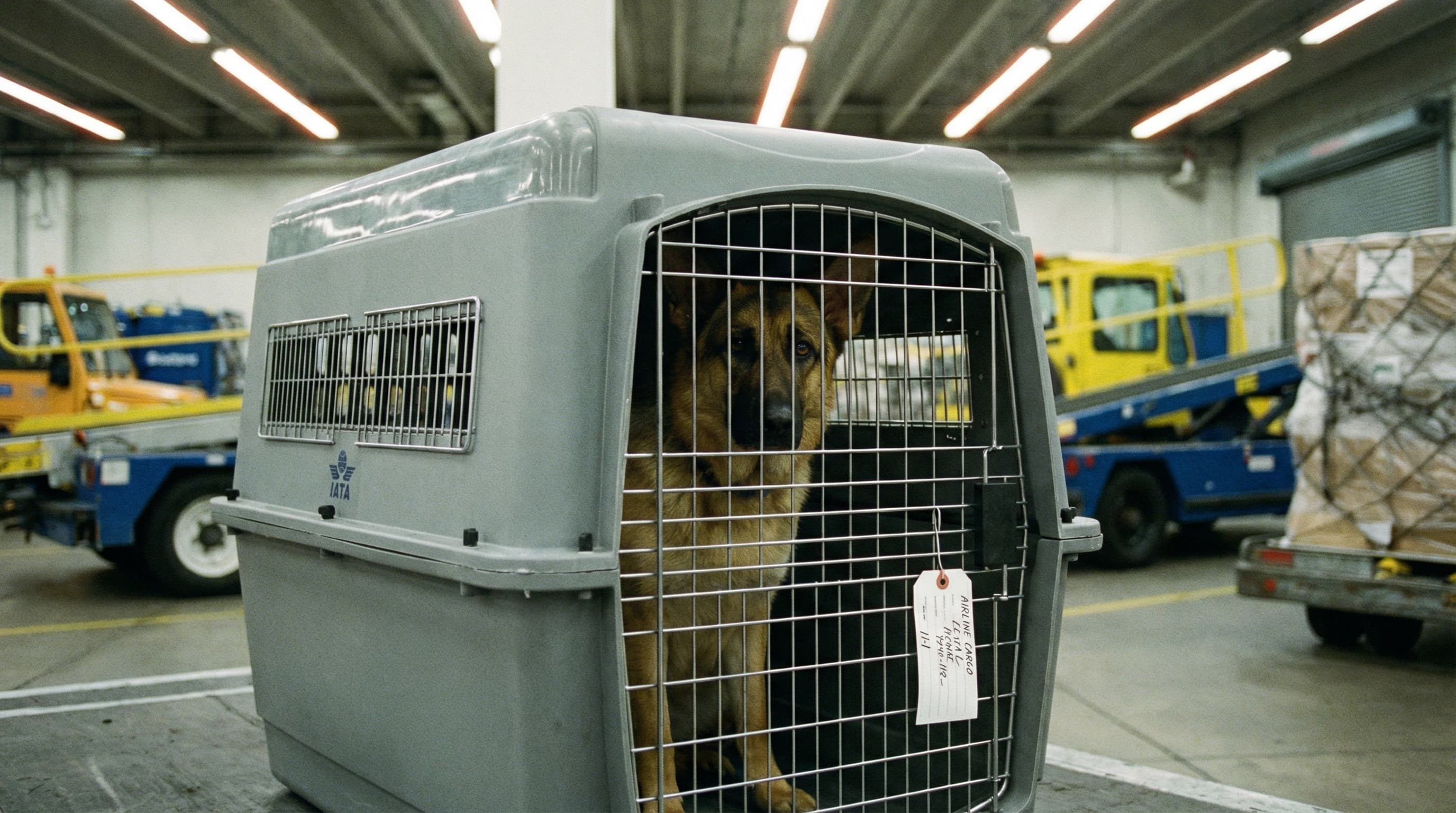
Your pet must arrive as manifest cargo on a direct international flight to Melbourne International Airport (MEL). No cabin travel, no checked baggage, no domestic transfers from Sydney or other airports. This is a DAFF rule, not an airline choice.
Qantas Freight is the primary carrier for US-to-Australia pet transport on the LAX–Melbourne route. You'll most likely work through a pet transport agent who books with the airline's cargo division. Freight costs vary by pet size and crate dimensions. Expect $1,500–4,000 for a medium-to-large dog and $800–2,000 for a cat.
Your pet must travel in an IATA-approved crate sized for their standing height and turning room.
Stops along the way: Your pet can transit (stay on the plane) through any country. Transhipping (changing aircraft) is allowed only in approved countries, and the pet must stay on the international side of the airport under supervision.
Breed restrictions:
- Dogs banned from Australia: Dogo Argentino, fila Brasileiro, Japanese tosa, American pit bull terrier, Perro de Presa Canario. Wolf-dog hybrids are also banned (Czechoslovakian wolfdog, Saarloos wolfdog, Lupo Italiano, Kunming wolfdog). Mixed-breed dogs are allowed if they meet all other conditions.
- Cats banned from Australia: Savannah, Safari, Chausie, and Bengal hybrids. Bengal cat import exemptions end March 1, 2026. After that date, no Bengal cats can enter Australia.
Pet transport agents: DAFF strongly recommends using an experienced agent. The process involves timed blood draws, permit applications, quarantine bookings, and cargo arrangements. Most people hire an agent to manage all of this.
Search the International Pet and Animal Transportation Association (IPATA) directory. Expect to pay $1,000–3,000 for agent services on top of all other costs.
Cost Breakdown
Australia is the most expensive pet travel destination from the US. Costs differ between dogs and cats because dogs need extra disease tests.
Dogs
| Microchip | $25–75 | ISO 10 or 15-digit |
| Rabies vaccine | $15–50 | If not active |
| CIV vaccine | $50–75 | US dogs only; 2-dose primary course |
| Leptospira vaccine | $30–50 | Or test ($50–100) within 45 days |
| RNATT (FAVN at KSU) | $350–750 | KSU lab fee $86–91; rest is vet + shipping |
| Brucella test | $50–100 | Only if intact (not desexed) |
| Leishmania test | $50–150 | IFAT or ELISA only |
| Parasite treatments | $50–100 | External + 2 internal doses |
| Vet exam + health cert | $150–300 | USDA-accredited vet, within 5 days |
| USDA endorsement | $38+ | Through VEHCS |
| Import permit | ~$380 | $603 AUD, non-refundable |
| Quarantine (10 days) | ~$1,185 | $269 + $1,078 + $530 AUD (with ID verification) |
| Quarantine (30 days) | ~$1,855 | $269 + $1,078 + $1,590 AUD (without) |
| Airline cargo freight | $1,500–4,000 | Varies by size and route |
| Pet transport agent | $1,000–3,000 | Optional but recommended |
| Total (with ID verification) | $3,500–$8,500+ | One dog, one way |
Cats
| Microchip | $25–75 | ISO 10 or 15-digit |
| Rabies vaccine | $15–50 | If not active |
| RNATT (FAVN at KSU) | $350–750 | KSU lab fee $86–91; rest is vet + shipping |
| Parasite treatments | $50–100 | External + 2 internal doses |
| Vet exam + health cert | $150–300 | USDA-accredited vet, within 5 days |
| USDA endorsement | $38+ | Through VEHCS |
| Import permit | ~$380 | $603 AUD, non-refundable |
| Quarantine (10 days) | ~$1,185 | $269 + $1,078 + $530 AUD (with ID verification) |
| Quarantine (30 days) | ~$1,855 | $269 + $1,078 + $1,590 AUD (without) |
| Airline cargo freight | $800–2,000 | Varies by crate size |
| Pet transport agent | $1,000–3,000 | Optional but recommended |
| Total (with ID verification) | $2,700–$6,500+ | One cat, one way |
All DAFF fees are in Australian dollars. USD estimates assume roughly 0.63 USD/AUD. Exchange rates fluctuate; check the current rate when budgeting.
Timeline: 7+ Months Start to Finish
7+ months before: Get your pet microchipped (if not already). Vaccinate for rabies (must be 84+ days old). For first-time vaccination, wait 3–4 weeks before the RNATT blood draw. Get identity verification from USDA APHIS before the blood draw. This is the step that cuts quarantine from 30 to 10 days.
6+ months before: Have your vet draw blood for the RNATT. Send to KSU for FAVN testing. The 180-day wait starts when the sample arrives at the lab.
5–6 months before: Receive RNATT results (2–3 weeks). Get the RNATT declaration from USDA. Apply for the import permit through BICON immediately. Processing takes 20–40 business days, sometimes much longer.
3–4 months before: Receive your import permit. Book quarantine at Mickleham. Start arranging cargo transport through a pet transport agent or directly with the airline.
6–8 weeks before (dogs): Start CIV vaccination if not active. Primary course needs 2 doses per manufacturer directions, completed at least 14 days before export.
45 days before (dogs): Schedule Leptospira test (or confirm vaccine is active), Brucella test (if intact), and Leishmania test. All must be negative within 45 days of export.
30 days before (dogs) / 21 days before (cats): Start external parasite treatment. Repeat per manufacturer directions until export.
45 days before (both): First internal parasite treatment (nematodes and cestodes).
Within 5 days of export: Second internal parasite treatment. Final vet exam. Vet completes the health certificate. Take all documents to USDA APHIS for endorsement (allow 2–3 business days by mail, same-day in person).
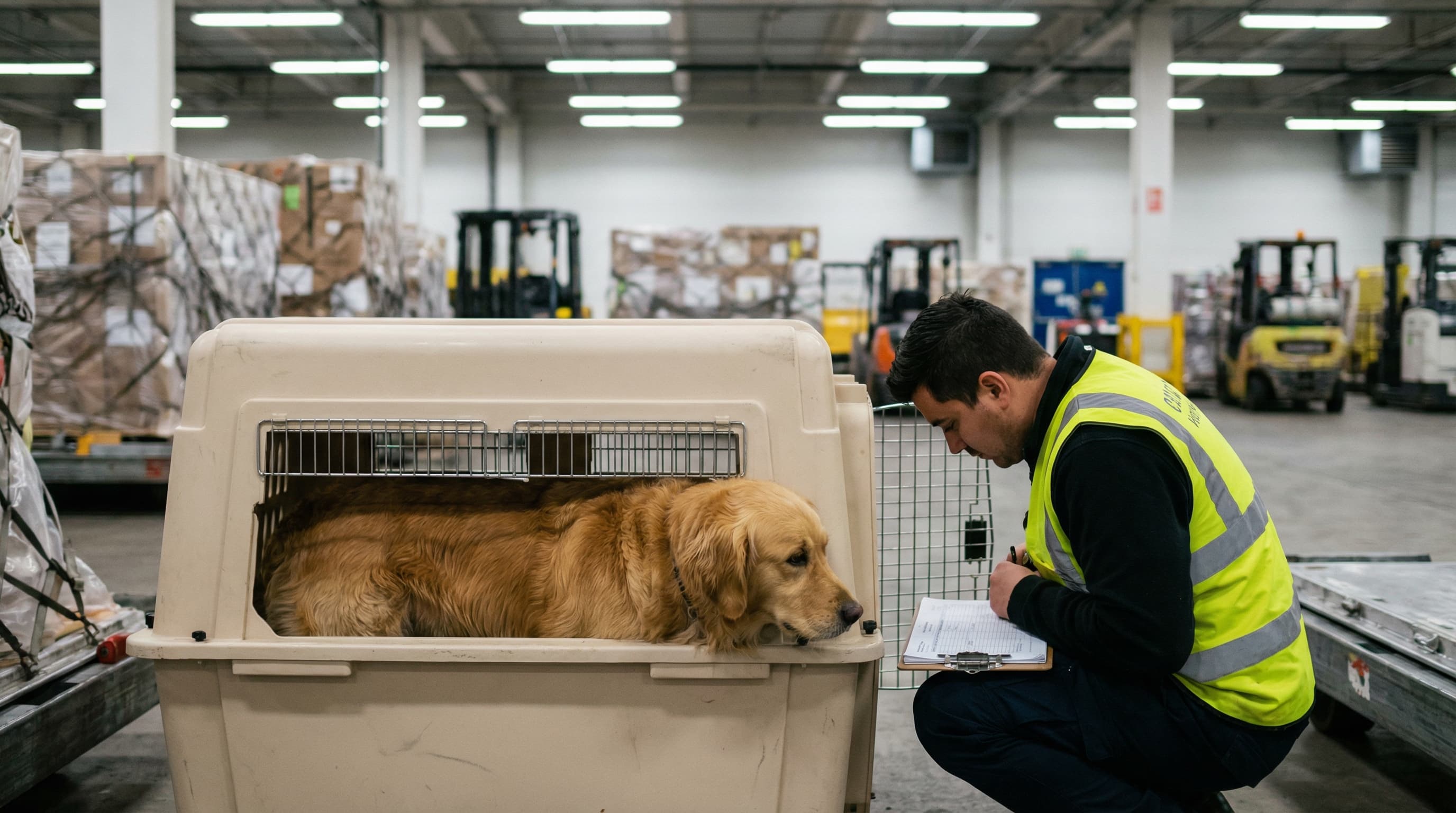
Export day: Pet travels in an IATA-approved crate as manifest cargo to Melbourne. All original endorsed documents travel with the pet. Do not put anything else in the crate.
Common Mistakes
Returning to the US with Your Pet
Dogs
The CDC updated its dog import rules in 2024. All dogs entering the US must have:
- A completed CDC Dog Import Form submitted online before arrival
- A microchip that matches the form
- Be at least 6 months old
- Appear healthy on arrival
Australia is a CDC low-risk country for dog rabies, so you won't need extra CDC rabies paperwork beyond the form and microchip. Your dog's Australian rabies vaccination and RNATT results satisfy US re-entry.
Cats
Federal re-entry rules for cats are minimal. The CDC does not have an import form for cats. There's no federal microchip requirement. Cats must appear healthy on arrival. That's the main federal standard.
Many US states require rabies vaccination for cats, so check your home state's rules. Hawaii and Guam quarantine all pets including cats. Your cat's rabies vaccination for Australia will typically cover state requirements.
For the full re-entry process, see our guide to returning to the USA with a pet.
FAQ
Your next step: Get the microchip and identity verification done first. That single appointment locks in the 10-day quarantine and starts the clock on everything else.