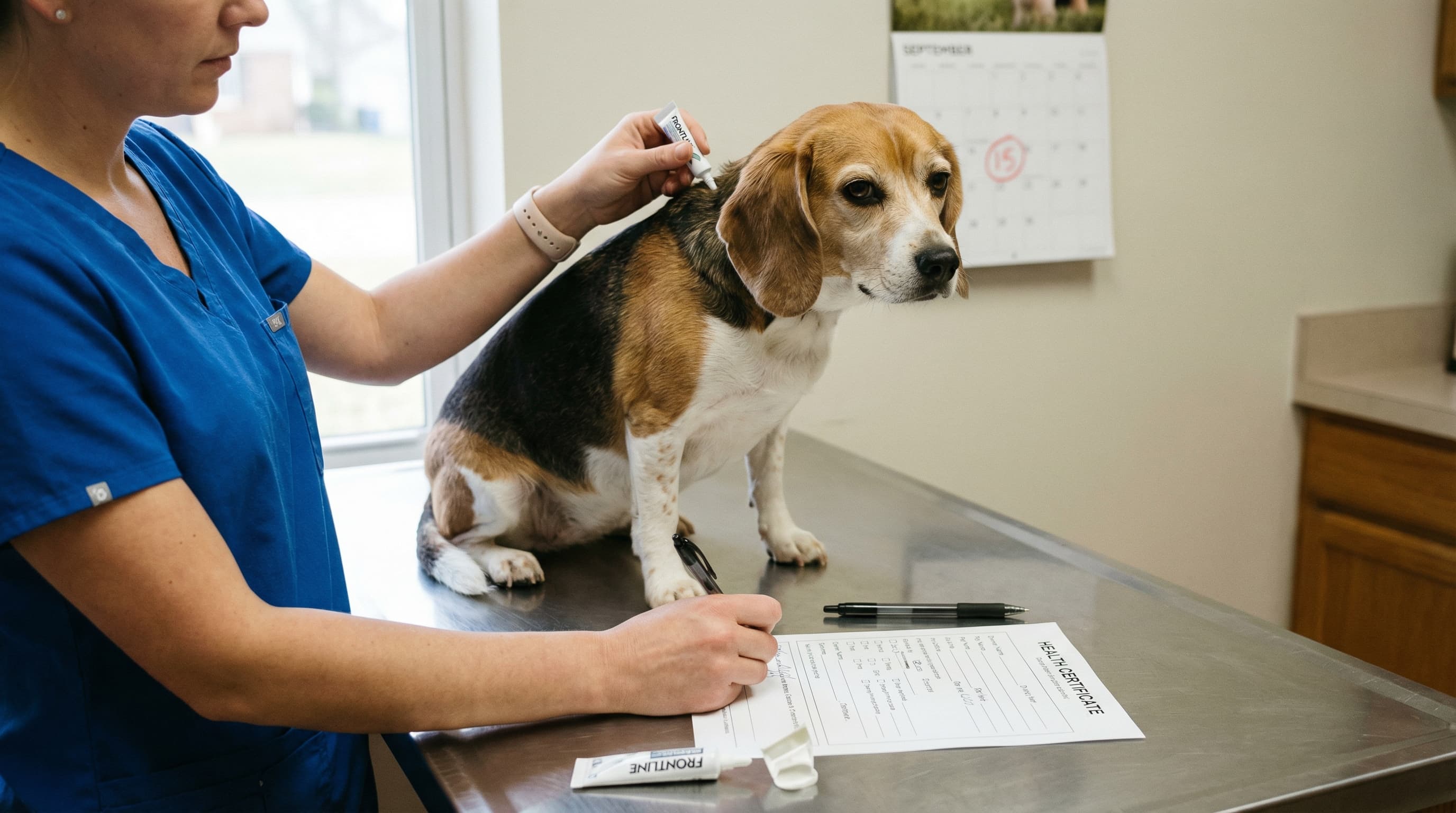
The flea/tick treatment has to happen within 72 hours of arriving in Puerto Rico, and your vet has to write the product name and date on the health certificate itself. If it's missing, PR won't accept the certificate. Schedule your vet visit 1–2 days before your flight to cover both the exam and the treatment in one appointment.
Bringing a Dog or Cat to Puerto Rico — No Passport or USDA Needed (2026)
15 min readdomestic

Marcus Reid
Former Airline Operations
| Applies to | Dogs and cats (same entry rules for both) |
| Documents | Health certificate + rabies certificate |
| Vaccines | Rabies required (4+ months old) |
| Microchip | Required (ISO 15-digit or AVID 9-digit) |
| Quarantine | None |
| Cost (Round trip) | Dogs: $300–$550 / Cats: $275–$500 |
| Timeline | Start 2–3 weeks before |
| Difficulty | 🟡 Moderate |
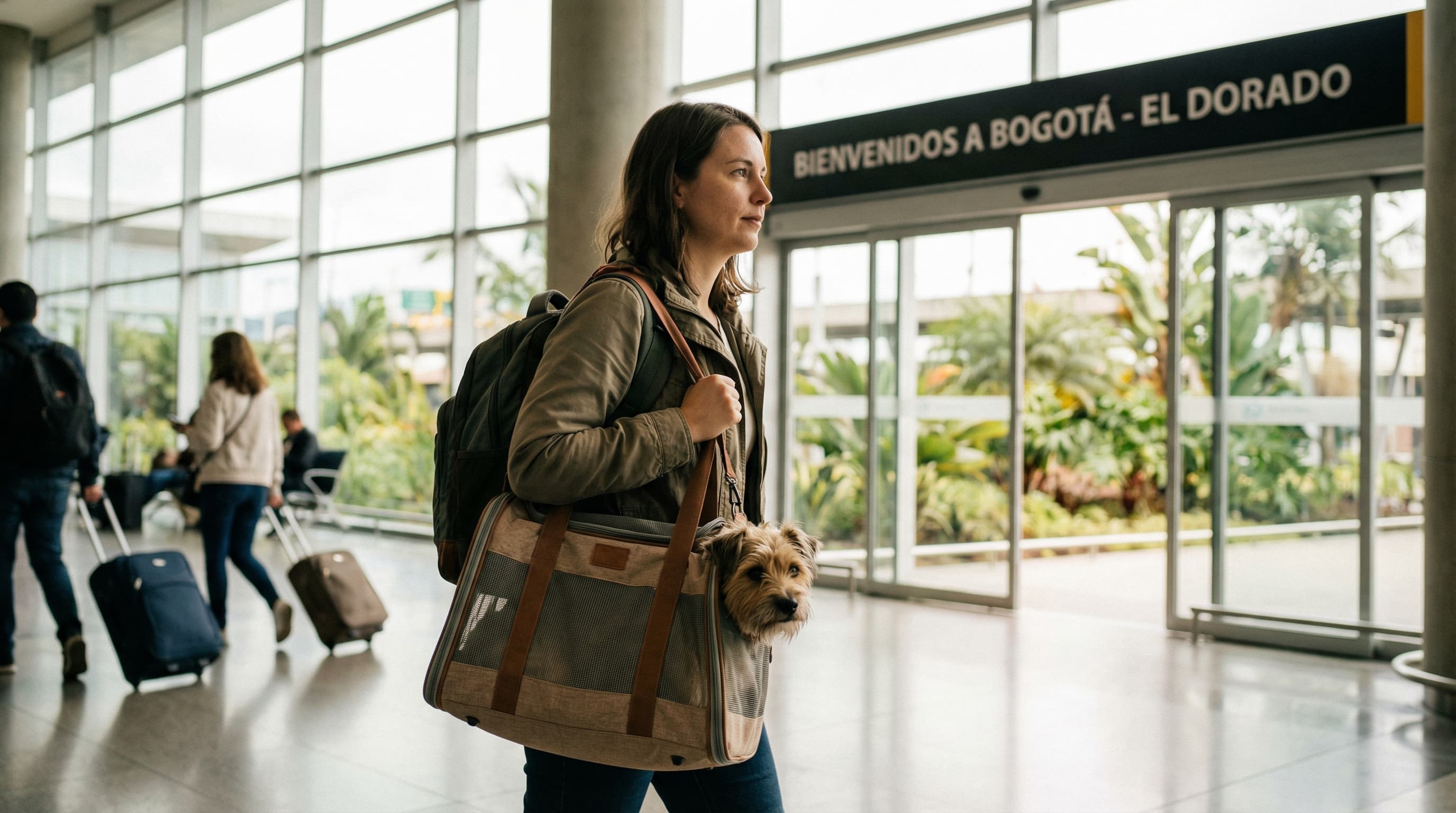
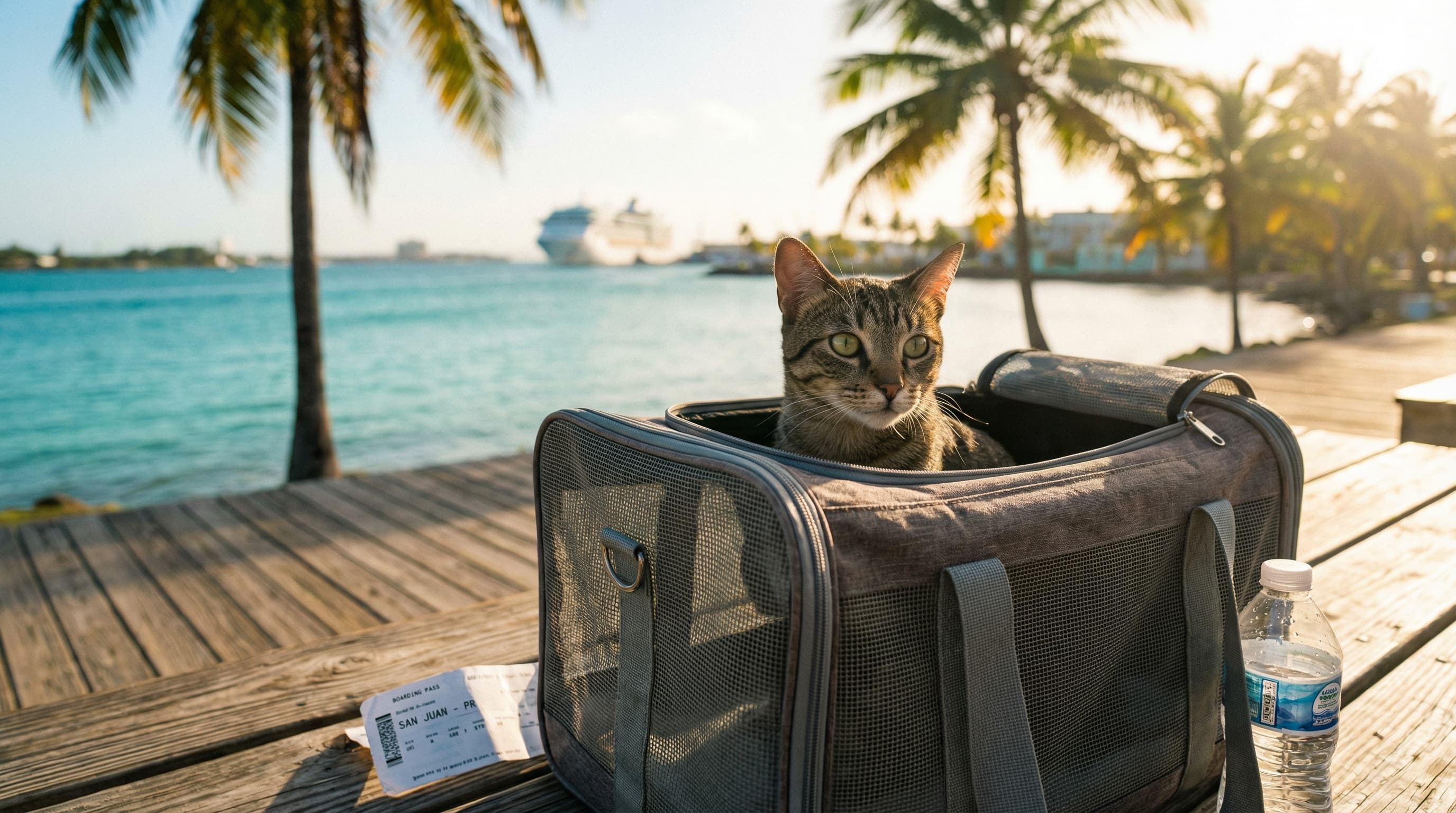
Flying to Puerto Rico with your dog or cat from the US is domestic travel. No passport, no customs, no CDC Dog Import Form. But it's not as simple as flying to another state. Puerto Rico's Department of Agriculture has its own entry rules: a health certificate, rabies vaccine, flea/tick treatment within 72 hours of arrival, and a microchip. No USDA endorsement. No quarantine. The whole thing costs $300–$550 round trip for a small pet in cabin.
Coming back is the easy part. Puerto Rico to the mainland is just a domestic flight. Your destination state's rules apply, not federal import rules. This guide covers both directions for dogs and cats.
What You Need
Puerto Rico is a US territory, so there's no customs and no federal import process. But PR's Department of Agriculture has its own rules that go beyond what most mainland states ask for:
- Health certificate from a USDA-accredited veterinarian, issued within 10 days of travel
- Active rabies vaccination for pets 4 months and older
- Flea/tick treatment within 72 hours of arrival, noted on the health certificate
- Microchip or metallic ID tag (microchip strongly recommended)
- Your pet must appear healthy at the arrival inspection
Maximum 2 pets per person.
What you don't need
- USDA endorsement
- Import permit
- Quarantine
The rules are the same for dogs and cats. PR updated these rules in November 2024, tightening the parasite treatment timing and what must appear on the health certificate.
Tip
Vaccine Requirements
Puerto Rico has a uniquely strict rabies requirement: the active rabies vaccination for dogs and cats 4 months and older MUST be administered within 6 months of arrival.
This means that even if your pet has a "current" 3-year rabies vaccine, if it was given more than 6 months ago, you must get a booster shot before traveling to Puerto Rico. The shot must be given at least 30 days before arrival to allow immunity to build.
Under 4 months? Puppies and kittens can't meet the rabies rule. PR might let them in, but with strings attached: the pet gets confined right away and vaccinated within 4–10 days, then stays confined for 30 more days. Not a practical option for a vacation.
Beyond rabies: PR's Department of Agriculture wants DA2PPL for dogs (distemper, adenovirus, parvovirus, parainfluenza, leptospirosis) and FVRCP for cats (rhinotracheitis, calicivirus, panleukopenia), but doesn't technically require them. Your airline will check rabies at boarding. PR inspectors may ask about the rest. Having them up to date avoids questions.
A rabies vaccine costs $15–$35. Remember to check the date: if it's older than 6 months on your arrival day, it will be rejected.
Health Certificate
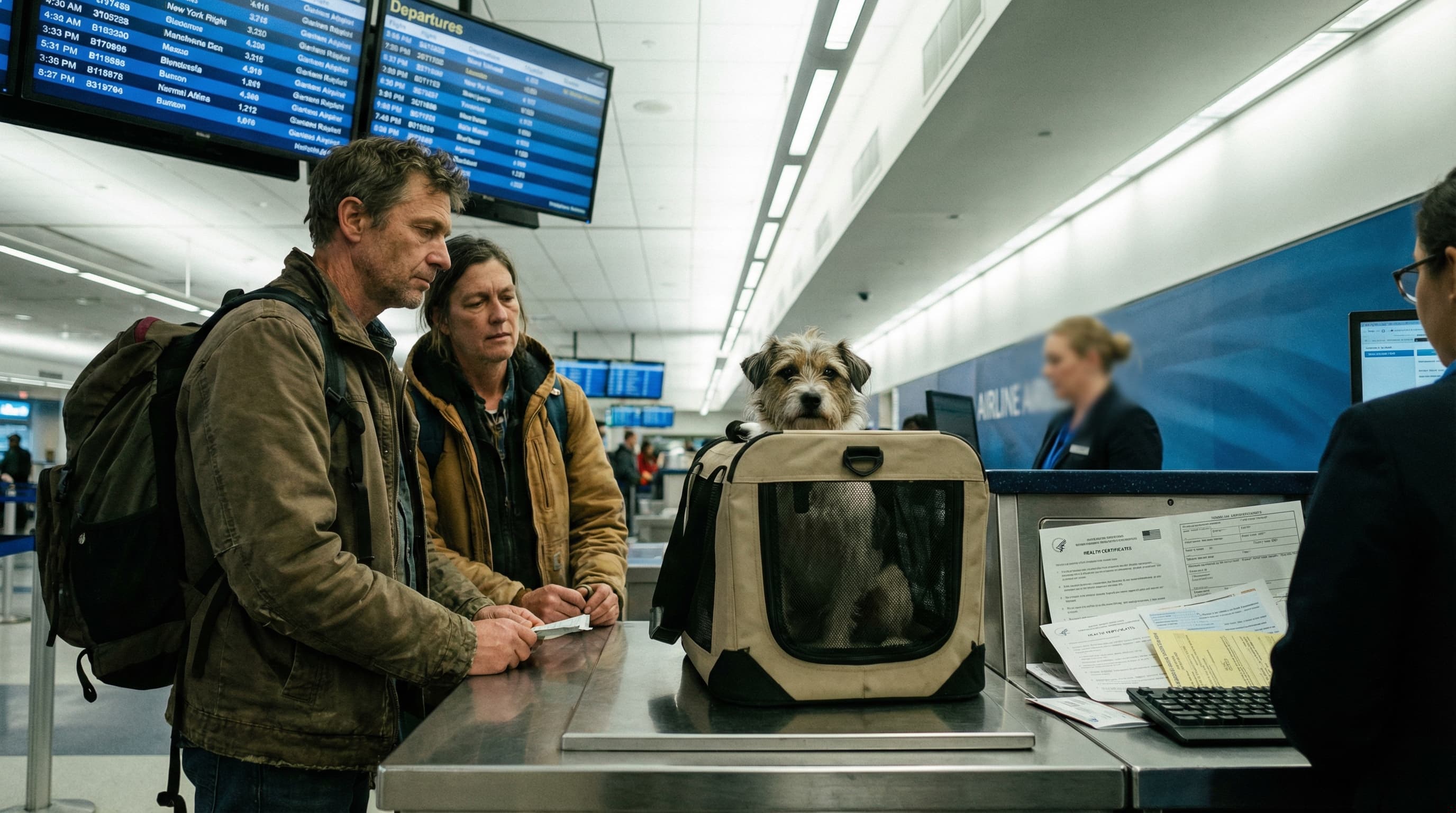
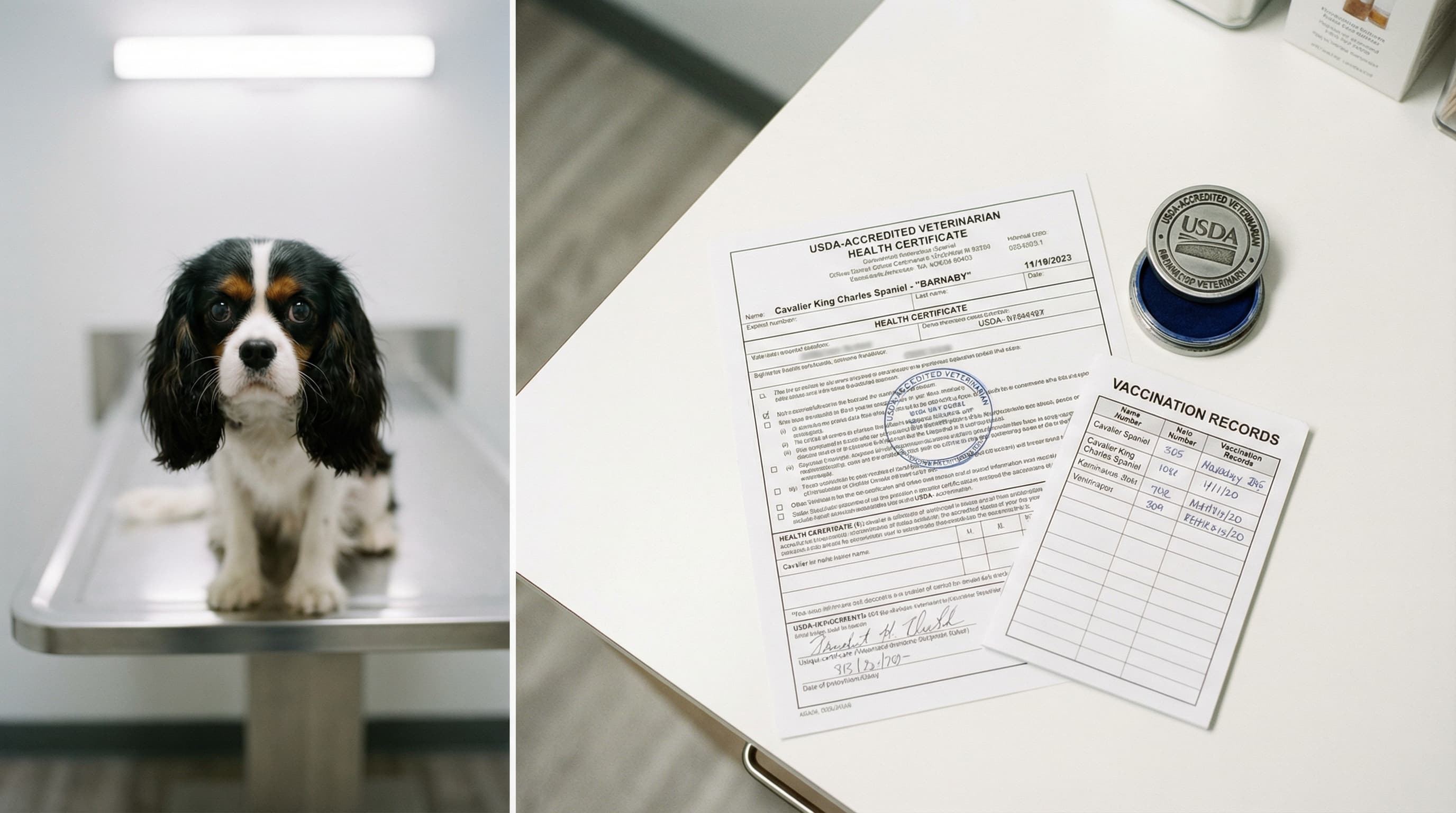
You need an interstate health certificate signed by a USDA-accredited vet. Same certificate you'd get for flying a pet to Hawaii or any state with entry rules. Not a separate international form.
What it must include:
- Animal description (breed, color, sex, age) with microchip number
- Vaccination dates and products used
- Date and product of flea/tick treatment (within 72 hours of arrival)
- Note that your pet looks healthy
- Owner name, address, origin/destination, vet signature, and USDA accreditation number
Timing: The certificate is valid for 30 days from the exam date per PR rules. Airlines typically want it within 10 days of travel. The tighter deadline wins. Schedule the vet visit 1–2 days before departure and you're covered.
Cost: $75–$200 for the exam and certificate, depending on your vet.
For details on the health certificate process, see our health certificate guide.
USDA Endorsement
Not needed. Puerto Rico is a US territory, so traveling there is a domestic trip, not international. USDA doesn't touch domestic health certificates. That saves you $38+ and 2–7 business days of processing.
For details on what USDA endorsement is and which destinations need it, see our USDA endorsement guide.
Microchip Requirements
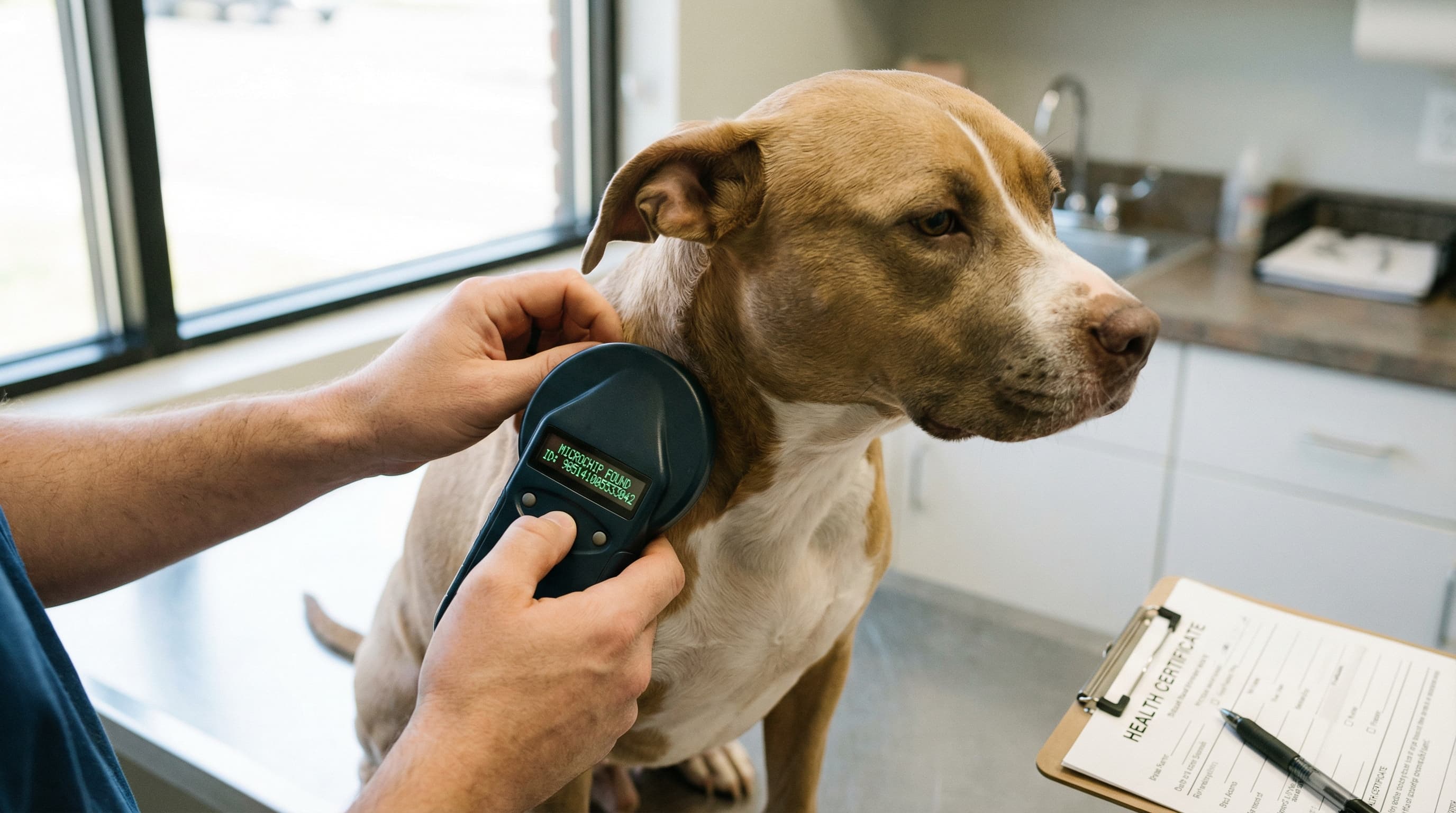
Puerto Rico needs your pet to have ID. That means an ISO 11784/11785 15-digit microchip, an AVID 9-digit chip, or a collar with a metallic ID tag.
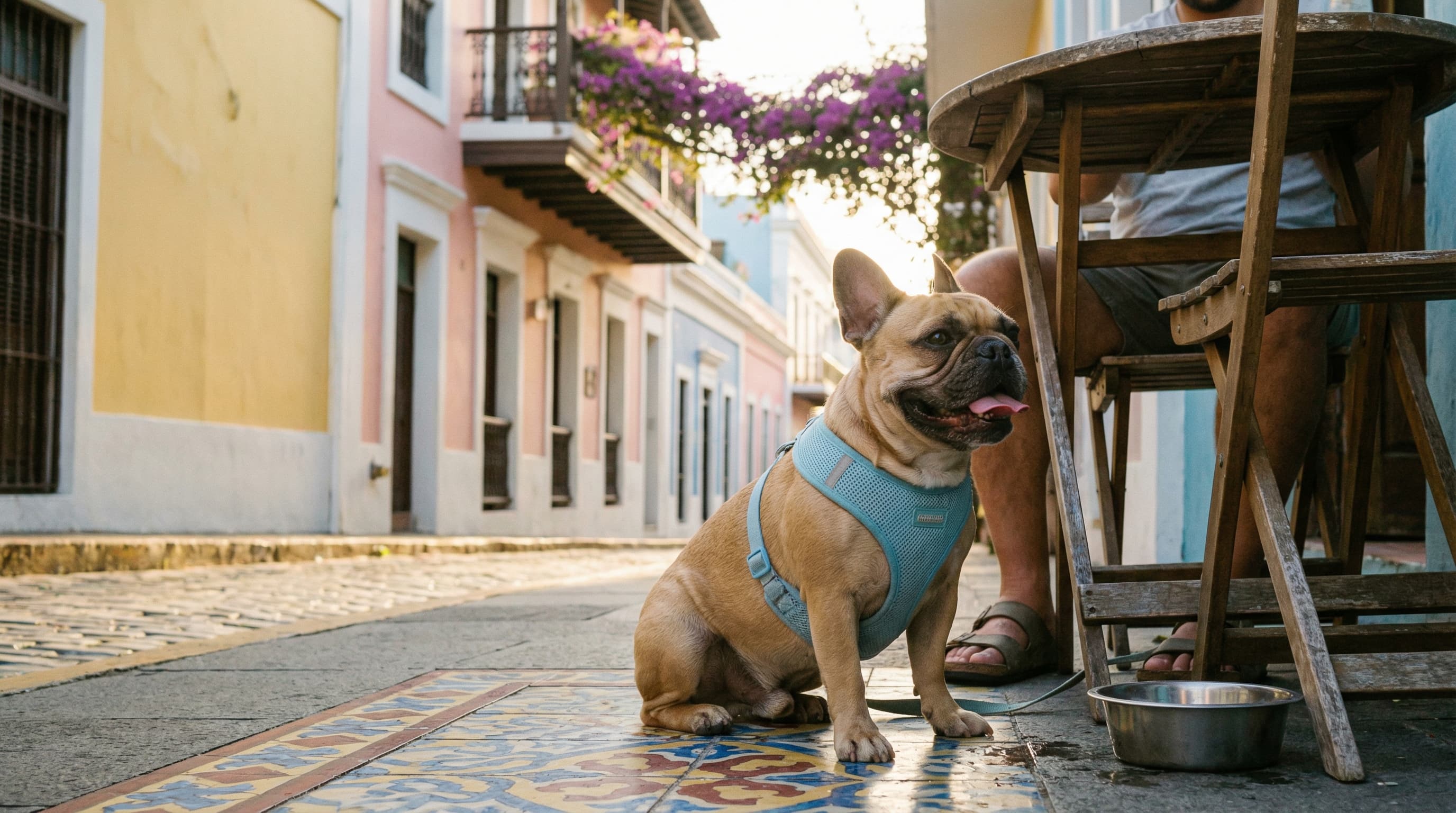
Get the microchip. Puerto Rico has one of the highest stray dog populations in the US — over 500,000 by some estimates. If your dog slips its leash in Old San Juan, a collar can come off. A microchip is the difference between getting your pet back and not. $25–$60 at any vet, 30 seconds to implant.
Cats should be chipped too. Same logic, same price, same 30 seconds.
Airline Rules for Flying to Puerto Rico
Airline rules apply on top of PR's entry rules. Here's what the big airlines charge for cabin pets on PR flights:
| JetBlue | $150 | Dominant PR carrier. No cargo option for pets. |
| American Airlines | $150 | PR flights eligible. Cargo military-only. |
| Delta | $150 | Cargo military/State Dept. only. |
| United | $150 | Cargo military/State Dept. only. |
| Spirit | $150 | Max 6 pet containers per flight. |
| Southwest | $150 | Health cert + rabies proof needed for PR. Max 6 pets per flight. |
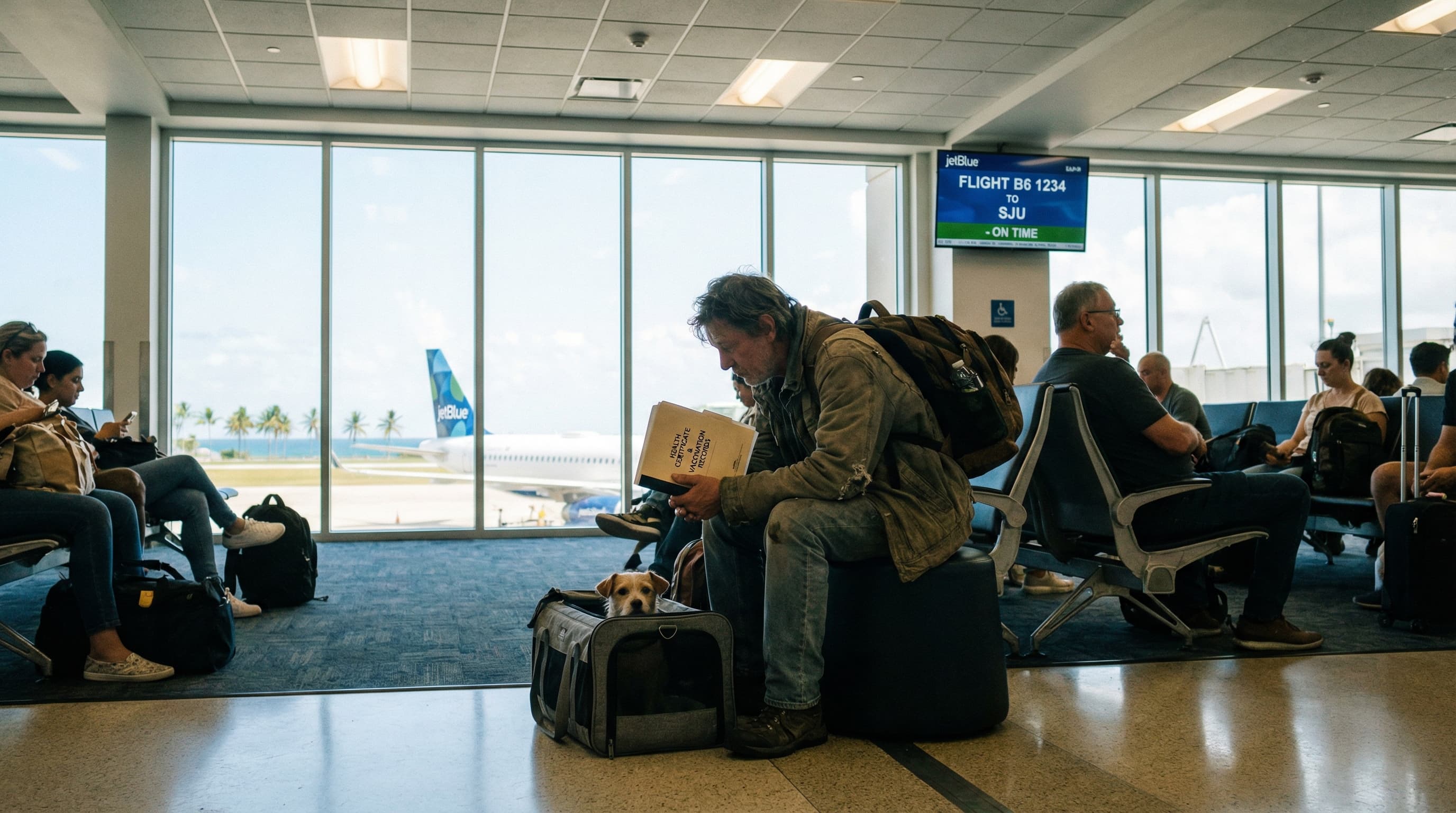
Watch OutPuerto Rico flights are domestic, but airlines still need health certificates and rabies proof for PR routes. Rules they don't enforce on most mainland flights. If your pet doesn't have the paperwork, you won't board. Don't assume "domestic" means "no documents."
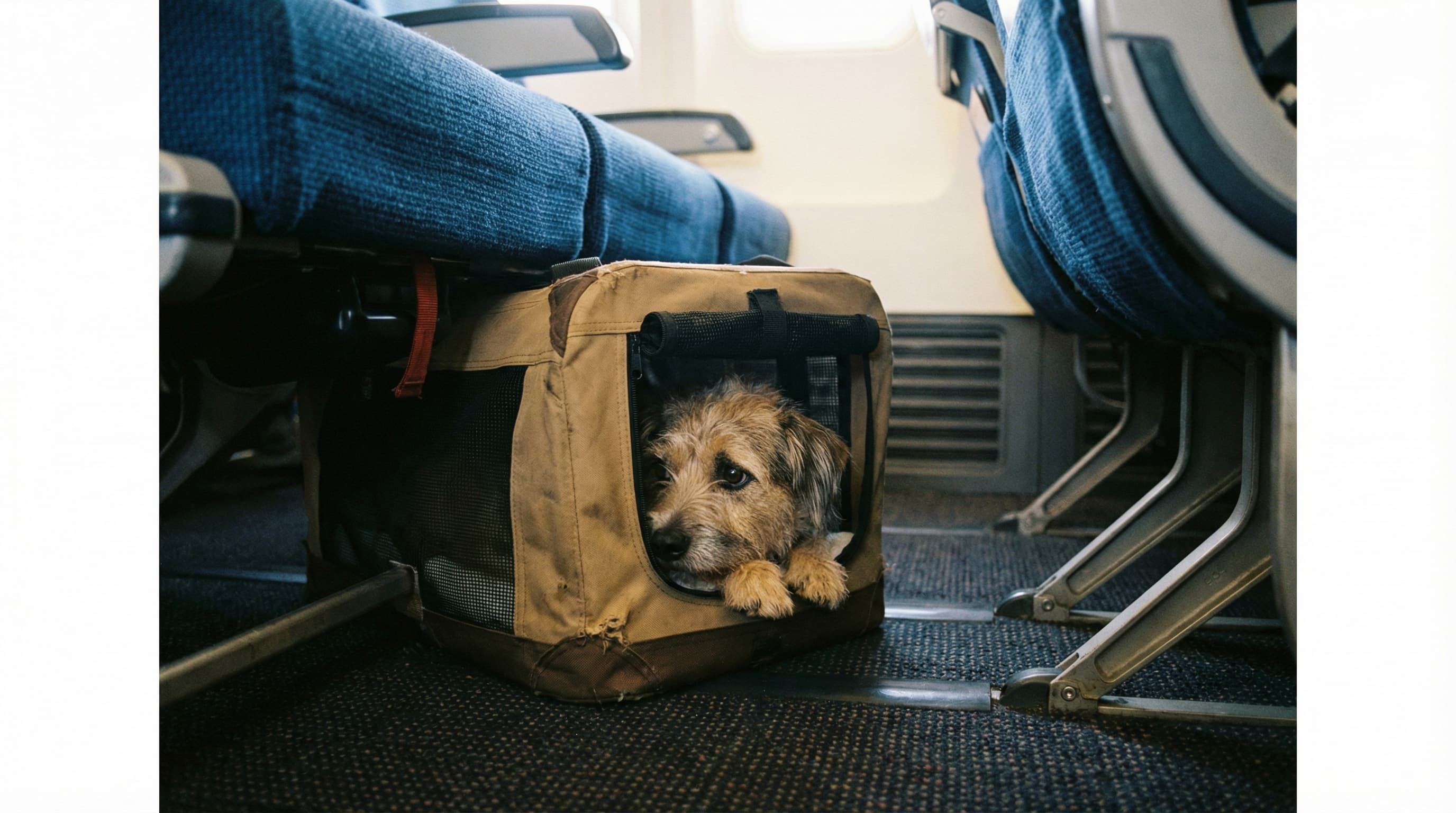
Cabin travel: Your pet has to fit in a carrier under the seat. Max carrier size is about 18x11x11 inches on most airlines. Pet and carrier together can't top 20 lbs.
Call the airline 3–4 weeks before travel to reserve a pet spot. Most flights only allow 2–4 pets in cabin.
Cargo travel: Putting your pet in cargo on a Puerto Rico flight is tough — and not just emotionally. PR's year-round heat (regularly 85°F+) triggers airline temperature embargoes, and most big airlines have stopped flying civilian pets in cargo anyway. Delta, United, and American only offer cargo for active-duty military or State Department staff.
If your dog is too big for cabin, your options are limited:
- AmeriJet is a cargo-only airline out of Miami with climate-controlled animal transport.
- Pet transport companies like PetRelocation or island-based services handle door-to-door transport for $900–$2,000+ depending on dog size and route.
- Book early morning or late evening flights if you find a cargo option. Tarmac temps are lowest then.
Flat-faced breeds: All major airlines ban flat-faced breeds (bulldogs, pugs, Boston terriers) from cargo. PR's heat makes this an even bigger safety concern. Most airlines allow flat-faced pets in cabin if they fit the carrier.
For a full comparison of airline pet policies, see our airline pet fee comparison.
Cost Breakdown
Dogs
| Vet exam + health certificate | $75–$200 | USDA-accredited vet, includes flea/tick treatment notes |
| Rabies vaccine (if needed) | $15–$35 | Skip if vaccination is active |
| DA2PPL vaccines (if needed) | $25–$50 | Recommended by PR Dept of Agriculture |
| Microchip (if needed) | $25–$60 | ISO 15-digit or AVID 9-digit |
| Flea/tick treatment | $15–$30 | Within 72 hours of arrival |
| Airline pet fee (cabin, each way) | $150–$150 | $0 if using pet transport |
| Pet transport (large dogs) | $900–$2,000+ | Only if too big for cabin |
| Total estimate (small dog, flying) | $300–$550 | Round trip, cabin |
| Total estimate (large dog, transport) | $1,200–$2,500+ | Via pet transport company |
Cats
| Vet exam + health certificate | $75–$200 | USDA-accredited vet, includes flea/tick treatment notes |
| Rabies vaccine (if needed) | $15–$35 | Skip if vaccination is active |
| FVRCP vaccine (if needed) | $25–$50 | Recommended by PR Dept of Agriculture |
| Microchip (if needed) | $25–$60 | Not strictly needed, but strongly recommended |
| Flea/tick treatment | $15–$30 | Within 72 hours of arrival |
| Airline pet fee (cabin, each way) | $150–$150 | Varies by airline |
| Total estimate (flying) | $275–$500 | Round trip, one cat |
Cost SaverNo USDA endorsement needed. That's $38+ and up to a week of processing time you skip compared to international destinations. No import permit fees either. The biggest expense is the airline cabin fee ($250–$300 round trip).

Timeline
2–3 weeks before departure: Confirm your pet's rabies vaccine is active and not expiring before your return date. If it's expired or too old, schedule a vet visit now. Call your airline to reserve a pet spot. If your pet needs a microchip, get it done now. Don't leave it for the last-minute vet visit.
1 week before: Confirm your vet appointment for 1–2 days before departure. Make sure the vet is USDA-accredited, since not every vet can sign the health certificate — find one near you. Buy flea/tick treatment if your vet doesn't stock it.
1–2 days before departure: Vet appointment. The vet examines your pet, signs the health certificate, applies the flea/tick treatment, and documents everything on the certificate. This single visit covers the health certificate, the treatment, and the 72-hour window.
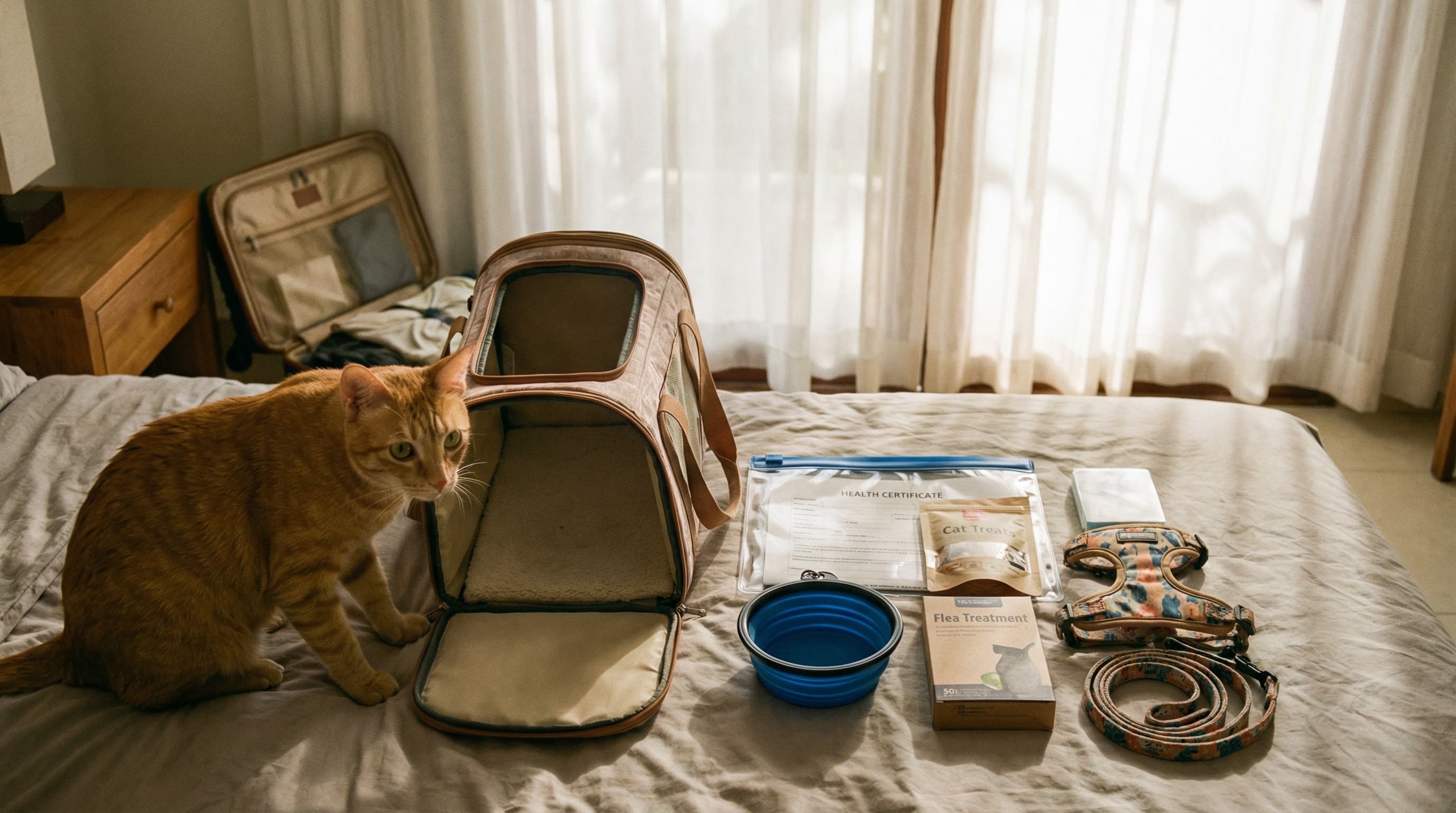
Travel day: Bring the health certificate (original), rabies certificate, and any other vaccination records in a waterproof folder. Arrive at the airport 60–90 minutes early. Exercise your pet before heading through security.
Common Mistakes
Airport Tips
Departing the US: Check in at the airline counter with your pet. The agent checks your reservation, carrier dimensions, and collects the pet fee. At security, remove your pet from the carrier and hold it tight (use a harness and leash for cats, they bolt), then send the empty carrier through the X-ray. Same process as any domestic flight.
Arriving at SJU (San Juan): After you collect your bags, a PR Department of Agriculture inspector may check your health certificate and vaccination records. In practice, many travelers report that nobody checks. Don't count on that. Have your paperwork ready. If your pet's rabies shot isn't active, inspectors can quarantine your pet and make you pay for vaccination.
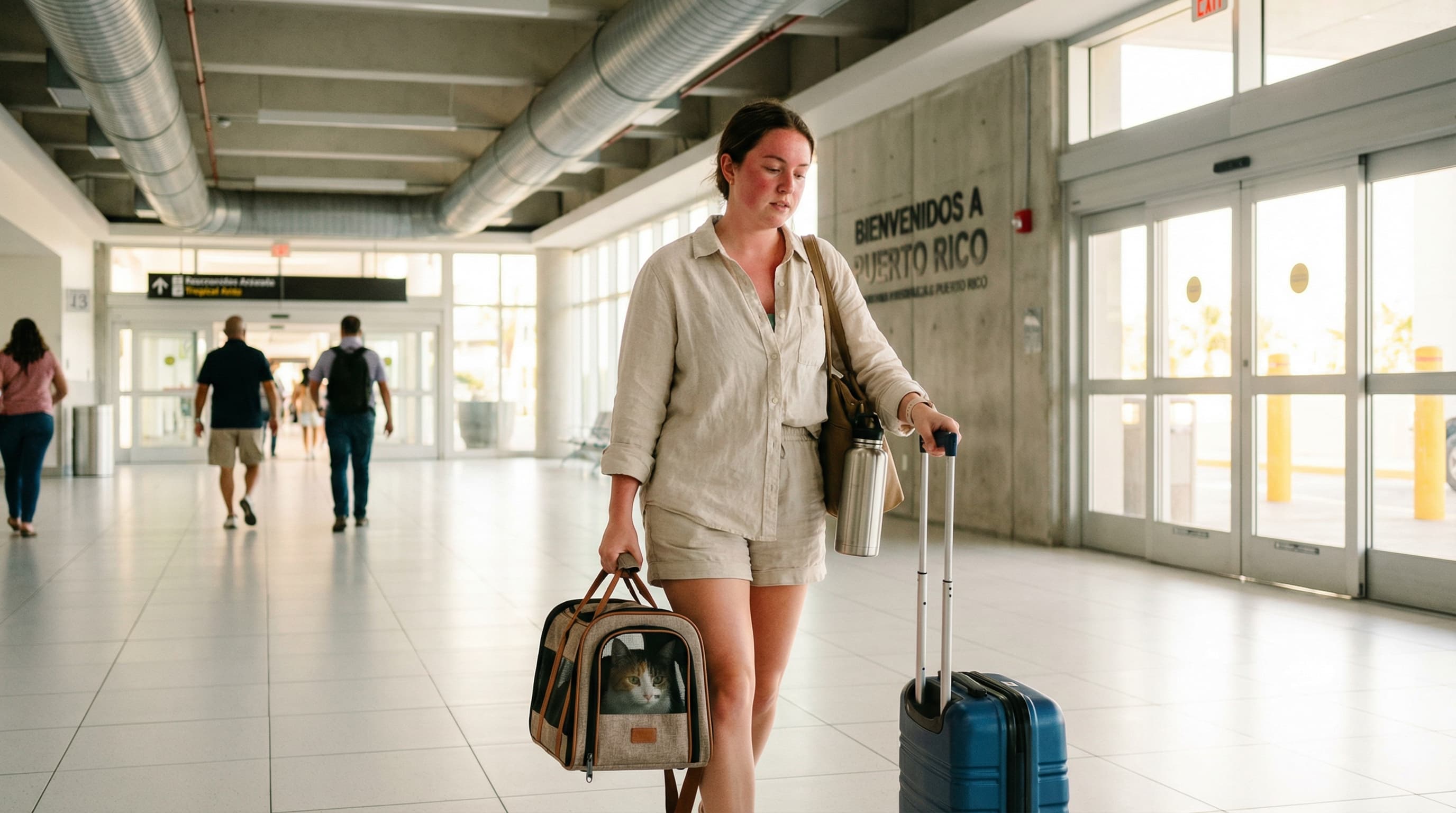
Practical tips: PR is hot year-round. Have water ready for your pet right after landing. If you rented a car, crank the AC before loading the carrier. Freeze water in a travel bowl before the flight to prevent spills and give your pet something cool on arrival.
Returning to the US Mainland
This is the easy direction. Puerto Rico to the mainland is domestic travel. No CDC Dog Import Form, no customs, no federal import process for dogs or cats.
What you need: Your destination state's entry rules apply. Most states want a health certificate and active rabies vaccination. If your original health certificate is less than 10 days old, you can use it for the return trip. If not, get a new one from a vet in Puerto Rico.
Dogs and cats: Same deal for both species. No CDC form, no microchip check, no screwworm certificate. Just whatever your home state asks for.
Check your state's rules. Some states are strict about incoming pets (Hawaii quarantines, others need specific vaccines). Look up your destination state's rules before you fly back.
For the full re-entry process, see our guide to returning to the USA with a pet.
FAQ
Your next step: Call your airline to reserve a pet spot. Most PR flights allow only 2–4 pets in cabin — that's the one thing that can actually sell out before you're ready.