Failure to meet any import condition can result in your pet being sent back to the US at your expense. MAST does not make exceptions. A single paperwork error — wrong date, missing microchip number, expired vaccine — can mean rejection at the airport.
Bringing a Dog or Cat to Iceland from the US — 2026 Requirements
19 min readinternational

James Harlow
Pet Relocation Consultant
| Applies to | Dogs and cats (dogs need extra vaccines and tests) |
| Documents | MAST import permit + D2/C2 health certificate + lab reports |
| Vaccines | Rabies + titer test. Dogs: also canine influenza, DHPP, leptospirosis. Cats: FVRCP |
| Titer test | FAVN, ≥0.5 IU/ml, 90-day wait from blood draw before entry |
| Microchip | Required (ISO 11784/11785) |
| Quarantine | 14 days required, no exceptions |
| Transport | Cargo freight only (no cabin, no checked baggage) |
| Cost | $2,390–$2,890+ (dogs) / $1,370–$1,720+ (cats) — excludes cargo freight |
| Timeline | Start 5–6 months before travel |
| Difficulty | 🔴 Very Hard |
Bringing a pet to Iceland from the US costs $1,370–2,890+ (excluding cargo freight) and takes 5–6 months of prep.
The US is classified as a Category 2 country by Iceland's MAST authority, which triggers the most complex import pathway.
Iceland has some of the strictest pet import rules in the world: a MAST import permit, rabies vaccination at least 120 days before arrival, a titer test with a 90-day waiting period, and a required 14-day quarantine at one of two facilities. As of November 2024, transport is cargo-only — no airline allows pets on passenger flights to Iceland.
Dogs from the US need extra vaccines and tests that cats don't, including canine influenza and a Brucella blood test. You cannot bring a pet to Iceland on vacation: every entry is a full import with quarantine.

What You Need
Iceland's MAST (Icelandic Food and Veterinary Authority) controls all pet imports. The US is Category 2 (rabies present but controlled), which means the full testing and waiting period pathway applies. Regulation 200/2020 governs the process.
Your pet must have lived in an approved Category 2 country (the US qualifies) since birth or for at least 6 months before import. Pets can meet the full requirements at the earliest around 7 months of age.
For both dogs and cats:
Documents and permits:
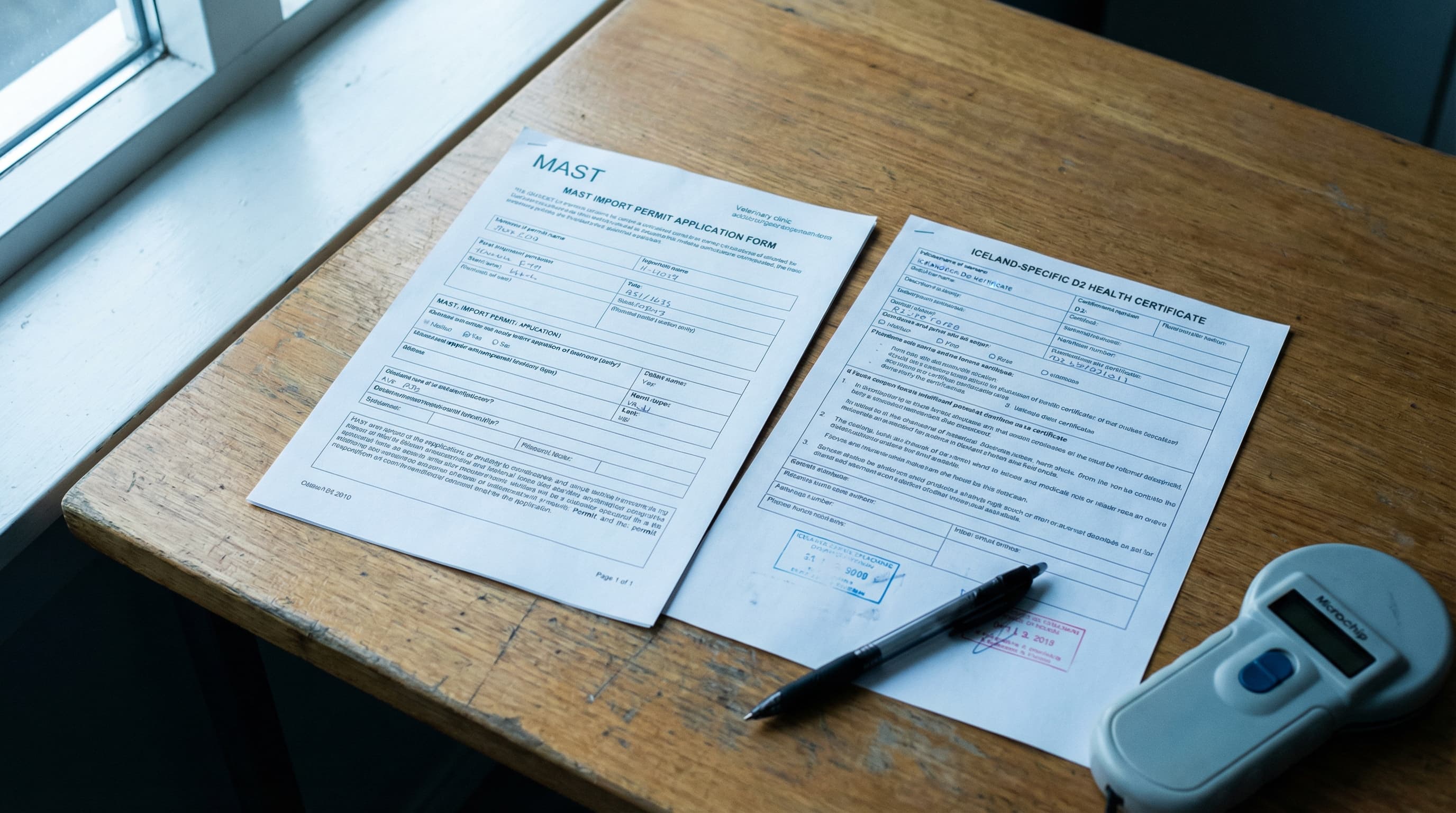
- MAST import permit — apply at least 30 days before arrival. Fee: 39,633 ISK (~$290). Email MAST pet import office or apply on the MAST portal with an Icelandic ID
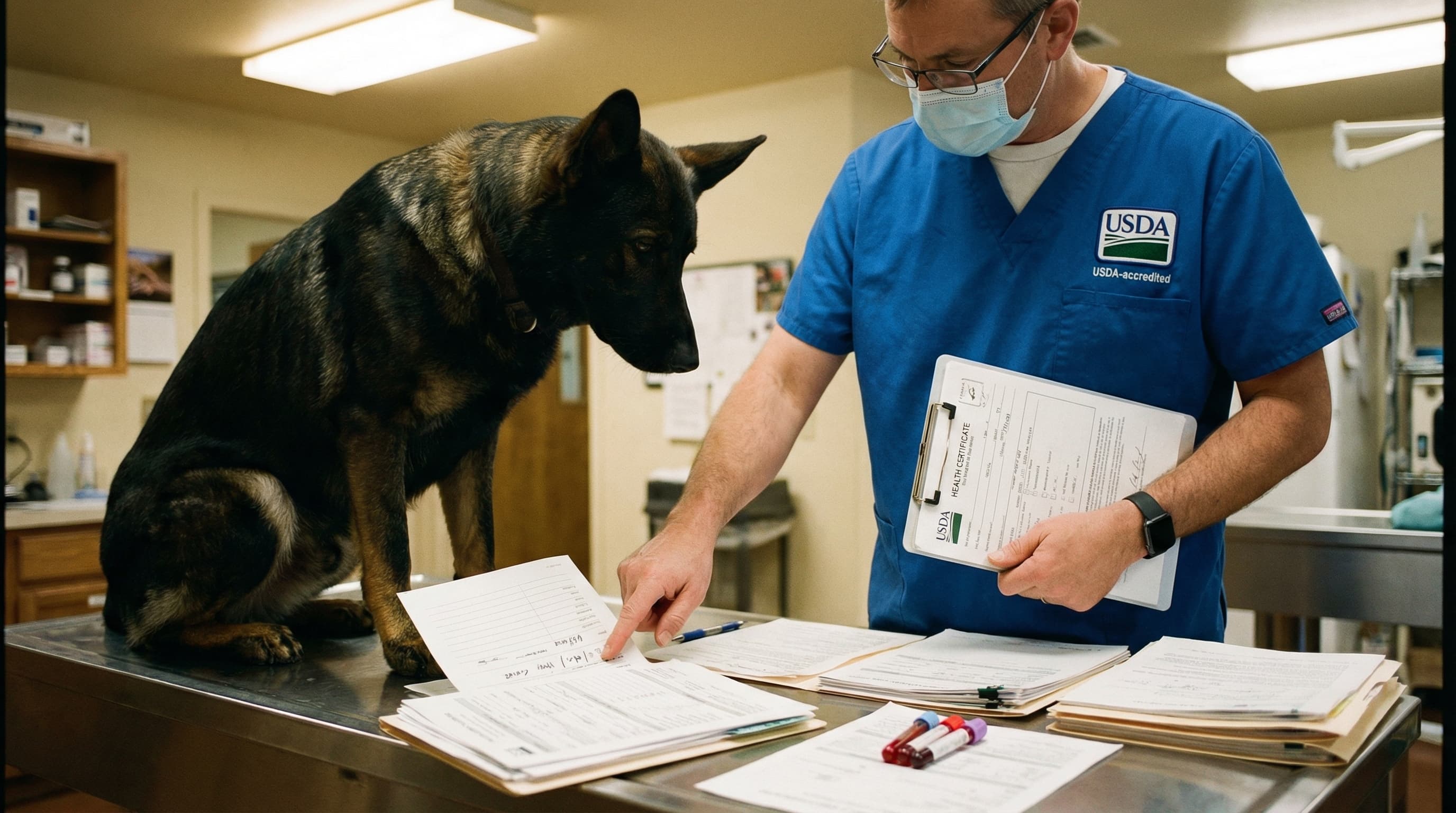
- Health certificate (D2 for dogs, C2 for cats) — completed by a USDA-accredited vet 5–10 days before import. Iceland uses its own MAST forms, not the standard APHIS 7001. Email to MAST at least 5 days before arrival for pre-approval
Medical requirements:
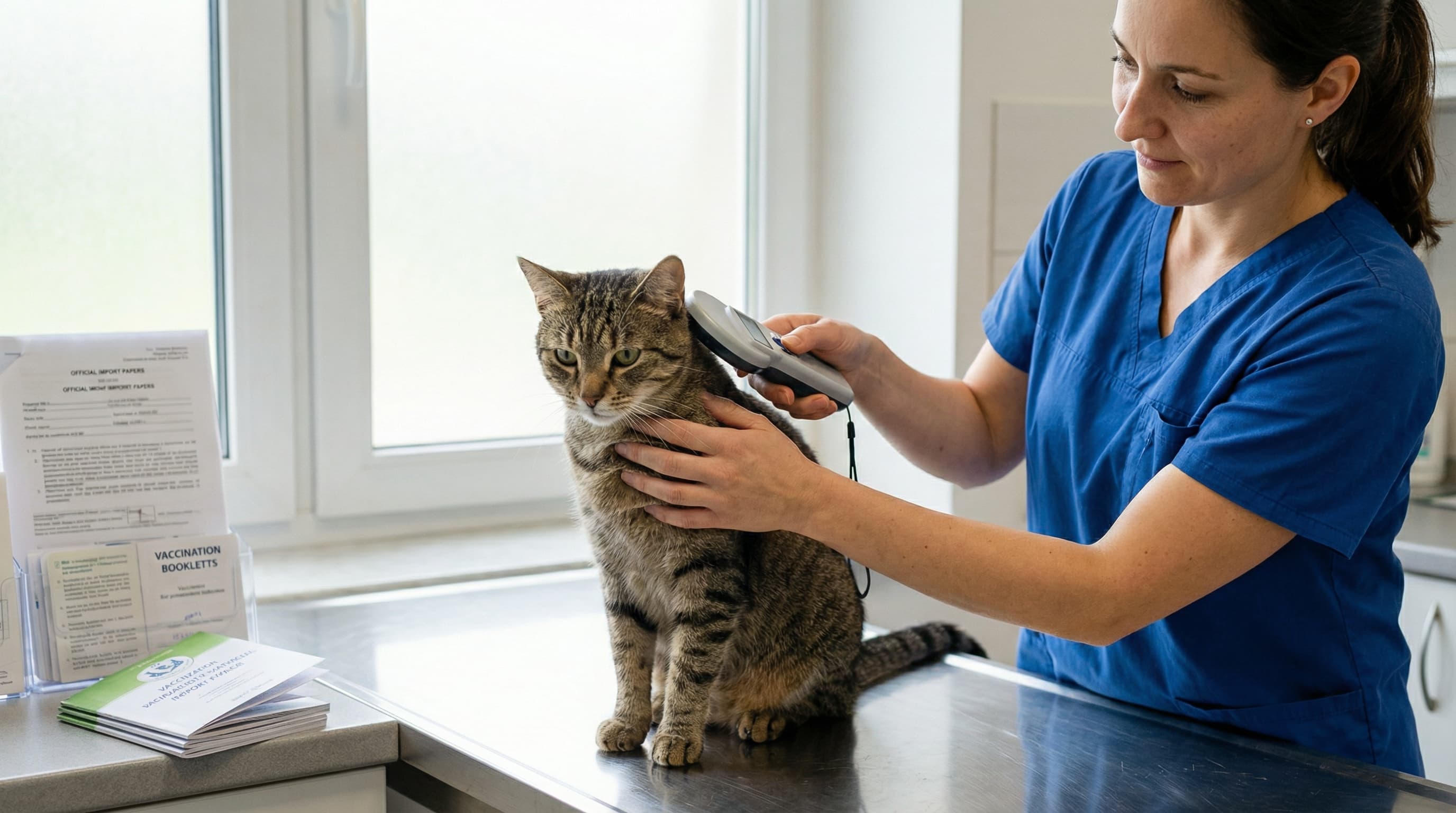
- ISO microchip (ISO 11784/11785) — implanted before any vaccinations or blood tests. The chip number is checked at every vet visit and must appear on every document
- Rabies vaccination — at least 120 days before import. Must be active when the titer blood draw happens
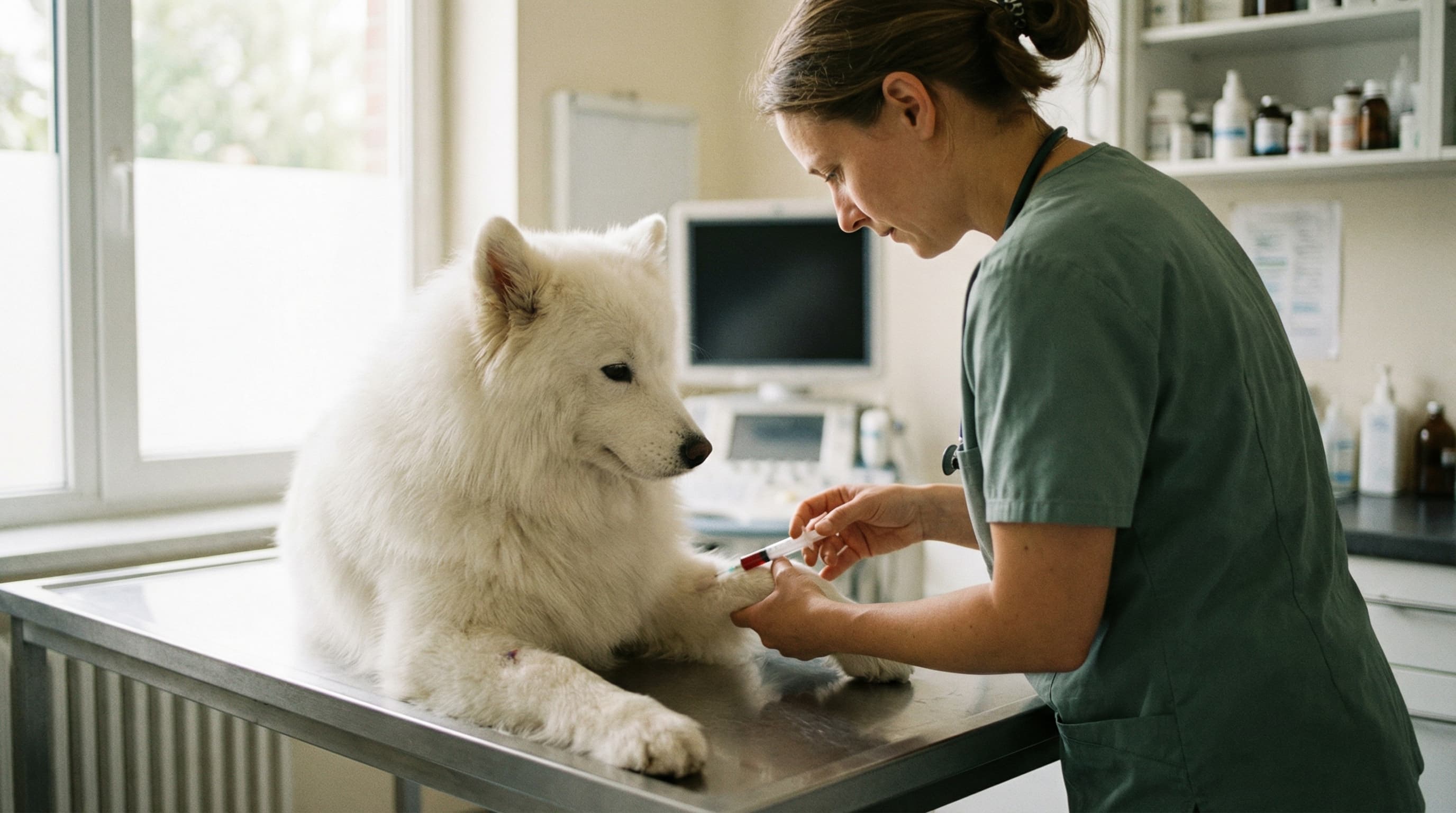
- Rabies titer test — blood drawn at least 30 days after vaccination, at an EU-approved lab. Result must be ≥0.5 IU/ml. Then 90 days must pass from the blood draw date before the pet can enter Iceland
- Two rounds of parasite treatment — first treatment 21–28 days before import, second 5–10 days before. Must cover lice, fleas, ticks (external) and roundworm, tapeworm (internal)
Logistics:
- 14-day quarantine — at one of two approved facilities. No exceptions, no home quarantine
- Keflavik Airport only — the only approved entry point. Air travel only (no ferries)
USDA endorsement is not required for pets going to Iceland. Your USDA-accredited vet completes the MAST certificate directly. This saves you the USDA endorsement fee.
The D2 and C2 forms are Iceland-specific: download them from the MAST website before your vet appointment, as most US practices won't have them on file. The 5–10 day window from exam to import is strict: if your travel date shifts after the certificate is signed, you need a new exam and a new certificate.
Pregnant or lactating pets cannot be imported. Dogs and cats that recently had major surgery or need special medical treatment are also rejected unless MAST grants an exception.
Critical
Dogs: Extra Requirements from the US
Dogs from the US need several things that cats don't. All must be recorded on the D2 certificate:
Vaccines (all at least 14 days before import):
- Canine influenza — required specifically for dogs from the US, Canada, and Singapore. Must be fully vaccinated per manufacturer directions
- DHPP (distemper, adenovirus/hepatitis, parvovirus, parainfluenza) — four diseases in one standard combination shot
- Leptospirosis
Blood tests (within 30 days before import):
- Brucella canis — IFAT, RSAT, or TAT. Must be negative
- Leishmania spp. — PCR or ELISA. Applies only to intact dogs (both sexes). A positive result doesn't block import if the dog is surgically spayed/neutered (chemical neutering not accepted)
- Angiostrongylus vasorum — either a blood/fecal test (ELISA, PCR, or Baermann method) within 30 days, OR preventive treatment 5–10 days before import with a spot-on containing imidacloprid and moxidectin (e.g., Advocate or Advantage Multi). Your vet picks one option
MAST recommends scheduling the Brucella and Leishmania blood draws during the same vet visit as the first parasite treatment. Results take 1–3 weeks.
Intact dogs also must not have mated in the 60 days before import.
Cats: What's Different
Cats have a simpler path. The C2 certificate covers:
Vaccines (at least 14 days before import):
- Feline panleukopenia
- Feline rhinotracheitis (herpesvirus)
- Calicivirus
Blood tests (within 30 days before import):
- FeLV (feline leukemia virus) — PCR, ELISA, or IFA. In-house test kits based on accredited methods are accepted
- FIV (feline immunodeficiency virus) — ELISA or Western blot. In-house test kits accepted
No canine influenza, no Brucella, no Leishmania, no Angiostrongylus. No breed restrictions. Cats still need rabies + titer test, parasite treatments, microchip, import permit, and quarantine: the same core steps as dogs.
Rabies Vaccine and Titer Test
The rabies vaccine and titer test create the longest waiting period in the entire process. Here's the math:
- Microchip first. ISO 15-digit chip before anything else
- Rabies vaccine. Must be given at least 120 days before import. The vaccine must stay valid through the titer test and all the way to entry day
- Titer blood draw. At least 30 days after vaccination. Send to an EU-approved lab — Kansas State in the US qualifies. Result must be ≥0.5 IU/ml
- 90-day wait. From the date the blood was drawn, 90 days must pass before the pet can enter Iceland. There are no exceptions to this waiting period
The titer stays valid as long as the rabies vaccine is kept current. If the vaccine lapses, the titer is void and you start over.
The 120-day vaccine minimum works out to: vaccine on day 0 → blood draw on day 30 → entry allowed on day 120.
If your pet has never had a rabies vaccine, the timeline is even longer because you may need primary vaccination plus a booster before the titer test.
Quarantine: 14 Days, No Exceptions
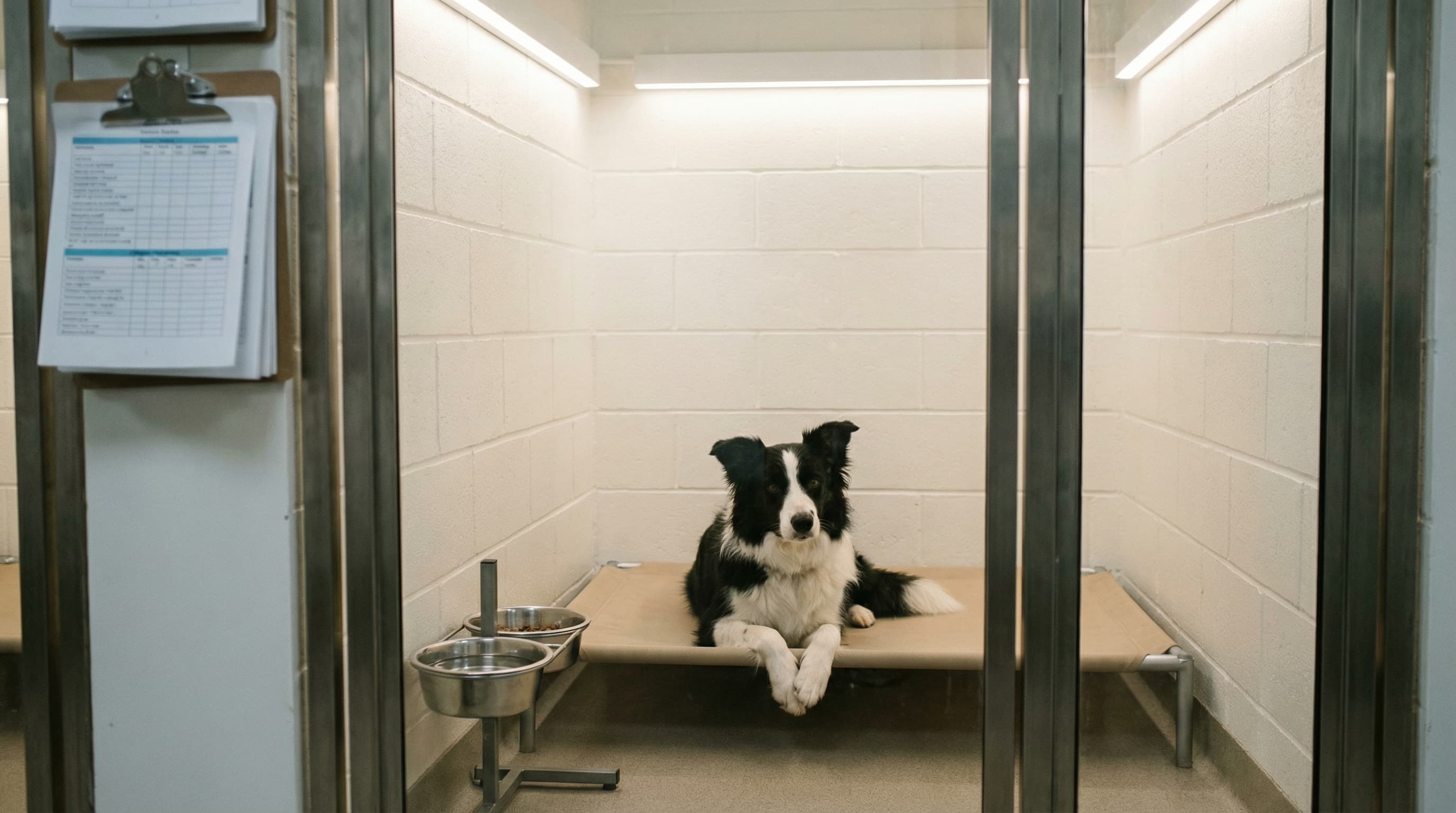
Every pet entering Iceland spends 14 days in quarantine. There's no way around this — not for elderly pets, not for emotional support animals, not for homes in isolated areas. MAST's FAQ addresses all of these: the answer is always no.
Two approved quarantine facilities exist in all of Iceland:
Reykjanesbær quarantine station (Hafnir) — 15 minutes from Keflavik Airport
- Dogs: 220,000 ISK (~$1,600)
- Cats: 100,000 ISK (~$730)
- Confirmation deposit: 50,000 ISK (~$365), non-refundable, deducted from total
- Includes: airport pickup, food, housing, cleaning, vet checks, stool samples, parasite treatments
- Phone: +354 421 6949 / +354 893 6949
- einangrun.weebly.com
Mósel quarantine station (Hella)
- Phone: +354 892 3457
- Email: moseleinangrun@gmail.com
- okkarmosel.com
Both stations admit pets during 3-day intake windows every ~3 weeks. Your pet's flight must land during an intake window (06:00–17:00 on admission days). Miss the window and your pet can't enter.
Book quarantine months in advance: only two facilities exist in all of Iceland.
When quarantine ends, your pet's collar, leash, toys, and bed are destroyed for biosecurity. Bring replacement items for pickup day.
Getting Your Pet to Iceland: Cargo Only
This is the hardest part of the logistics. As of November 2024, no airline allows pets on passenger flights to Iceland (not in the cabin, not as checked baggage).
Icelandair stopped carrying pets in the hold of passenger aircraft, and PLAY, Delta, and United all prohibit pets on Iceland routes.
Icelandair Cargo is the primary option:
- Operates freight flights from Los Angeles (LAX), New York (JFK), and Chicago (ORD) to Keflavik.
- Contact: +354 5050 549
- Pricing is not published — you must call for a quote.
- Weight Limits: Standard combined weight (pet + crate) is typically capped at 88 lbs (40 kg), though some aircraft can accommodate up to 110 lbs (50 kg).
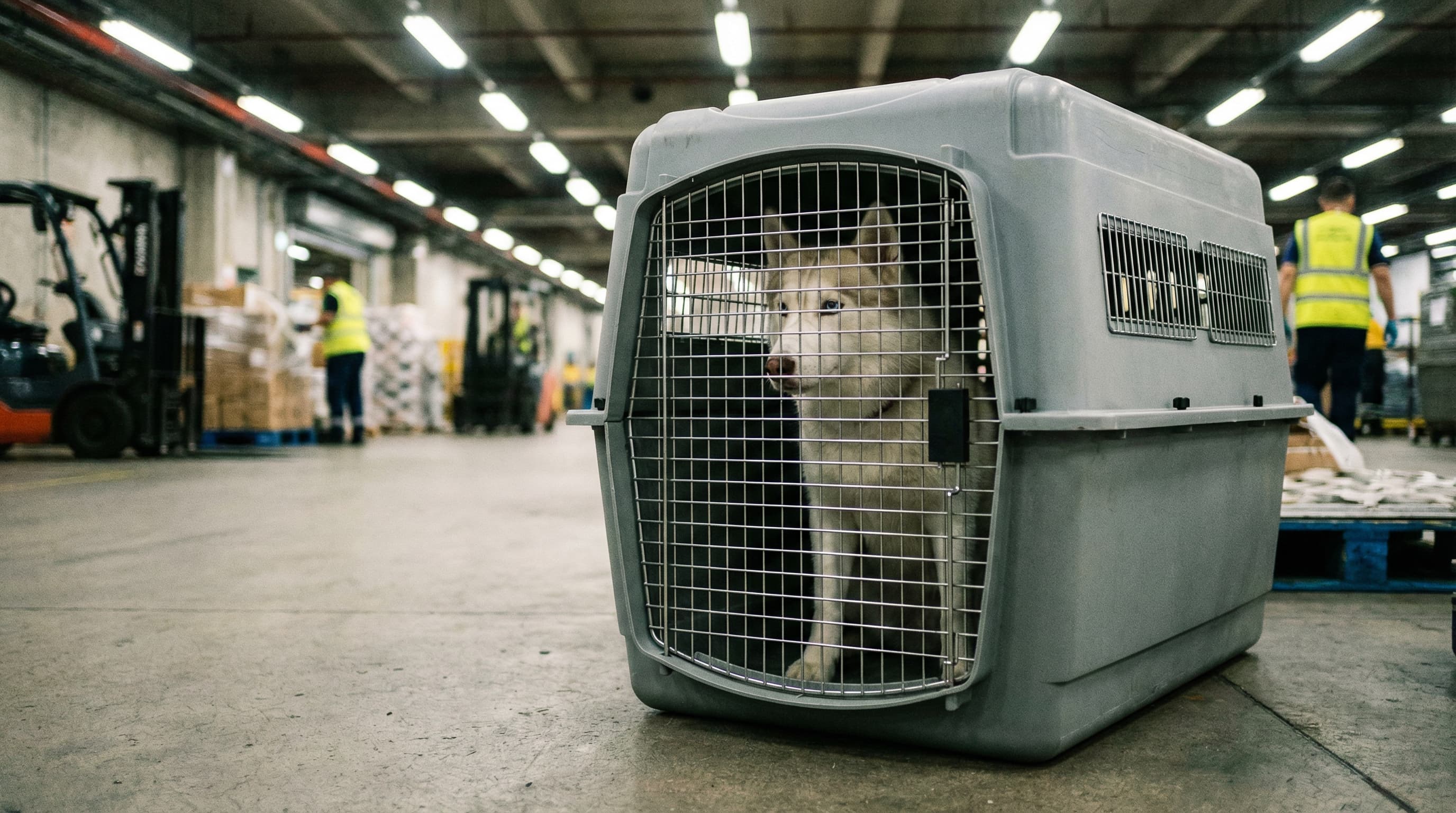
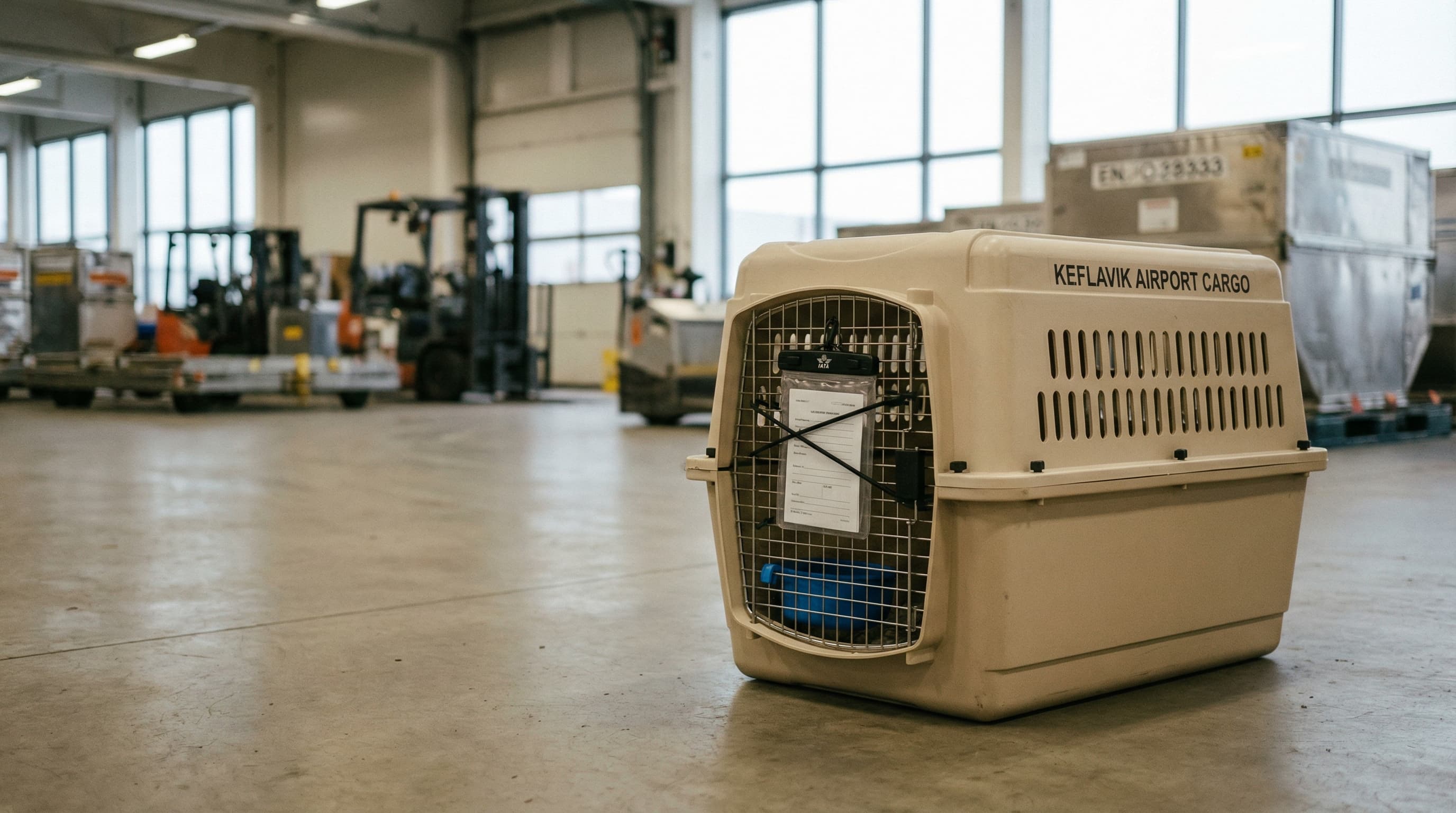
- IATA-approved hard crate required (no soft carriers, no collapsible crates)
- A licensed agent handles pet reception at Keflavik through the airport service provider Avior
Pet transport companies can manage the entire cargo process:
- PetRelocation — major international shipper
- Across The Pond Pets — Iceland experience
- Search the IPATA directory for Iceland-experienced agents
This is one situation where a professional pet transport company is worth the cost. The cargo booking must align with quarantine intake windows, and the logistics of coordinating between Icelandair Cargo, MAST, and the quarantine station are hard to manage alone.
Watch OutIf your pet needs to transit through another country (like the UK or Denmark) en route to Iceland, you must also meet that country's import rules for the transit. This can add extra vaccine or paperwork needs. Plan the routing carefully.
Breed Restrictions
Iceland bans the following dog breeds and their crosses (for at least 5 generations):
- Pit Bull Terrier / American Staffordshire Terrier / Staffordshire Bull Terrier / American Bulldog
- Fila Brasileiro
- Tosa Inu
- Dogo Argentino
- Cane Corso
- Presa Canario
- Boerboel
Wolf-dog hybrids are banned for at least 10 generations. MAST also reserves the right to reject any breed it considers similar in "origin, physique and/or temperament" to the banned breeds.
If you have a breed that's even remotely close to this list, contact MAST before you start the process.
No breed restrictions exist for cats.
Cost Breakdown
Dogs
| MAST import permit | ~$290 | 39,633 ISK minimum |
| Quarantine (14 days) | ~$1,600 | 220,000 ISK at Reykjanesbær |
| Vet exam + D2 certificate | $150–300 | USDA-accredited vet, multiple visits |
| Rabies vaccine (if needed) | $15–35 | Must be 120+ days before import |
| Rabies titer test | $100–175 | EU-approved lab (Kansas State) |
| Canine influenza vaccine | $25–50 | US-specific requirement |
| DHPP + leptospirosis vaccines | $45–90 | 5 vaccines total |
| Brucella canis test | $50–100 | Within 30 days of import |
| Leishmania test (intact dogs) | $75–150 | Skip if neutered/spayed |
| Angiostrongylus treatment | $20–40 | OR test ($50–100) |
| FIV/FeLV test | — | Dogs don't need this |
| Parasite treatments (2 rounds) | $30–80 | Internal + external |
| ISO microchip (if needed) | $25–75 | Before any vaccines |
| Cargo freight (Icelandair Cargo) | Unknown | Call +354 5050 549 for quote |
| Total estimate (excl. freight) | $2,390–$2,890+ |
Cats
| MAST import permit | ~$290 | 39,633 ISK minimum |
| Quarantine (14 days) | ~$730 | 100,000 ISK at Reykjanesbær |
| Vet exam + C2 certificate | $150–300 | USDA-accredited vet, multiple visits |
| Rabies vaccine (if needed) | $15–35 | Must be 120+ days before import |
| Rabies titer test | $100–175 | EU-approved lab |
| FVRCP vaccine | $25–50 | 14+ days before import |
| FeLV test | $20–40 | Within 30 days, in-house kits OK |
| FIV test | $20–40 | Within 30 days, in-house kits OK |
| Parasite treatments (2 rounds) | $30–80 | Internal + external |
| ISO microchip (if needed) | $25–75 | Before any vaccines |
| Cargo freight (Icelandair Cargo) | Unknown | Call +354 5050 549 for quote |
| Total estimate (excl. freight) | $1,370–$1,720+ |
The cargo freight cost is the biggest unknown. Professional pet transport companies typically charge $2,000–5,000+ for transatlantic cargo shipments, but prices vary by route, season, and crate size.
Customs note: If you've owned the pet for less than 12 months, you'll pay VAT on the purchase price when importing. Contact Icelandair Cargo at tollskyrsla@icelandaircargo.is for customs details. Payment must clear before your pet leaves quarantine.

Timeline: When to Start
5–6 months before travel: Apply for the MAST import permit. Book a quarantine slot now: both facilities fill fast and intake windows are limited. Get the ISO microchip implanted if your pet doesn't have one.
4+ months before (120+ days): Rabies vaccination. This is the hard minimum: the vaccine must be given at least 120 days before import day.
3–3.5 months before (~90 days): Titer test blood draw. Must be at least 30 days after vaccination. The 90-day countdown starts from this blood draw date. Send blood to an EU-approved lab.
6–8 weeks before: Receive titer results. If ≥0.5 IU/ml, you're cleared. If lower, revaccinate and retest, which resets the 90-day clock.
21–28 days before: First parasite treatment (internal + external). Dogs: also schedule Brucella, Leishmania (if intact), and Angiostrongylus blood tests. Cats: schedule FeLV and FIV tests. MAST recommends combining these with the first parasite treatment visit.
14+ days before: Final round of non-rabies vaccines (canine influenza, DHPP, leptospirosis for dogs; FVRCP for cats). All must be at least 14 days before import.
5–10 days before: Second parasite treatment. Health exam. Vet completes the D2 (dogs) or C2 (cats) certificate. If choosing A. vasorum treatment instead of testing (dogs), do it now.
5 days before: Email the completed, signed certificate and all lab results to petimport@mast.is. MAST reviews during business hours only (weekdays). If approved, they sign Part 11 (dogs) or Part 10 (cats) and send confirmation.
Travel day: Attach an envelope to the crate with: import permit (copy is fine), original D2 or C2 certificate, original lab reports (titer, Brucella, FeLV/FIV, etc.), and customs declaration if needed. Pet flies cargo to Keflavik, is met by Avior, inspected by MAST, and transported directly to quarantine.
14 days later: Pick up your pet from quarantine. Bring a new collar, leash, and bed: quarantine biosecurity destroys the originals.
Common Mistakes
Airport Tips
Iceland's arrival process is unlike any other country guide on this site. Your pet and you travel to Iceland separately and never go through a shared check-in. Everything below is about the cargo handoff — not the passenger terminal.
Prepare the crate before drop-off. Attach a waterproof envelope to the outside with: a copy of the import permit (copy is fine), the original MAST-pre-approved D2 or C2 certificate, and original lab reports (titer, Brucella, FeLV/FIV, etc.). Avior's team at Keflavik checks this envelope before MAST inspects. Line the crate with an absorbent pad, include a water dish, and skip food 4–6 hours before drop-off. Exercise your pet before loading.
Lock in the intake window before booking the cargo flight. The cargo flight must land at Keflavik between 06:00–17:00 on one of the quarantine intake days. Confirm the exact flight number with Icelandair Cargo, cross-reference it against the quarantine station's intake calendar, and get written confirmation from the station that they're expecting your pet on that date. Book in this order: quarantine date first, cargo flight second, your own passenger flight third.
What happens at Keflavik (the pet's side). Avior receives the crate at the cargo facility. MAST conducts the inspection there — checking microchip, certificate, and lab reports against the pre-approval on file. If everything matches, the quarantine station transports your pet directly to the facility. You are not present for any of this.
What happens at Keflavik (your side). You arrive on a separate passenger flight with no pet-related customs obligations. The cargo and passenger processes are completely independent. Keep document copies in your bag in case you're asked, but the inspection already happened on the cargo side. Get the quarantine station's direct phone number before you travel — call to confirm arrival, don't wait on email.
Timing your own flight. Arrive a day or two after the cargo flight if you can. This lets you confirm your pet cleared inspection and was admitted before you land, rather than arriving simultaneously and having no way to follow up quickly.
Re-Entry to the USA
Dogs
Iceland is on the CDC's low-risk country list. Re-entry is straightforward:
- CDC Dog Import Form — submit online, receipt by email in ~15 minutes. Valid 6 months
- Microchip readable by a universal scanner
- Dog must be at least 6 months old
- Dog must appear healthy
No titer test, no quarantine, no screwworm certificate. Your dog will already have all of this from the Iceland import process.
Cats
The CDC has no federal import requirements for cats. Check your home state's rules — many require rabies certificates for cats.
For the full breakdown, see our re-entry guide.
FAQ
Your next step: Apply for the MAST import permit and book a quarantine slot. Both have limited availability, and the quarantine intake windows dictate your entire timeline. Email petimport@mast.is to start.