If your pet arrives without a health certificate, QIA will send them back to the US at your expense. No exceptions. Missing a microchip or titer test means extended quarantine until the issue is fixed — also at your expense.

Bringing a Dog or Cat to South Korea from the US — 2026 Requirements
20 min readinternational

Dr. Sarah Chen
Travel Veterinarian
| Applies to | Dogs and cats (same entry rules for both) |
| Documents | USDA-endorsed health certificate with microchip number and titer results |
| Vaccines | Rabies (pets 90+ days old) |
| Titer test | FAVN, ≥0.5 IU/ml, valid 24 months from blood draw |
| Microchip | Required (ISO 11784/11785) |
| Quarantine | None if paperwork is complete. Extended quarantine if anything is missing |
| Cost | $565–$1,525 for dogs, $405–$1,265 for cats |
| Timeline | Start 2–3 months before travel |
| Difficulty | 🟡 Moderate |
Bringing a pet to South Korea from the US costs $405–1,525 and takes 2–3 months of prep. The US is not on South Korea's rabies-free list, so your pet needs a rabies titer test unlike travelers from rabies-free countries.
South Korea's Animal and Plant Quarantine Agency (QIA) needs three things: an ISO microchip, a rabies antibody titer test with passing results, and a USDA-endorsed health certificate.
No import permit needed. No quarantine if your paperwork is correct — your pet walks out of Incheon Airport the same day you land.
The rules are the same for dogs and cats. This guide covers every step, cost, and airline option for both.
What You Need
South Korea's QIA (Animal and Plant Quarantine Agency) runs pet import inspections. Because the US is not rabies-free by OIE/WOAH standards, pets 90 days or older need the full titer test pathway.
For both dogs and cats:
- ISO microchip — implanted before rabies vaccination so the vaccine record links to the chip number. Non-ISO chips are accepted only if you bring your own scanner to the airport
- Rabies vaccination — required for pets 90 days or older. Must be active (not expired) at time of travel. Use an inactivated rabies vaccine approved in the US
- FAVN rabies titer test — blood drawn after vaccination. Valid for 24 months from the blood collection date, as long as the rabies vaccine hasn't lapsed
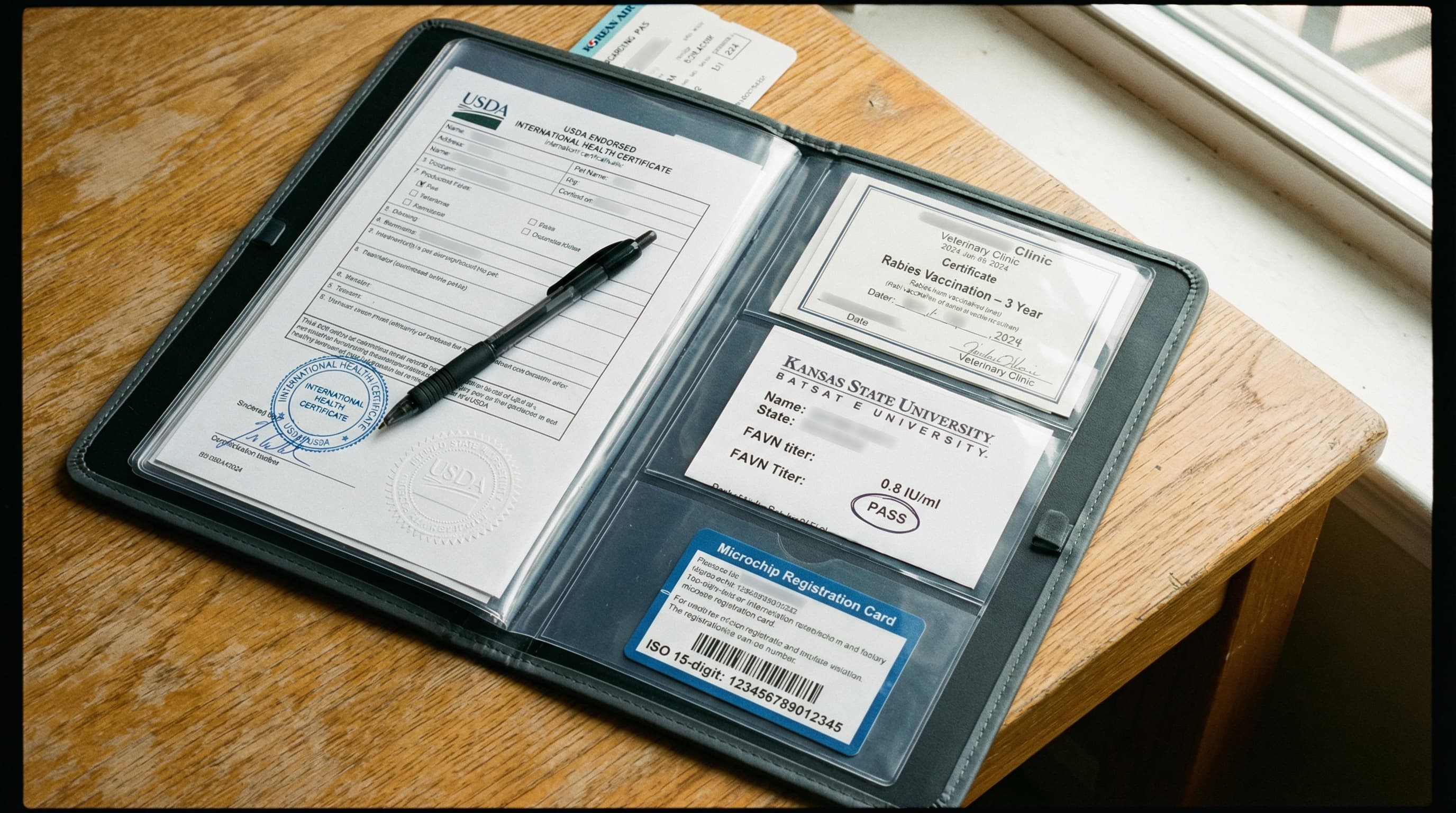
- Health certificate — issued by a USDA-accredited vet. Must include the microchip number, rabies titer result, test date, test lab, and birth date
- USDA endorsement — APHIS stamps and embosses the health certificate. Submit through VEHCS or by mail
No import permit needed for personal pets (up to 4 animals). No quarantine if everything checks out — QIA inspects your paperwork at the airport and releases your pet the same day.
Critical
Rabies Vaccine and Titer Test
Your pet needs an active rabies vaccine and a blood test proving the vaccine worked. Here's the sequence:
- Microchip first. Get an ISO 15-digit chip implanted before any rabies vaccination. This links the chip number to the vaccine record — if you do it in the wrong order, the vaccine certificate won't reference the right chip
- Rabies vaccine. Any inactivated rabies vaccine licensed in the US. If your pet already has an active rabies shot with the microchip on record, you can skip a new one
- FAVN titer test. Your vet draws blood and sends it to an OIE-approved lab. In the US, that's Kansas State University Rabies Laboratory. Results currently take about 10–14 calendar days and cost around $100–150
- Results must show 0.5 IU/ml or higher. If the result is lower, talk to your vet about revaccinating and retesting
The titer test result stays valid for 24 months from the date the blood was drawn, as long as you keep the rabies vaccine active. If the vaccine lapses, the titer is void — you'd need to revaccinate and retest.
Pets under 90 days old skip both the rabies vaccine and titer test. They still need a microchip and health certificate with their birth date documented.
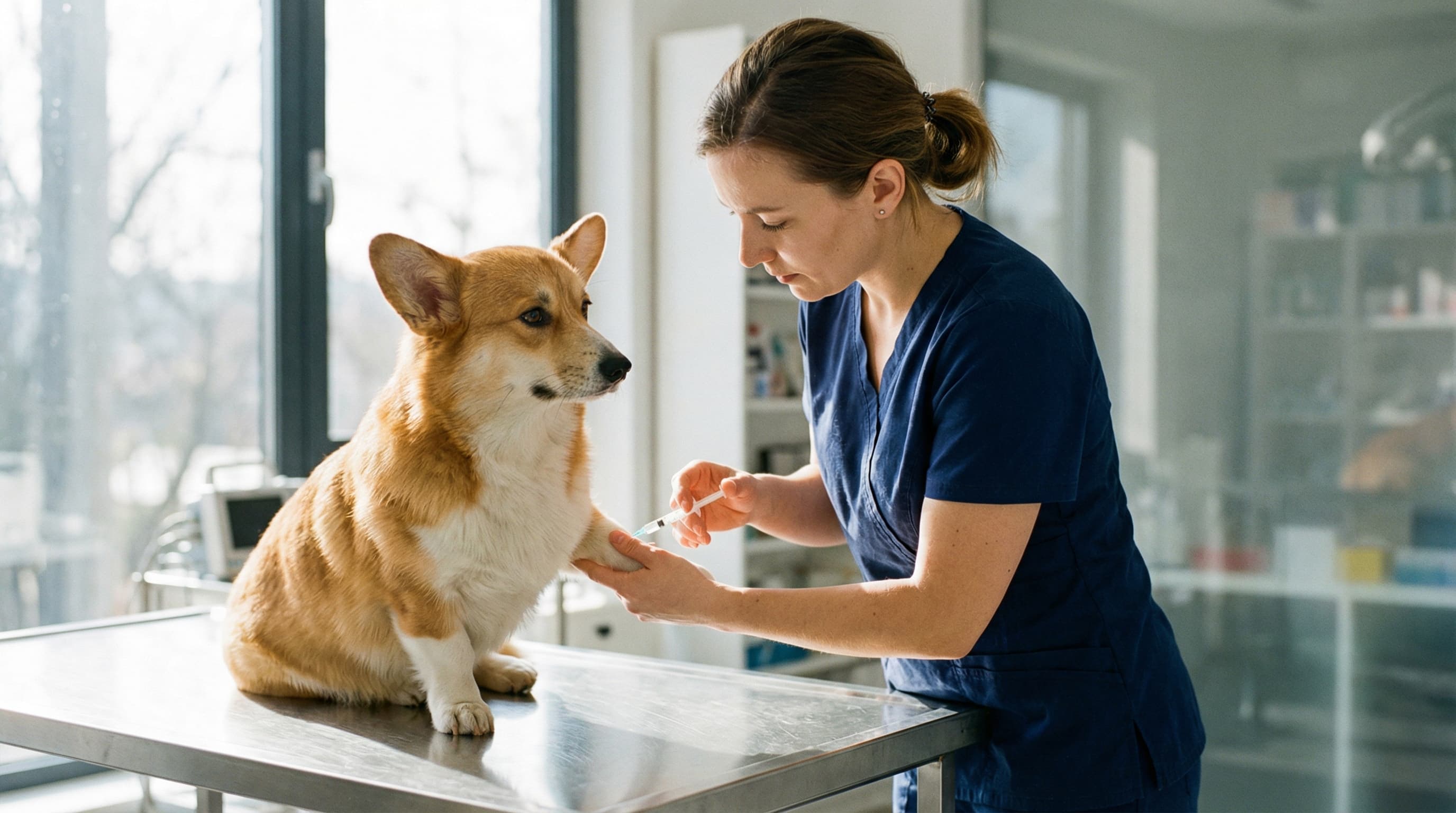
Health Certificate and USDA Endorsement
Your vet fills out the health certificate. USDA stamps it. South Korea's QIA checks it at the airport. Here's how the process works:
Health certificate: Schedule an exam with a USDA-accredited vet within 10 days of your departure. The vet examines your pet and fills out the International Health Certificate for Dogs and Cats.
It must include your pet's microchip number, the rabies titer test result with the test date and lab name, and your pet's birth date. The vet signs in blue ink.
USDA endorsement: After the vet completes the certificate, submit it to your USDA-APHIS Veterinary Services Endorsement Office. You can submit electronically through VEHCS (fastest) or by mail with a prepaid return label.
USDA reviews the certificate, stamps it with an original ink endorsement, and embosses it. The endorsed certificate is valid within 30 days of export.
Cost: USDA endorsement fees increased significantly under a new tiered structure. For South Korea (which needs titer test verification), the fee is $160 per certificate with 1–2 test results verified, plus $10 for each additional pet on the same certificate. The old $38 flat fee no longer applies.
TipUse VEHCS for the fastest turnaround. Vets who submit electronically often get endorsements back in 1–2 business days. Mailing adds 5–7 business days each way.
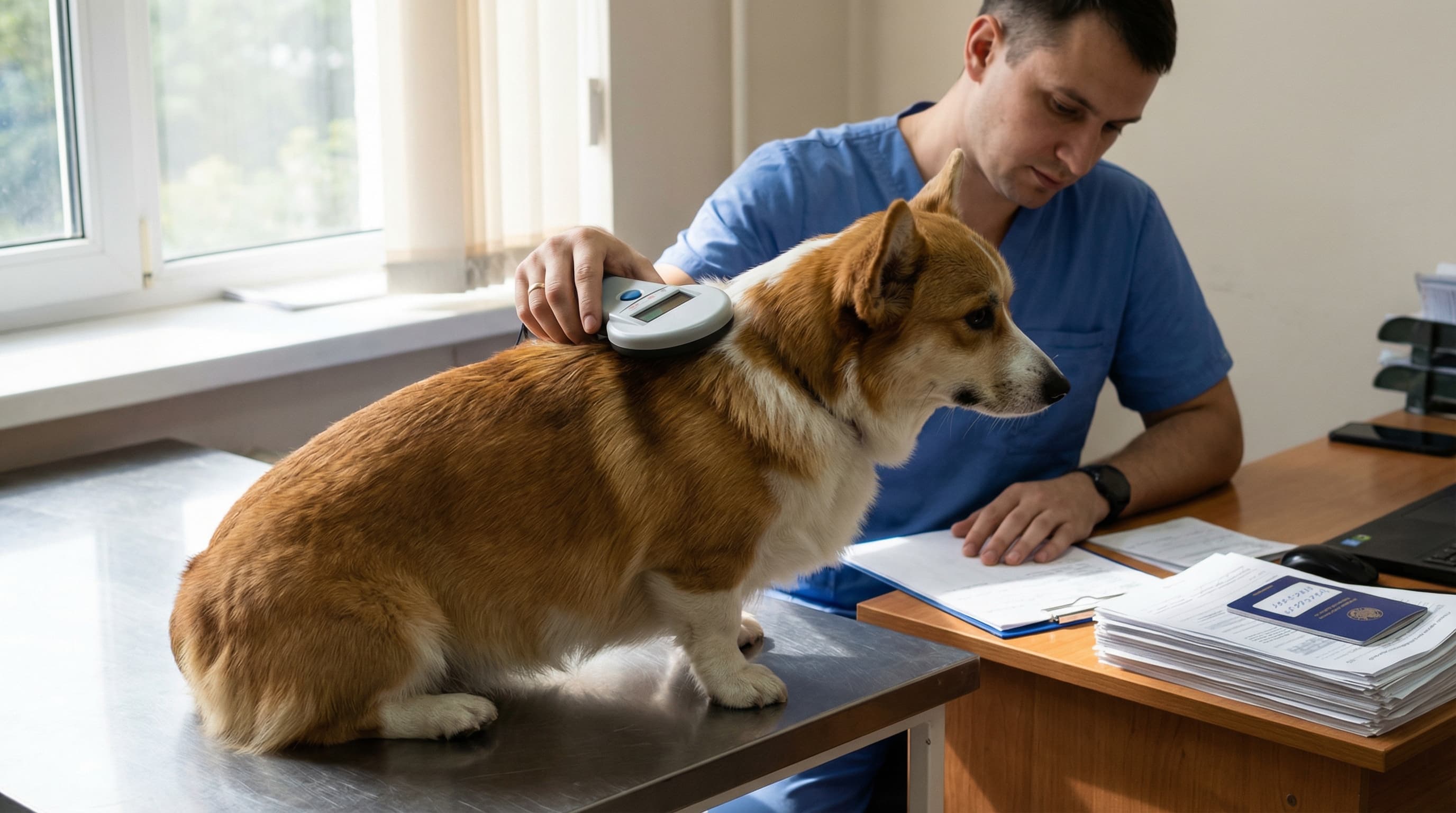
Microchip Rules
South Korea accepts ISO 11784/11785 microchips — the standard 15-digit, non-encrypted chip. Implant type or collar (necklace) type both work.
Get the microchip before the rabies vaccine. The chip number needs to appear on every document from that point forward: the rabies certificate, the titer test submission, and the health certificate.
If the chip number on any document doesn't match what QIA scans at the airport, your pet goes into quarantine until they sort it out.
If your pet already has a non-ISO chip (like a 9 or 10-digit AVID chip common in older US pets), you have two options: bring your own scanner that reads the chip, or get a second ISO chip implanted.
Most travelers get the ISO chip — it costs $25–75 and avoids any scanner drama at Incheon.
For dogs: you'll also need the microchip for re-entering the US. The CDC requires a microchip readable by a universal scanner for all dogs entering the US.
Cats don't have this federal requirement, but if your cat escapes the carrier at Incheon Airport, the microchip is the only way to prove it's yours.
Airline Rules for Flying Pets to South Korea
Country rules and airline rules are separate. Your pet can clear QIA perfectly and still get rejected at the boarding gate if the airline's own rules aren't met. Here's what the major US-to-Korea airlines allow:
Korean Air — Best Overall Option
Korean Air flies direct from multiple US cities (LAX, JFK, SFO, SEA, ATL, and more) and offers cabin, checked baggage, and cargo:
- Cabin: Pet + carrier under 7 kg (15 lbs). Carrier max 45 × 32 × 19 cm. ~$200 one-way
- Checked baggage: 7–32 kg: $300. 32–45 kg: $600. Rigid crate required
- Cargo: Pets over 45 kg go through Korean Air Cargo
- Booking: Call reservations at least 48 hours before an international flight. Can't book online
Putting your dog in cargo on a 13-hour transpacific flight is understandably stressful. The cargo hold is pressurized and temperature-controlled the same as the cabin, but your dog will be alone and you can't check on them until you land.
If your dog weighs over 45 kg, cargo is your only option — focus on preparation that actually reduces stress: exercise before the flight, a crate they're familiar with, and arriving early so check-in isn't rushed.
Korean Air bans 4 aggressive dog breeds from all transport (American Pit Bull Terrier, American Staffordshire Terrier, Tosa, Rottweiler). Flat-faced breeds (21 dog breeds including Bulldogs, Pugs, Shih Tzus, Boxers; 6 cat breeds including Persians, Himalayans, Scottish Folds) are banned from the cargo hold but allowed in the cabin if they meet size limits.
People often confuse Korean Air's breed bans with Korean law. The airline's flat-faced breed cargo ban is about safety during flight (pressure and temperature regulation issues), not a legal requirement.
Korea's actual breed restrictions are different and apply once you're in the country — covered in the next section.
Asiana Airlines
Asiana mirrors Korean Air's structure (the two carriers merged in 2024 but still operate separate policies):
- Cabin: Pet + carrier under 7 kg. Carrier max 45 × 32 × 21 cm. ~$290 one-way on US routes
- Checked baggage: Similar tiers to Korean Air — ~$290 (≤32 kg) / ~$590 (32–45 kg) on US routes
- Flat-faced breed restrictions similar to Korean Air for cargo
United Airlines — Best US Carrier Option
United allows cabin pets on US–Korea routes. South Korea is not on their restricted destinations list.
- Cabin only: $150 each way. Soft carrier max 45 × 28 × 28 cm. Pet must fit comfortably under the seat (United doesn't publish a specific weight limit)
- No cargo option for the general public (discontinued PetSafe; only available to military/State Department)
Delta and American — Not an Option
Delta allows cabin pets on some international routes, but restricts many destinations and does not currently list South Korea as eligible for cabin pets. American doesn't allow cabin pets on transpacific routes. Neither offers civilian cargo to Korea. If you fly Delta or American, you'd need to ship your pet separately on Korean Air.
For the full fee comparison across all airlines, see our airline guides.
Breed Restrictions in South Korea
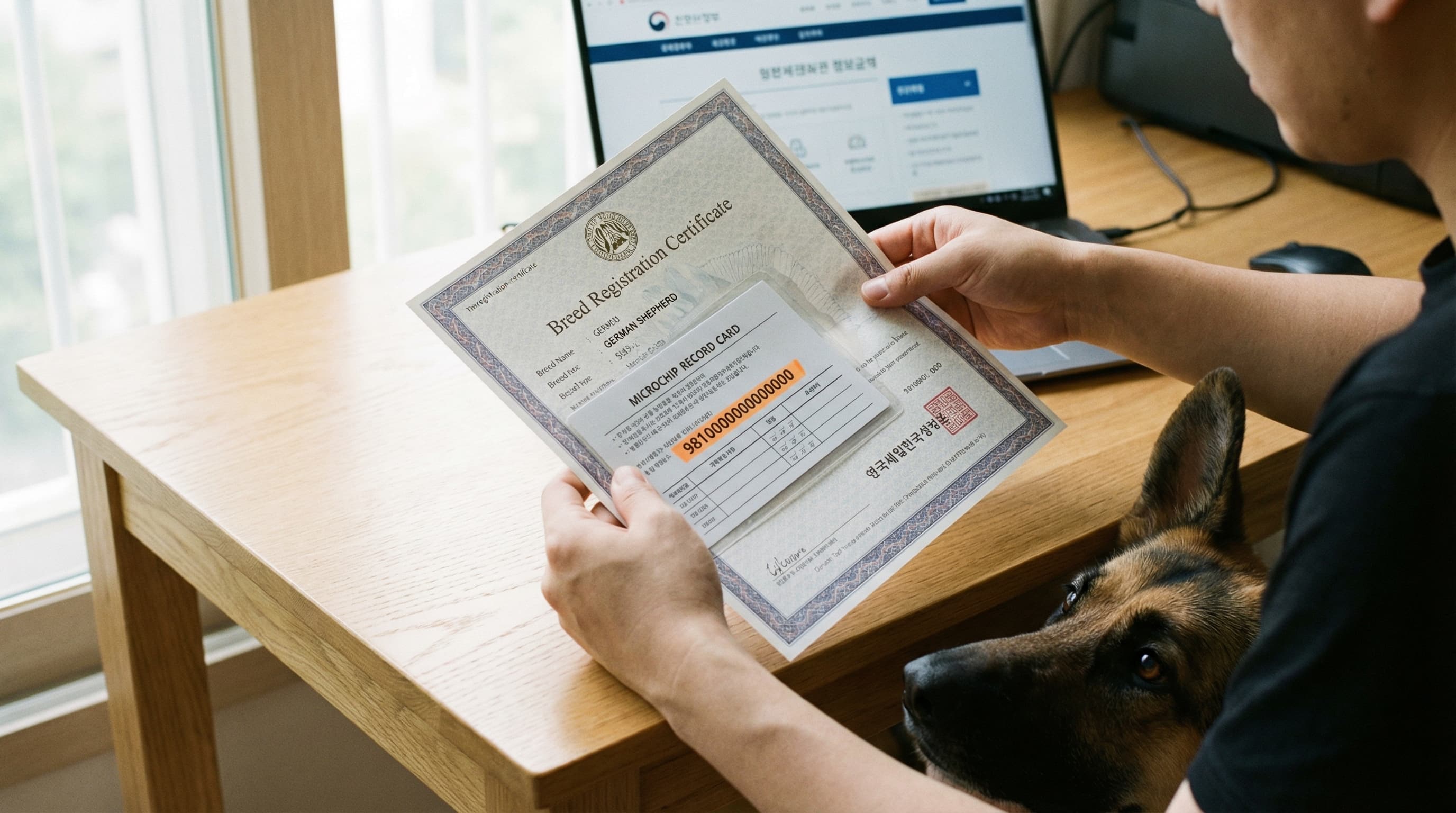
Dogs: South Korea's Animal Protection Act (updated April 2024) classifies 5 breeds as "dangerous":
- American Pit Bull Terrier
- American Staffordshire Terrier
- Staffordshire Bull Terrier
- Tosa (Japanese Mastiff)
- Rottweiler
These breeds are not banned outright, but they need a government ownership permit from city or provincial authorities. The permit requires:
- Mandatory sterilization (neutering/spaying)
- Civil liability insurance
- Passing a Temperament Assessment: The dog must pass a behavioral evaluation conducted by an expert committee.
- Handling rules: Muzzle in public at all times and a short leash.
Penalties for non-compliance: up to 10 million KRW (~$7,400) fine or 1 year in prison.
If you're bringing one of these breeds, this is a genuinely difficult situation. The permit process for foreign nationals isn't well-documented, and the temperament test requires coordination with local authorities upon arrival.
Start the permit process well before you travel — contact the QIA animal quarantine office or general Incheon branch at qia.ia@korea.kr for guidance on getting the permit as a foreign national.
Cats: Savannah and Bengal cats are restricted unless they're F5 (5th generation) or further removed from the wild ancestor. Most pet Bengals sold in the US are F5+, but check your cat's registration papers.
Cost Breakdown
Dogs
| Vet exam + health certificate | $50–200 | USDA-accredited vet required |
| Rabies vaccine (if needed) | $20–50 | Skip if active |
| ISO microchip (if needed) | $25–75 | Required before vaccination |
| FAVN titer test | $100–150 | Kansas State lab, ~10–14 days |
| USDA endorsement | $160 | New tiered fee (was $38) |
| Airline pet fee (cabin) | $150–290 | Korean Air ~$200, Asiana ~$290, United $150 |
| CDC Dog Import Form | Free | Required for US re-entry |
| Total estimate (cabin) | $565–$1,125 | Round trip, one dog |
| Total estimate (checked/cargo) | $865–$1,525 | If pet flies in checked baggage |
Cats
| Vet exam + health certificate | $50–200 | USDA-accredited vet required |
| Rabies vaccine (if needed) | $20–50 | Skip if active |
| ISO microchip (if needed) | $25–75 | Not required for US re-entry, but required by Korea |
| FAVN titer test | $100–150 | Kansas State lab, ~10–14 days |
| USDA endorsement | $160 | New tiered fee |
| Airline pet fee (cabin) | $150–290 | Same fees as dogs |
| Total estimate (cabin) | $405–$965 | Round trip, one cat |
| Total estimate (checked/cargo) | $705–$1,265 | If pet flies in checked baggage |
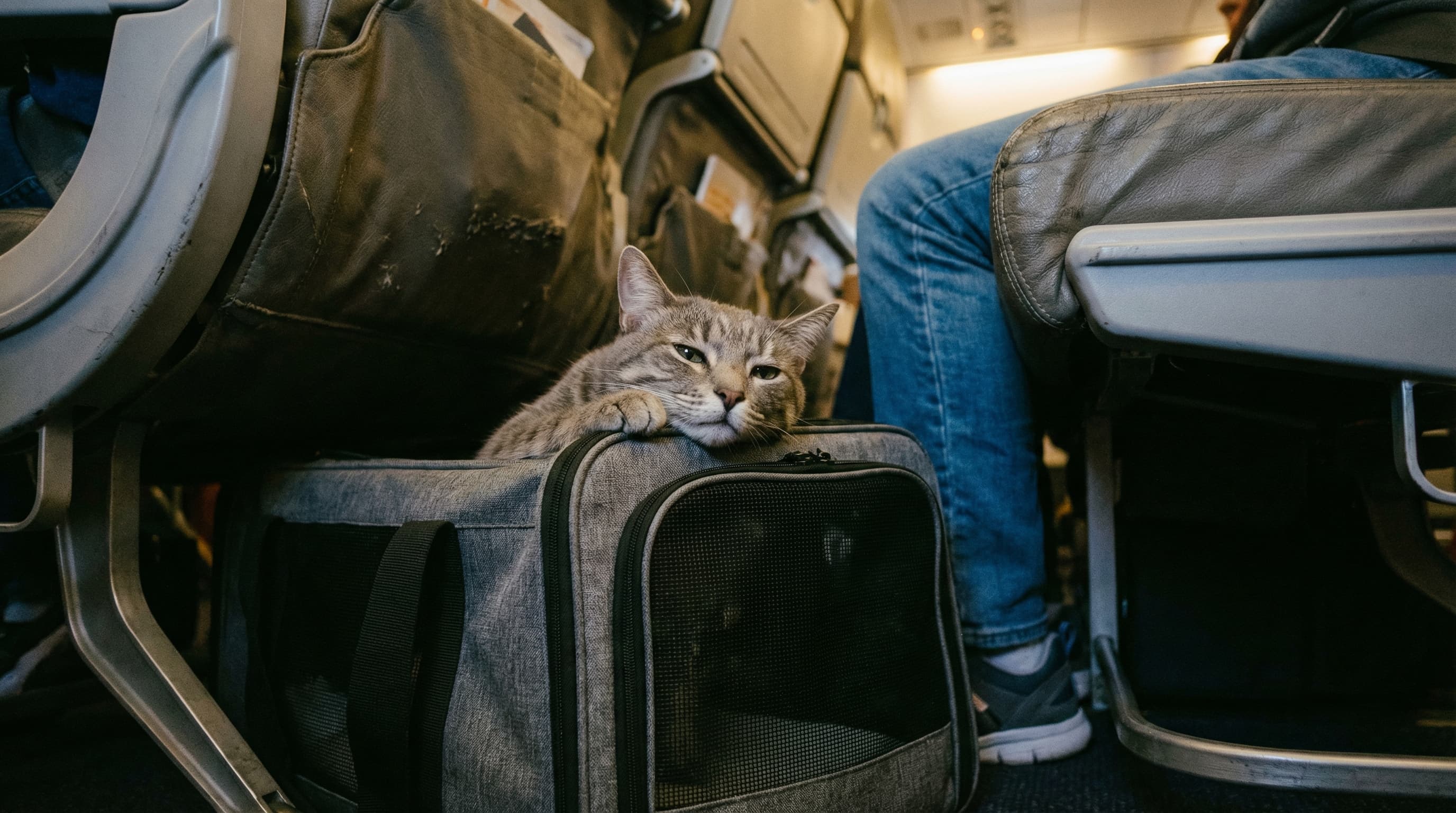
Cats are cheaper because they skip the CDC Dog Import Form (free anyway) and don't need a microchip for US re-entry. The main savings come from not needing breed-related permits.
Timeline: When to Start
10–12 weeks before travel: Get the ISO microchip implanted (if your pet doesn't already have one). Schedule the rabies vaccine — it needs to be active before the titer blood draw.
8–10 weeks before: Have your vet draw blood for the FAVN titer test and send it to Kansas State Rabies Lab. Current turnaround is about 10–14 calendar days, though this can vary by season.
6–8 weeks before: Receive titer results. If the result is 0.5 IU/ml or higher, you're cleared. If it's lower, you'll need to revaccinate and retest — which may push your travel date.
2–3 weeks before: Book your pet's spot with the airline. Korean Air and Asiana need at least 48 hours' notice for international flights, but popular routes fill up. Call early.
1 week before (dogs only): Submit the CDC Dog Import Form online. The receipt arrives by email within 15 minutes. It's valid for 6 months and covers multiple entries from the same low-risk country.
Within 10 days of departure: Vet exam and health certificate. Your USDA-accredited vet examines your pet and completes the International Health Certificate, including the microchip number and titer results.
Within 7 days of departure: Submit the health certificate for USDA endorsement. Use VEHCS for 1–2 business day turnaround. By mail, allow 5–7 business days each way.
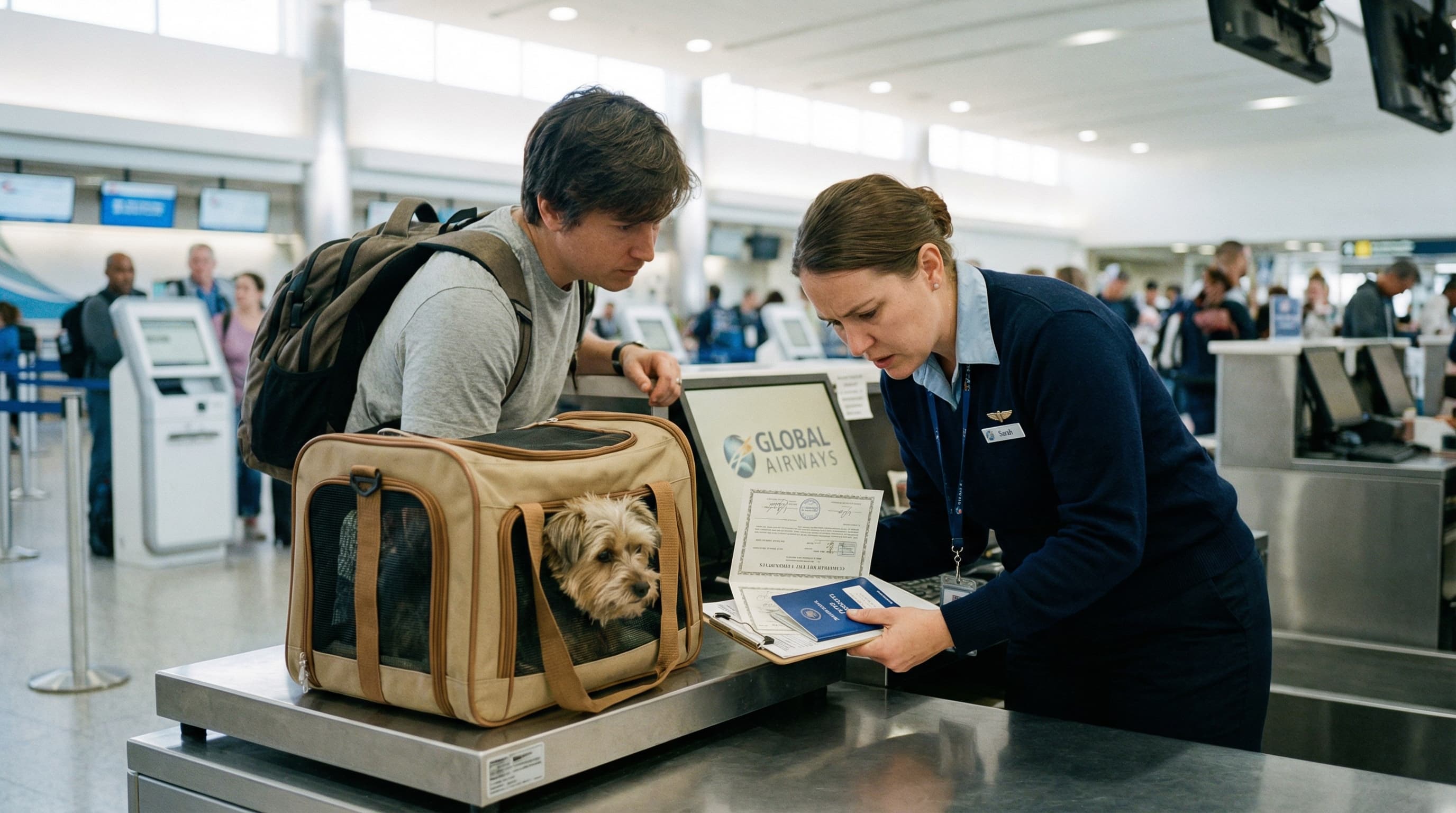
Travel day: Bring the endorsed health certificate (original), rabies vaccination certificate, titer test results, and CDC Dog Import Form receipt (dogs only). Arrive at the airport 3 hours early for international flights with a pet. Airlines check documents at the counter before boarding.
Common Mistakes
Airport Tips
At departure (US airport): Check in at the airline counter with your pet and all documents. The airline checks the health certificate and microchip before issuing a boarding pass.
For cabin pets, the carrier goes under the seat in front of you. For checked/cargo pets, you hand over the crate at an oversized baggage or cargo area.
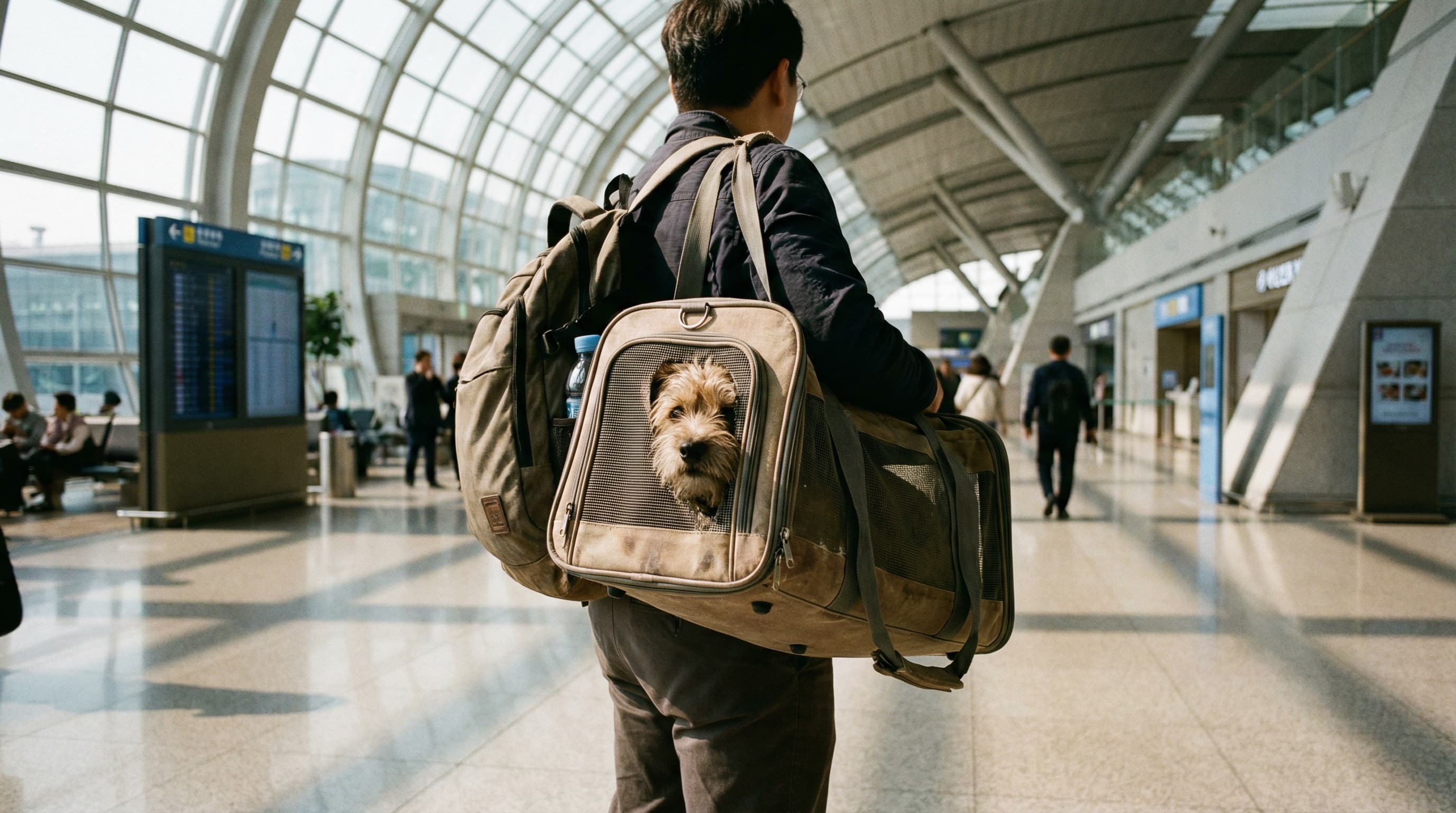
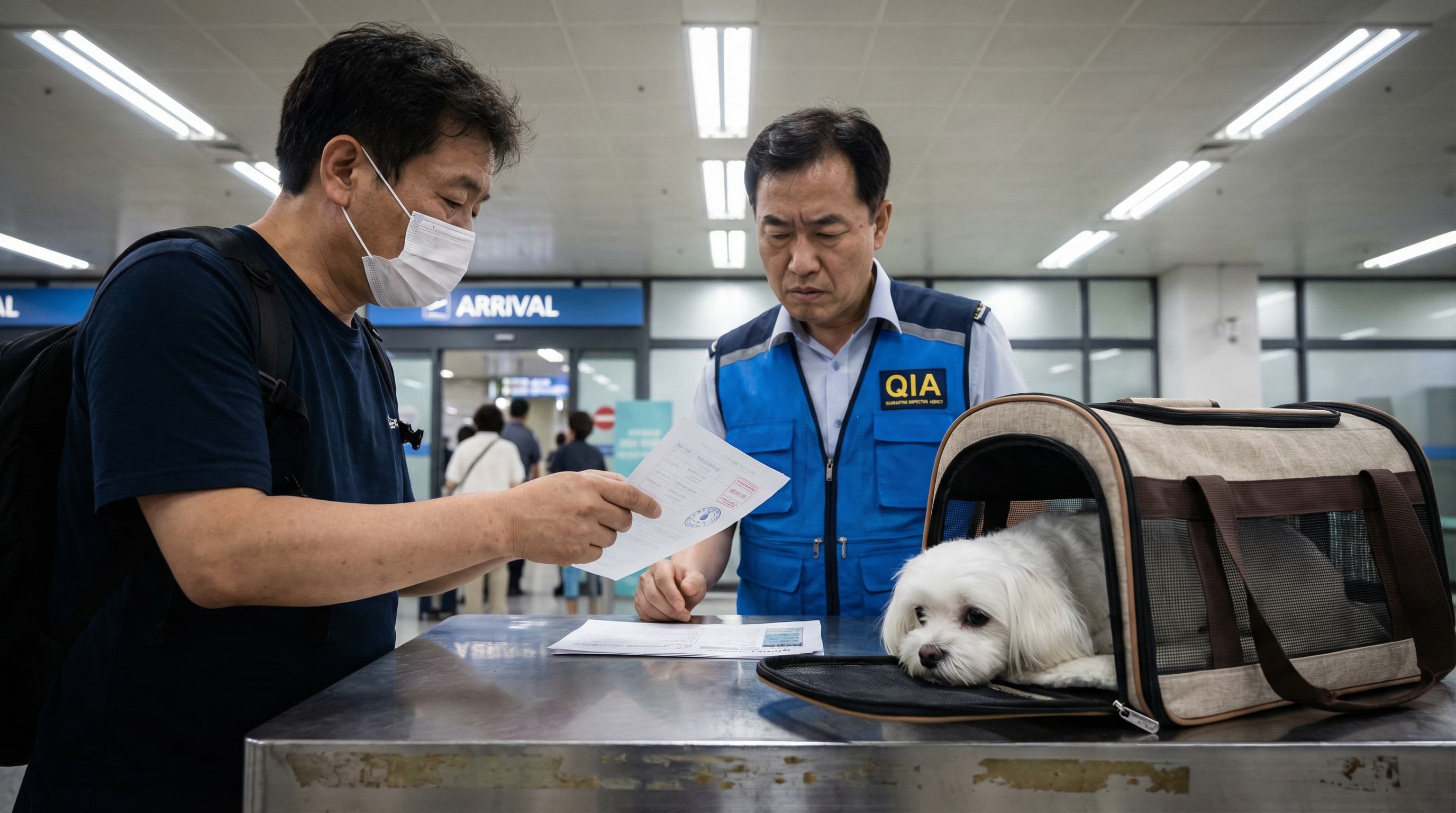
At Incheon Airport (arrival): Follow signs to the QIA quarantine inspection office. Every passenger arriving with a pet must clear QIA before leaving the airport.
An officer scans the microchip, checks the health certificate and titer results, and does a brief clinical exam. If everything matches, your pet is released immediately. The whole process takes 15–30 minutes on a normal day.
At other Korean airports: QIA has quarantine offices at Gimhae (Busan), Gimpo (Seoul domestic/Japan flights), Jeju, Cheongju, Daegu, and Muan.
If you're connecting through Incheon to a domestic flight, you clear QIA at Incheon before proceeding.
Practical tips:
- Keep all documents in a waterproof folder in your carry-on — not in checked luggage
- Exercise your pet before check-in. A tired pet is a quieter pet on a 12-hour transpacific flight
- Freeze a small dish of water in the crate for cargo pets — it won't spill during loading but melts into drinking water during the flight
- Don't sedate your pet. Both Korean Air and QIA advise against sedation — drugs interact unpredictably with cabin pressure changes at altitude
Re-Entry to the USA
Getting your pet back into the US has different rules for dogs and cats.
Dogs
South Korea is on the CDC's low-risk country list for rabies. That makes re-entry straightforward:
- CDC Dog Import Form — submit online before travel. Receipt arrives by email in ~15 minutes. Valid 6 months
- Microchip — must be readable by a universal scanner
- Dog must be at least 6 months old
- Dog must appear healthy at the US port of entry
No titer test, no quarantine, no screwworm certificate. Dogs from low-risk countries can enter at any US port. Present the CDC receipt and your dog's microchip to Customs and Border Protection on arrival.
Cats
The CDC has no federal import requirements for cats. No import form, no microchip requirement, no age minimum. Your cat just needs to appear healthy.
State rules vary. Many US states require a rabies vaccination certificate for cats. Hawaii quarantines all cats for 120 days (or 5 days with the pre-arrival rabies titer program). Check your home state's animal import rules before flying back.
For the full breakdown on re-entering the US with a pet, see our re-entry guide.
What If Something Goes Wrong at QIA
If your paperwork has a problem, QIA won't just wave you through. Here's what happens:
Missing health certificate: Your pet is returned to the US on the next available flight. You pay for the return shipment. This is the only scenario where they won't let the animal into the country at all.
Missing microchip or chip doesn't match: QIA quarantines your pet at the airport until a new chip is implanted. A vet at the quarantine facility handles it. You pay for the chip and the quarantine stay.
Missing titer test or result below 0.5 IU/ml: Extended quarantine while QIA arranges an in-country titer test. The test costs 110,000 KRW (~$82) at a Korean lab, but quarantine could last 10 days to 3 weeks while you wait for results. Daily quarantine costs are on you.
None of this is fun. But it's all avoidable by getting the paperwork right before you leave.
FAQ
Your next step: Book the FAVN titer test. The lab turnaround (~10–14 days, sometimes longer) is the single step you can't rush, and everything else works around it. Call your USDA-accredited vet today to schedule the blood draw.