Japan's 180-day wait starts from the blood draw date for the FAVN test, not the date you get results back. If your blood draw is January 1, your pet can enter Japan on July 1 at the earliest. Results typically take 2–3 weeks from KSU, but the clock started on draw day. Plan backward from your travel date.

Bringing a Dog or Cat to Japan from the US — 2026 Requirements
17 min readinternational

Dr. Sarah Chen
Travel Veterinarian
| Applies to | Dogs and cats (same rules for both species) |
| Documents | Health certificate (APHIS Form AC) + USDA endorsement + NACCS advance notification |
| Vaccines | 2 rabies shots (inactivated only), 30+ days apart, after microchip |
| Titer test | FAVN test (≥0.5 IU/ml) at MAFF-approved lab, 180-day wait from blood draw |
| Microchip | Required (ISO 15-digit, before all vaccinations) |
| Quarantine | None if all steps completed; up to 180 days if not |
| Cost (one way) | $570–$1,685+ (dogs and cats, cargo only) |
| Timeline | Start 7+ months before travel |
| Difficulty | 🔴 Very Hard |
Flying to Japan from the US with your dog or cat takes at least 7 months of prep and costs $570–1,685+ one way.
Japan has the strictest pet import process of any major travel destination: ISO microchip, two rabies vaccinations (inactivated vaccine only) given 30+ days apart, a FAVN rabies titer test at a MAFF-approved lab, and then a 180-day wait from the blood draw date before your pet can enter. No exceptions, no way to speed it up.
You also need a USDA health certificate, USDA endorsement, and must notify Japan's quarantine system (NACCS) at least 40 days before arrival.
If you follow every step correctly and your paperwork is complete, there's no quarantine. Skip any step or get the timing wrong, and your pet faces up to 180 days in a Japanese quarantine facility. You pay all costs.
This guide breaks down entry rules, airline options, costs, and return paperwork for both dogs and cats.
What You Need
Japan's Animal Quarantine Service (part of MAFF) runs one of the most detailed pet import processes in the world. The rules are identical for dogs and cats.
Medical requirements
- ISO 15-digit microchip, implanted before any rabies vaccinations. Microchips starting with "900202" are not accepted by Japan.
- Two rabies vaccinations (inactivated or recombinant only), at least 30 days apart. First shot at 91+ days of age. Japan does not accept live or RNA-based rabies vaccines.
- FAVN rabies titer test (≥0.5 IU/ml), blood drawn 30+ days after the second vaccination. Must be done at a MAFF-designated lab. In the US, Kansas State University is the only approved civilian lab.
- 180-day wait from the blood draw date (not the results date). This is the step that makes Japan a 7+ month process. The wait cannot be shortened.
Documents and process
- Health certificate: Japan uses a specific form (APHIS Form AC), filled out by a USDA-accredited vet.
- USDA endorsement via VEHCS electronic system.
- NACCS advance notification submitted to Japan's Animal Quarantine Service at least 40 days before arrival.
- Import inspection at your arrival airport (Narita, Haneda, Kansai, or other international airports with AQS offices).
No import permit is needed. The US is a designated rabies-free region under MAFF rules.
Critical
Rabies Vaccine and Microchip
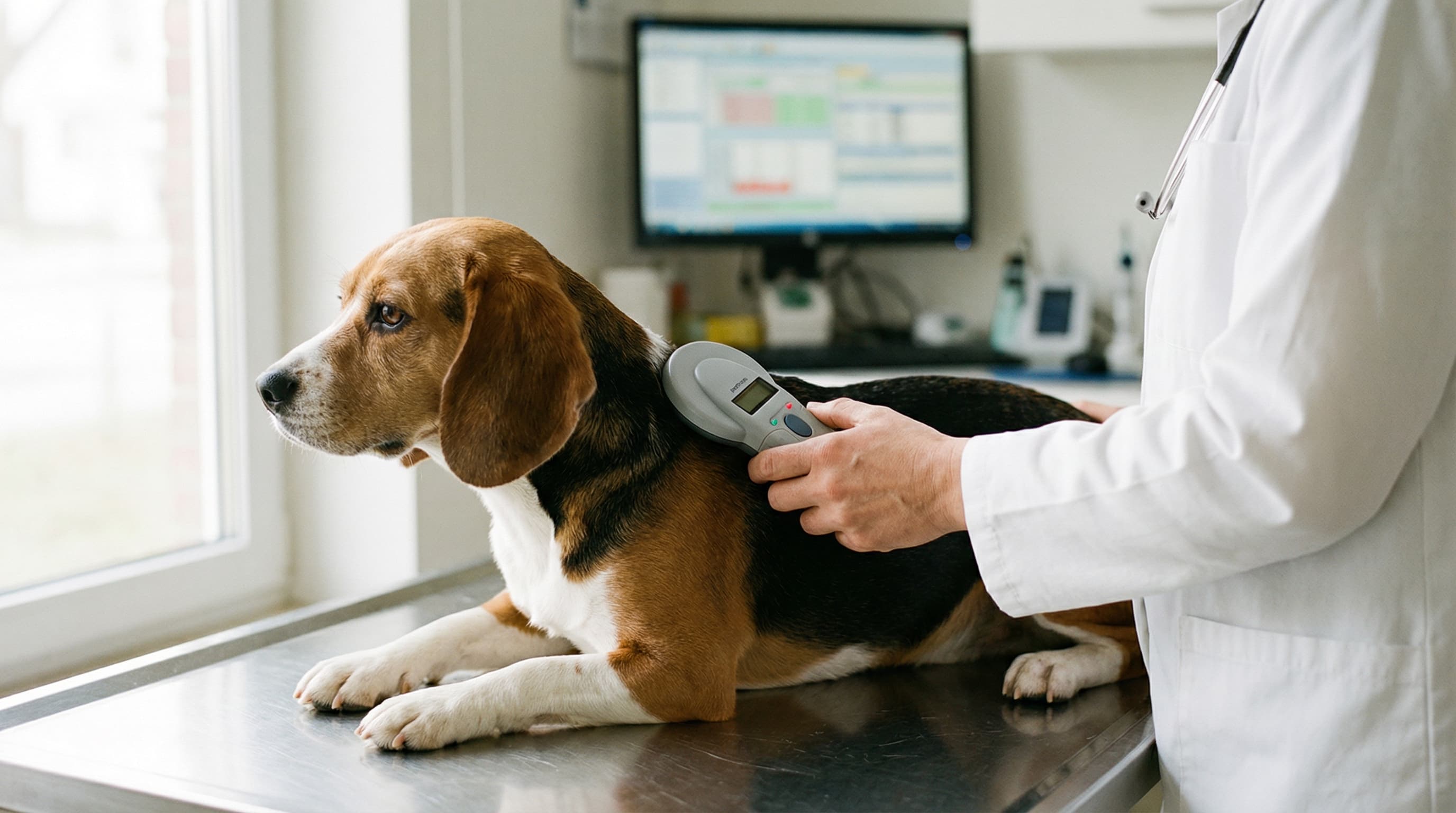
Your pet needs an ISO 15-digit microchip implanted before everything else. Japan counts vaccinations only if the microchip was in place when the shot was given. A rabies vaccine from two years ago doesn't count if the chip went in last month.
Vaccination sequence:
- Microchip implanted (any time, any age)
- First rabies shot: at least 91 days old, inactivated or recombinant only (check the label: killed virus, not modified live). Wait at least 30 days.
- Second rabies shot: given while the first is still valid (within 1 year for most US vaccines). Wait at least 30 days.
- Blood draw for FAVN titer test.
Every forum post about Japan pet travel mentions this sequence, and every other post gets it wrong.
The most common mistake: giving both shots too close together. The second shot must be at least 30 days after the first, not 21. Japan is stricter than the EU on this timing.
Microchip: $25–75. Rabies vaccine: $15–30 per shot. Your vet can do the chip and first vaccine in one visit, but the chip goes in first.
FAVN Titer Test
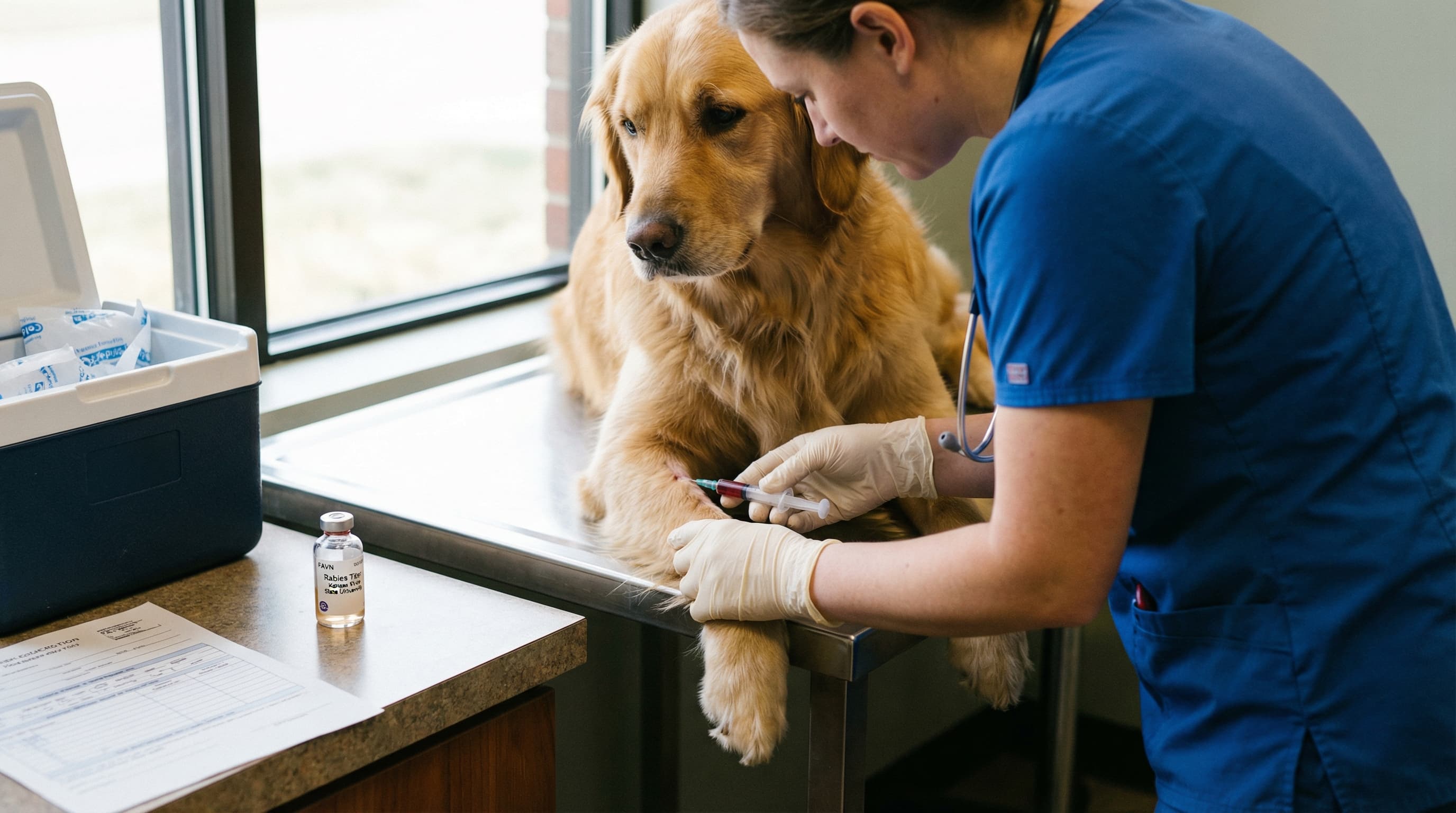
The FAVN (Fluorescent Antibody Virus Neutralization) test proves your pet's rabies antibodies are at or above 0.5 IU/ml. Japan only accepts results from MAFF-designated laboratories.
In the US, Kansas State University (KSU) is the only MAFF-approved civilian lab. The DOD lab handles military pets only.
Other US labs (University of Missouri, Auburn) run FAVN tests but are not MAFF-approved for Japan — using them means Japan won't accept your results.
What the test costs: The KSU lab fee is $84 per sample. But you don't send blood to KSU yourself. Your vet draws the blood, prepares the serum, and ships it in a cold chain.
Total cost through a vet clinic runs $300–700 per pet, depending on your vet's fees, blood draw charge, and overnight shipping costs. Metro-area vets tend to charge more.
Turnaround: KSU typically returns results in 2–3 weeks. Results are sent to your vet, not directly to you.
How long the result lasts: The FAVN result is valid for 2 years from the blood draw date, as long as your pet's rabies vaccinations stay active without any lapse.
If the test fails (below 0.5 IU/ml): Your pet needs another rabies vaccination, another 30-day wait, and another blood draw. The 180-day clock resets from the new blood draw date.
This is why the 7-month estimate is a minimum. Test failures can push your timeline to 10+ months.
Watch OutThe FAVN test result stays valid as long as your pet's rabies vaccinations stay active without any lapse. If you let the rabies vaccine expire by even one day before getting a booster, Japan considers the FAVN invalid. You'd need a new vaccination series, new blood test, and a new 180-day wait. Set a reminder 2–4 weeks before the booster is due.
Health Certificate and USDA Endorsement
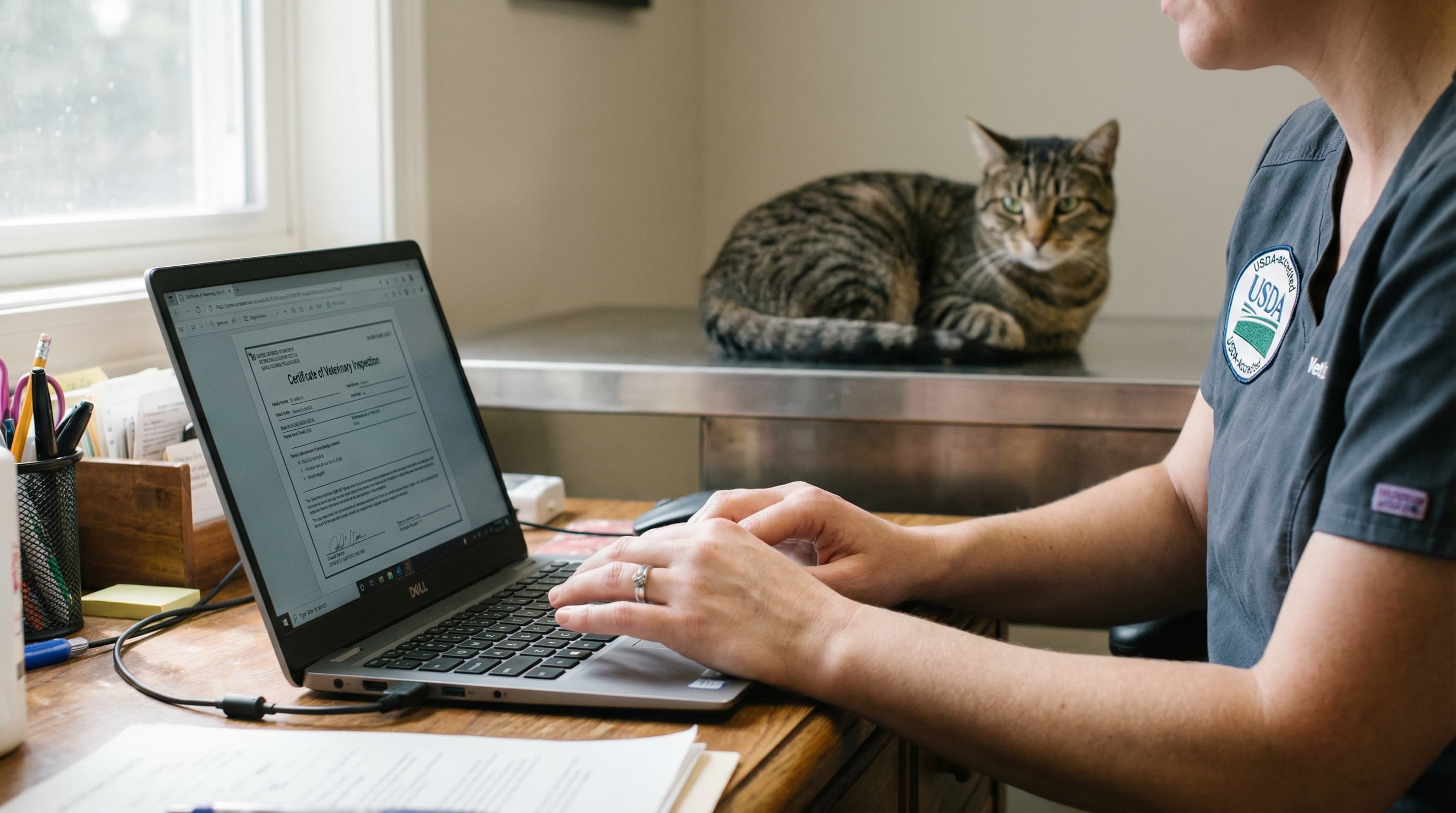
Japan uses a specific bilateral health certificate form (APHIS Form AC), not the generic APHIS 7001. A USDA-accredited vet fills this out after examining your pet and confirming the microchip, vaccination history, and FAVN results. Not every vet holds this accreditation — find one near you.
Your vet enters the data into VEHCS (USDA's electronic system for health certificates). USDA endorses the certificate electronically through VEHCS. No mailing paper forms back and forth.
USDA endorsement cost: $38 (no lab tests on the certificate) to $150 (3–6 lab test results listed). For Japan, expect $121–150 since the FAVN test result must be listed on the certificate.
The endorsed health certificate is valid for 10 days from the date of the vet exam. Schedule the vet visit so the certificate covers your arrival date in Japan, not just your departure date.
NACCS Advance Notification
This catches almost everyone off guard.
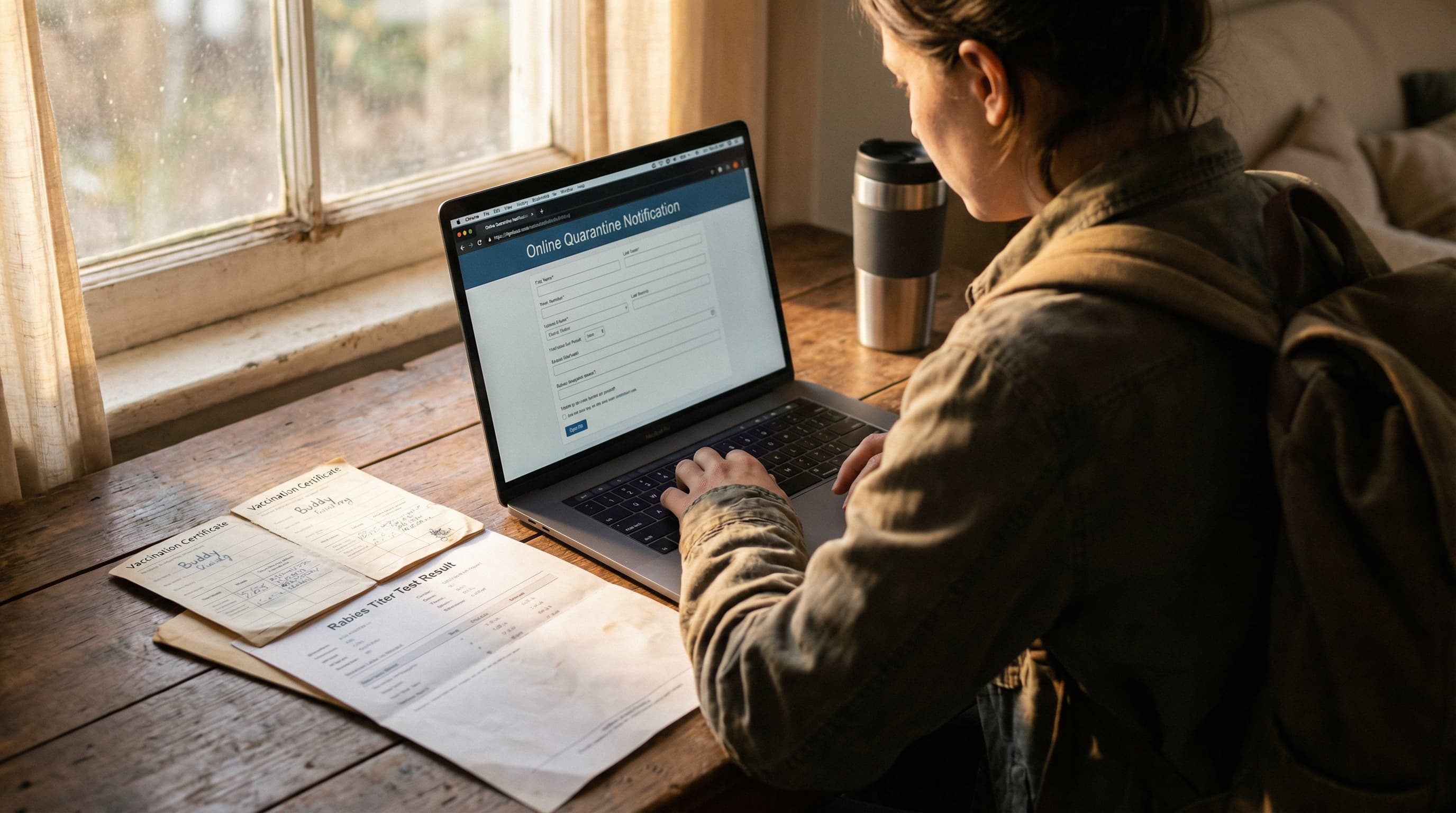
At least 40 days before your arrival in Japan, you must submit an advance notification through NACCS (Japan's customs and quarantine system) or by email/fax to the Animal Quarantine Service at your arrival airport.
The notification form asks for:
- Your pet's microchip number
- Vaccination dates and vaccine types
- FAVN test date and results
- Flight details and arrival airport
- Your contact info in Japan
After submission, AQS reviews your notification and sends back an "approval of import inspection" or requests more information. This back-and-forth can take 1–2 weeks.
If you submit late, your pet sits in quarantine while the paperwork catches up.
Most travelers use the online NACCS form. If you're not comfortable with the system, email the AQS office at your arrival airport directly. They respond within a few business days and can walk you through it.
Airline Rules for Flying Pets to Japan
Most US-Japan airlines require pets to fly in the pressurized cargo hold. However, United Airlines is a rare and valuable exception, allowing small dogs and cats in the cabin on transpacific routes for a $150 fee.
United Airlines (Cabin Exception):
- Cabin: Allowed ($150 each way).
- Carrier: Must fit under the seat (max 18 x 11 x 11 inches).
- Note: This is the only major carrier allowing cabin pets directly from the US to Japan.
ANA (All Nippon Airways):
- Cargo hold only for international flights.
- Fee: about $400 USD one way (contact ANA to confirm for your route).
- IATA-compliant hard-sided crate required (you provide your own).
- Flat-faced breeds (dogs and cats) restricted during summer months (May–October).
- Book pet cargo through ANA's reservation center, not online.
JAL (Japan Airlines):
- Cargo hold only for international flights.
- Fee: not listed publicly; JAL says "the check-in agent will provide you with information on the applicable charges." Call JAL International Reservation for a quote before booking.
- IATA-compliant hard-sided crate required.
- 23 flat-faced dog breeds banned year-round from international cargo, including French Bulldogs, Bulldogs, Pugs, Boxers, Boston Terriers, Shih Tzus, Mastiffs, Cavalier King Charles Spaniels, Lhasa Apsos, Shar Peis, Chow Chows, and others. This is the most extensive breed ban of any major airline.
- Letter of consent (waiver) required, signed at check-in.
Zipair (Low-Cost Carrier):
- No pets accepted. Zipair does not allow pets in the cabin, checked baggage, or cargo. Budget travelers should avoid this carrier if traveling with a pet.
If your dog is a flat-faced breed, that's a hard situation. JAL's ban covers 23 breeds with no seasonal exceptions. ANA restricts flat-faced breeds only during summer, so winter travel on ANA may be an option. Contact both airlines directly to confirm your breed's status.
For more airline details, see our airline fee comparison.
Cost Breakdown
Japan's costs are the same for dogs and cats. The FAVN test is the biggest variable. Vet clinic pricing ranges widely.
| Microchip (if needed) | $25–75 | ISO 15-digit, must be first |
| Rabies vaccines (2 shots) | $30–60 | Inactivated/recombinant only |
| FAVN titer test (through vet) | $300–700 | KSU lab fee $84 + vet/shipping costs |
| Vet exam + health certificate | $100–300 | USDA-accredited vet, Form AC |
| USDA endorsement | $38–150 | Via VEHCS; $121–150 typical for Japan |
| IATA-compliant crate | $75–300 | One-time cost, size-dependent |
| Airline cargo fee | ~$400+ | ANA ~$400; JAL contact for quote |
| Total (one way) | $570–$1,685+ | Per pet, cargo only |
The FAVN test drives most of the cost variation. A vet in a small town might charge $300 total; a specialty clinic in Manhattan might charge $700. Call around. Prices vary significantly for the same test.

Timeline
7+ months before: Get your pet microchipped (ISO 15-digit). At the same visit, give the first rabies vaccine (inactivated only). This starts the clock.
6+ months before: Give the second rabies vaccine (30+ days after the first). Wait 30+ days, then have your vet draw blood for the FAVN titer test and ship it to KSU. The 180-day wait starts from the blood draw date.
3 months before: You should have FAVN results back (≥0.5 IU/ml). Confirm results with your vet. If the test failed, you need to revaccinate and retest. Your timeline just extended.
40+ days before: Submit NACCS advance notification to Japan's Animal Quarantine Service. Include microchip number, vaccination dates, FAVN results, and flight details. Allow 1–2 weeks for AQS to review and respond.
2–3 weeks before: Call your airline to confirm pet cargo arrangements. Confirm crate dimensions meet IATA standards and your airline's rules. Buy or rent a crate if you don't have one.
10 days before (at most): USDA-accredited vet visit. Vet examines your pet, confirms microchip, reviews vaccination and FAVN records, fills out APHIS Form AC in VEHCS.
5–7 days before: USDA endorses the certificate through VEHCS. Confirm endorsement is complete. Print all documents.
1–2 days before: For dogs: fill out the CDC Dog Import Form for the return trip. Confirm airline reservation. Pack originals in a waterproof folder.
Travel day: Arrive at least 2–3 hours early (JAL requires 120 minutes minimum). Airline checks all paperwork at the cargo counter. At arrival in Japan, proceed to the Animal Quarantine Service office for import inspection. If your paperwork is complete, inspection takes 30–60 minutes.
Common Mistakes
Airport Tips
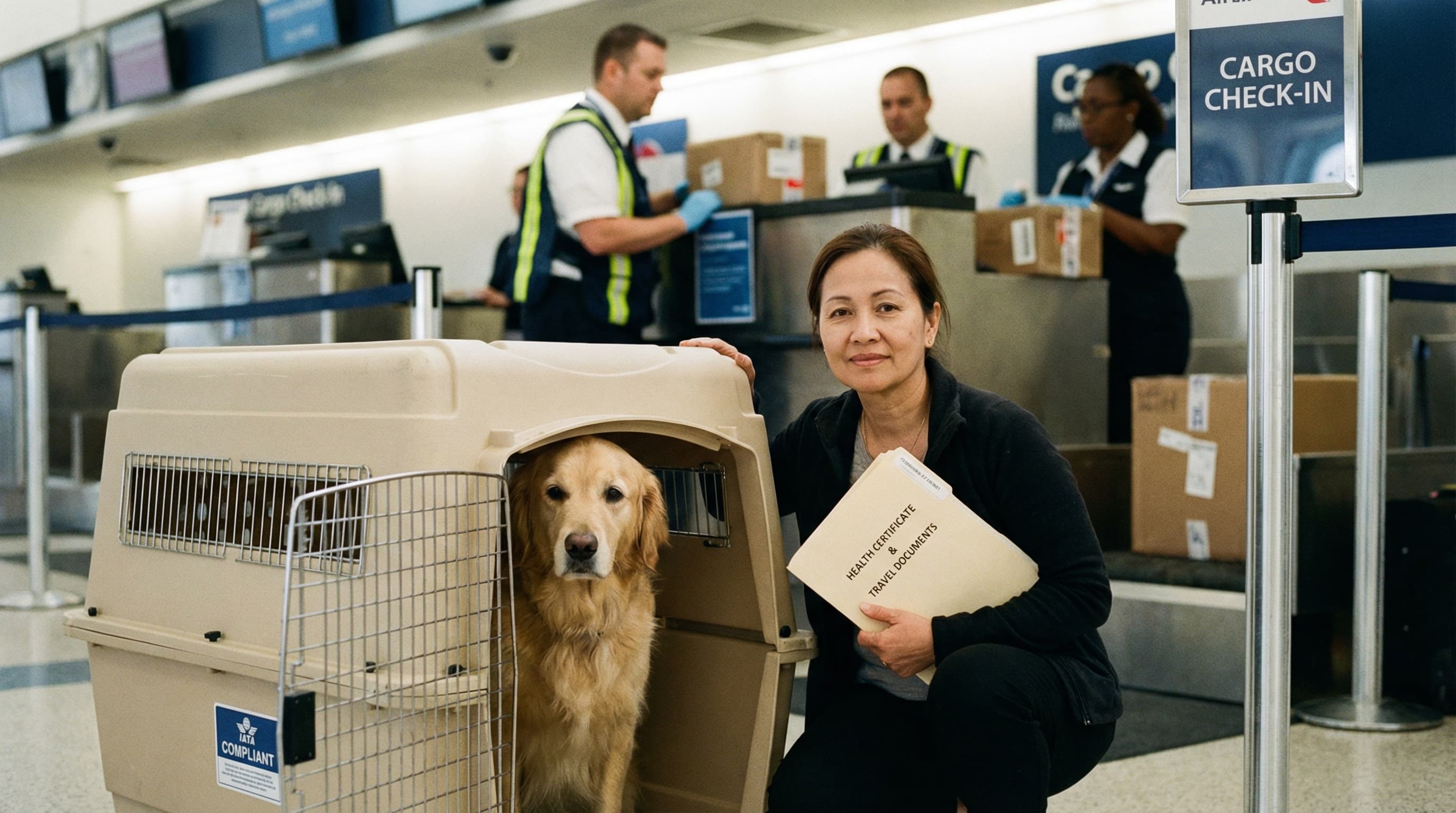
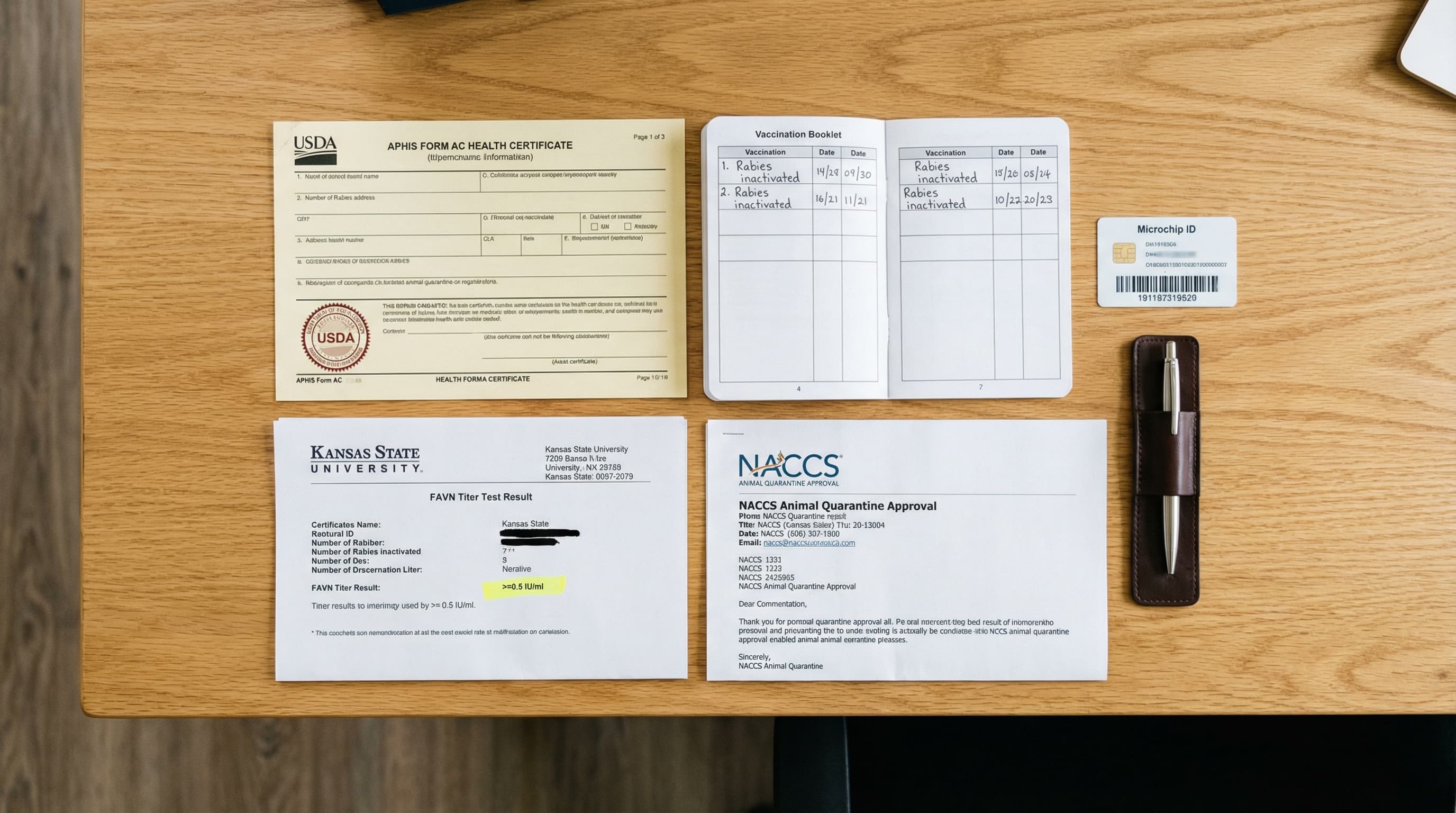
Departing the US: Your pet checks in at the cargo counter, not the regular passenger counter. Bring the endorsed health certificate (APHIS Form AC), rabies vaccination records, FAVN test results, NACCS approval confirmation, and your microchip records.
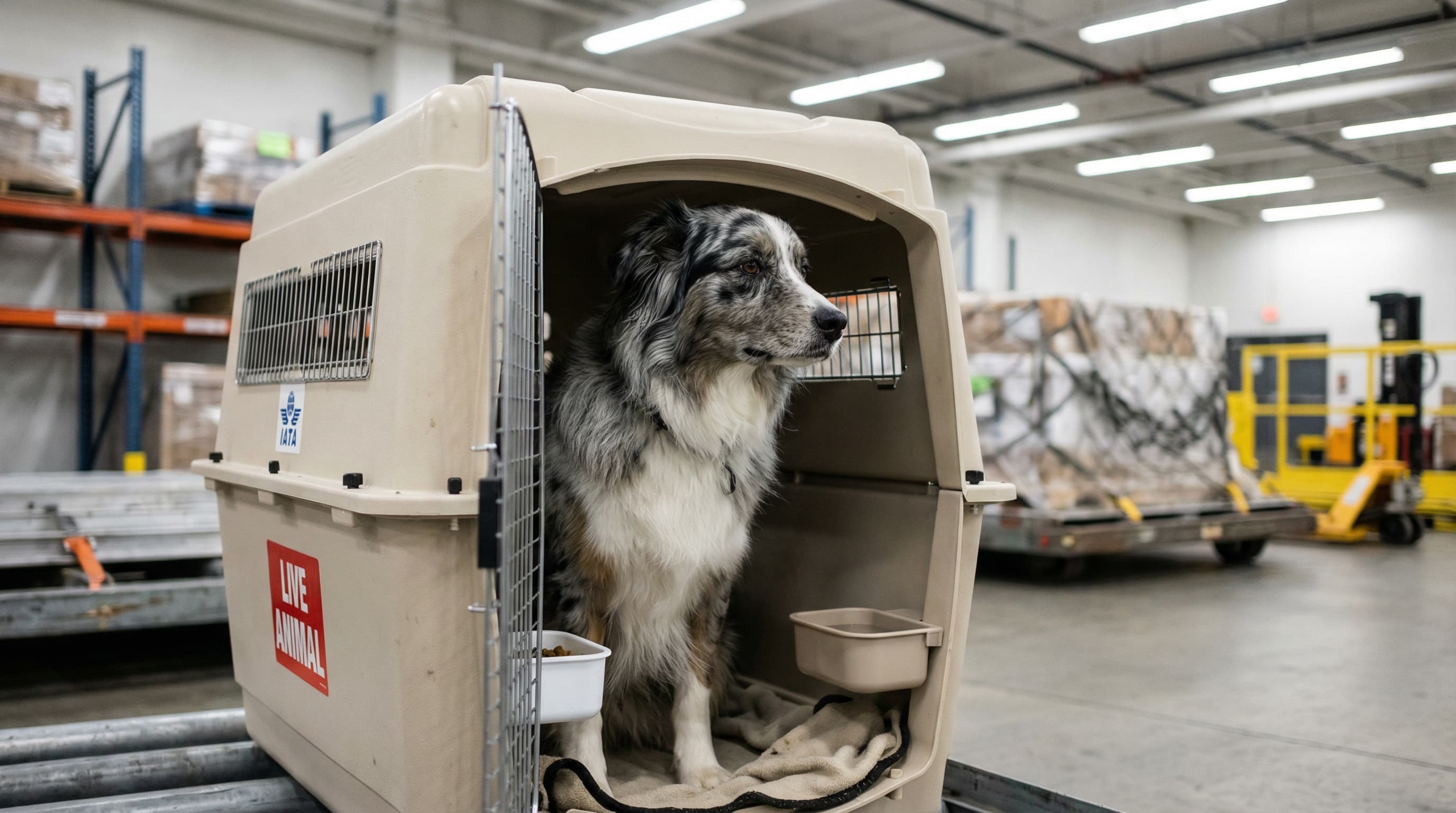
The airline reviews everything before accepting your pet. Make sure the crate has food and water containers attached (required for flights over 12 hours), a "Live Animal" label, and your contact info at both origin and destination.
Arriving in Japan: After landing, proceed to the Animal Quarantine Service (AQS) office at your arrival airport. The inspector scans the microchip, reviews all documents against the NACCS pre-notification, and examines your pet.
If everything matches, the inspection takes about 30–60 minutes. If there's a discrepancy (wrong microchip number, missing document, expired vaccine), your pet goes into quarantine.
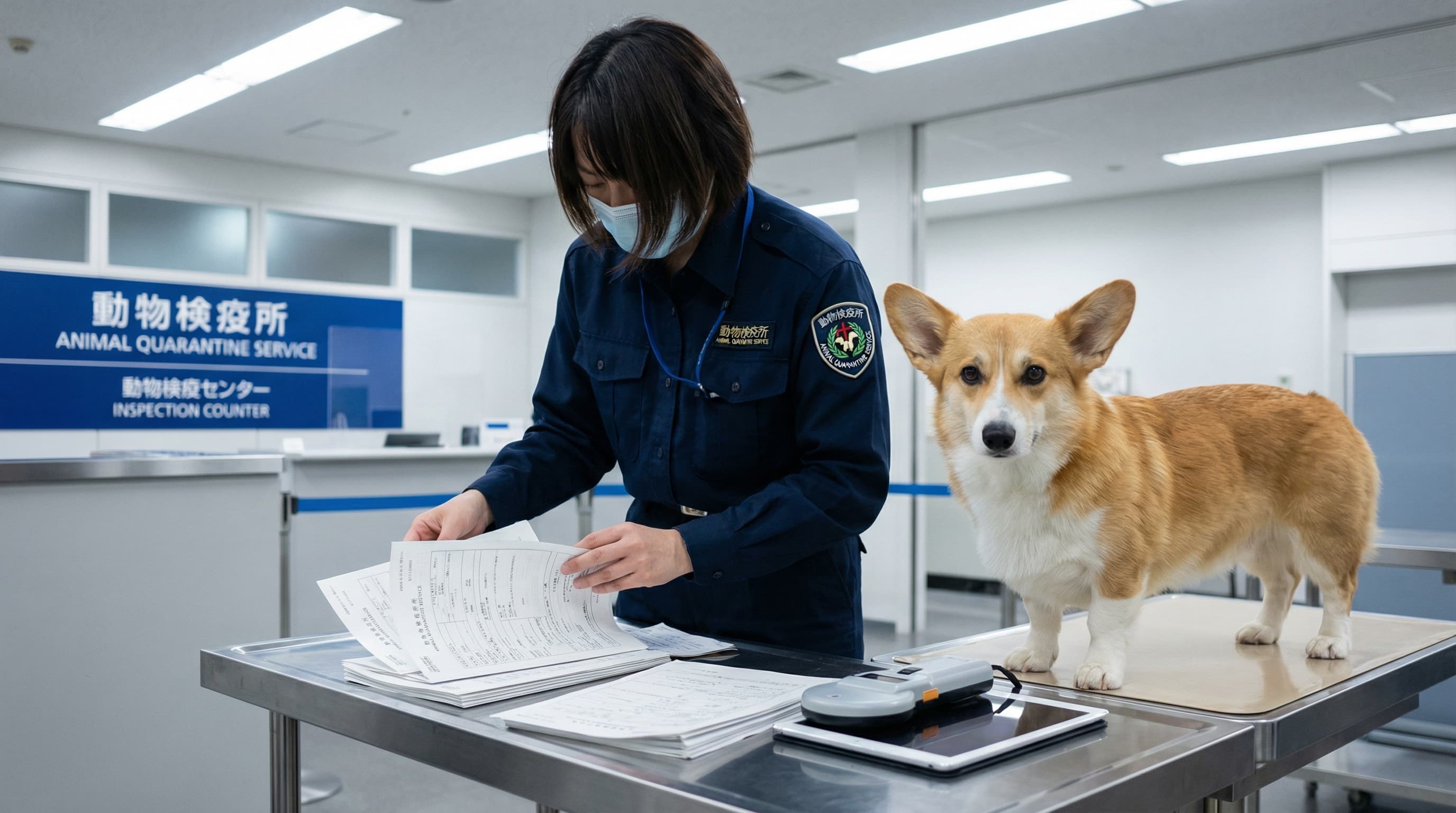
Narita (NRT) and Haneda (HND) handle the most pet arrivals from the US. Both have AQS offices staffed during regular business hours.
If your flight lands late at night, plan for your pet to be held at the AQS facility until morning. Contact the Narita AQS or Haneda AQS directly with questions.
Returning to the US
Dogs
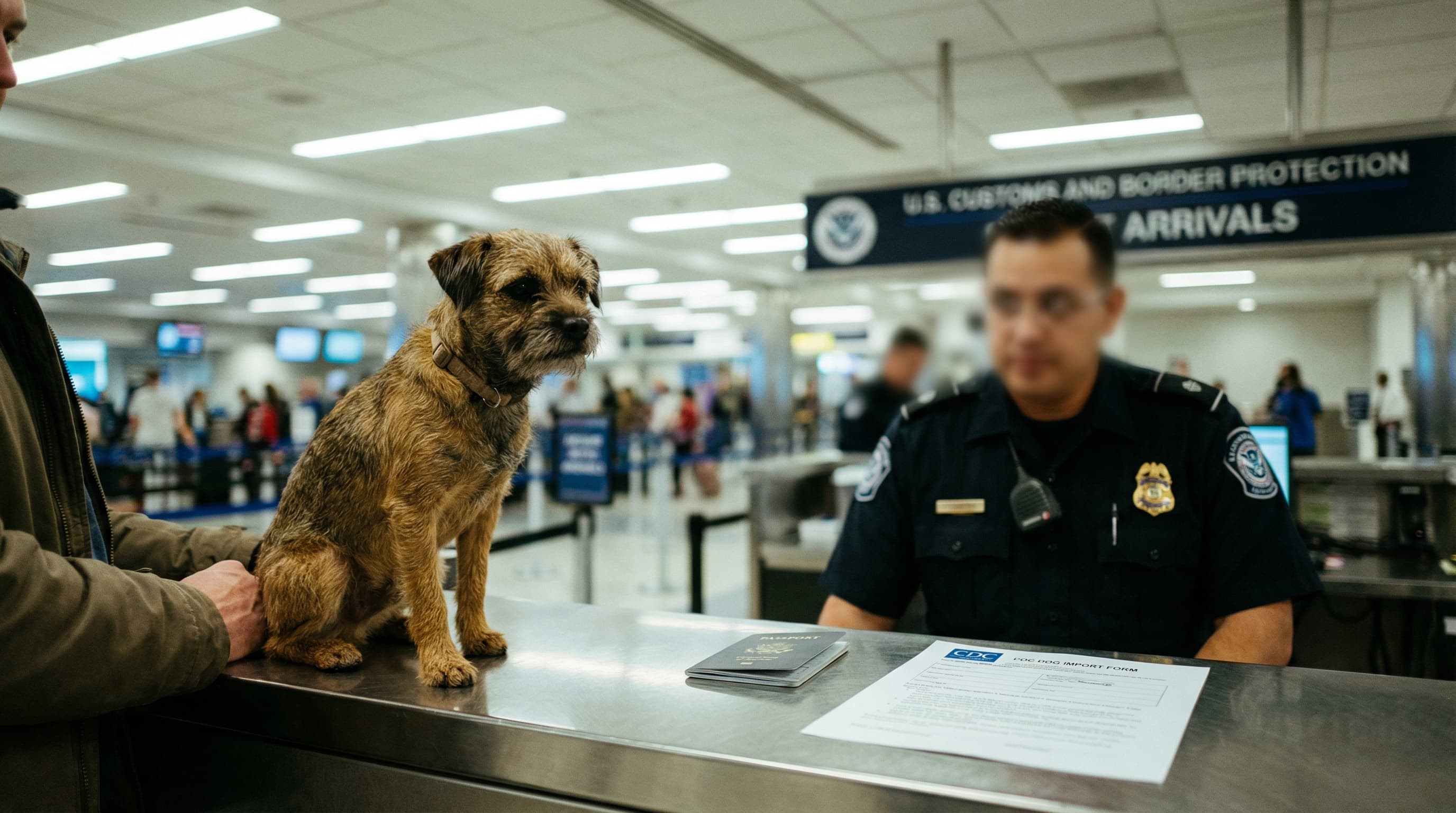
Japan is a CDC low-risk country (rabies-free). Your dog can re-enter the US at any port of entry.
- Complete the CDC Dog Import Form online before your return flight. Free, takes under 5 minutes
- Dog must have a microchip readable by a universal scanner (already done for Japan entry)
- Dog must be at least 6 months old
- Dog must appear healthy on arrival
- Show the CDC form receipt to your airline before boarding and to US Customs on arrival
No screwworm certificate needed. No separate health certificate for US re-entry from low-risk countries.
Cats
Federal re-entry rules for cats are minimal:
- Cat must appear healthy on arrival. That's the main CDC requirement
- No CDC import form (the Dog Import Form is dog-specific)
- No federal microchip requirement for US re-entry
- No screwworm certificate
Your cat already has a microchip and rabies vaccine from the Japan entry process. Keep those records. Many states require rabies vaccination for cats. Check your home state's rules before returning.
For the full re-entry process, see our guide to returning to the USA with a pet.
FAQ
Your next step: Get your pet microchipped and schedule the first rabies vaccination. That's day one of a 7+ month process. The FAVN test, 180-day wait, and NACCS notification all follow from that first vet visit. If your pet already has a microchip and active rabies vaccine, ask your vet whether the vaccine is inactivated and whether the chip was in place before the shot. If not, you're starting from scratch.