Colombia doesn't need a microchip, but the CDC does. Every dog returning to the US from Colombia needs an ISO microchip. Get it before you leave — implanting one in Colombia adds unnecessary stress. Cat owners can skip this, though a chip is still worth the $25–$50 if your cat escapes at the airport.
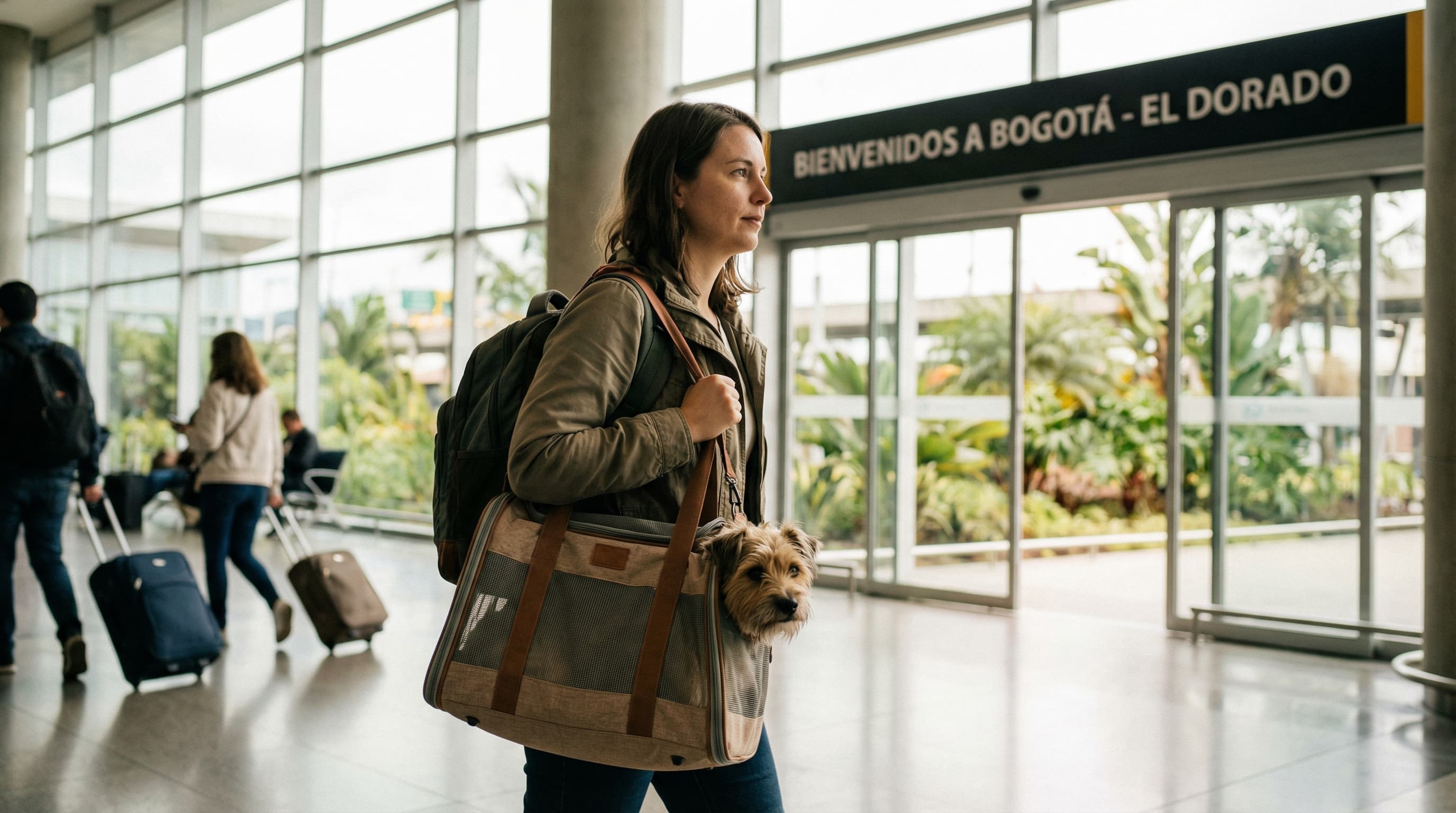
Bringing a Dog or Cat to Colombia from the US — 2026 Requirements
15 min readinternational

Lisa Carter
International Pet Relocator
| Applies to | Dogs and cats (vaccine lists differ significantly by species) |
| Documents | Health certificate + USDA endorsement + SISPAP registration |
| Vaccines | Rabies + 6 more for dogs / rabies + FVRCP for cats |
| Microchip | Not required by Colombia (required for dogs returning to the US) |
| Quarantine | None |
| Cost | $450–$850 (dogs) / $325–$650 (cats) |
| Timeline | Start 3–4 weeks before travel |
| Difficulty | 🟡 Moderate |
Flying from the US to Colombia with your dog or cat takes a USDA-endorsed health certificate, species-specific vaccines, parasite treatment, and online registration through Colombia's SISPAP system.
Dogs have it harder than cats here. Colombia needs seven vaccines for dogs but only two for cats, and the return trip is where the real gap opens — Colombia is a CDC high-risk country for dog rabies, so dogs need extra paperwork that didn't exist before August 2024.
Round trip costs run $450–$850 for dogs and $325–$650 for cats. Start prep 3–4 weeks before you fly.
What You Need
These rules apply to both dogs and cats unless noted. Your pet must be at least 15 weeks old to enter Colombia:
- Health certificate from a USDA-accredited vet, issued within 10 days of travel and endorsed by USDA APHIS
- Active rabies vaccine (21-day wait if it's your pet's first shot)
- Species-specific vaccines — dogs need 6 beyond rabies, cats need just panleukopenia (details below)
- Internal and external parasite treatment within 60 days of travel
- SISPAP registration — Colombia's online pre-registration system for pet imports
- One photocopy of your endorsed health certificate
What you don't need
- Import permit (not needed for personal pets)
- Microchip (Colombia doesn't require one — but get one anyway if you have a dog; you'll need it to come home)
- Quarantine
- Titer test
Watch Out
Vaccine Requirements
Rabies
All dogs and cats need an active rabies vaccine. If it's your pet's first rabies shot ever, give it at least 21 days before travel. Booster shots (second dose or later) have no waiting period.
A rabies vaccine costs $15–$30.
Dogs: 6 more vaccines
Colombia's ICA needs dogs vaccinated against all of these:
- Distemper (Carré)
- Hepatitis (adenovirus)
- Leptospirosis
- Parvovirus
- Coronavirus
- Parainfluenza
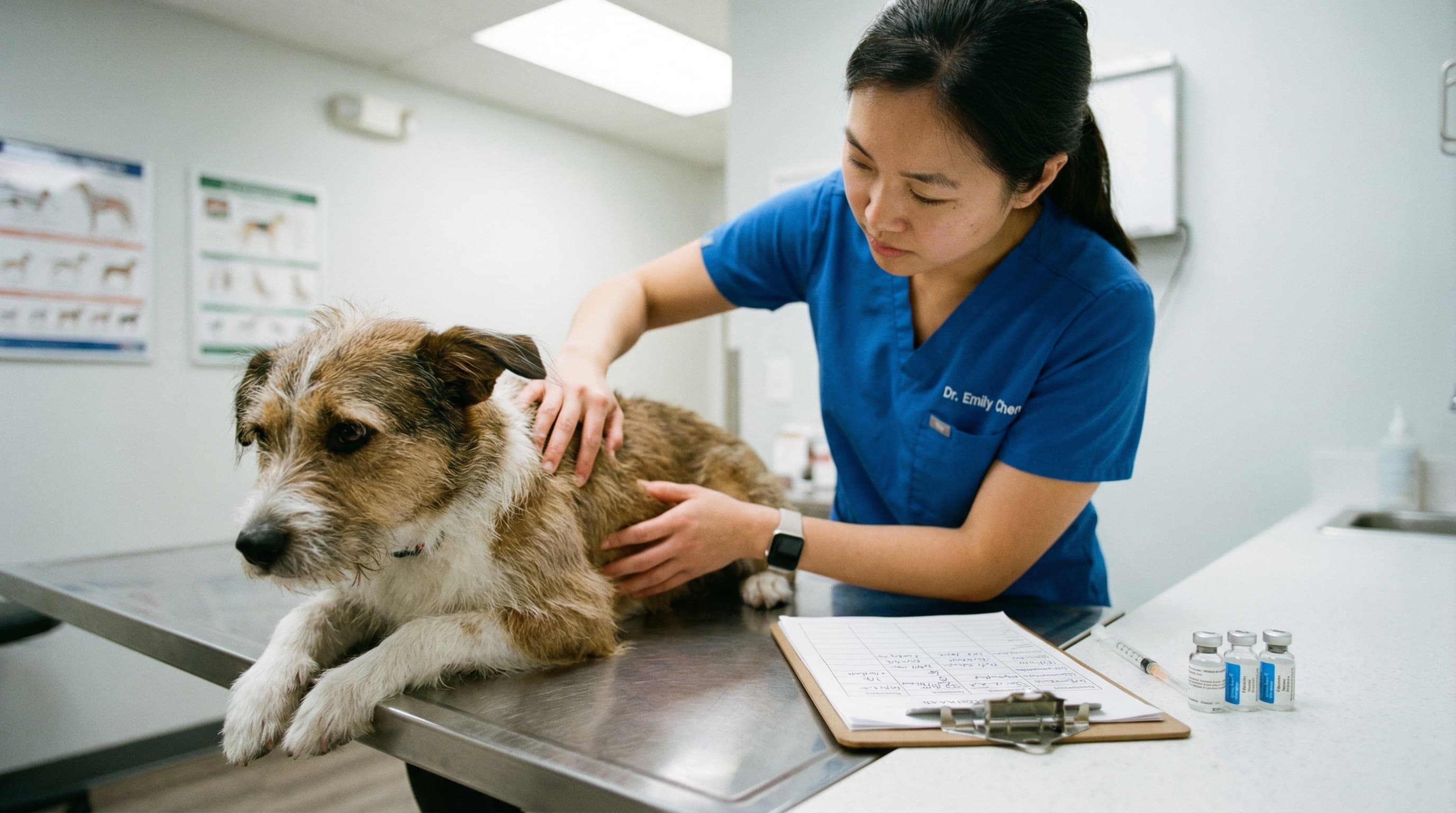
Most US dogs already have distemper, hepatitis, parvovirus, and parainfluenza through their routine DHPP shots. Leptospirosis is common too. Coronavirus is the one that catches people — it's not part of standard US vaccination protocols, and many vets stopped giving it years ago.
Ask your vet about the coronavirus vaccine specifically. Some vets carry a combination vaccine (like the 7-in-1 or 8-in-1) that covers everything on this list in one shot.
Cats: 4 mandatory vaccines
For cats, ICA Resolution 100164 requires:
- Rabies
- Panleukopenia
- Calicivirus
- Feline Rhinotracheitis
Most US cats receive these through their standard FVRCP triple vaccine plus a rabies shot. While some older guides claim only rabies and panleukopenia are needed, the official legal requirement includes the full triple vaccine.
Parasite Treatment
Your pet needs treatment for both internal parasites (worms) and external parasites (fleas and ticks) within 60 days of travel. That's a much wider window than most countries give — Costa Rica allows only 15 days.
The health certificate must list the product name, active ingredient, and treatment date.
Health Certificate and USDA Endorsement
You need a health certificate issued by a USDA-accredited vet within 10 calendar days of your travel date. This is one of the tighter windows — most countries give you 10–14 days, and every day counts.
Your vet examines your pet and fills out the health certificate form. All vaccines, parasite treatments, and exam findings go on it.
After the vet signs it, the certificate goes to USDA for endorsement. Your vet submits it through VEHCS (the electronic system). Colombia accepts digital endorsement, so you can print it from VEHCS.
The endorsement costs $101 per certificate. You can list multiple pets on one form.
Bring at least one printed photocopy of the endorsed health certificate. USDA specifically notes this for Colombia — officials may keep your original at the airport inspection.
For more on how endorsement works, see our USDA endorsement guide.
SISPAP Registration and Arrival Inspection
Colombia adds a step most countries don't: online pre-registration through SISPAP, ICA's sanitary import system.
Before you fly
- Create an account at ICA's SISPAP portal
- Log in and request a CIS (Sanitary Inspection Certificate) for your pet
- Pay the inspection fee by credit card (Visa, Mastercard, or Amex)
- Print the payment receipt
The portal is in Spanish. Google Translate handles it, but budget 30 minutes for the process. If SISPAP is down or you can't complete registration, you can do it at the ICA office at the airport when you arrive — but this takes longer and adds stress on travel day.
At the airport
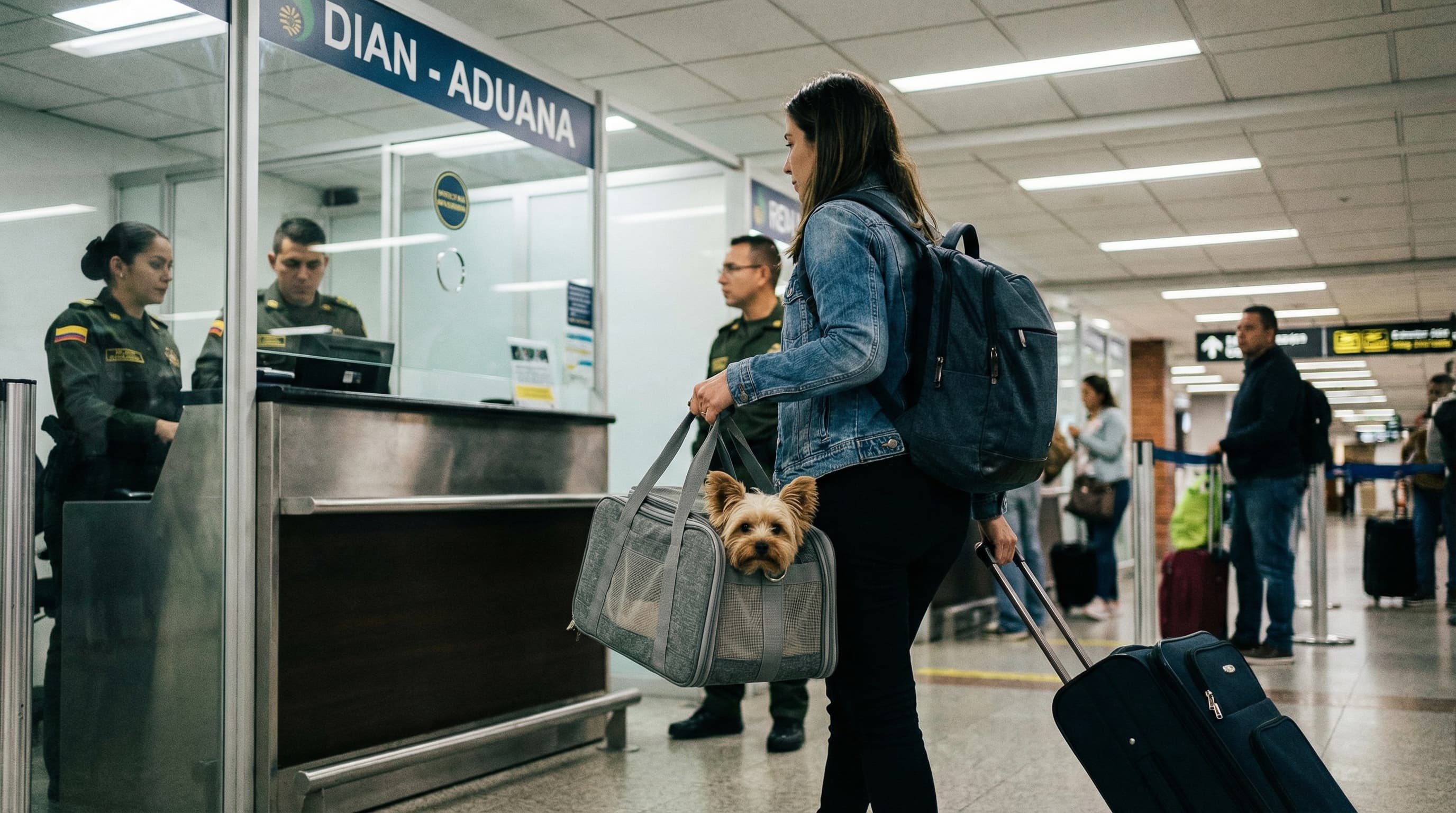
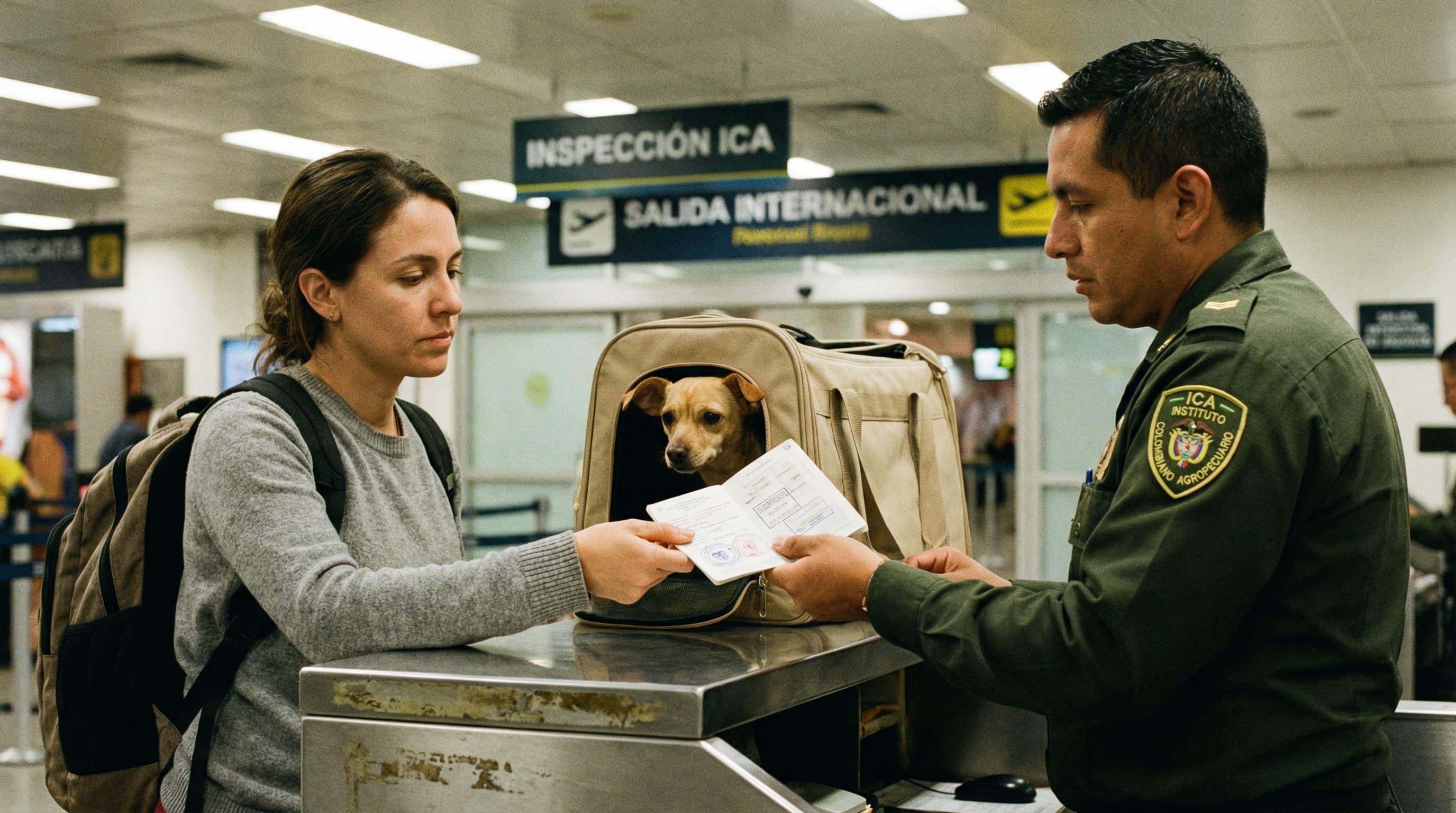
After you clear immigration at El Dorado (BOG), Rionegro (MDE), or another international airport, find the ICA inspection office. An official will:
- Check your health certificate and vaccine records
- Scan your pet's microchip (if implanted)
- Physically inspect your pet
- Issue the CIS (Sanitary Inspection Certificate)
ICA accepts card payments only — no cash. Bring a Visa, Mastercard, or Amex.
If your SISPAP registration is complete, this takes 15–20 minutes. Without it, expect longer.
Breed Restrictions
Colombia bans the import of three breeds under Law 746 of 2002 (Article 108-E):
- American Pit Bull Terrier
- American Staffordshire Terrier
- Staffordshire Bull Terrier
Crosses of these breeds are also banned. This is a hard ban — these dogs cannot enter Colombia, period.
If your dog is one of these breeds, this is a dealbreaker. No waiver, no exception.
Other breeds classified as "dangerous" in Colombia (Rottweiler, Doberman, Bull Terrier, and others) can enter the country. They face domestic ownership rules — muzzle and leash in public, liability insurance — but the import itself is allowed. Avianca transports these breeds in the cargo hold only, in metal containers.
Airline Rules for Colombia
Avianca is the main carrier between the US and Colombia and the only one with detailed pet policies for this route.
| Cabin | Hold | |
|---|---|---|
| Weight limit | 22 lb (10 kg) pet + carrier | 154 lb (70 kg) |
| Carrier size (cabin) | 22 × 14 × 10 in | Airline-approved kennel |
| Fee (each way) | $160–$165 | $225–$230 |
| Booking | 48 hours before flight (phone or presale) | 48 hours before flight |
| Min age | 4 months | 4 months |
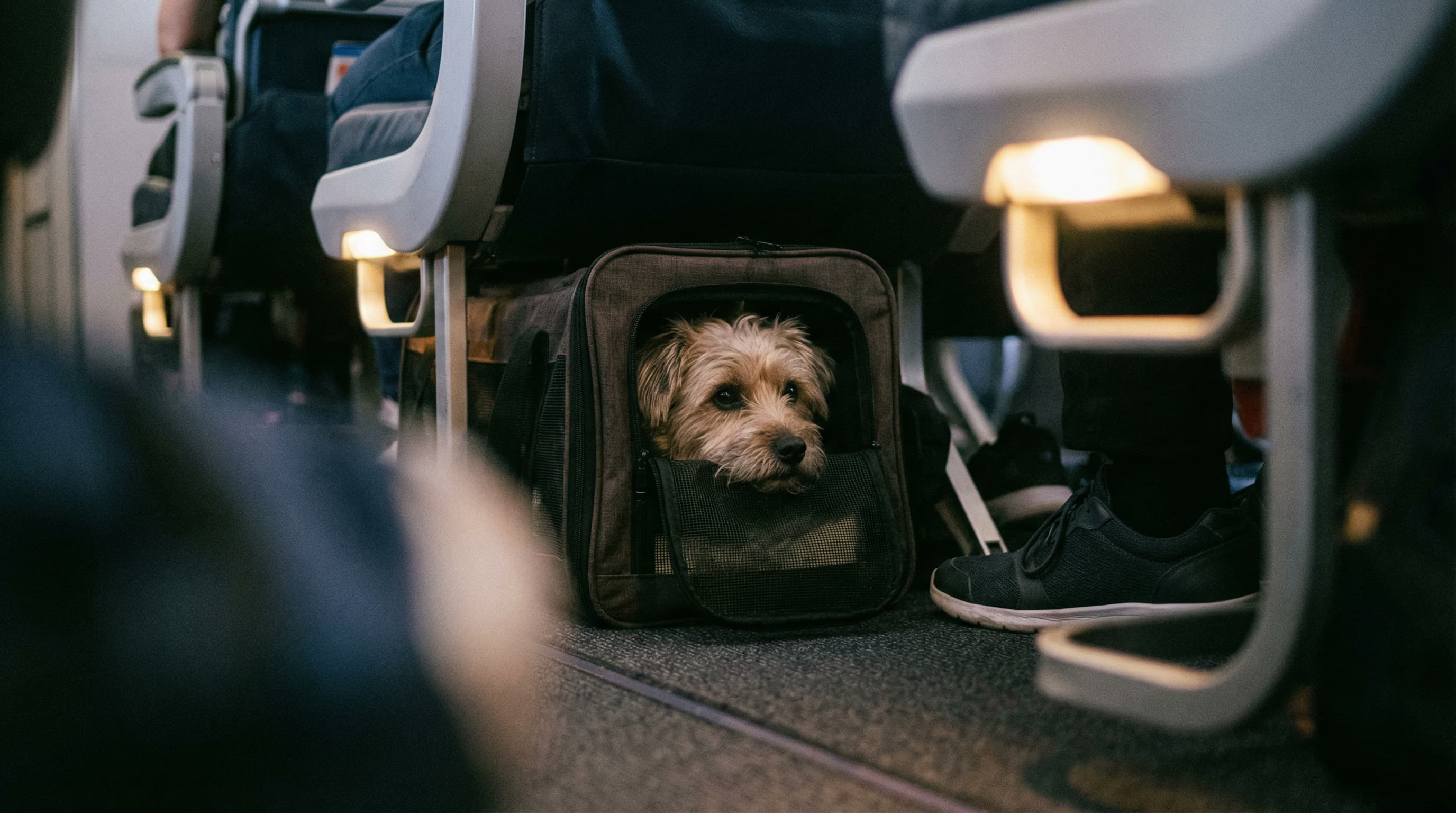
Flat-faced breeds: Avianca allows flat-faced dogs and cats in cabin only — not in the hold. This applies to breeds like Bulldogs, Pugs, Boston Terriers, Persian cats, and Exotic Shorthairs.
Temperature embargo: Avianca suspends hold transport to and from Boston, Chicago, New York, and Washington DC from December 26 through March 31. Cabin travel is unaffected.
High season surcharge: Avianca adds up to $20 to pet fees in January, July, November, and December.
Other US airlines (American, United, Delta, JetBlue) fly to Colombia but have varying pet policies. Call your airline directly — most require 48-hour advance booking for pets.
For a full comparison, see our airline pet fee comparison.
Cost Breakdown
Dogs
| Vet exam + health certificate | $80–$200 | USDA-accredited vet |
| USDA APHIS endorsement | $101 | Per certificate |
| Rabies vaccine (if needed) | $15–$30 | 21-day wait if first shot |
| Core + extra vaccines (if needed) | $40–$120 | DHPP + lepto + coronavirus + parainfluenza |
| Parasite treatment | $20–$50 | Internal + external, within 60 days |
| Microchip (if needed) | $25–$50 | Not needed for Colombia, but needed for US return |
| Airline pet fee (cabin, each way) | $160–$200 | Avianca $160; others vary |
| ICA arrival inspection | ~$25–$30 | Card only |
| Screwworm certificate (for return) | $30–$100 | Colombian government vet |
| CDC Dog Import Form | Free | Online before return |
| Total estimate | $450–$850 | Round trip, one dog |
Cats
| Vet exam + health certificate | $80–$200 | USDA-accredited vet |
| USDA APHIS endorsement | $101 | Per certificate |
| Rabies vaccine (if needed) | $15–$30 | 21-day wait if first shot |
| Panleukopenia vaccine (if needed) | $15–$30 | Usually part of FVRCP |
| Parasite treatment | $20–$50 | Internal + external, within 60 days |
| Airline pet fee (cabin, each way) | $160–$200 | Avianca $160; others vary |
| ICA arrival inspection | ~$25–$30 | Card only |
| Total estimate | $325–$650 | Round trip, one cat |
Cats cost less because they skip the microchip, screwworm certificate, and CDC form on the return trip. The USDA endorsement ($101) is the single biggest paperwork expense for both species.
Cost SaverList multiple pets on one health certificate. USDA charges $101 per certificate, not per animal. Two pets on one form saves you $101.

Timeline
3–4 weeks before departure: Confirm your pet's rabies vaccine is active. Check that all other vaccines are up to date — especially the coronavirus vaccine for dogs, which most US vets don't give routinely. If your dog needs a first-ever rabies shot, get it now (21-day waiting period).
Call your airline to reserve a pet spot. Get a microchip implanted if your dog doesn't have one.
2 weeks before departure: Complete your SISPAP registration online. The portal can be slow, so don't leave this for the last day.
Within 60 days of travel: Get parasite treatment done if not already covered. Save the receipt with product name, active ingredient, and date.
7–10 days before departure: Visit your USDA-accredited vet for the health exam and certificate. The certificate is valid for 10 calendar days, so time it carefully. The vet submits it through VEHCS for endorsement. Print the endorsed certificate and one photocopy.
1 week before return (dogs only): Complete the CDC Dog Import Form online. You'll need a photo of your dog and the microchip number. The receipt is valid for 6 months.
5 days before return (dogs only): Visit a Colombian official government vet for a screwworm freedom certificate. This must be a salaried government vet, not a private practice.
Travel day: Bring all paperwork in a waterproof folder — endorsed health certificate, photocopy, vaccine records, parasite treatment records, SISPAP receipt, and microchip records (dogs). Arrive 90 minutes early.
Common Mistakes
Re-entry to the USA
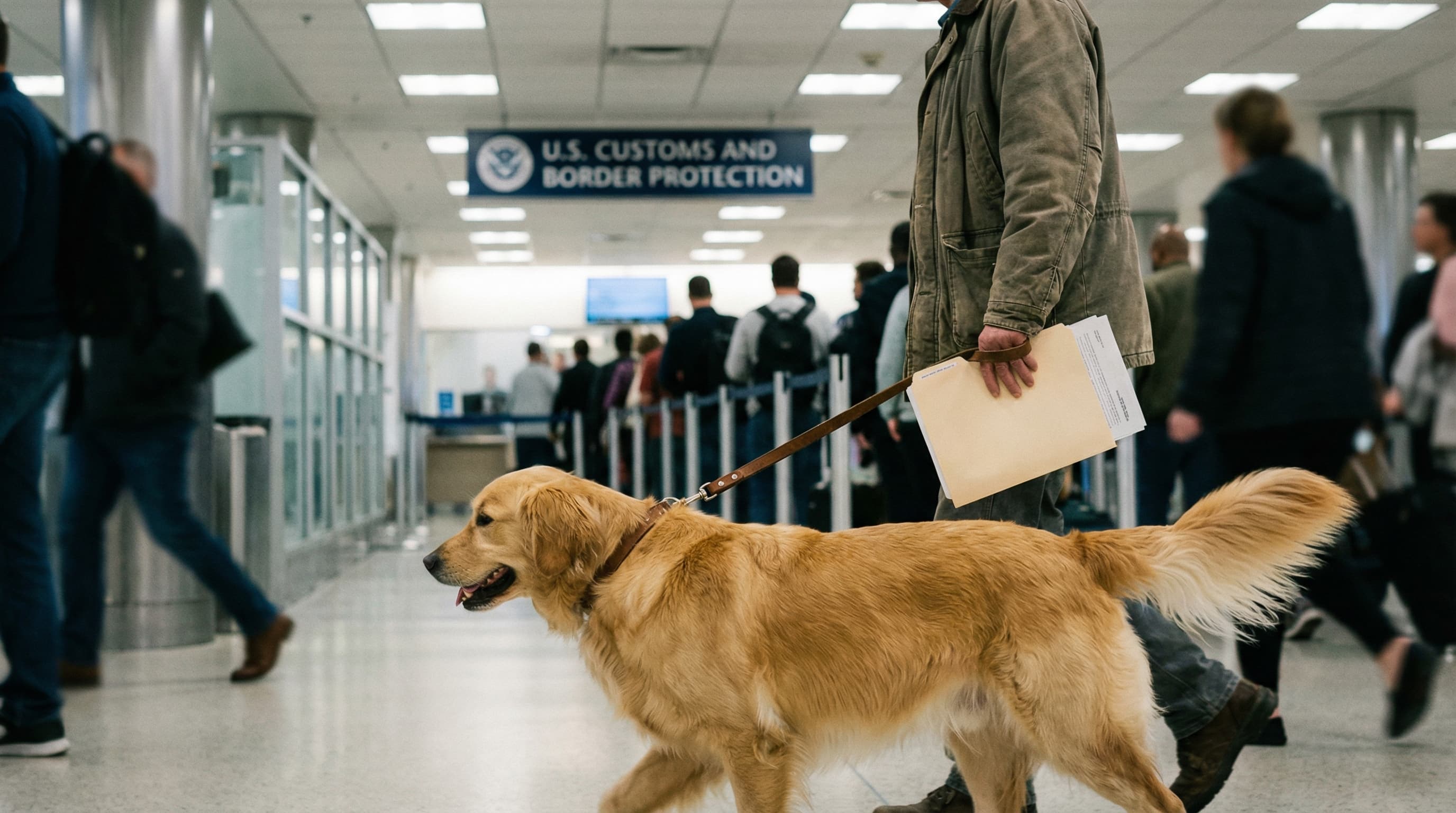
This is where Colombia gets complicated — especially for dogs. Colombia is both a CDC high-risk country for dog rabies and screwworm-affected, which means dogs face two extra layers of paperwork that don't apply to cats.
Dogs
Five things you need:
1. Certification of U.S.-issued Rabies Vaccination form. This is a specific CDC form that must be completed by a USDA-accredited vet and endorsed by USDA before your dog leaves the US. This replaced the old process where a USDA-endorsed health certificate covered re-entry. Don't confuse this with the regular health certificate — they're separate documents.
2. CDC Dog Import Form. Complete the CDC Dog Import Form online before your return. Free. The receipt is valid for 6 months. You'll need a photo of your dog and the microchip number.
3. ISO microchip. Your dog needs a readable ISO microchip. Border officials scan this to match your dog to its paperwork.
4. Screwworm freedom certificate. A Colombian official government vet must inspect your dog and certify it's screwworm-free within 5 days of your return flight. This must come from a full-time salaried government vet, not a private practice.
5. FMD Bath and Isolation. Because Colombia is not recognized as FMD-free, dogs must be bathed immediately upon arrival in the US and kept away from all livestock for at least 5 days.
6. Dog must be 6+ months old and appear healthy on arrival.
Cats
Cats have it much easier:
- Appear healthy. That's the main federal rule. If your cat looks sick at the border, officials may ask for a vet exam.
- No CDC import form. The form is dogs only.
- No microchip. No federal microchip rule for cats entering the US.
- No screwworm certificate. Screwworm rules apply to dogs, not cats.
Check your state's rules. Many states need rabies vaccination for cats even though the federal government doesn't. Hawaii and Guam quarantine all cats.
For the full re-entry process, see our guide to returning to the USA with a pet.
CriticalThe Certification of U.S.-issued Rabies Vaccination form for dogs must be completed and USDA-endorsed before you leave the US. You cannot get this document in Colombia. If you fly without it, your dog faces extended processing, possible quarantine at a CDC-registered facility ($2,000+), or denial of entry when you try to come home.
FAQ
Your next step: Call your vet and ask about the canine coronavirus vaccine — that's the one requirement most US dog owners aren't prepared for. Then schedule a vet appointment 7–10 days before departure for the health certificate, and complete SISPAP registration online while you still have time.