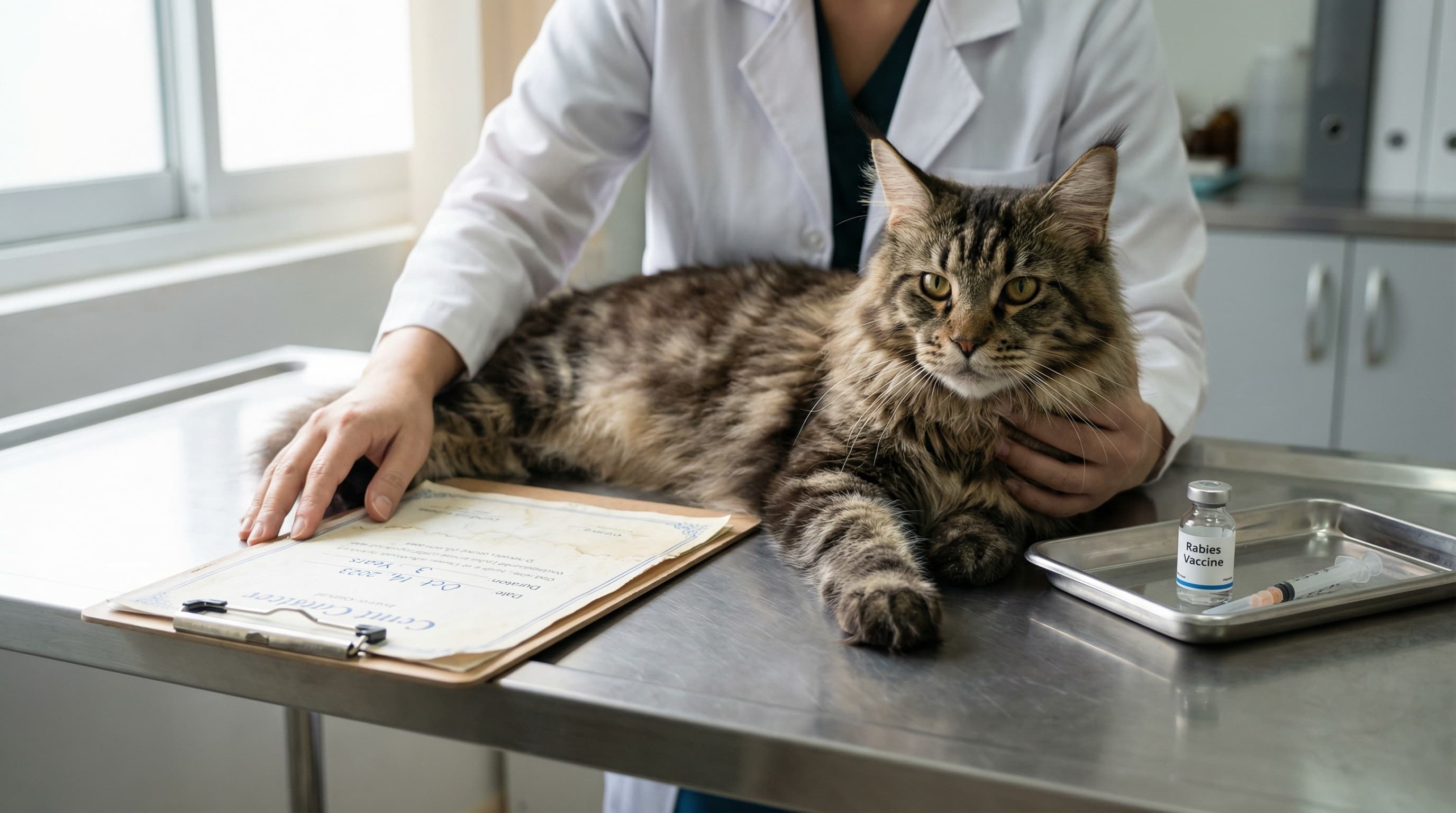
If your rabies certificate doesn't list the duration of immunity, Canada considers the vaccine expired 1 year after it was given, even if the product is labeled for 3 years. Make sure your vet writes the duration on the certificate.
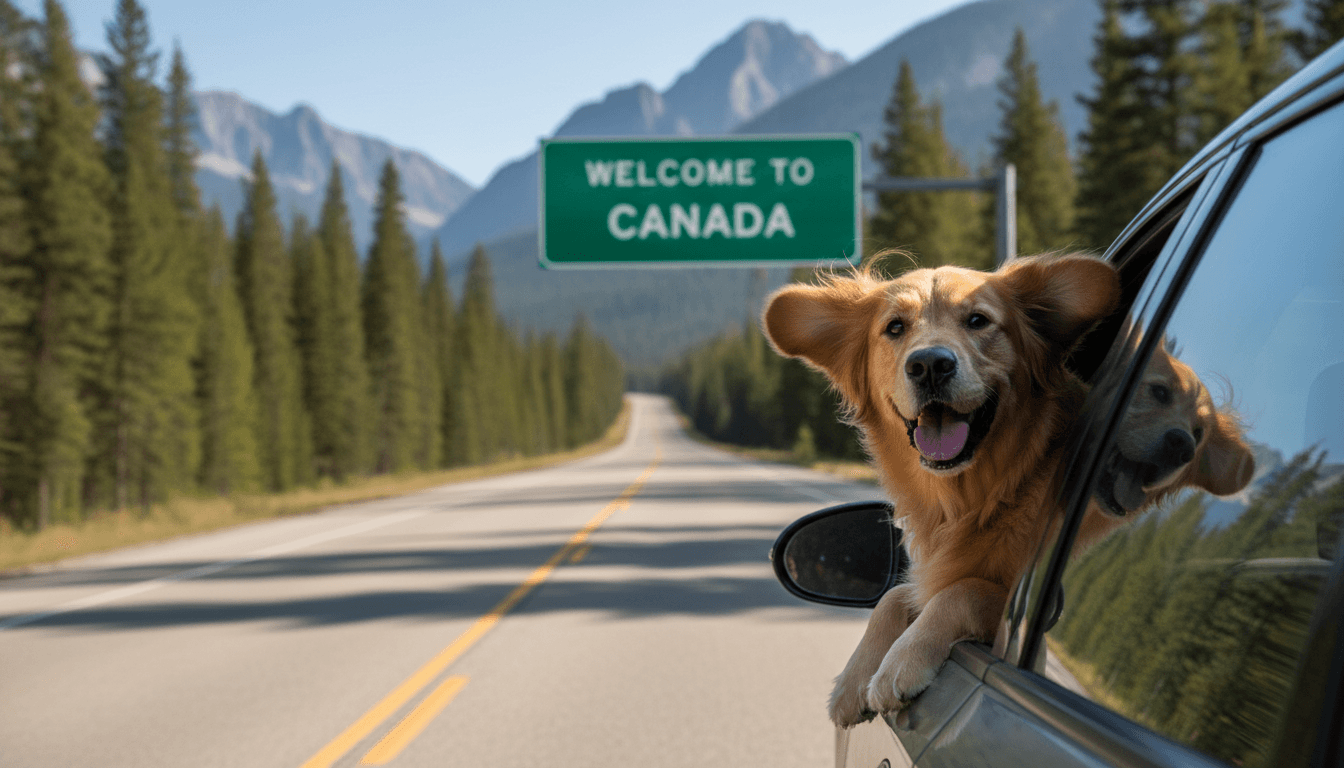
Bringing a Dog or Cat to Canada from the US — 2026 Requirements
19 min readinternational

Marcus Reid
Former Airline Operations
| Applies to | Dogs and cats (entry rules identical; re-entry rules differ) |
| Documents | Rabies vaccination certificate only |
| Vaccines | Rabies required (3+ months old) |
| Microchip | Not required by Canada |
| Quarantine | None |
| Cost (Round trip) | Dogs: $200–$600 / Cats: $130–$400 |
| Timeline | Start 4 weeks before |
| Difficulty | 🟢 Easy |
Taking your dog or cat to Canada from the US costs $200–$600 round trip and needs one document: a rabies vaccination certificate. No health certificate. No USDA endorsement. No import permit. No quarantine.
Canada doesn't charge an inspection fee for pets coming from the US, and the whole thing works the same whether you fly or drive.
Coming back is easy, but dogs and cats have different rules. Dogs need a CDC Dog Import Form, a microchip, and must be at least 6 months old (a rule updated in August 2024).
Cats just need to appear healthy at the border. No federal paperwork at all.
This guide covers both directions, both species, air and land.

What You Need
Canada's rules for dogs and cats coming from the US are nearly identical and straightforward:
- Rabies vaccination certificate: signed by a licensed vet, in English or French. Must show the animal's description (breed, color, weight), vaccine date, product name, and duration of immunity. Required for pets 3 months and older
- Pets under 3 months old: no vaccine needed, but bring a vet letter confirming the date of birth
- No hard limit on personal pets, but CBSA may scrutinize larger groups — contact CFIA in advance if traveling with more than 2
What you don't need
- Health certificate (APHIS Form 7001)
- USDA endorsement
- Import permit (for personal pets)
- Microchip
What counts as a "personal pet"? CFIA defines a personal pet as one that lives with you and will not be transferred to another person upon arrival.
If you're bringing a pet to give to a family member, for a trial adoption, or on behalf of a rescue, that's a commercial import with stricter rules and higher fees, even if the pet is a gift. Traveling with several pets at once may raise questions from CBSA about whether the import is truly personal.
CBSA (Canada Border Services Agency) handles the inspection at the border, whether you fly or drive. They check your rabies certificate, confirm the animal matches the description, and do a visual check.
CFIA (Canadian Food Inspection Agency) only gets involved if there's a health concern. No fee for pets from the US.
Tip
Vaccine Requirements
Canada requires an active rabies vaccination for all dogs and cats 3 months and older. No other vaccines needed. No titer test for dogs. No distemper, no FVRCP.
Canada doesn't specify a waiting period after vaccination. If your pet needs a rabies shot, you can get one the week before travel and Canada won't have an issue with it.
Your airline might need it though. Most carriers want proof of rabies vaccination given at least 21–30 days before the flight. Check your airline's policy.
Your airline's age rule. While Canada lets puppies in at 8 weeks, US airlines are stricter for international segments.
Most carriers require cats to be 16 weeks old and dogs to be 6 months old for flights to or from Canada. Always follow the airline's higher age floor to avoid being bumped at the gate.
A rabies vaccine costs $15–$35 and is valid for 1–3 years depending on the product.
Do You Need a Health Certificate?
No. Canada does not require an APHIS Form 7001 health certificate for personal pet dogs or cats from the US. The "veterinary certificate" Canada asks for is your rabies vaccination certificate: the same document your vet gives you after the shot. Not a separate form.
This trips up a lot of people. Every forum thread about Canada has someone insisting you need the full APHIS 7001 form because they're confusing "veterinary certificate" (the rabies cert) with "health certificate" (the USDA form).
Two reasons you might get a health certificate anyway:
Reason 1: Your airline might need it. Some airlines require a health certificate for any international flight with a pet, even if the destination country doesn't demand it.
Reason 2: You're also visiting another country. If your trip includes a stop in the EU or UK after Canada, you'll need the health certificate for that leg. Getting it before you leave the US is easier than trying to get one in Canada.
If you do get one, visit a USDA-accredited veterinarian. The exam costs $50–$150, and the certificate is valid for 10 days from the exam date.
USDA Endorsement
Not required for Canada, for either dogs or cats. That saves you $101 and 3–7 business days compared to countries that need it (most of Europe, Japan, Australia).
For details on what USDA endorsement is and which countries need it, see our USDA endorsement guide.
Microchip Requirements
Canada does not require a microchip for dogs or cats.
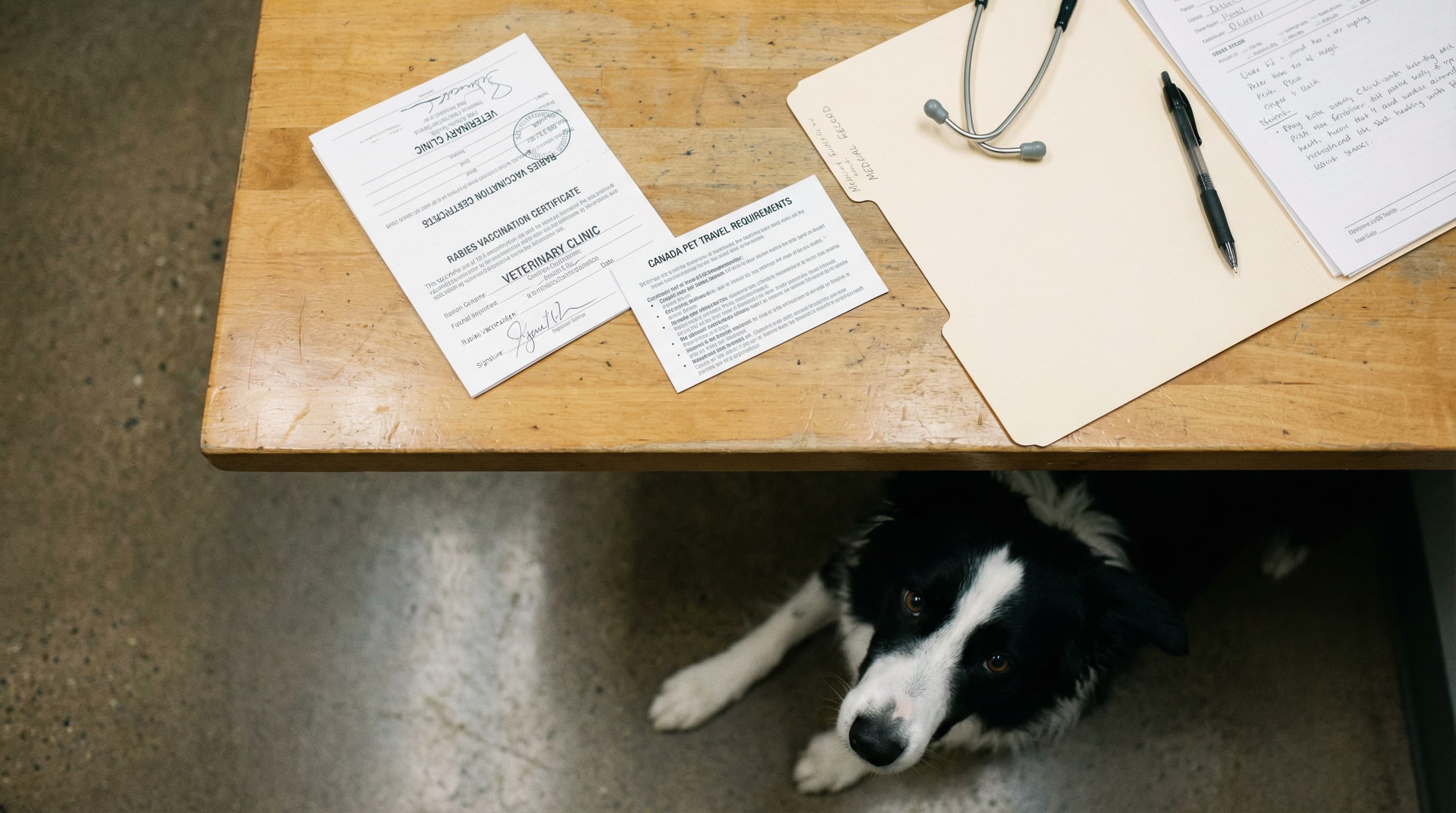
If you're traveling with a dog, get one anyway, and get it before your dog's rabies vaccination. The CDC requires all dogs entering the US to have an ISO 11784/11785 15-digit microchip, and the chip must be implanted before the rabies vaccine for the CDC to consider that vaccine valid.
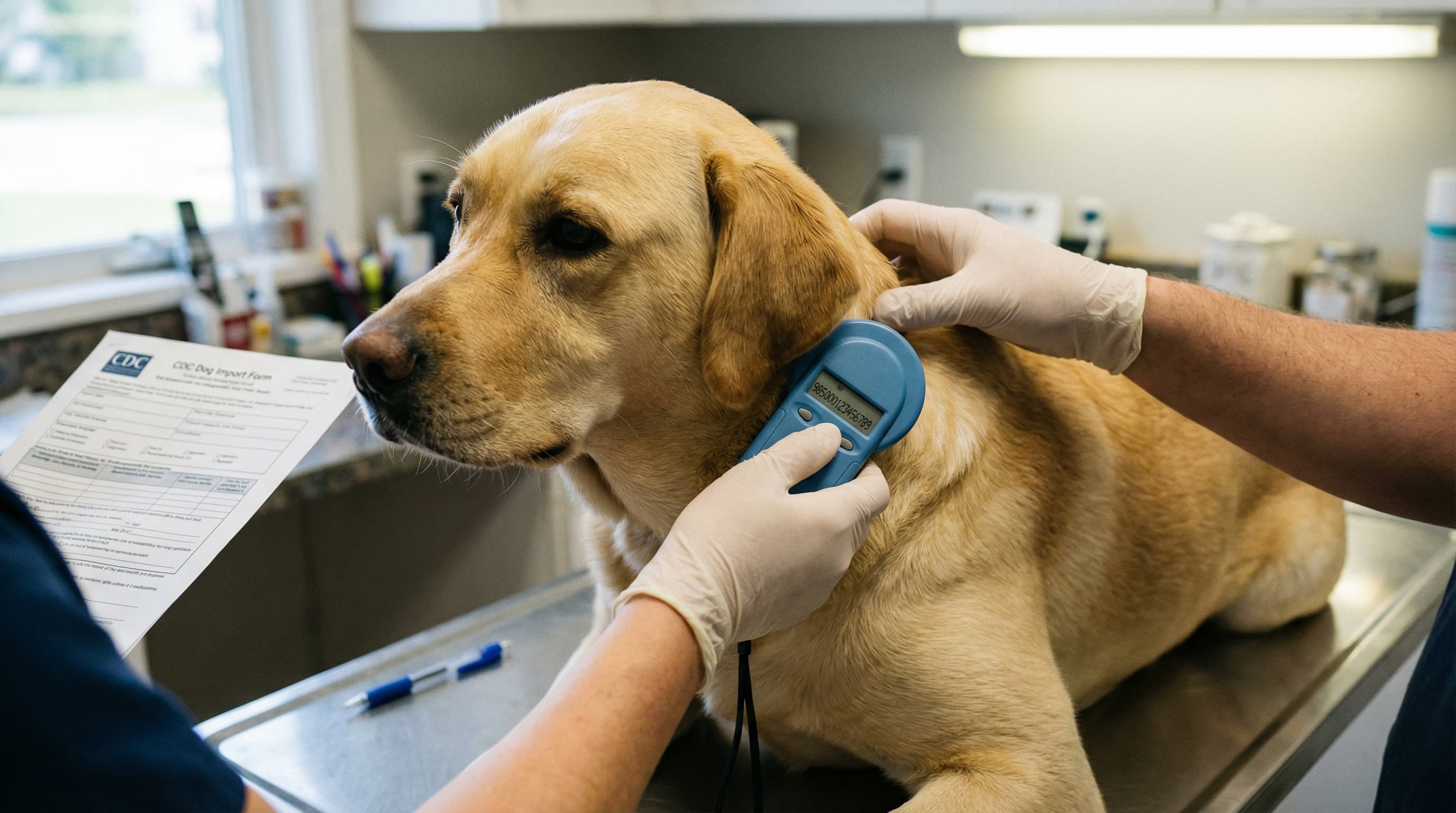
Border agents scan this chip when you return to match your dog's identity to the CDC import form.
If your dog already has a chip and an active rabies shot given after the chip, you're fine. If not, get the chip first, then the vaccine. $25–$75 at any vet, 30 seconds to do.
If you're traveling with a cat, there's no federal microchip requirement for US re-entry. Still worth the $25–$75.
If your cat escapes at Toronto Pearson and ends up in airport custody, a microchip is the fastest way to get them back. It's also required by most European countries if you travel internationally again.
Watch OutIf your dog already has both a chip and a rabies shot, check that the chip came first. A vaccination given before the chip doesn't count: you'd need a new shot after getting chipped. That's $40–$110 in unexpected costs, even if you thought your dog was up to date. Pull up your vet records and check the order before you leave.
Driving to Canada with Your Pet
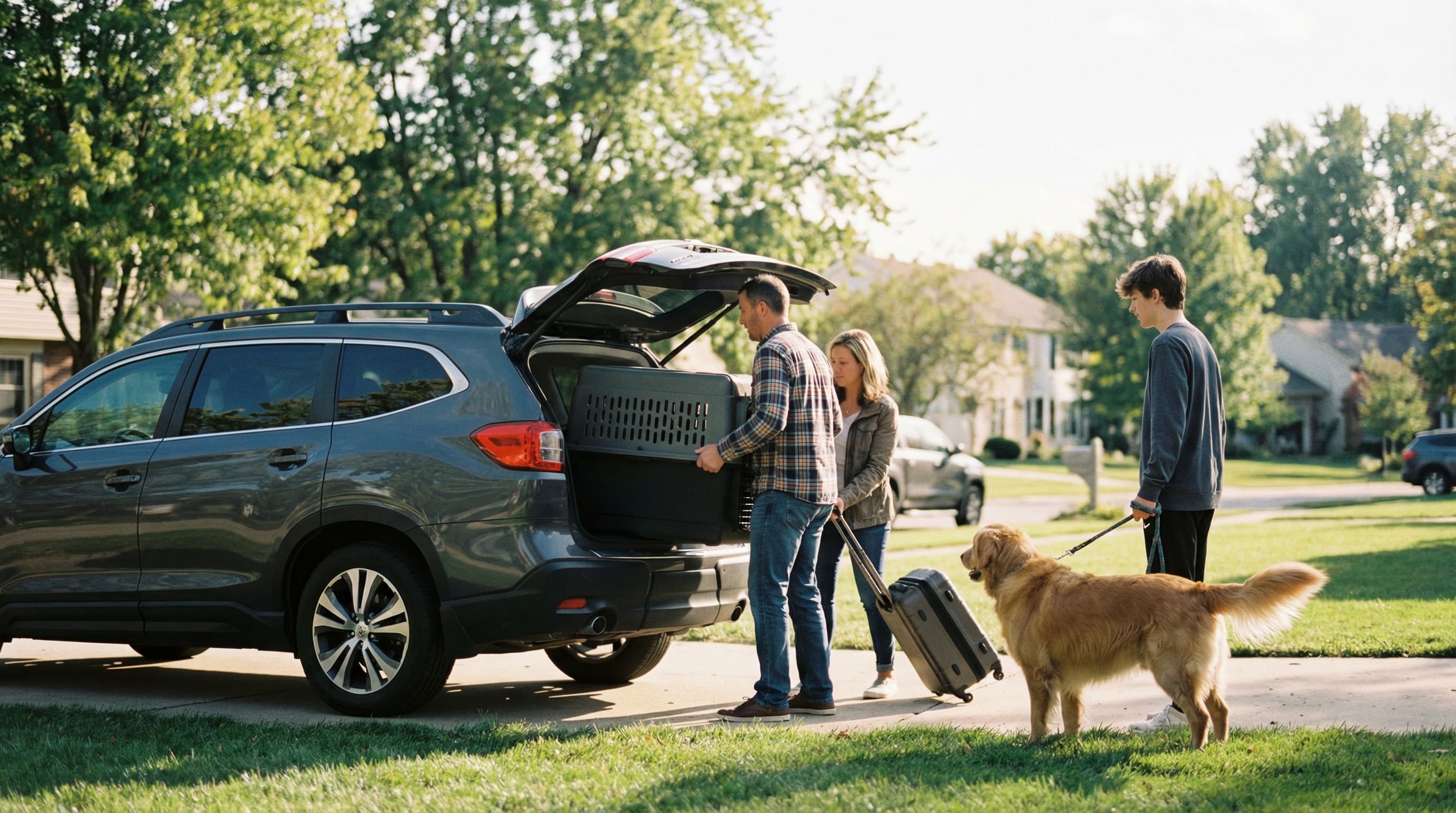
Millions of Americans drive to Canada each year, and bringing a pet by car is the simplest version of this trip. The CFIA requirements are exactly the same as flying: you need the rabies vaccination certificate and that's it.
The difference is you skip all airline rules: no carrier size limits, no cabin pet reservations, no breed restrictions, no pet fees.
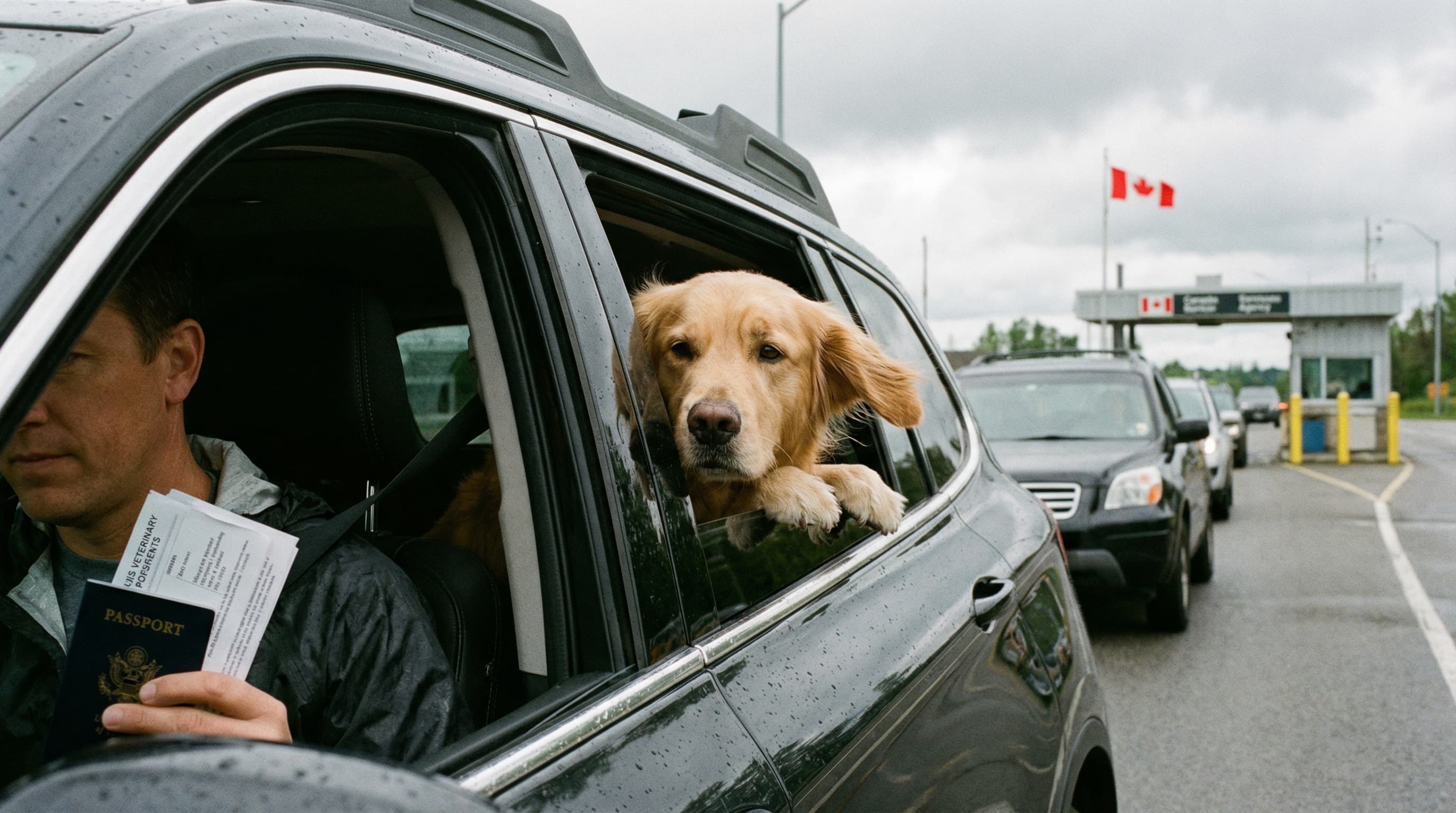
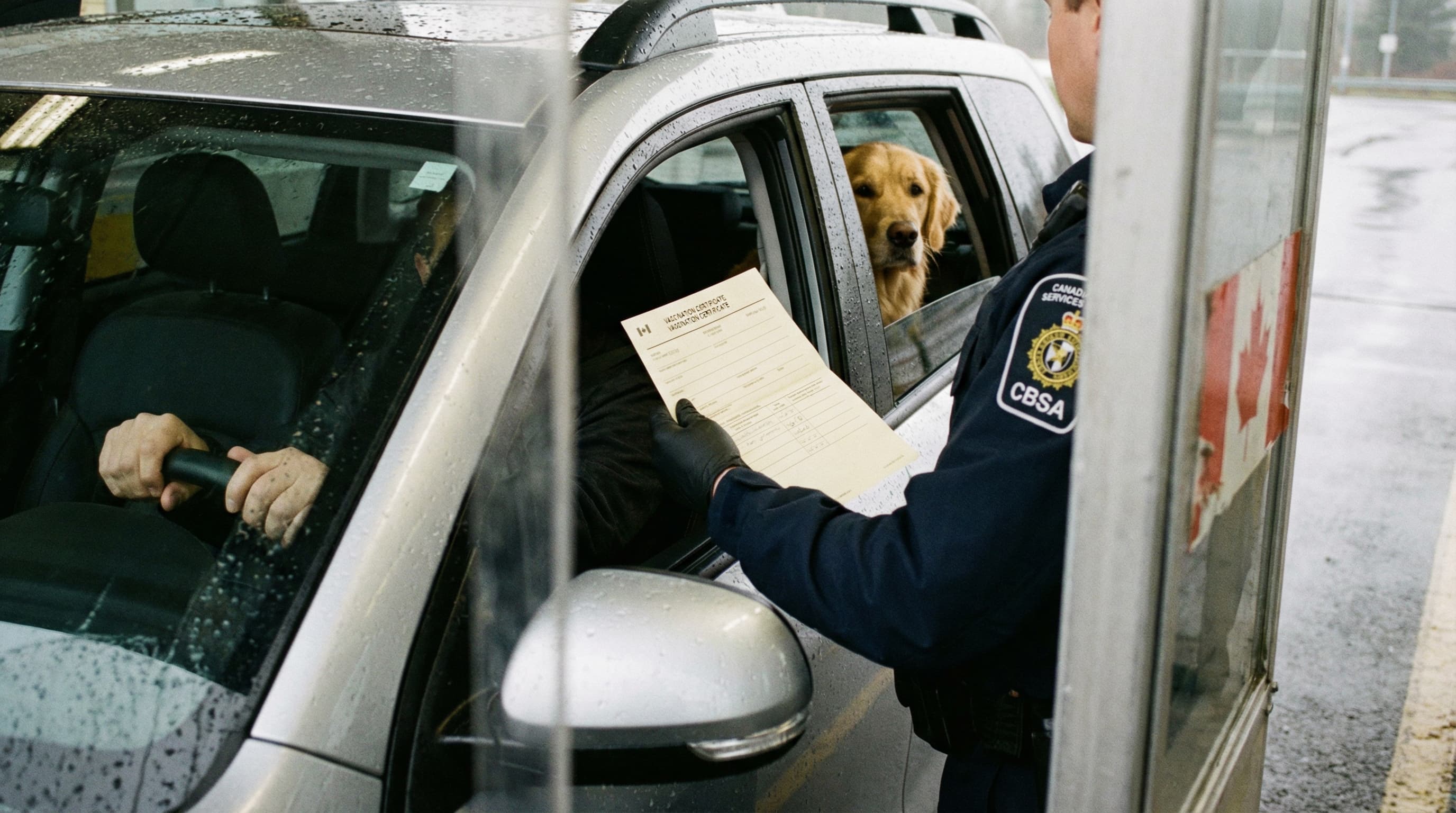
At the border: Tell the CBSA officer you have a pet in the car. They'll ask to see the rabies certificate. If everything matches (right animal, active vaccine, signed by a vet, in English or French), you're through. The whole process adds 2–5 minutes to your border crossing. No inspection fee for pets from the US.
If something's wrong: If the certificate is missing, expired, or doesn't match, CBSA may let you enter with a condition to get the vaccine updated within 2 weeks. Don't count on this: bring the right paperwork.
Any border crossing works. Unlike some countries that require pets to enter at specific ports, Canada lets you cross at any land border with a personal pet.
Safety in the car: Canada doesn't require pets to be crated while driving, but a secured crate or seatbelt harness is strongly recommended. An unrestrained 50-lb dog becomes a projectile in a sudden stop.
Airline Rules for Flying to Canada
Airline rules apply on top of Canada's country requirements. Here's what the major carriers charge for cabin pet travel on US–Canada routes:
| American Airlines | $150 | AA Cargo (separate service) |
| Delta | $150 | Military/State Dept. only |
| United | $150 | Military/State Dept. only |
| Alaska Airlines | $100 | Checked baggage: $150 |
| Air Canada | $50–$60 | Yes (Air Canada Cargo) |
| WestJet | $50–$60 | Yes (cargo from $185 CAD; checked baggage: $100–$118) |
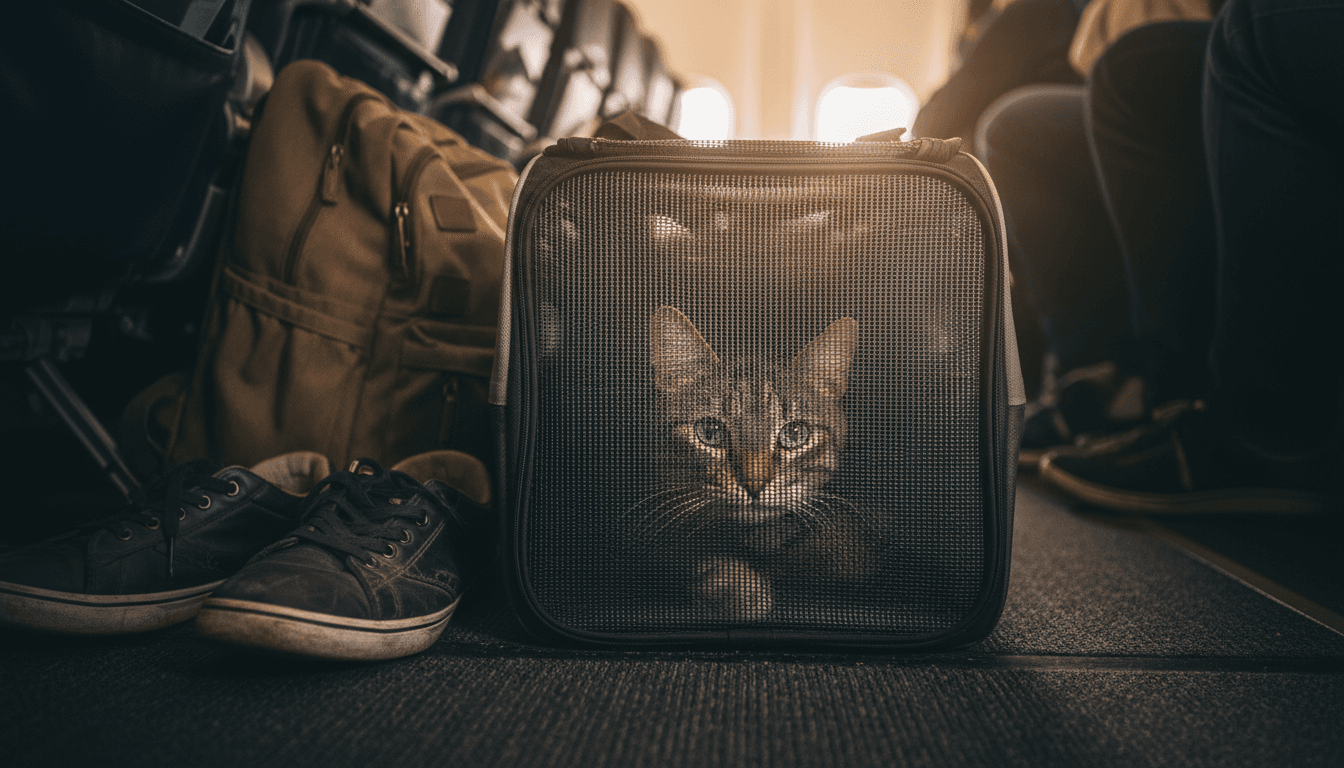
Cabin travel: Your pet must fit in a carrier under the seat. Maximum carrier size is roughly 18x11x11 inches on most airlines.
Pets must be at least 16 weeks old (cats) or 6 months old (dogs) for international cabin travel on most carriers. Pet plus carrier must weigh under 20 lbs.
Call the airline 4 weeks before travel to reserve a pet spot. Most flights allow only 2–4 pets in cabin.
Service dogs: Certified service dogs fly in-cabin free of charge on Canadian carriers under the Accessible Transportation for Persons with Disabilities Regulations (ATPDR). Airlines must provide adjacent floor space and cannot charge a pet fee.
This applies to dogs individually trained to perform a task for a person with a disability. Emotional support animals do not qualify.
Cargo travel: Putting your pet in cargo (even a 3-hour flight to Toronto) is hard to think about. Here's what actually happens: your pet rides in a pressurized, temperature-controlled hold with the same air and cabin pressure as passengers.
Airline ground crews load and unload animals first. It's not comfortable for you, but it's designed to be safe for them.
Most major US carriers restrict cargo to military and State Department staff. Air Canada and WestJet offer cargo options to the general public. Alaska Airlines allows pets as checked baggage ($150 one way).
Third-party pet relocation companies handle large-dog transport for $1,000–$5,000 depending on route and size.
Breed and weight limits: Most major airlines ban flat-faced breeds (bulldogs, pugs, Boston terriers) from cargo: their short airways make them vulnerable at altitude. Flat-faced cats (Persians, Himalayans) face the same cargo ban. Most airlines allow both in cabin if they fit the carrier.
Cargo weight limits vary by airline but typically cap at 150 lbs (pet + crate). Cabin limit is usually 20 lbs (pet + carrier).
Temperature embargoes: Airlines won't transport pets in cargo when ground temperatures exceed 85°F or drop below 45°F. Canadian winters regularly hit well below 45°F, so winter cargo travel may not be an option.
For a full comparison of airline pet policies, see our airline pet fee comparison.

Cost Breakdown
Dogs
| Rabies vaccine (if needed) | $15–$35 | Skip if active |
| Microchip (if needed) | $25–$75 | Must be implanted before rabies vaccine |
| Vet exam + health certificate | $50–$150 | Optional; only if airline needs it |
| Airline pet fee (cabin, each way) | $100–$200 | $0 if driving |
| CDC Dog Import Form | Free | For US re-entry |
| CBSA inspection | Free | No fee for US pets |
| Total estimate (flying) | $200–$600 | Round trip, one dog |
| Total estimate (driving) | $40–$110 | Round trip, one dog |
Cats
| Rabies vaccine (if needed) | $15–$35 | Skip if active |
| Microchip (optional) | $25–$75 | Not required, but recommended |
| Vet exam + health certificate | $50–$150 | Optional; only if airline needs it |
| Airline pet fee (cabin, each way) | $100–$200 | $0 if driving |
| CBSA inspection | Free | No fee for US pets |
| Total estimate (flying) | $130–$400 | Round trip, one cat |
| Total estimate (driving) | $15–$35 | Round trip, one cat |
Driving is much cheaper because you skip the airline pet fee entirely. Canada doesn't charge USDA endorsement ($101), import permits, or inspection fees for pets from the US.
Some pet relocation services charge $500+ to "handle Canada paperwork." For Canada from the US, that paperwork is a rabies certificate your vet gives you after a $25 shot. Don't overpay for a process this simple.
Cost SaverIf you're driving, the only cost is the rabies vaccine and microchip (dogs). No airline fee, no border fee, no health certificate. A round trip with a cat can cost as little as $15, the price of a rabies shot.
Timeline
4 weeks before departure: Confirm your pet's rabies vaccine is active. If expired, schedule a vet visit.
If flying, call your airline to reserve a pet spot. Most carriers now require cats to be 16 weeks old and dogs to be 6 months old for international routes.
If traveling with a dog, confirm it has a microchip implanted before its current rabies vaccine.
10 days before (if getting a health certificate): Visit your USDA-accredited vet. The certificate is valid for 10 days from the exam date. Only do this if your airline asks for one. Canada doesn't need it.
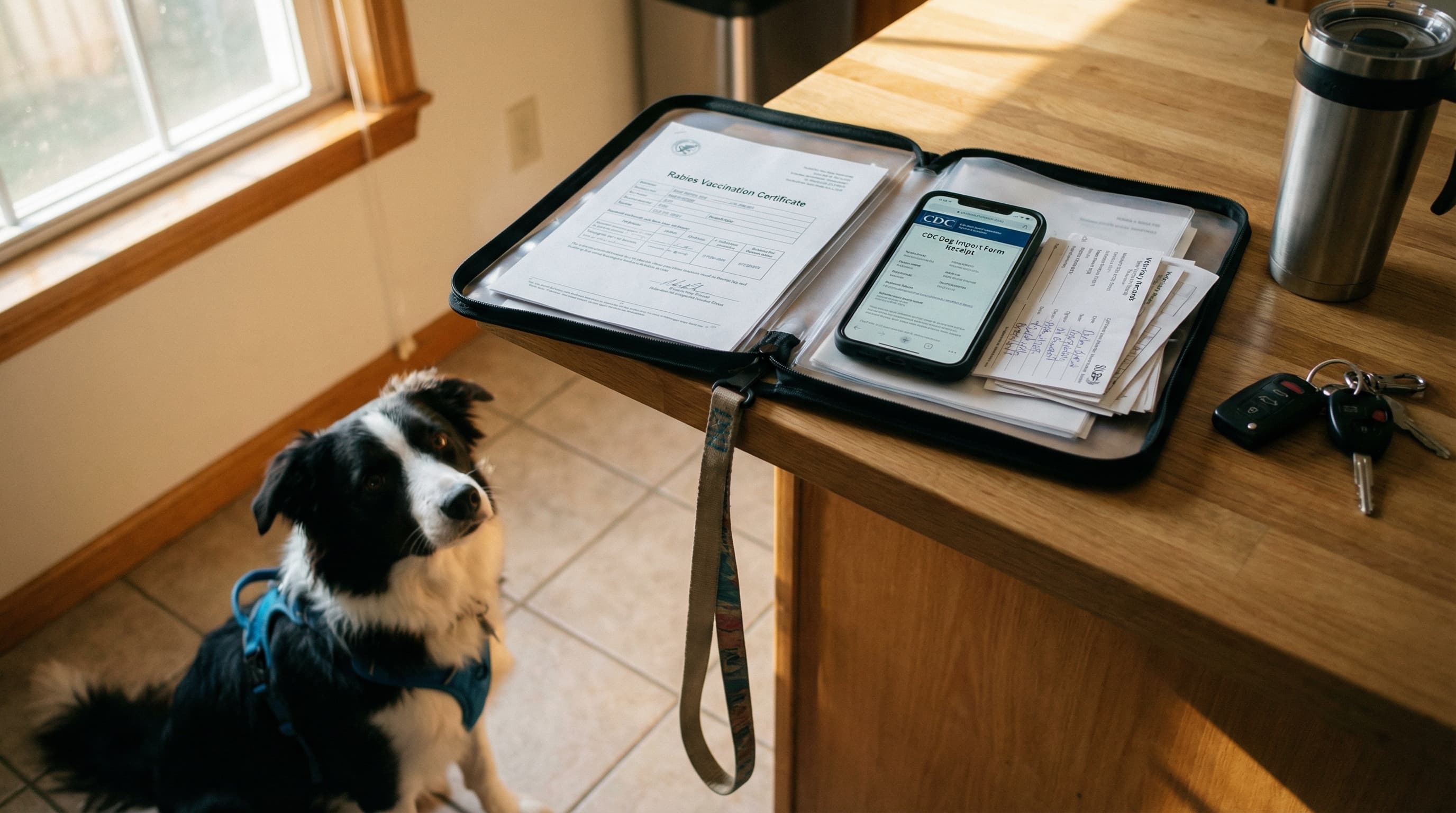
1 week before (dogs only): Complete the CDC Dog Import Form online for your return trip. It's free. After you submit, you'll verify your email and receive the receipt within about 15 minutes. Check your spam folder if it doesn't arrive. Cats don't need this.
Travel day: Bring your rabies vaccination certificate (original, not a copy). If flying, bring all documents in a waterproof folder and arrive 60–90 minutes early. If driving, have the certificate within reach, not buried in the trunk.
Common Mistakes
Border Tips
Flying
Departing the US: Check in at the airline counter with your pet. The agent checks your reservation, carrier dimensions, and collects the pet fee.
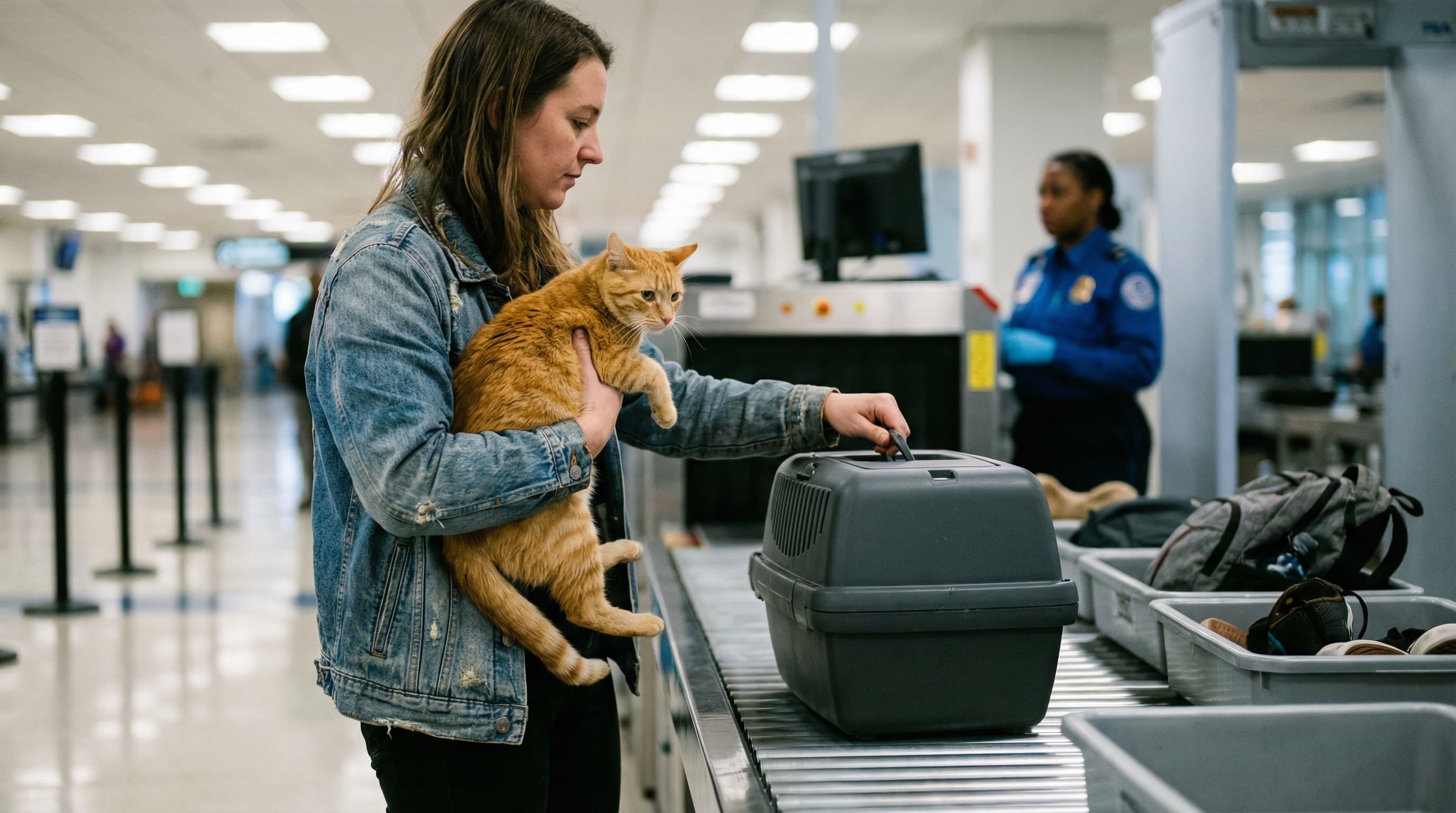
At security, remove your pet from the carrier and send it through the X-ray. Hold your pet securely. Keep cats on a harness and leash: they'll bolt.
Arriving in Canada: After you clear immigration, CBSA checks your rabies certificate. They may glance at your pet to confirm it matches the description and looks healthy. No separate inspection office to visit, no fee.
Driving
Entering Canada: Declare your pet to the CBSA officer at the booth. Hand over the rabies certificate. They'll check the document, possibly look at your pet, and wave you through. Adds 2–5 minutes. No secondary inspection unless something's off.
Returning to the US: For dogs, have the CDC Dog Import Form receipt ready. Border agents may scan the microchip. For cats, nothing. They just need to appear healthy.
Practical tips: Freeze water in a travel bowl to prevent spills on the drive. Bring a collapsible water bowl for rest stops.
If crossing in winter, keep the car warm enough for your pet but don't leave them in the car at rest stops. Canadian parking lots get cold fast.
Re-entry to the USA
Dogs
Three things as of 2026:
1. CDC Dog Import Form. Complete the CDC Dog Import Form before your return. Free. The receipt is valid for 6 months and covers multiple trips to Canada. Fill it out before you leave so it's ready.
2. Microchip. ISO 11784/11785, 15-digit. Must be implanted before the rabies vaccination. No chip, no entry. Get this done before you leave the US.
3. Dog must be at least 6 months old. No exceptions, even for low-risk countries like Canada.
Canada is a low-risk country for dog rabies. That means no screwworm certificate, no titer test, no extra rabies paperwork, and your dog can re-enter at any US port — airport, seaport, or land border.
Check your state's rules too. Some states require more vaccinations or health certificates for dogs beyond what the CDC asks for. Check with your state's department of agriculture before you travel.
Cats
Cats have very few federal re-entry rules:
1. Appear healthy. That's the main CDC requirement for cats. If your cat shows signs of illness at the border (coughing, sneezing, acting tired), officials may ask for a vet exam.
2. No CDC import form. The CDC Dog Import Form is for dogs only.
3. No federal microchip requirement. Unlike dogs, cats don't need a microchip to enter the US.
4. No age minimum. Unlike dogs (6 months), kittens of any age can enter the US.
Check your state's rules. Many states require rabies vaccination for cats even when the federal government doesn't. Hawaii and Guam quarantine all pets, even from the US mainland.
For the full re-entry process, see our guide to returning to the USA with a pet.
Province Breed Restrictions
Canada doesn't have a national breed ban, but some provinces and cities do:
Ontario: Bans American Staffordshire Terriers, American Pit Bull Terriers, Staffordshire Bull Terriers, and their crosses. Province-wide, including Toronto.
Your dog cannot enter or transit through Ontario. If you're driving to Montreal or western Canada, this affects your route.
Winnipeg, Manitoba: Bans pit bull-type dogs under the city's Responsible Pet Ownership By-law.
Montreal and other Quebec cities: Various breed-specific bylaws at the city level. Check your destination city before traveling.
If you have a pit bull-type dog, this is a genuinely difficult situation for Canadian travel. Your options: fly directly to a province without a ban (British Columbia, Alberta, most of Atlantic Canada), or drive a route that avoids Ontario and Winnipeg.
No province adds extra vaccination or health certificate rules beyond what CFIA requires federally. The breed restrictions are the only province-level concern.

FAQ
Your next step: If you're flying, book your airline pet reservation before anything else. Most flights hold only 2–4 spots, and that's the one step that actually fills up. If you're driving, check that your rabies certificate is active, in English or French, and lists the duration of immunity.