Your vet must implant the microchip before or on the same day as the rabies vaccine. If the order is reversed, the UK won't accept the vaccine — you'd need a new shot and a new 21-day wait.
Bringing a Dog or Cat to the UK from the US — 2026 Requirements
19 min readinternational

James Harlow
Pet Relocation Consultant
| Applies to | Dogs and cats (same rules except tapeworm and breed bans are dogs only) |
| Documents | GB pet health certificate + USDA endorsement + Owner Declaration + rabies certificate |
| Vaccines | Rabies required (12+ weeks old, 21-day wait) |
| Microchip | Required (ISO, before rabies vaccine) |
| Quarantine | None if paperwork is correct. Up to 4 months if not. |
| Cost (One way) | Dogs: $2,500–$6,500+ / Cats: $2,300–$6,000+ |
| Timeline | Start 6–8 weeks before |
| Difficulty | 🟠 Hard |
Flying with your pet to the UK from the US costs $2,500–$6,500 for dogs and $2,300–$6,000 for cats, one way.
It's more than most countries because no airline on approved UK routes accepts pets in the cabin or as checked baggage. Every dog and cat flies as manifest cargo, which means booking through a cargo carrier and hiring a pet shipper on the UK side to handle customs and collection.
The paperwork is standard: microchip, rabies vaccine (21-day wait), health certificate, USDA endorsement. Dogs also need tapeworm treatment 1–5 days before landing.
Five dog breeds are banned entirely, and you cannot import them under any circumstances. No quarantine if everything's done right, but up to 4 months if it's not.
This guide covers the full process for dogs and cats flying from the US to England, Scotland, or Wales.
What You Need
The rules are the same for dogs and cats unless noted. All pets enter under DEFRA's pet travel scheme and must arrive through an approved route.
- ISO microchip: implanted before or on the same day as the rabies vaccine.
- Rabies vaccine: given after the microchip; pet must be at least 12 weeks old; first shots need a 21-day wait.
- GB pet health certificate + USDA endorsement: GB-specific form signed by a USDA-accredited vet; pet must arrive within 10 days of endorsement ($101). Sign the Owner Declaration on the last page.
- Tapeworm treatment: dogs only; praziquantel; 24–120 hours before arrival; given by a USDA-accredited vet.
- Manifest cargo only: book through an approved airline to an approved UK airport; hire an IPATA-certified pet shipper on the UK side for customs and collection.
What you don't need: No quarantine (up to 4 months at your cost if paperwork fails), no titer test.
Critical
About Northern Ireland: This article covers Great Britain (England, Scotland, Wales). Northern Ireland has different rules managed by DAERA and follows EU-aligned pet travel rules. If your destination is Belfast or anywhere in Northern Ireland, check DAERA's website for the specific process.
Rabies Vaccine for UK Pet Travel
The UK needs an active rabies vaccine for dogs and cats. Your pet has to be at least 12 weeks old for the shot.
First-time rabies: Wait at least 21 days after the shot before arriving. This means your pet must be at least 15 weeks old to enter the UK. A first rabies shot is valid for 1 year on the health certificate, even if your vet gave a 3-year product.
Booster (given before the previous shot expired): No waiting period. The booster lasts 1–3 years depending on the brand. Miss the booster window and your vet has to start over with a primary shot, plus the 21-day wait.
No titer test from the US. Every forum thread about UK pet travel asks about the rabies blood test. You don't need one. The US is a "listed country" under UK rules, so the UK trusts US rabies controls. A titer test is only needed if your pet has spent time in an unlisted country (parts of Africa, Asia, South America).
A rabies vaccine costs $15–$30.
Health Certificate and USDA Endorsement
You need a Great Britain pet health certificate, not the standard APHIS 7001 form used for most countries. USDA APHIS has the specific form on their website, with separate versions for shipments with dogs and shipments without dogs (cats/ferrets only).
For more on the general process, see our health certificate guide.
A USDA-accredited vet fills out the certificate after examining your pet. Not every vet is USDA-accredited — find one near you. The exam and certificate together cost $150–$300 depending on your vet.

After your vet signs the certificate, send it to your regional USDA APHIS Endorsement Office for endorsement. Your vet can submit electronically through VEHCS, or you can mail it with a prepaid return label. USDA must ink-sign and emboss the certificate — electronic endorsement alone isn't enough, so you need the physical document returned to you. Endorsement costs $101 per certificate. Allow 2–3 business days by mail, or same-day if your vet submits through VEHCS.
Your pet must arrive in the UK within 10 days of the USDA endorsement date. This is a strict window — count backward from your flight to schedule the vet visit. Without the endorsement stamp, UK border officials will reject the health certificate.
After endorsement, fill out the Owner Declaration on the last page of the health certificate. Sign it and make sure it travels with your pet. The cargo handler and UK officials both check for this.
Microchip for UK Pet Travel
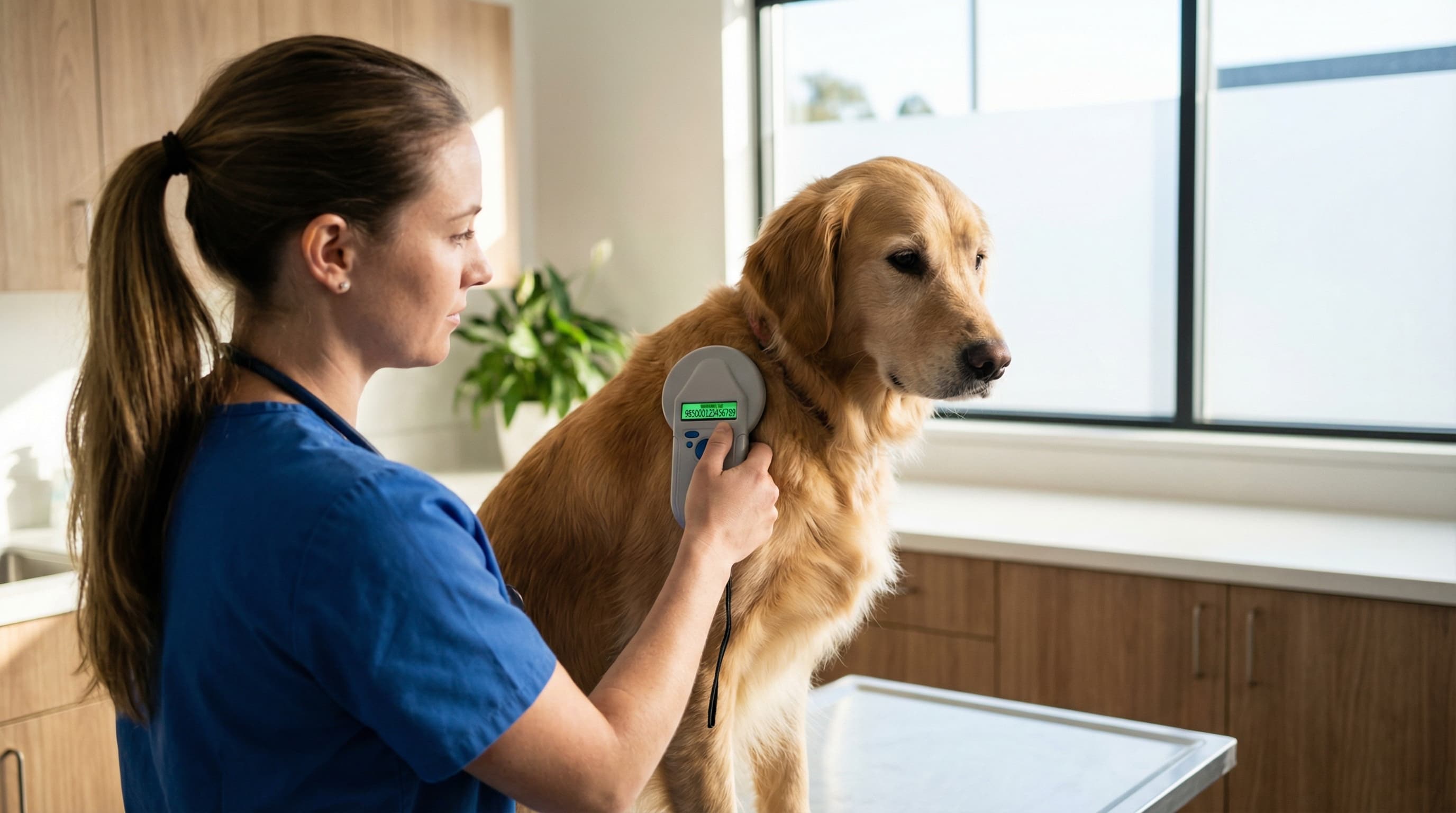
The UK needs an ISO microchip. Your vet implants it before or on the same day as the rabies vaccine, and the microchip number goes on every piece of paperwork. UK border officials scan the chip to match your pet to its papers.
Already have a non-ISO chip? You can add an ISO chip alongside it. Both chip numbers and implantation dates go on the health certificate. Your vet doesn't need to remove the old one.
A microchip costs $25–$50. Most vets keep them in stock.
Tapeworm TreatmentDogs Only
Dogs entering Great Britain need tapeworm treatment with a product containing praziquantel (or an equivalent active against Echinococcus multilocularis). A USDA-accredited vet must administer it 24–120 hours before your dog arrives in the UK.
That timing window is strict on both ends. Treated Monday at 2 PM? Your dog must arrive no earlier than Tuesday at 2 PM, and no later than Saturday at 2 PM. A delayed flight can push you outside the window — if that happens, your dog needs a new treatment before clearing customs.
Your vet records the product name, brand, date, time, and their signature on the health certificate.
Cats don't need tapeworm treatment for the UK. Neither do ferrets.
Treatment costs $20–$50.
Banned Dog Breeds in the UK
Five dog breeds are banned under the Dangerous Dogs Act: Pit Bull Terrier, Japanese Tosa, Dogo Argentino, Fila Brasileiro, and XL Bully. Importing any of these breeds into Great Britain is illegal, full stop. Certificates of Exemption only apply to dogs already living in the UK. They do not allow importation.
CriticalThe XL Bully is the most recent addition. Applications for Certificates of Exemption closed in early 2024, so there is no path to bring a new XL Bully into the UK. If your dog is an XL Bully type and doesn't already hold a UK exemption certificate, the UK is not an option.
The ban applies across England and Wales (2024), Scotland (August 2024), and Northern Ireland (January 2025). If your dog is already in the UK with an exemption certificate, it must be neutered, microchipped, insured, and muzzled in public. There's no cross-border recognition of exemption certificates between regions.
If your dog is any of these five breeds, the UK is not a viable destination. That's a hard thing to hear when you've been planning a move. Look into countries without breed-specific rules, or talk to a pet relocation specialist about alternatives.
No cat breeds are banned.
How Pets Fly to the UK (Cargo Only)
This is the single biggest difference between the UK and most other destinations. The UK's approved-route system means every airline operating pet transport into Great Britain does so as manifest cargo only.
No approved carrier accepts pets in the cabin or as checked baggage on UK-bound flights (assistance dogs are the sole exception). Your pet gets its own airway bill, travels in the aircraft's cargo hold, and goes through a separate customs process on arrival.
Approved Airlines From the US
| Airline | Arrives at |
|---|---|
| American Airlines | Heathrow (HARC) |
| United Airlines | Edinburgh, Glasgow, Heathrow (HARC) |
| Delta Air Lines | Edinburgh, Gatwick (AAC), Heathrow (HARC) |
| British Airways (IAG Cargo) | Heathrow (AAC), Gatwick (AAC) |
| Lufthansa | Edinburgh, Glasgow, Heathrow (HARC), Manchester |
| Air Canada | Edinburgh, Heathrow (HARC), Manchester |
Charter Flights (The Cabin Exception): The only way to fly your pet in the cabin directly into the UK is via an approved private charter flight (e.g., NetJets, K9 Jets, or private shared charters). These flights are authorized to land at specific private airports like Biggin Hill (BQH) or Oxford (OXF) where DEFRA-approved inspectors meet the plane to clear your pet. This is the most expensive option (often $8,000–$10,000+ per seat) but is the only "in-cabin" direct route.
The cargo-only rule is what makes UK pet travel expensive. The paperwork is actually simpler than Japan or Australia; it's the shipping that drives the cost up. Cargo flights are priced per request based on your pet's size, kennel dimensions, weight, and route. Expect $1,500–$5,000+ one way.
For a broader look at airline pricing, see our airline guides.
You Need a Pet Shipper
Airlines like British Airways (IAG Cargo) and American Airlines Cargo require bookings through an IPATA-certified agent. They won't take a booking directly from a pet owner.
Even on airlines that do accept direct bookings, you still need someone on the UK side to handle customs clearance, HARC or AAC collection, and document presentation to border officials.
Find a shipper through IPATA (International Pet and Animal Transportation Association). Shipper fees typically run $200–$500+ depending on services and whether they handle door-to-door delivery.
Kennel Rules
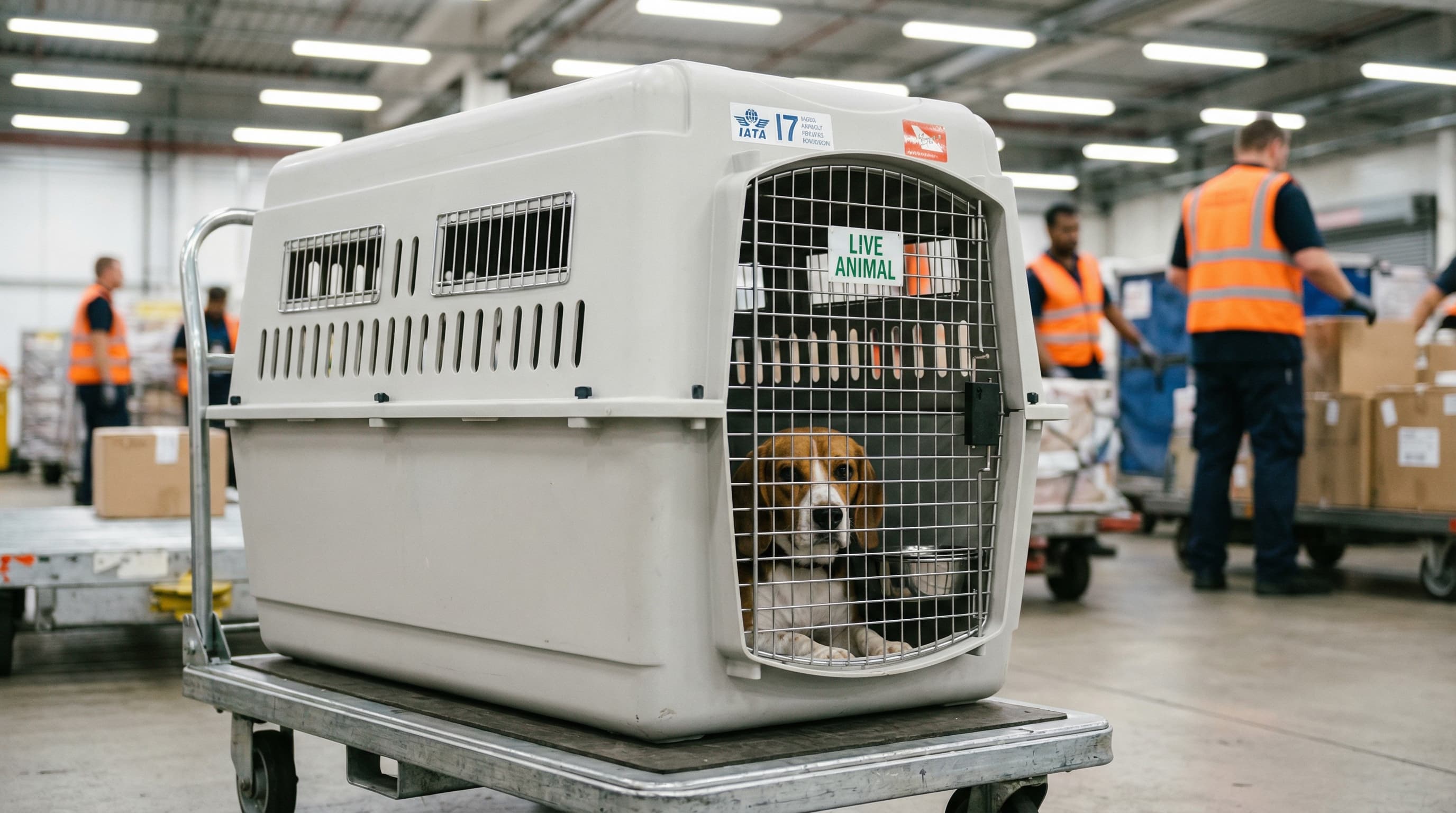
Your pet flies in an IATA-compliant hard-sided kennel — large enough for them to stand, turn around, and lie down. The kennel must be leak-proof, escape-proof, and have ventilation on at least three sides.
Two adults of comparable size (up to 20 lbs each) who are used to living together can share a kennel. Puppies or kittens under 6 months from the same litter can also share, maximum two per kennel.
What It Costs to Fly a Pet to the UK
Dogs
| Vet exam + health certificate | $150–$300 | USDA-accredited vet, GB-specific form |
| Rabies vaccine (if needed) | $15–$30 | Skip if active |
| Microchip (if needed) | $25–$50 | ISO 15-digit, before rabies shot |
| USDA endorsement | $101 | Per certificate |
| Tapeworm treatment | $20–$50 | Praziquantel, 24–120 hrs before arrival |
| Airline cargo (one way) | $1,500–$5,000+ | Based on pet size, kennel, route |
| UK reception (HARC/AAC) | ~$325 (£260) | Per airway bill at Heathrow |
| Pet shipper/broker | $200–$500+ | UK-side customs and collection |
| VAT (if applicable) | 20% of declared value | US visitors pay on arrival, reclaimable on exit |
| Total estimate | $2,500–$6,500+ | One way, one dog |
Cats
| Vet exam + health certificate | $150–$300 | USDA-accredited vet, GB-specific form |
| Rabies vaccine (if needed) | $15–$30 | Skip if active |
| Microchip (if needed) | $25–$50 | ISO 15-digit, before rabies shot |
| USDA endorsement | $101 | Per certificate |
| Airline cargo (one way) | $1,500–$5,000+ | Based on pet size, kennel, route |
| UK reception (HARC/AAC) | ~$325 (£260) | Per airway bill at Heathrow |
| Pet shipper/broker | $200–$500+ | UK-side customs and collection |
| VAT (if applicable) | 20% of declared value | US visitors pay on arrival, reclaimable on exit |
| Total estimate | $2,300–$6,000+ | One way, one cat |
About the VAT: The UK may charge 20% import VAT on pets, but whether you pay depends on your situation.
If you're a US visitor bringing a pet temporarily, customs typically charges VAT on arrival. You can reclaim it when you leave with proof of exit.
If you're a UK resident returning with your own pet, you're usually exempt with proof of residency and proof the pet left the UK.
If you're relocating to the UK permanently, apply for Transfer of Residence relief (ToR1) before your move. Without it, HMRC charges 20% VAT on your pet's declared value plus freight cost — which adds up fast. Processing takes 10–14 days, so apply at least 3–4 weeks before travel.
Ask your pet shipper about your specific case, as they deal with HMRC on this regularly.
Watch OutGOV.UK requires that if your pet arrives more than 5 days before or after you do, stricter commercial import rules (known as Balai rules) kick in — with more paperwork than the standard process. If you're relocating and sending your pet ahead of your own travel date, keep the gap to 5 days or less — or ask your pet shipper to walk you through Balai compliance before you book.
Cost SaverManchester Animal Reception Centre charges £100 per pet + £0.165/kg (min £36) — less than Heathrow's £260 per airway bill. If your route allows it, Manchester is the cheaper entry point.
Step-by-Step Timeline
6–8 weeks before: Get your pet microchipped (if not already) and make sure their rabies vaccine is active. If this is a first rabies shot, account for the 21-day wait. Book your cargo flight and hire a pet shipper. Cargo space fills up, especially in summer. Start researching IATA-compliant kennels if you don't have one.
3–4 weeks before: Confirm your airline booking and approved route. Check that your kennel meets the airline's size specs for your pet. Your pet shipper will tell you what UK-side paperwork they handle.
10 days before: Visit a USDA-accredited vet for the health certificate. Your vet fills out the GB-specific form, examines your pet, and records all microchip and vaccine details. Send the certificate to USDA for endorsement the same day. The clock starts ticking on the 10-day arrival window.
5–7 days before: Receive your endorsed health certificate back. Sign the Owner Declaration on the last page. Make sure you have the original rabies certificate too.
1–5 days before (dogs only): Get the tapeworm treatment from a USDA-accredited vet. Time this carefully — your dog must arrive in the UK between 24 and 120 hours after treatment.
1 week before (dogs only): Submit the CDC Dog Import Form online for your return trip. It's free and the receipt is valid for 6 months.
Travel day: Pack the original endorsed health certificate in a waterproof folder attached to the kennel (bring copies as backups, but officials check the original). Drop your pet at the airline's cargo facility (not the passenger terminal) — arrive 2–3 hours before the flight. Exercise your pet well beforehand. Freeze water in the kennel's dish so it melts slowly during the flight.
Common Mistakes
What to Expect at UK Airports
Your pet doesn't arrive at the passenger terminal. They land at the cargo facility and get taken to the Heathrow Animal Reception Centre (HARC) or Animal Aircare (AAC) at Gatwick, Heathrow, or other approved airports.
Your pet shipper or broker collects the pet, presents your paperwork to border officials, and handles the customs process. Officials scan the microchip and check every document against what's on file. If everything matches, your pet clears.
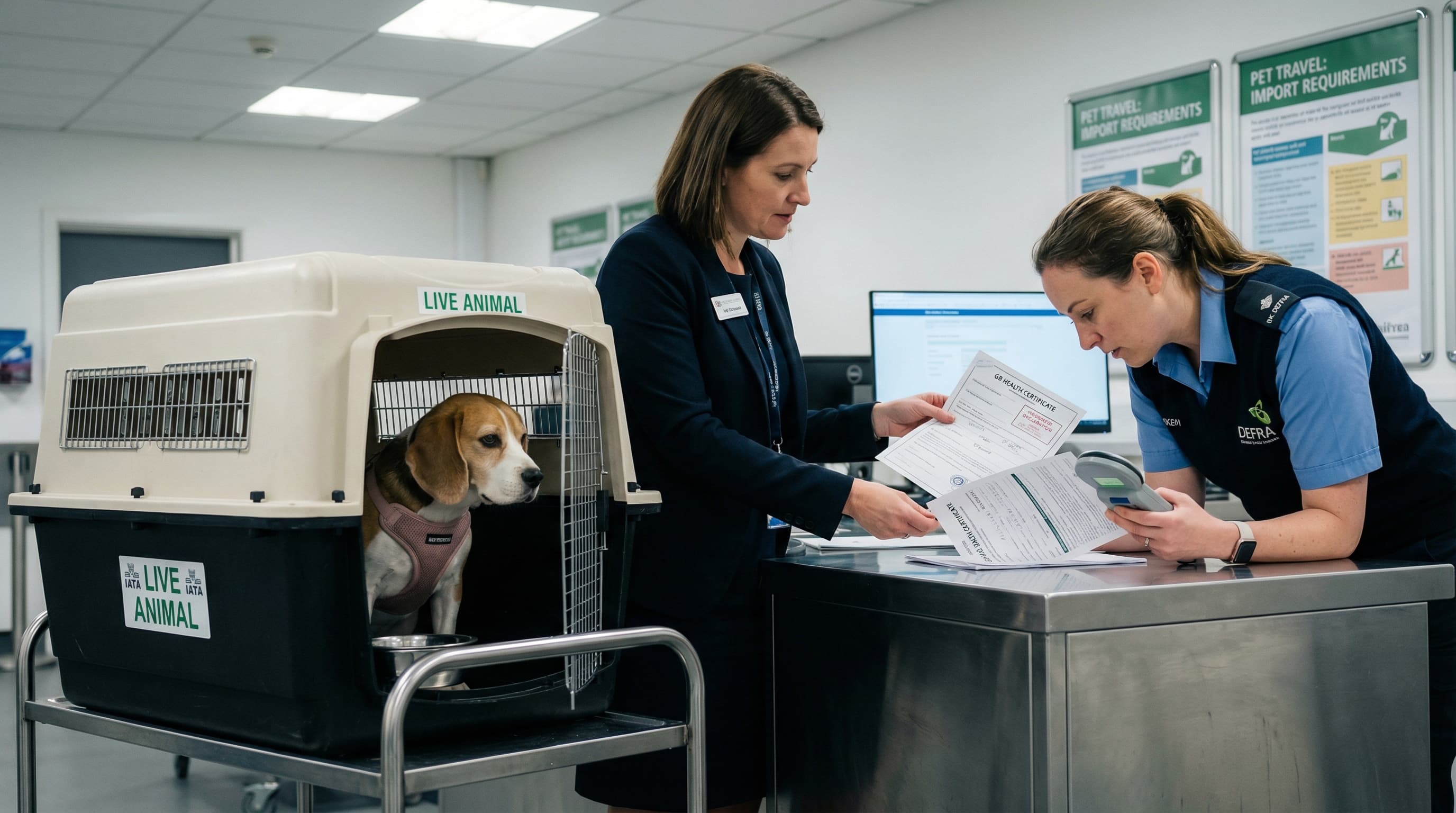
Plan for a 4–8 hour wait between your flight landing and actually getting your pet. The cargo process takes time: unloading, vet inspection, customs clearance. Your shipper will keep you in the loop.
If something is wrong (missing paperwork, unreadable microchip, expired tapeworm treatment), your pet can be quarantined for up to 4 months at a government-approved facility. You pay all quarantine fees. This rarely happens when paperwork is done correctly, but it's why getting the details right counts.
Coming Home: US Re-entry With Your Pet
Dogs
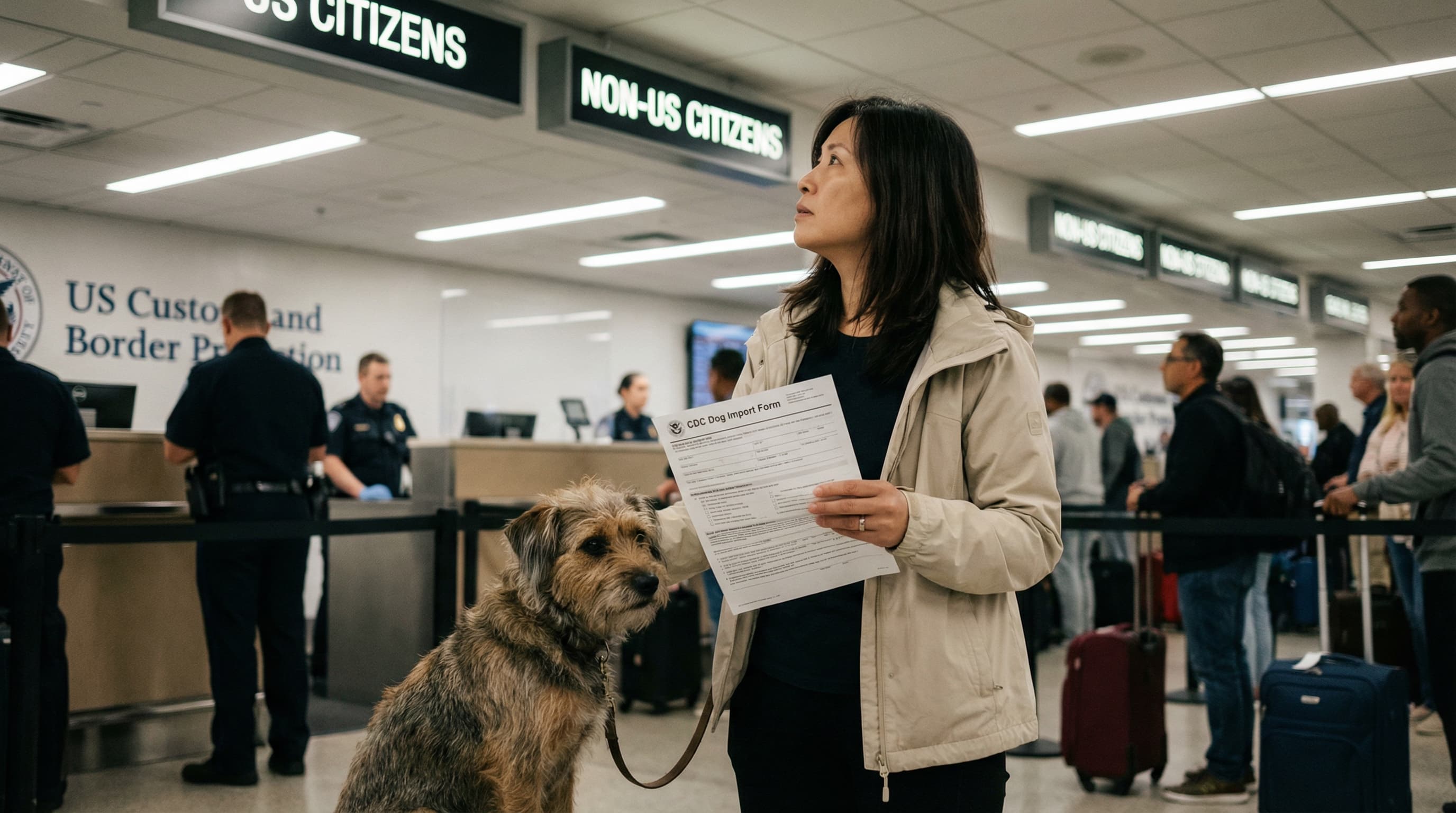
The UK is a CDC low-risk country for dog rabies. Re-entry needs:
- CDC Dog Import Form — free, submit online, receipt valid for 6 months.
- Microchip that reads on a universal scanner.
- Dog must be at least 6 months old.
- Dog must appear healthy on arrival.
No Certification of U.S.-issued Rabies Vaccination form needed — that's only for dogs returning from high-risk countries. No screwworm certificate either — the UK is screwworm-free.
Cats
Federal re-entry for cats is minimal. Your cat needs to appear healthy on arrival. There's no CDC import form for cats, no federal microchip rule, and no federal rabies rule.
Check your home state's rules. Many states need proof of rabies vaccination for cats, and Hawaii quarantines all incoming cats regardless of origin.
FAQ
Your next step: Book the cargo flight first — that's the bottleneck. Cargo space is limited and fills up weeks in advance, especially during summer. Once your flight is locked, everything else falls into a clear timeline working backward from your arrival date.