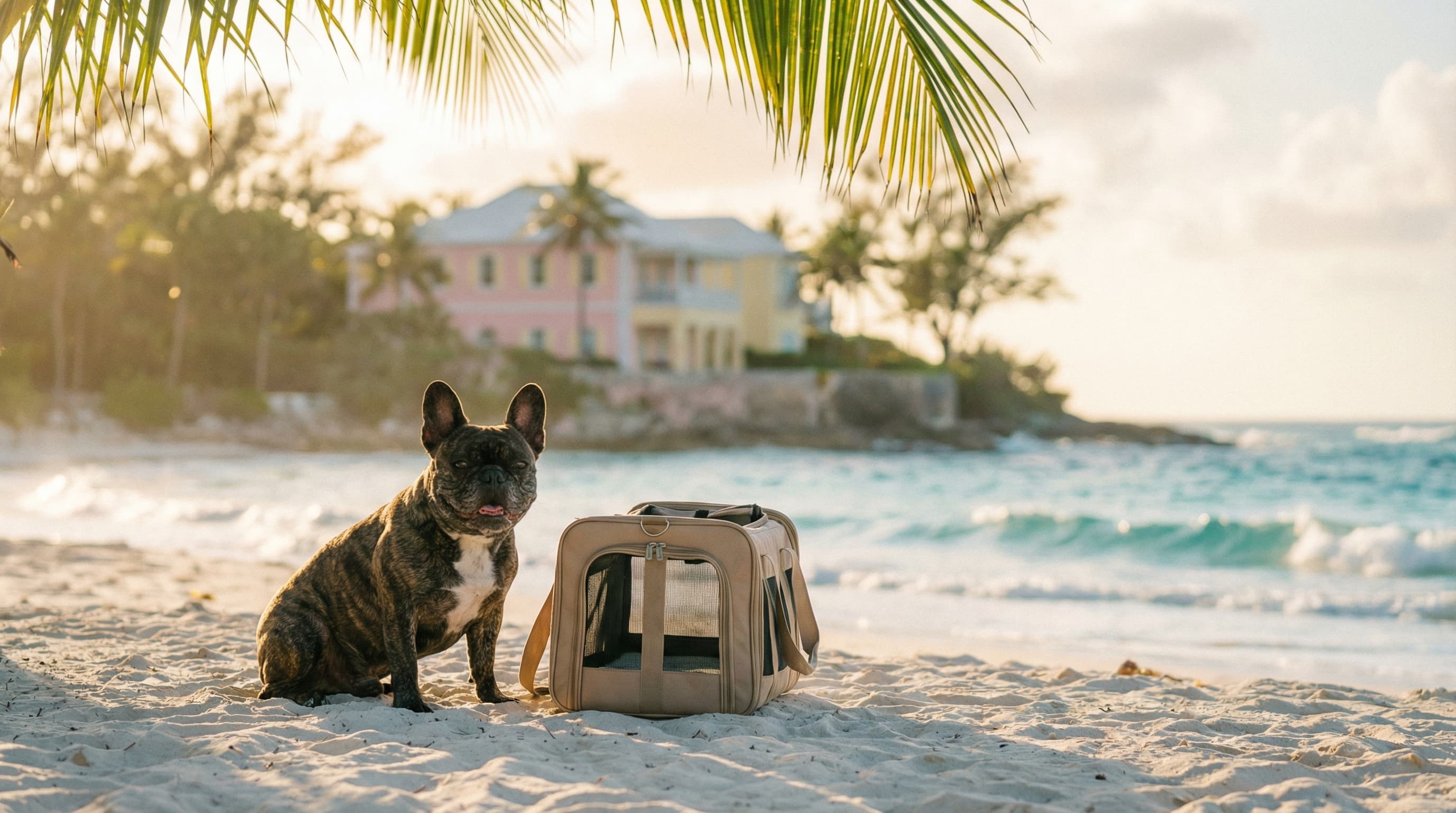
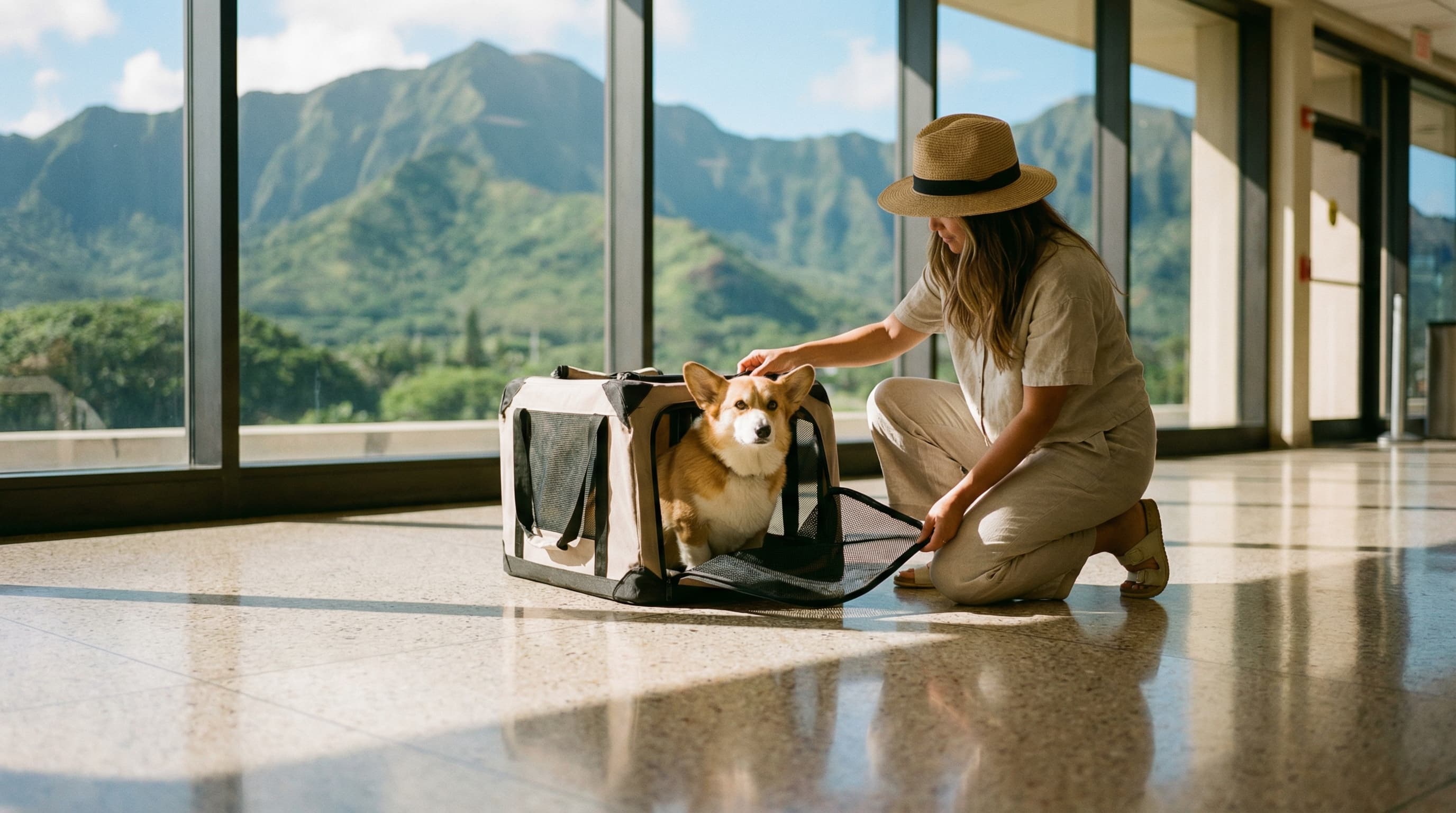
If you're picking up from a breeder, send the carrier 1–2 weeks early. Ask the breeder to use it for naps and feeding. A puppy that sleeps in the carrier willingly is a different animal than one seeing it for the first time at the airport.
Flying with a Puppy: Age Rules, Fees & Tips (2026)
10 min readtips

Dr. Sarah Chen
Travel Veterinarian
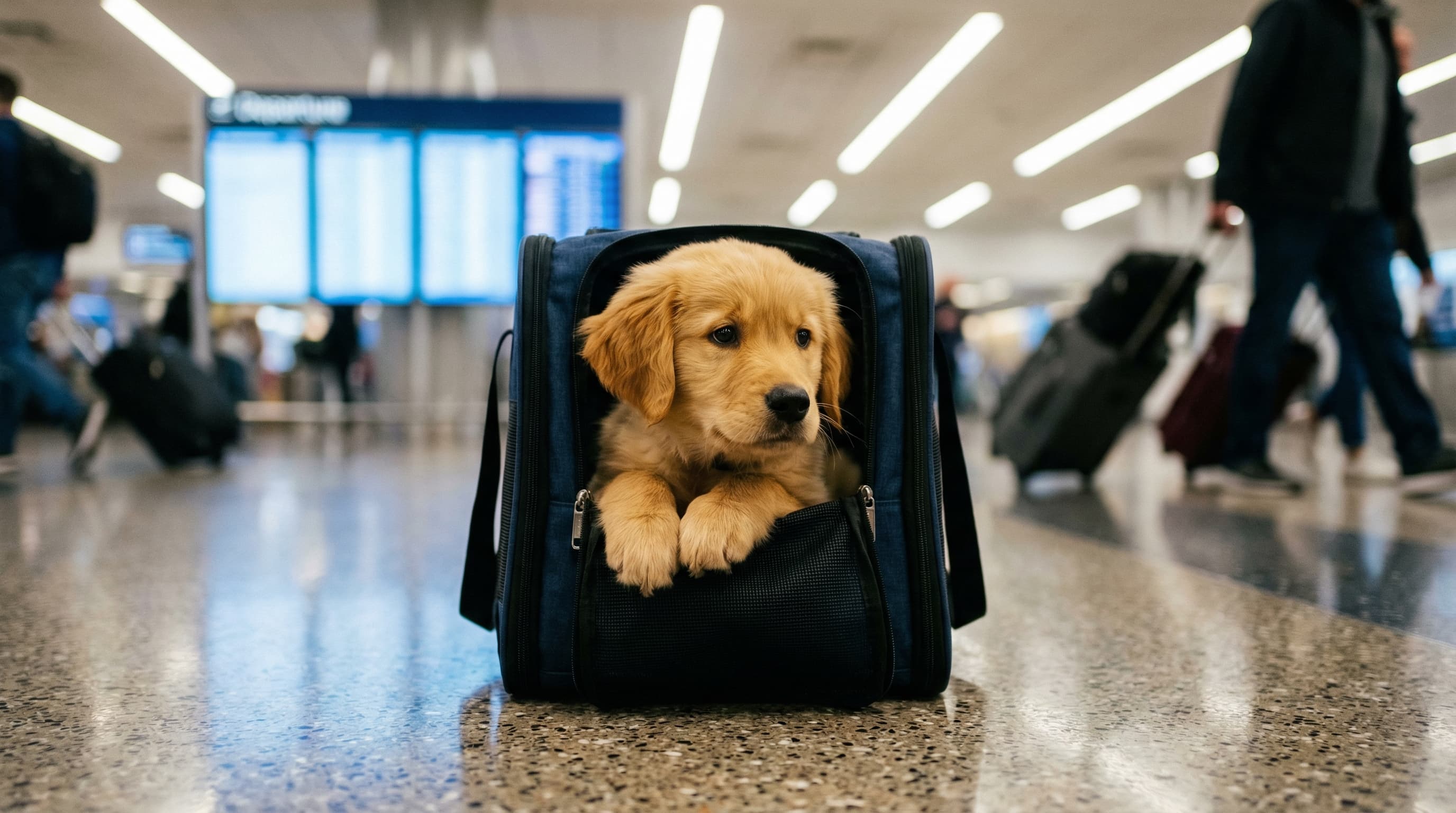
Most US airlines let you fly with a puppy in the cabin starting at 8 weeks old for $50–$150 each way. The puppy rides under the seat in a soft-sided carrier, same as an adult dog.
The rules are nearly identical to flying with an adult dog — with two differences. Your puppy might be too young for a rabies vaccine, and it's probably never been in a carrier before. This guide covers the vaccine gap, carrier training, airline fees, and how to keep your puppy comfortable from airport to landing.
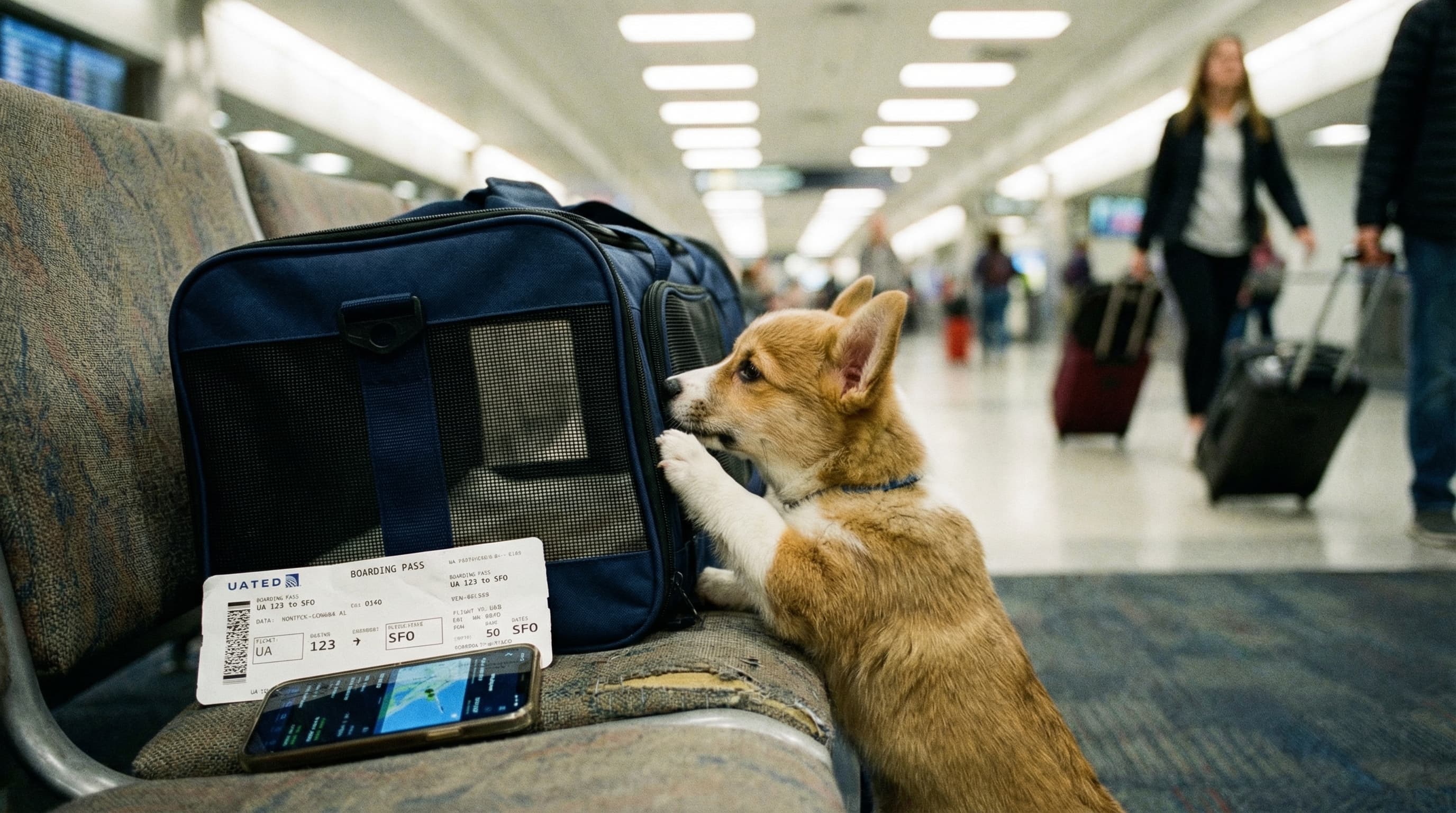
How Old Does a Puppy Have to Be to Fly?
8 weeks old and fully weaned — that's the minimum at every major US airline. No exceptions, no airline sets the bar higher for domestic flights.
"Fully weaned" means eating solid food on its own, no nursing. Alaska is the most specific: weaned and eating solid food for at least 5 days.
The 8-week floor matches the USDA federal minimum for air transport. If your breeder releases puppies at 8 weeks (standard for most breeds), the puppy can fly home the same day.
Kittens follow the same age rules. See our how to fly with a cat guide for more on traveling with young cats.
Airline Fees and Puppy Rules
Puppy fees are the same as adult pet fees — no airline charges more or less for a younger animal.
| Airline | Fee | Carrier Size | Two Puppies OK? |
|---|---|---|---|
| Allegiant | $50/segment | 18"×12"×11" (soft) | Yes |
| Alaska | $100/each way | 17"×11"×9.5" | Yes |
| Hawaiian | $100/each way | 17"×11"×9.5" | Yes |
| Southwest | $125/each way | 18.5"×13.5"×8.5" | Yes |
| American | $150/each way | 18"×11"×11" | Yes (under 6 months) |
| Delta | $150/each way | 18"×11"×11" | Yes (8 wks – 6 months) |
| JetBlue | $150/each way | 17"×12.5"×8.5" | No |
| Spirit | $150/each way | 18"×14"×9" | Yes |
| United | $150/each way | 18"×11"×11" | No |
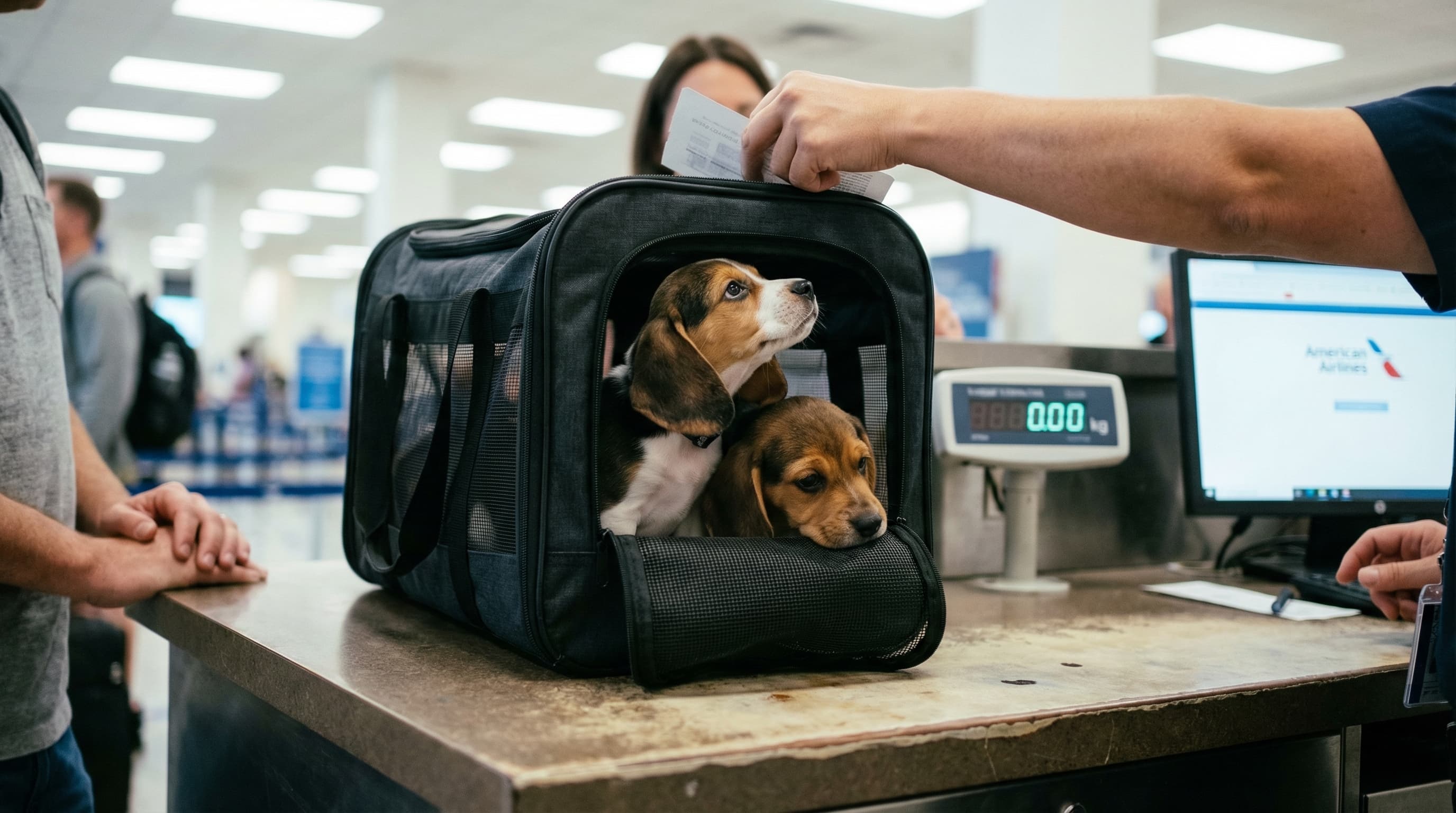
Southwest is the most popular airline for puppy travel. They allow 8-week-old puppies, charge $125 each way, and cap pets at 6 per flight. Book early — spots fill first-come, first-served by phone.
Two Puppies in One Carrier
Seven airlines let you fly two puppies in the same carrier for a single fee: Southwest, Delta, American, Alaska, Spirit, Allegiant, and Hawaiian. Both puppies must be the same species and similar in size.
Delta and American add an age cap — both puppies must be under 6 months. United, JetBlue, and Frontier limit you to one pet per carrier.
What to Bring
Carrier
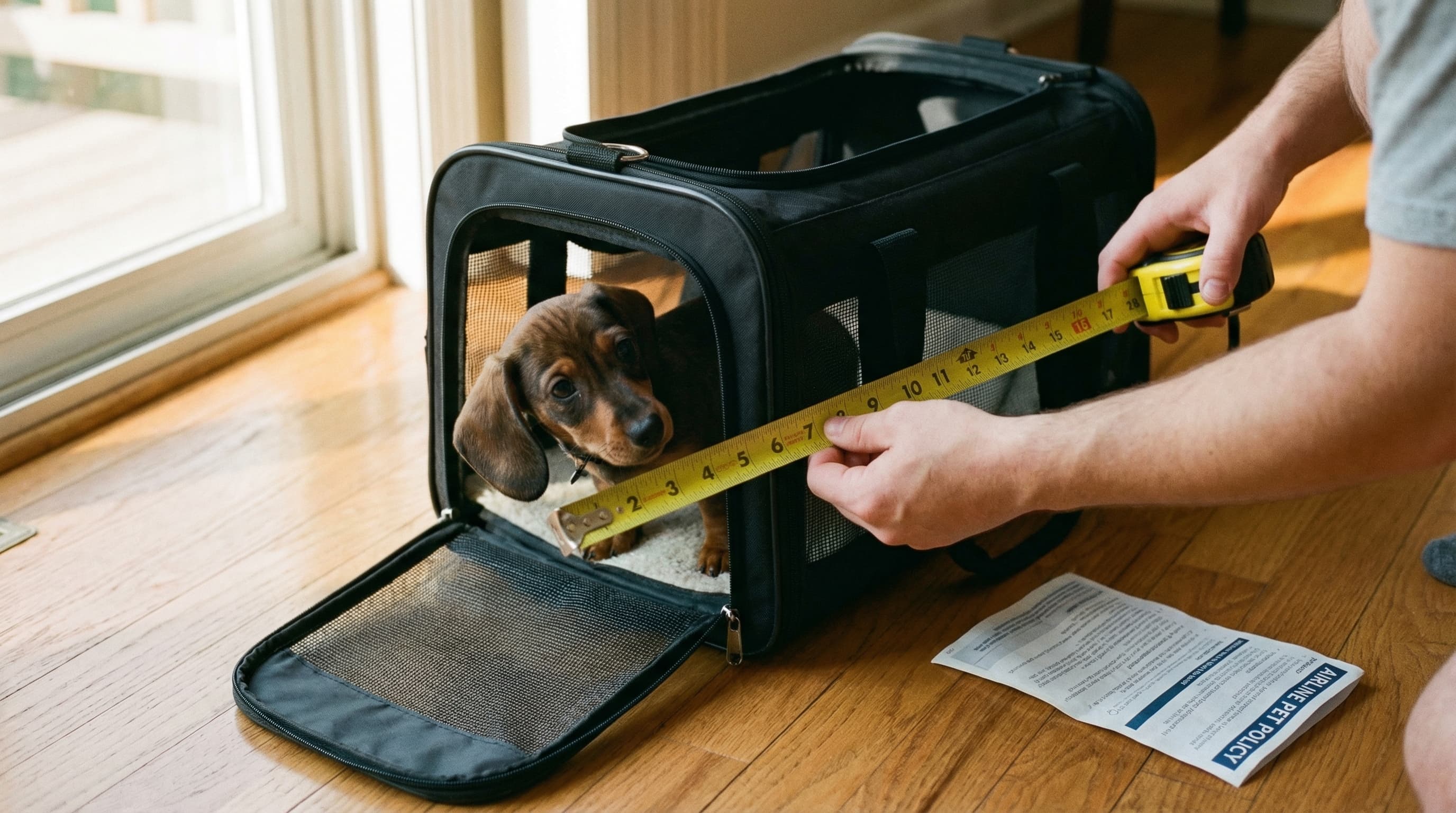
A soft-sided carrier that fits under the airplane seat. Measure yours against your airline's limits before you leave — agents check at the counter.
Your puppy doesn't need a full-size carrier. A smaller carrier that meets the airline's maximum dimensions works fine, as long as the puppy can lie down and turn around inside.
Our best airline-approved dog carriers guide has specific product recommendations by airline.
Documents
No US airline requires a health certificate or rabies proof for domestic mainland cabin travel. Bring your puppy's vaccination records anyway — some airlines ask to see them, and your destination state may have its own rules.
Puppies under 12 weeks can't get a rabies vaccine yet (some states: 16 weeks). For domestic mainland flights, this doesn't matter — no airline checks for rabies on domestic routes.
Rabies proof only becomes an issue for flights to Hawaii, Puerto Rico, the USVI, or international destinations. If you're headed to one of those, see our health certificate guide.
Packing List
- Puppy pads — one lining the carrier bottom, 2–3 extras in a ziplock
- Small battery-powered fan — the single most recommended item from experienced puppy flyers (it gets warm under the seat)
- Paper towels and unscented wipes
- High-value treats (no-refrigeration variety)
- A chew — bully strap or pig ear (avoid smelly options on a full plane)
- Collapsible water bowl
- A towel or toy from the litter — the scent of mom and siblings is a natural sedative
- Vaccination records in an accessible carry-on pocket
Preparing Your Puppy for the Flight
Carrier Training
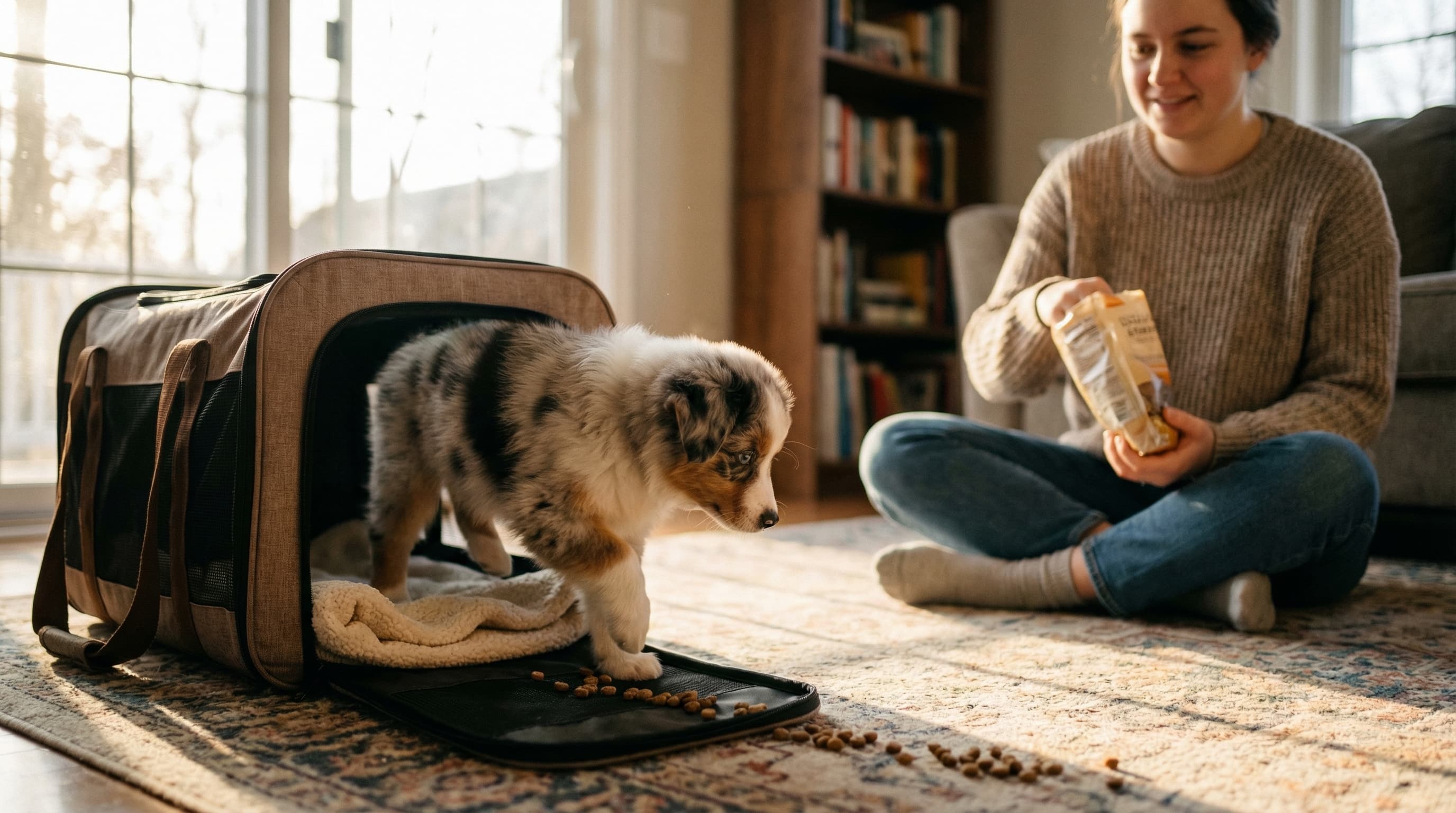
The most impactful prep step: get the puppy comfortable in the carrier before travel day.
Tip
If you already have the puppy, spend 5–7 days building positive associations. Feed meals inside the carrier. Place treats inside but never after the puppy comes out. Close the zipper for short periods, then longer ones.
Day-of Prep
Withhold solid food for 4 hours before the flight. Water is fine. A full stomach plus altitude and stress causes nausea — and your puppy has to sit in whatever happens inside that carrier.
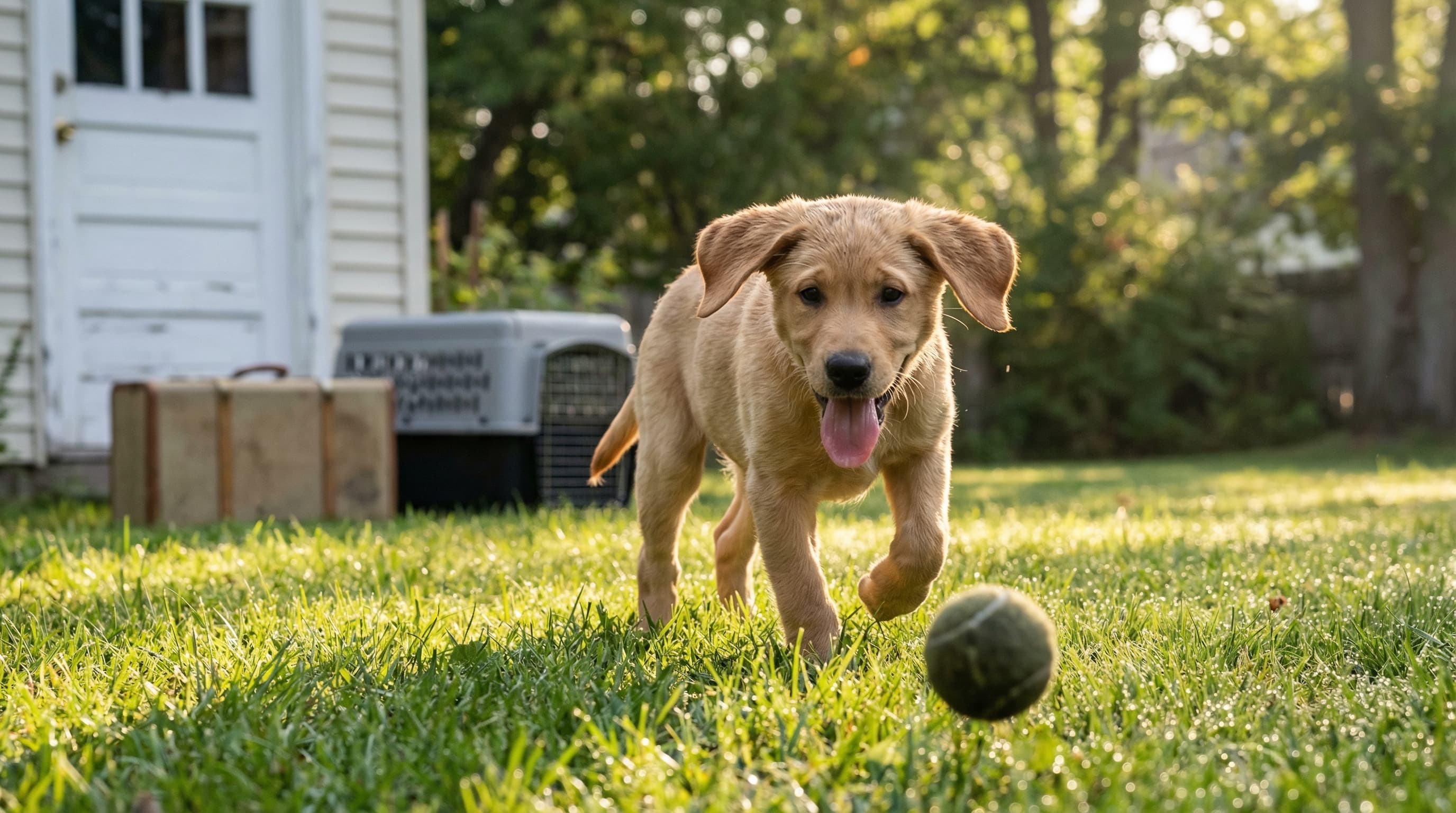
Exercise the puppy thoroughly before leaving for the airport. A tired puppy sleeps on the plane. An energized puppy barks.
Time your departure so the puppy has just gone to the bathroom before you leave.
At the Airport and During the Flight
TSA Security
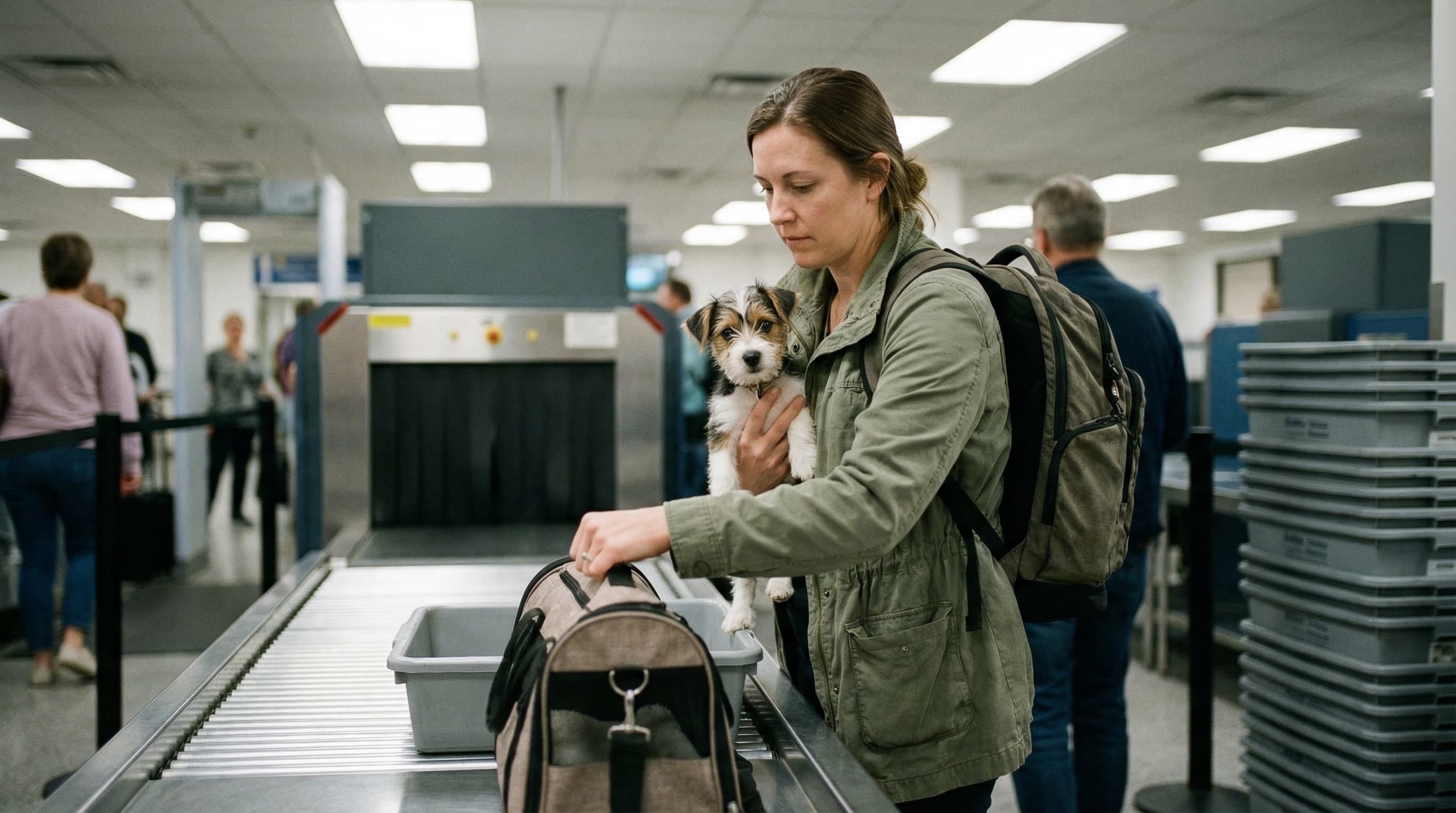
The carrier goes through the X-ray machine. You carry the puppy through the metal detector.
Have a plan for this moment — holding a squirming puppy while collecting your belongings from the belt is awkward solo. Arrive at least 2 hours early.
Pet Relief Areas
Watch OutSkip the airport pet relief areas if your puppy isn't fully vaccinated. Distemper and canine flu spread in high-traffic dog areas. Use a family bathroom with a puppy pad on the floor instead.
An 8-week-old puppy with only first shots has almost no immune protection. The family bathroom with a potty pad is the safer call.
Overheating
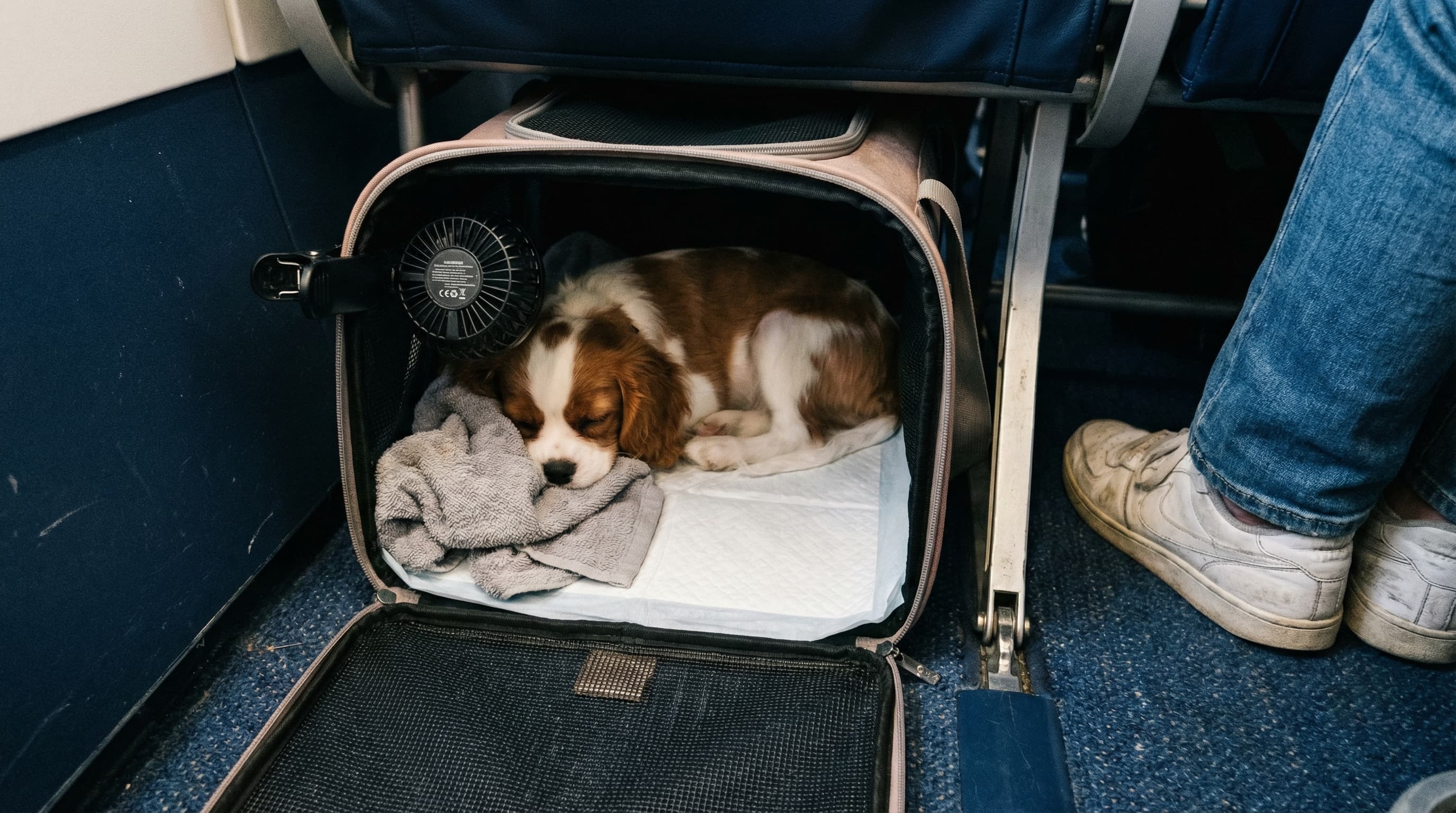
The space under the seat gets warm — no air circulation, body heat from passengers, and the carrier traps heat. This is the #1 in-flight concern from experienced puppy travelers.
Point the overhead air vent toward the floor. Use your battery fan directed into the carrier mesh. Ask a flight attendant for ice in a double-bagged ziplock to place alongside the carrier.
Crying and Barking
Most puppies settle within 10–15 minutes of takeoff. The white noise and vibration calm them. If your puppy was carrier-trained before the trip, the carrier itself is a comfort signal.
If the puppy gets restless mid-flight, it may need a bathroom break. Take a puppy pad to the lavatory.
Tell your seat neighbors about the puppy before boarding. Most people are happy about it. The few who aren't can ask to move while seats are still open — better than mid-flight tension.
Common Mistakes
FAQ
Your next step: Call your airline to reserve a pet spot before buying your ticket. Spots are limited per flight — Southwest caps at 6, Delta at 4 in main cabin — and they fill without warning.