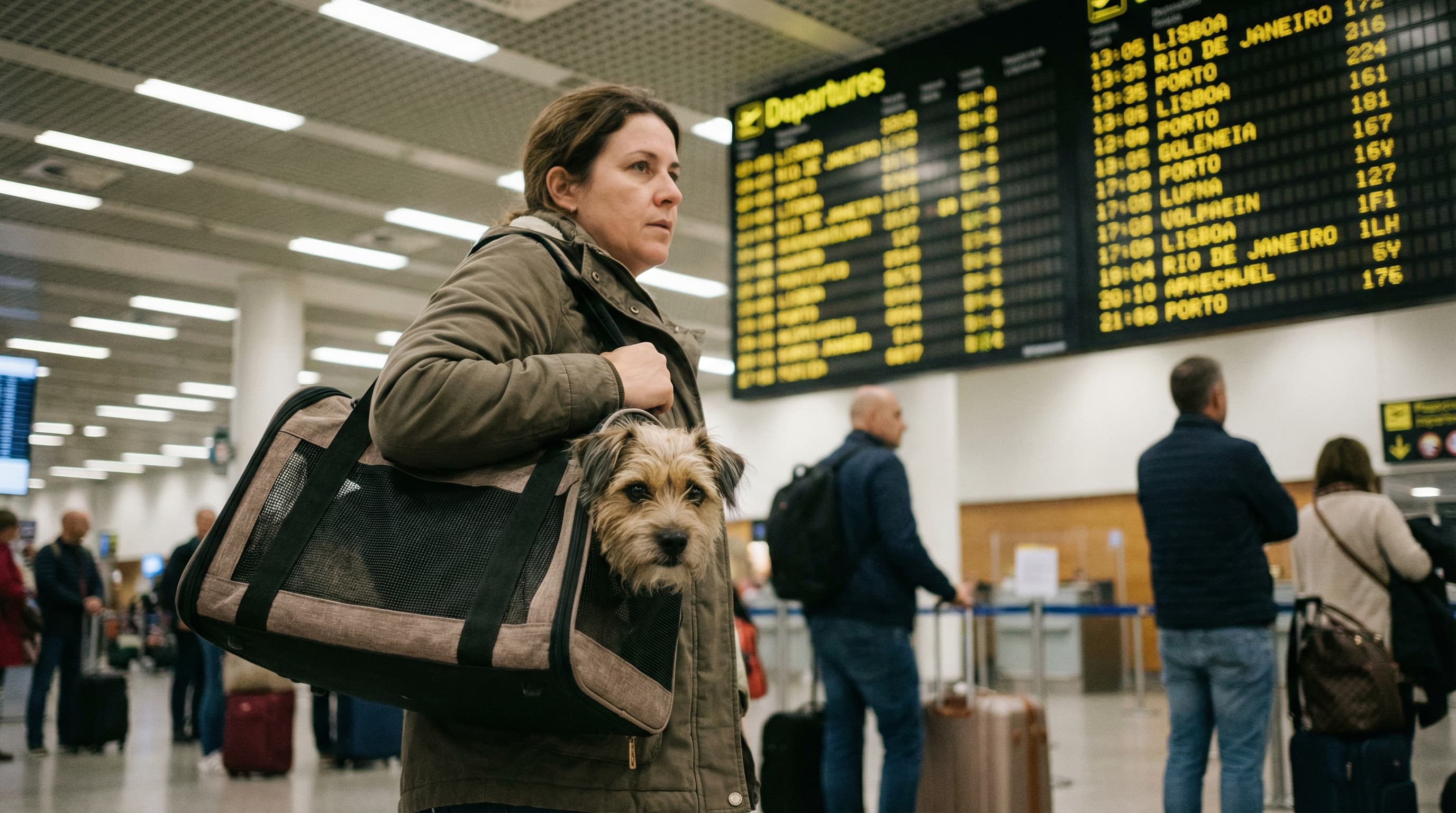
Per-flight pet limits are enforced at booking, not at the gate. If the flight is full when you try to add your cat, you'll be turned away at the counter.
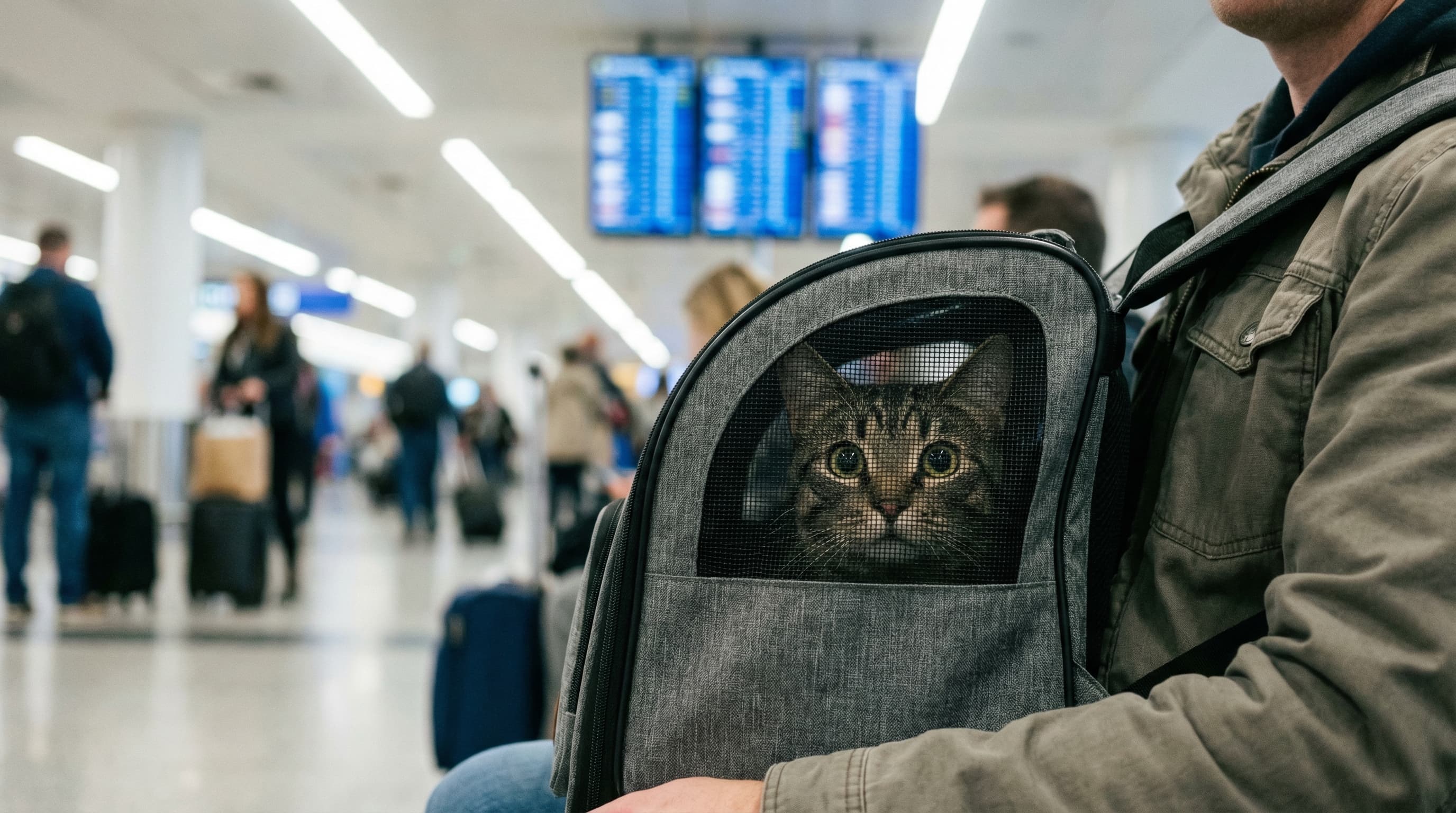
How to Fly with a Cat in 2026: Fees, Carriers, and Tips
12 min readplanning

James Harlow
Pet Relocation Consultant
Quick answer: Cats fly in the cabin with you for $99–$150 each way on every major US airline. You need a soft-sided carrier that fits under the seat, a vet visit close to your flight, and about 2 weeks of carrier training so your cat isn't panicking at the gate.
Flying with a cat is simpler than most people expect. The process is nearly identical to flying with a dog — same fees, same carrier rules, same TSA screening.
The cat-specific part is preparation: getting your cat comfortable in the carrier before travel day.
Can You Fly with a Cat?
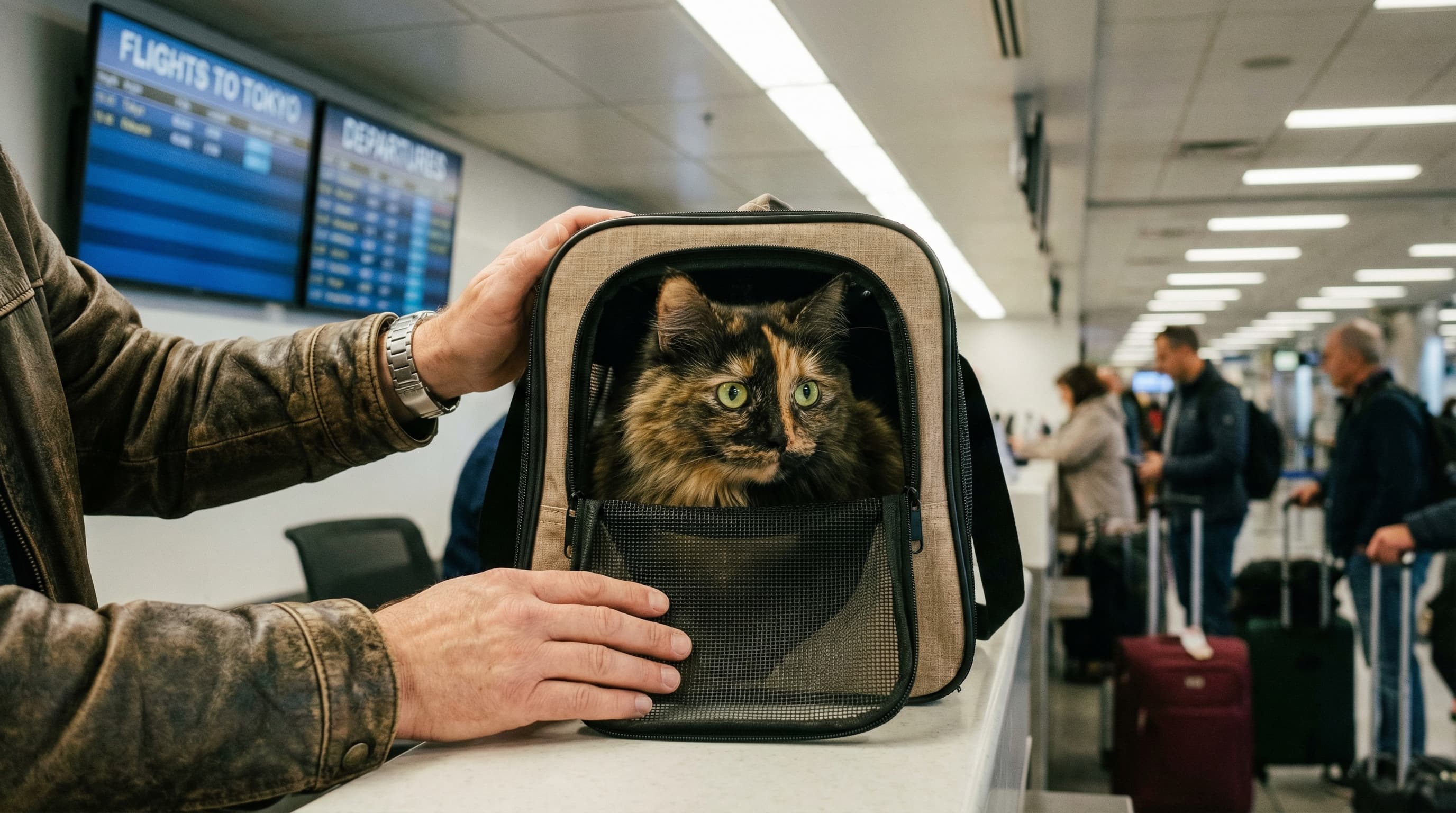
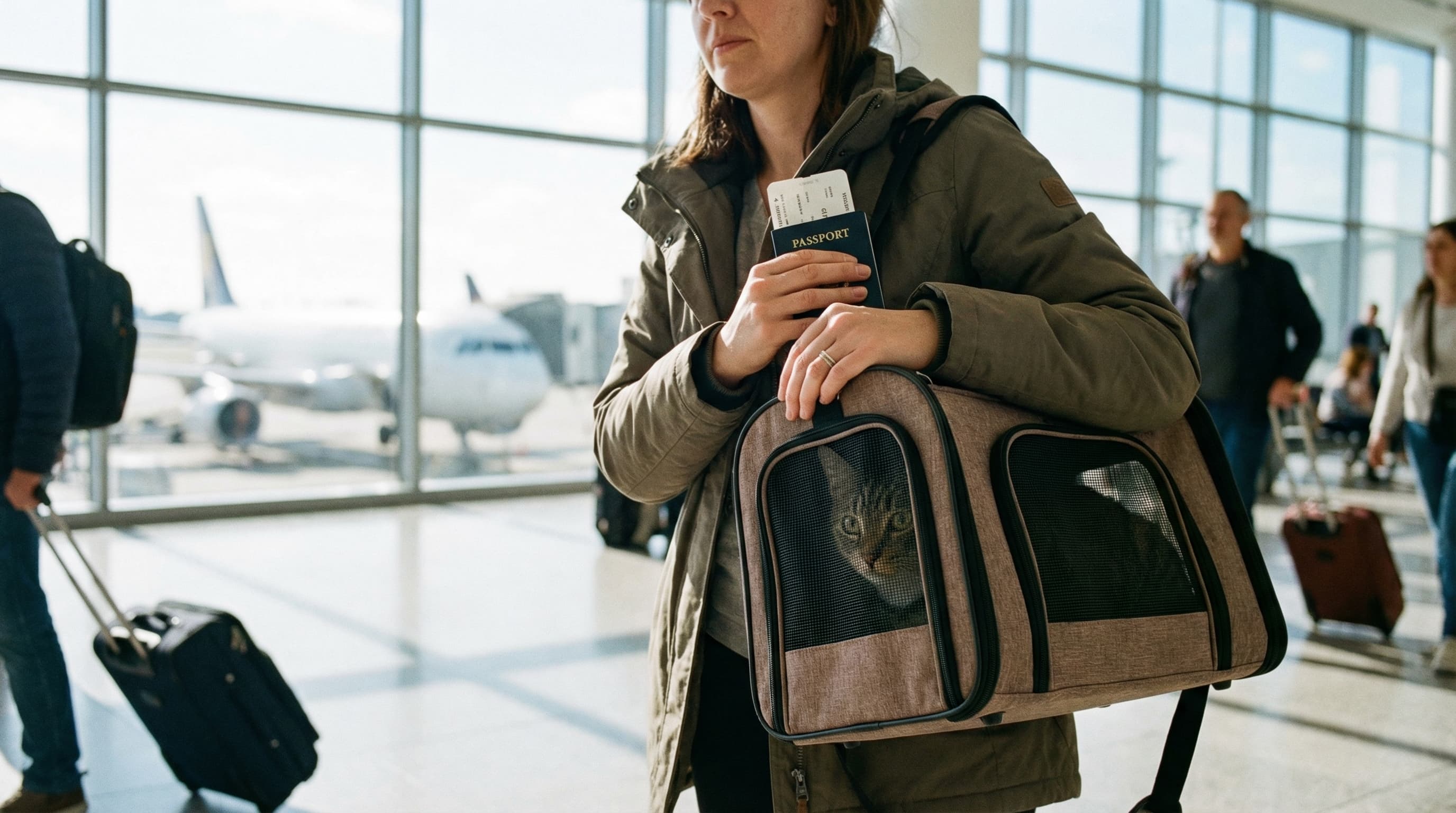
Yes. Every major US airline allows cats in the cabin. The rules are the same as for dogs: one pet per passenger, carrier under the seat in front of you, pet stays inside the carrier for the entire flight.
Almost every cat fits in a cabin carrier. Unlike dogs, where large breeds need cargo, cats rarely exceed cabin size or weight limits. Cargo travel for cats exists but is almost never necessary.
Flat-faced breeds (Persians, Himalayans, Exotic Shorthairs) are banned from cargo on most airlines — same reasoning as flat-faced dogs. Their airways are more prone to problems under cargo hold conditions. If your flat-faced cat fits in a cabin carrier, they can fly that way.
Delta also restricts British Shorthairs and Scottish Folds from all pet travel. This catches people off guard — check your airline's breed list before booking.
How to Fly with a Cat in the Cabin
Step 1: Book your cat when you book your ticket
Each flight caps cabin pets at 4–8 depending on the aircraft. Those spots fill on popular routes.
United is the only major airline where you can add a pet fully online. American lets you add a pet during checkout on their website. Delta, Southwest, and Alaska all need a call or chat to reservations.
Book your cat the same day you book your own ticket — not as an afterthought a week later.
Watch Out
Step 2: Get the right carrier
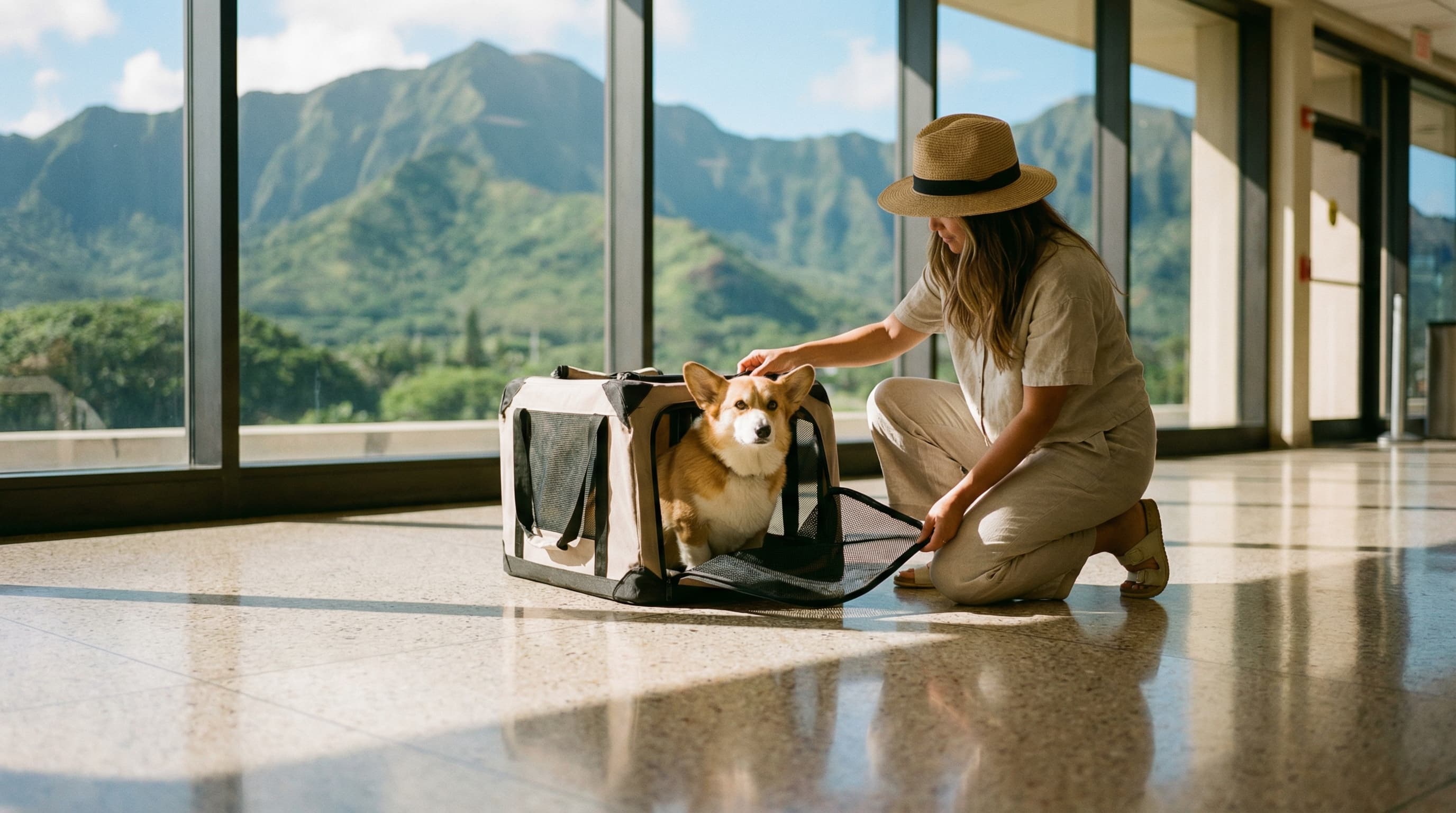
Soft-sided carriers are accepted everywhere and compress slightly to fit tight seat wells. Most airlines max out at 18" x 11" x 11" — Alaska and JetBlue are shorter.
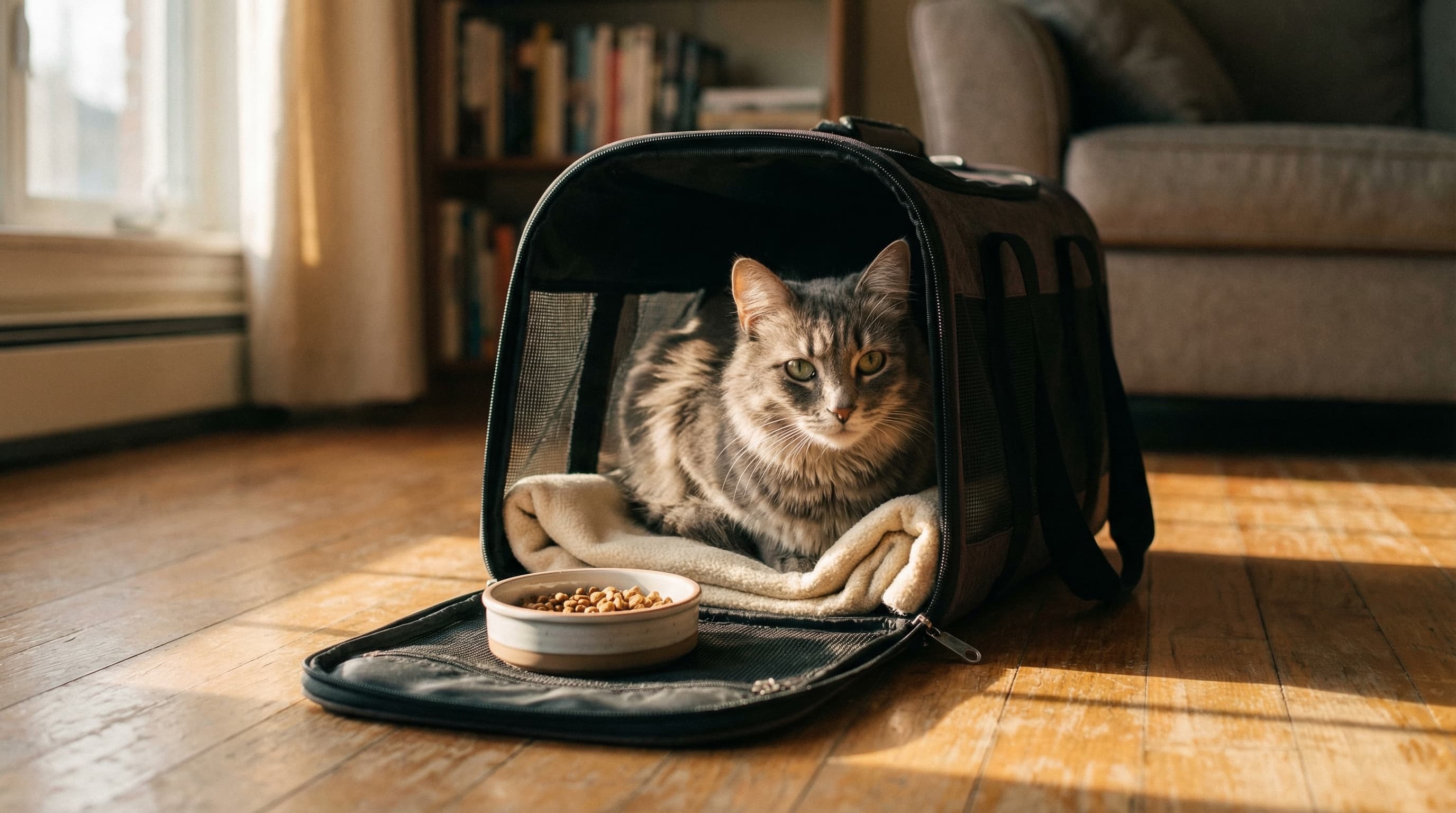
The best airline-approved cat carriers guide covers specific models. The short version: buy for your most restrictive airline, make sure your cat can turn around inside, and get it at least 2 weeks before your flight.
Step 3: Carrier-train your cat
This is the step most people skip, and it's the one that matters most. A cat who's never been in a carrier will panic — meowing, scratching, and trying to escape — the entire flight.
Start 2–3 weeks before travel. Leave the carrier open in your living room with a blanket inside. Feed meals near it, then inside it.
Close the door for short periods, then longer ones. Take a few short car rides.
A cat who walks into the carrier voluntarily on travel day is a cat who'll settle on the plane. A cat who gets stuffed in at the airport is the one everyone on the flight hears.
Step 4: Talk to your vet about gabapentin
Gabapentin is a mild anti-anxiety medication that most vets prescribe for cat travel. It's not sedation — your cat stays conscious and responsive, just calmer.
Your vet will dose it based on your cat's weight. You give it 2–3 hours before the flight. The effect lasts 8–12 hours.
Most vets who see cat travelers prescribe it regularly — ask at the same appointment where you get the health certificate.
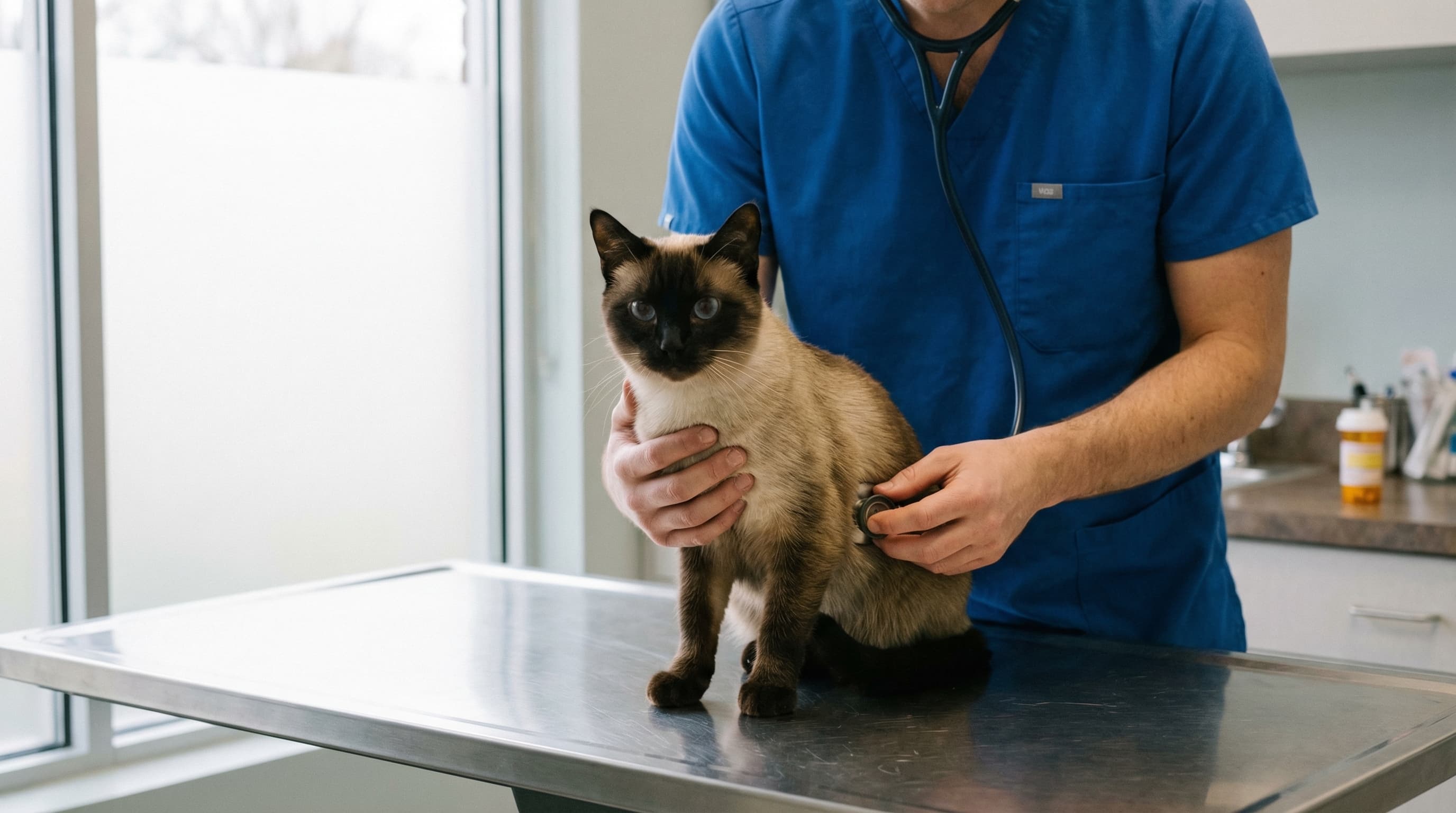
Step 5: Get a health certificate
A health certificate is a vet-signed document confirming your cat is healthy and fit to fly. Most airlines need one for domestic flights — for international flights it's always needed.
Schedule the vet visit 5–8 days before your flight. The certificate is valid for 10 days from the date it's issued — too early and it expires before you fly, too late and you're scrambling if something comes up.
The health certificate guide walks through the full process. For a domestic flight, it's a standard exam — your vet has done hundreds of them.
Step 6: Check in and pay the pet fee
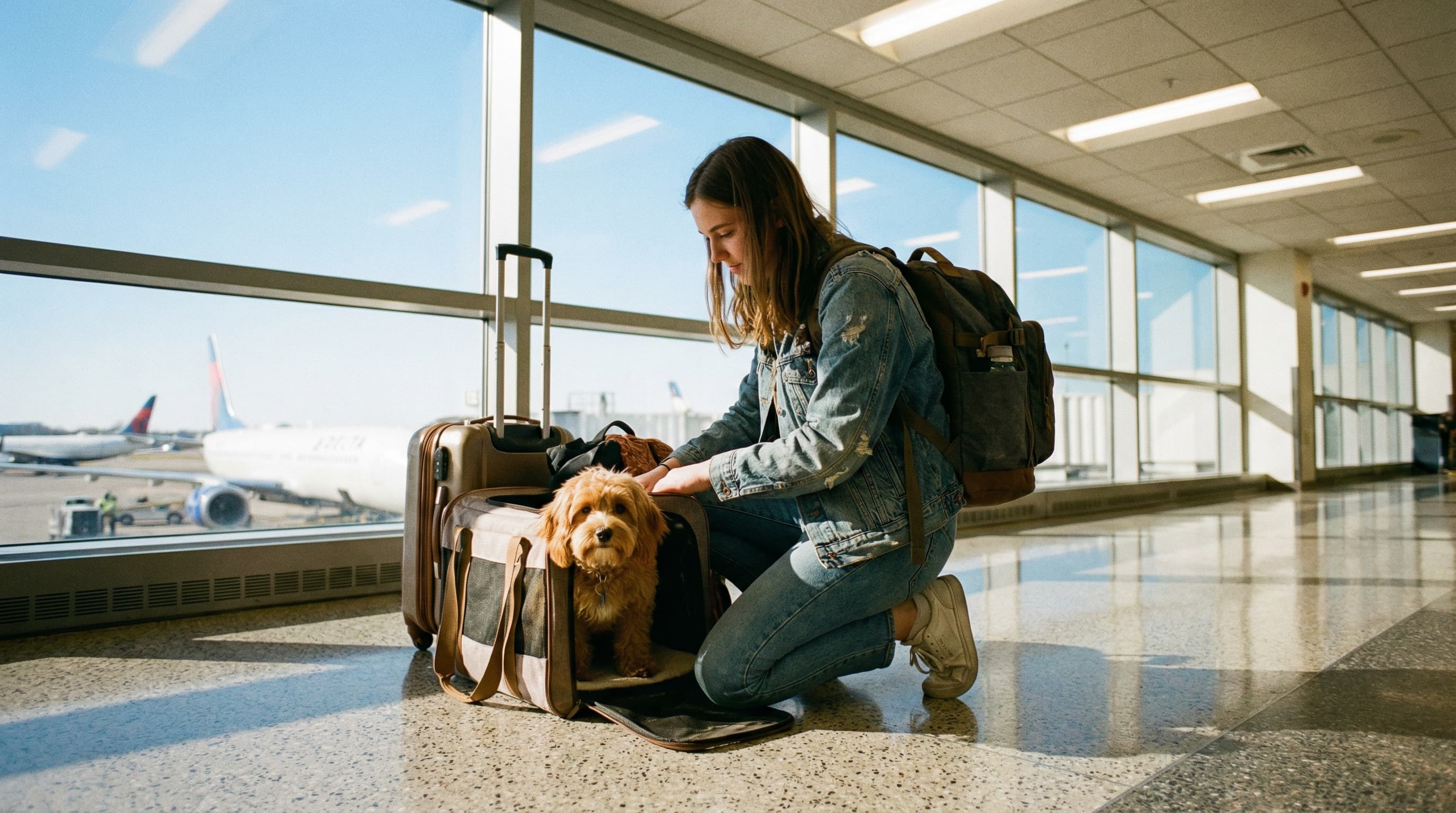
Arrive earlier than usual. Even with online check-in, you need to stop at the ticket counter to pay the pet fee and have your carrier checked in person.
Budget an extra 20–30 minutes. Bring a credit card — most airlines don't take cash for pet fees.
Step 7: Get through TSA
TSA's process for cats is the same as for dogs:
- Remove your cat from the carrier at the checkpoint
- Send the empty carrier through the X-ray machine
- Walk through the metal detector holding your cat
- TSA may inspect the carrier on the other side
This is the highest-risk moment for cats. Dogs you can hold by the collar. Cats bolt — and a loose cat in an airport terminal is a nightmare to catch.
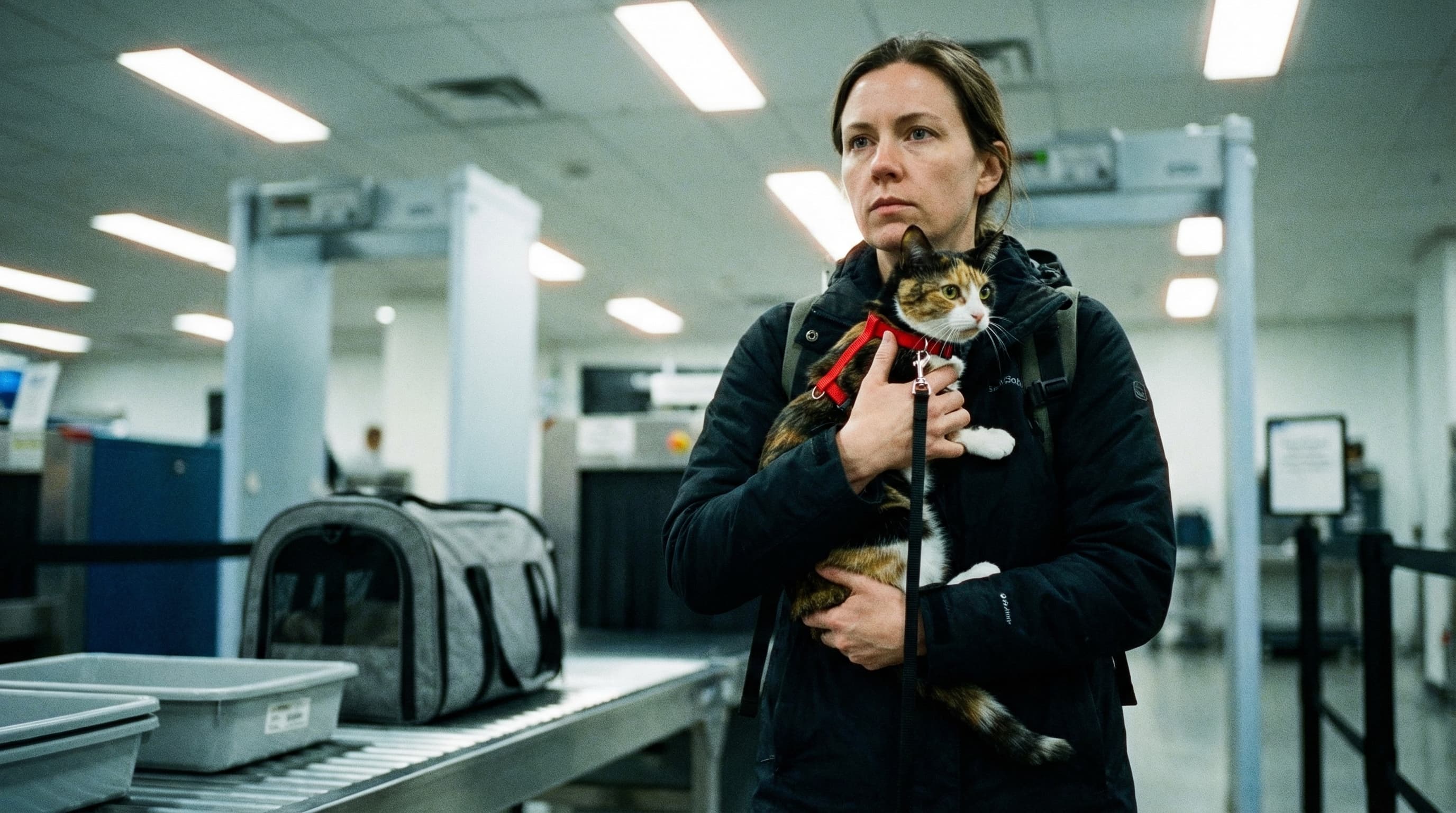
Two things that help: put a harness and leash on your cat inside the carrier before you reach the checkpoint, and ask for a private screening room.
TSA grants this on request, no reason needed. A closed room means if your cat squirms free, they're contained.
TipAsk for a private screening room at the TSA checkpoint. It's free, available at every airport, and eliminates the risk of your cat escaping into the terminal.
Step 8: On the plane
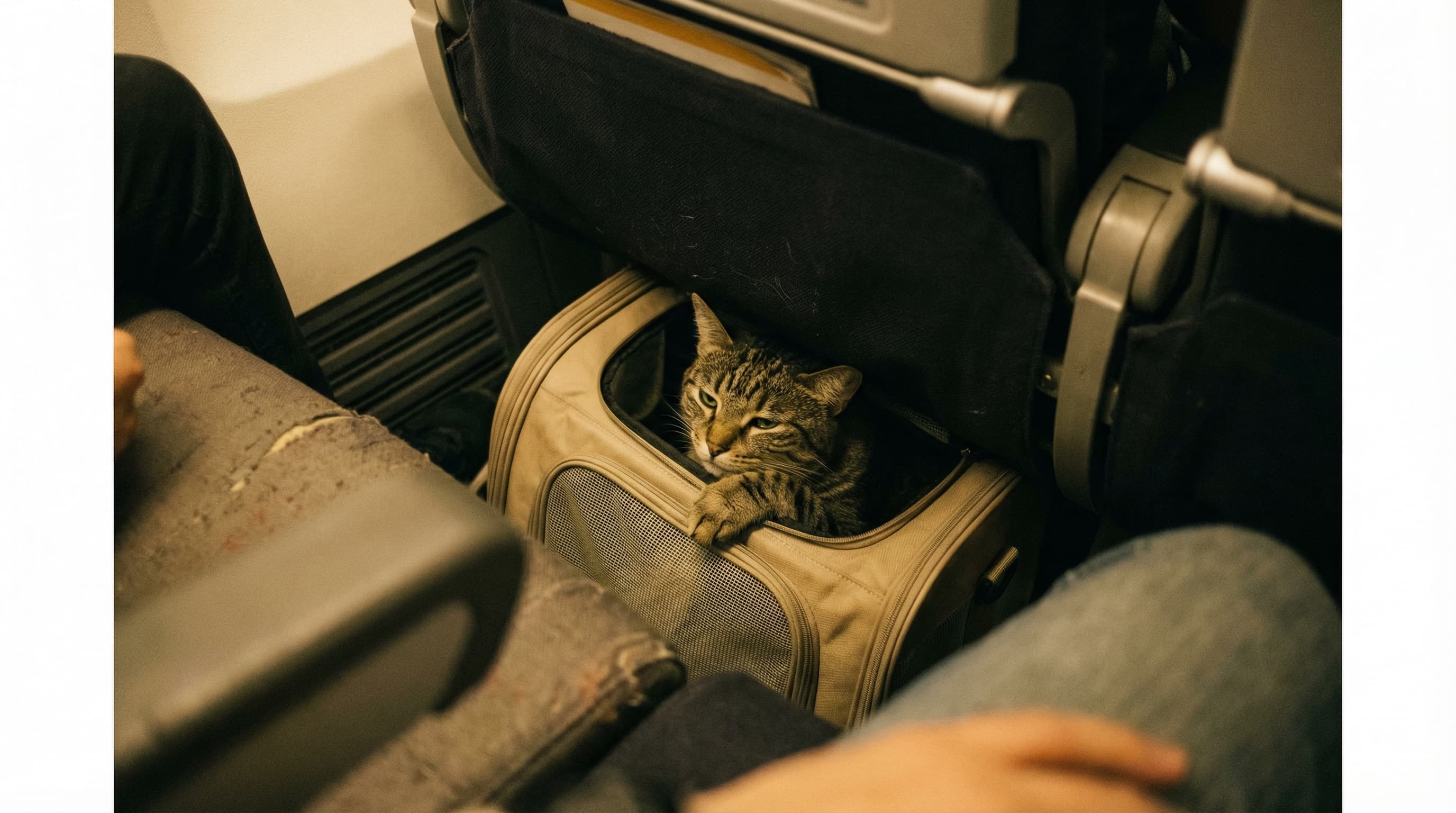
Your cat stays in the carrier under the seat for the entire flight. Not on your lap, not on an empty seat.
Most cats settle once the engine noise starts — the white noise is calming. If your cat meows during takeoff or landing, that's normal pressure adjustment. Covering the carrier with a light blanket can help an anxious cat feel more enclosed and secure.
For flights over 3–4 hours, slip a small water dish through the carrier's mesh opening during cruise. Don't open the carrier door mid-flight.
Airline Fees and Carrier Sizes
| Frontier | $99 | 18" x 14" x 8" | None published | Online |
| Alaska | $100 | 17" x 11" x 9.5" | None published | Call/chat |
| Allegiant | $100 | Varies by aircraft | None published | Call |
| Southwest | ~$125 | 18.5" x 13.5" x 9.5" | None published | Call |
| JetBlue | $125 | 17" x 12.5" x 8.5" | 20 lbs | Online/call |
| Spirit | $125 | 18" x 14" x 9" | 40 lbs | Online/call |
| Delta | $150 | 18" x 11" x 11" | None published | Call/chat |
| American | $150 | 18" x 11" x 11" | 20 lbs | Online/call |
| United | $150 | 18" x 11" x 11" | None published | Online |
Fees are for domestic flights. International cabin fees run $25–$50 higher on Delta, American, and United. Southwest, Frontier, Allegiant, and Spirit are domestic only.
Where a weight limit is listed, it's the combined weight of your cat plus the carrier. Most adult cats weigh 8–12 lbs, and soft-sided carriers weigh 2–4 lbs — you'll be well under 20 lbs for almost any cat.
What Does It Cost to Fly with a Cat?
| Item | Low | High |
|---|---|---|
| Cabin fee — domestic (each way) | $99 | $150 |
| Cabin fee — international (each way) | $125 | $200 |
| Health certificate (vet exam) | $50 | $150 |
| Soft-sided carrier | $25 | $80 |
| Gabapentin (if prescribed) | $10 | $20 |
| Domestic trip total (one way) | $185 | $400 |
Cabin costs are predictable. The carrier is a one-time cost — it's good for every flight after the first.
Common Mistakes
Flying Internationally with Your Cat?
International flights add paperwork that domestic flights don't. Most countries need a USDA-endorsed health certificate — a different document from the standard domestic version.
Returning to the US is dramatically simpler with a cat than with a dog. The CDC's strict import rules (the CDC Dog Import Form, microchip scanning, rabies documentation) apply only to dogs.
Cats face almost no federal re-entry rules — though your state may need a rabies vaccination.
Start with your destination's country guide before booking:
- Bringing a dog or cat to Mexico
- Bringing a dog or cat to Canada
- Bringing a dog or cat to the UK
- Bringing a dog or cat to Costa Rica
- All destination guides
FAQ
The biggest bottleneck is carrier training — start that today and everything else falls into place. Book your cat when you book your ticket, schedule the vet visit 5–8 days before your flight, and put a harness on your cat before TSA. The rest is routine.