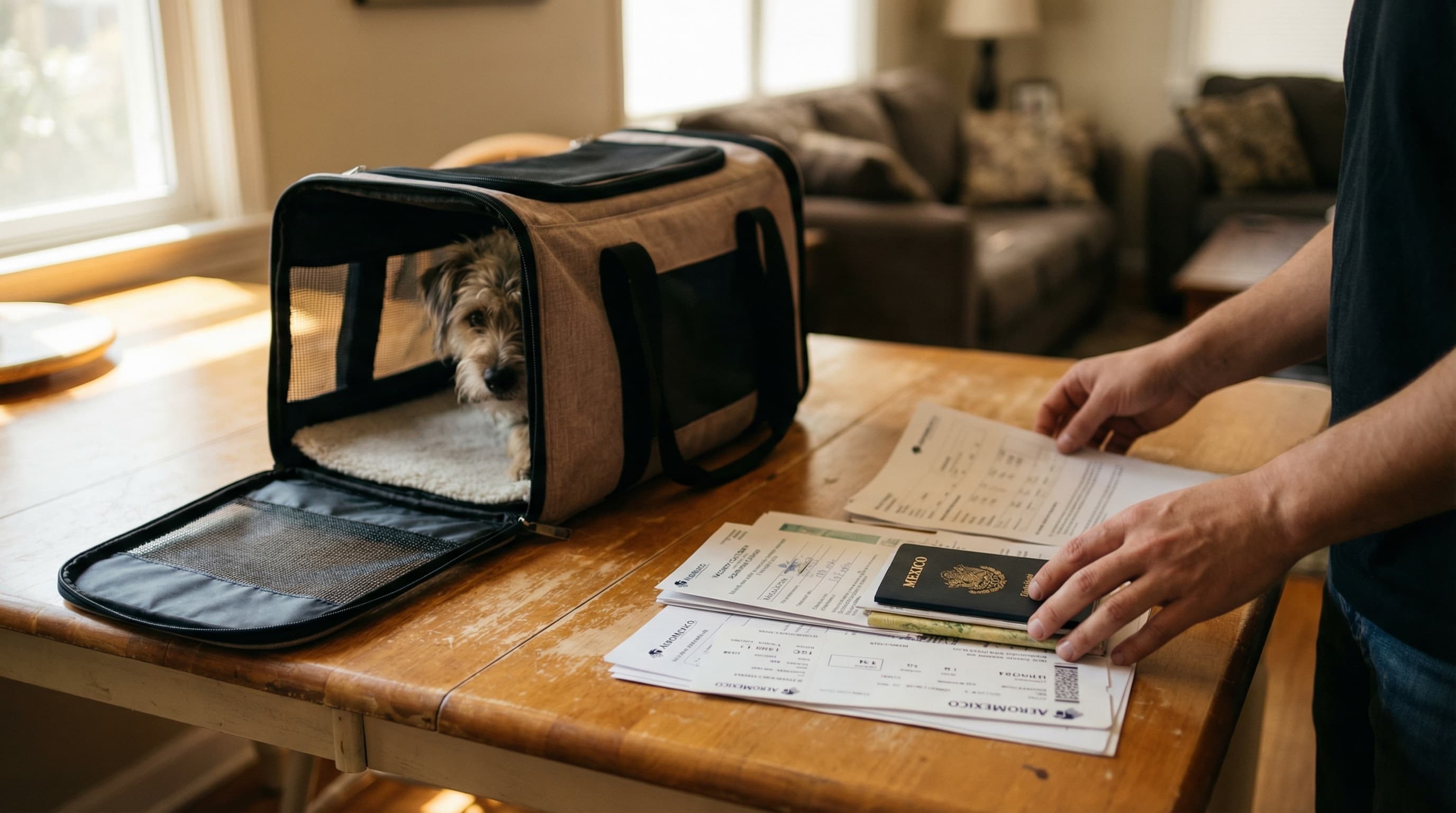
Bring vaccination records and a recent vet visit summary even though Mexico doesn't officially require them. Airlines often check paperwork at boarding, and having records on hand speeds up the SENASICA inspection.
Taking Your Dog or Cat to Mexico: No Paperwork Required (2026)
16 min readinternational

Marcus Reid
Former Airline Operations
| Applies to | Dogs and cats (same rules for both) |
| Documents | None required (SENASICA inspection at arrival) |
| Vaccines | Rabies required (given 15+ days before travel) |
| Microchip | Not required by Mexico |
| Quarantine | None |
| Cost | $300–$600 (dogs) / $250–$500 (cats) |
| Timeline | Start 4 weeks before travel |
| Difficulty | 🟢 Easy |
Flying to Mexico from the US with your dog or cat requires almost no paperwork on the Mexico side. The country dropped its health certificate requirement for both dogs and cats in 2019, and there's no USDA endorsement, no microchip rule, and no quarantine.
SENASICA inspects your pet at the airport, checks it's healthy and free of parasites, and you're through.
The whole thing costs $200–$500 (mostly airline fees) and takes about 2 weeks of prep. Driving is even simpler — same SENASICA inspection at the border, no airline fees.
Coming home is the bigger hassle.
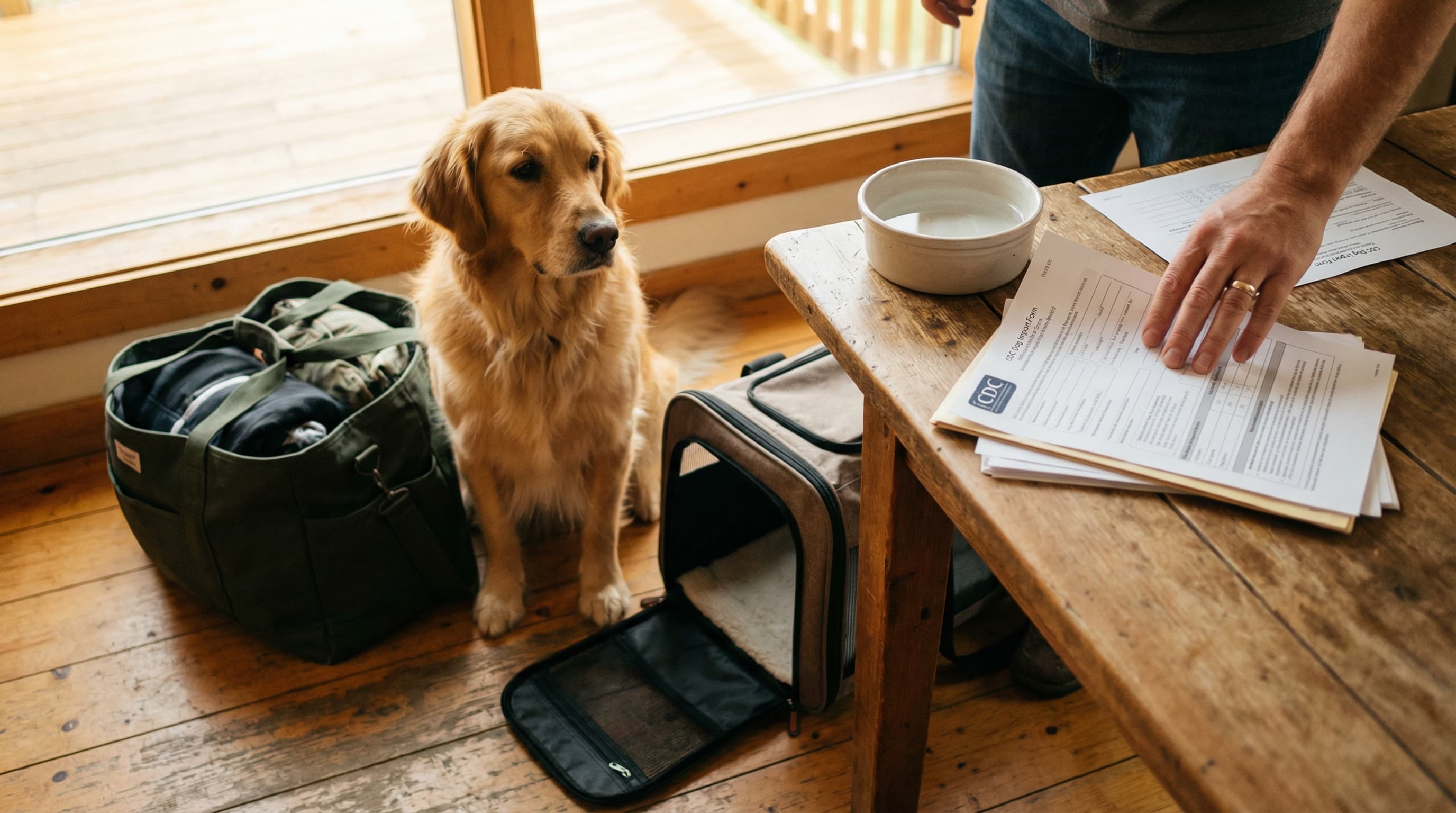
Since November 2024, dogs returning from Mexico to the US need a screwworm freedom certificate, a CDC Dog Import Form, and a microchip.
For cats it's much easier: no CDC import form, no microchip requirement, and no screwworm certificate.
What You Need
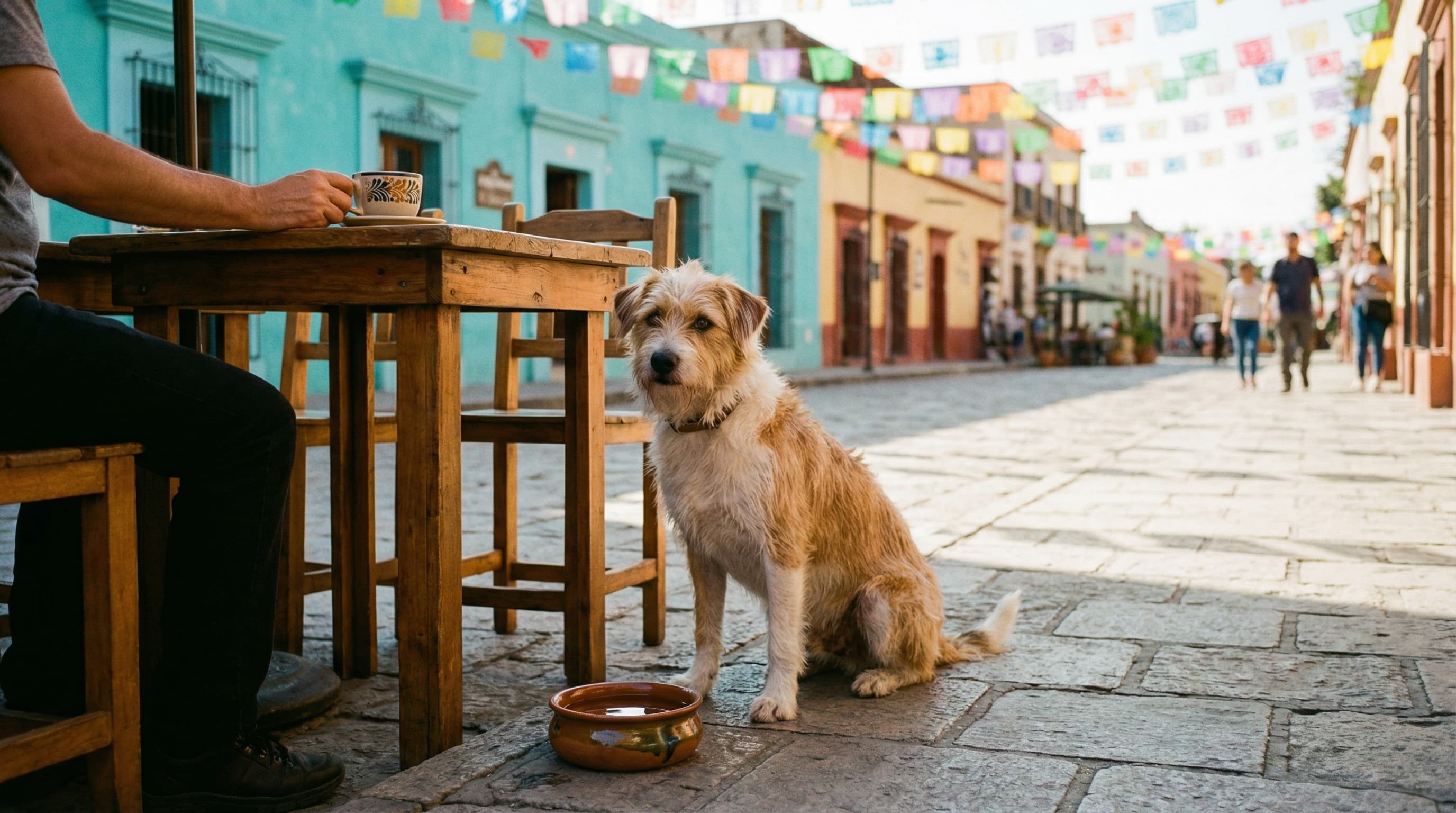
Mexico's requirements for dogs and cats are identical and the simplest of any major international destination:
- Pet appears healthy — no signs of illness, fleas, ticks, or wounds
- Clean carrier with no bedding — no hay, straw, cloth, newspaper, or wood shavings
- Active rabies vaccination required (given at least 15 days before travel)
- Records of internal and external parasite treatment within the last 6 months
- SENASICA inspection at the airport OISA office on arrival
- Maximum 2 pets per passenger under the standard process
What you don't need
- Health certificate
- USDA endorsement
- Microchip (to enter Mexico)
- Import permit
- Wait in quarantine
No advance paperwork, no fees from the Mexican government. SENASICA inspects your pet at the airport, confirms it looks healthy, and you're through. If you're bringing 3 or more animals, Mexican customs treats it as a commercial shipment with extra rules, though.
Tip
Vaccine Requirements
Mexico requires proof of a rabies vaccination for dogs or cats entering from the US or Canada. The vaccine must be administered at least 15 days before your arrival.
Under 3 months? Mexico generally allows kittens and puppies under 3 months without a rabies shot, but US airlines have stricter age limits.
Check the age rules. Most major US carriers require pets to be at least 16 weeks old for international travel.
A rabies vaccine costs $15–$35 and is active for 1–3 years. Hand your records to the SENASICA inspector immediately to speed up the process.
Your airline's window. While Mexico only requires 15 days, many airlines require the shot to be given 21–30 days before travel. Always follow the longer window to avoid being denied at the gate.
No other vaccines are required by Mexico. You do not need a titer test or distemper proof for either dogs or cats.
Do You Need a Health Certificate?
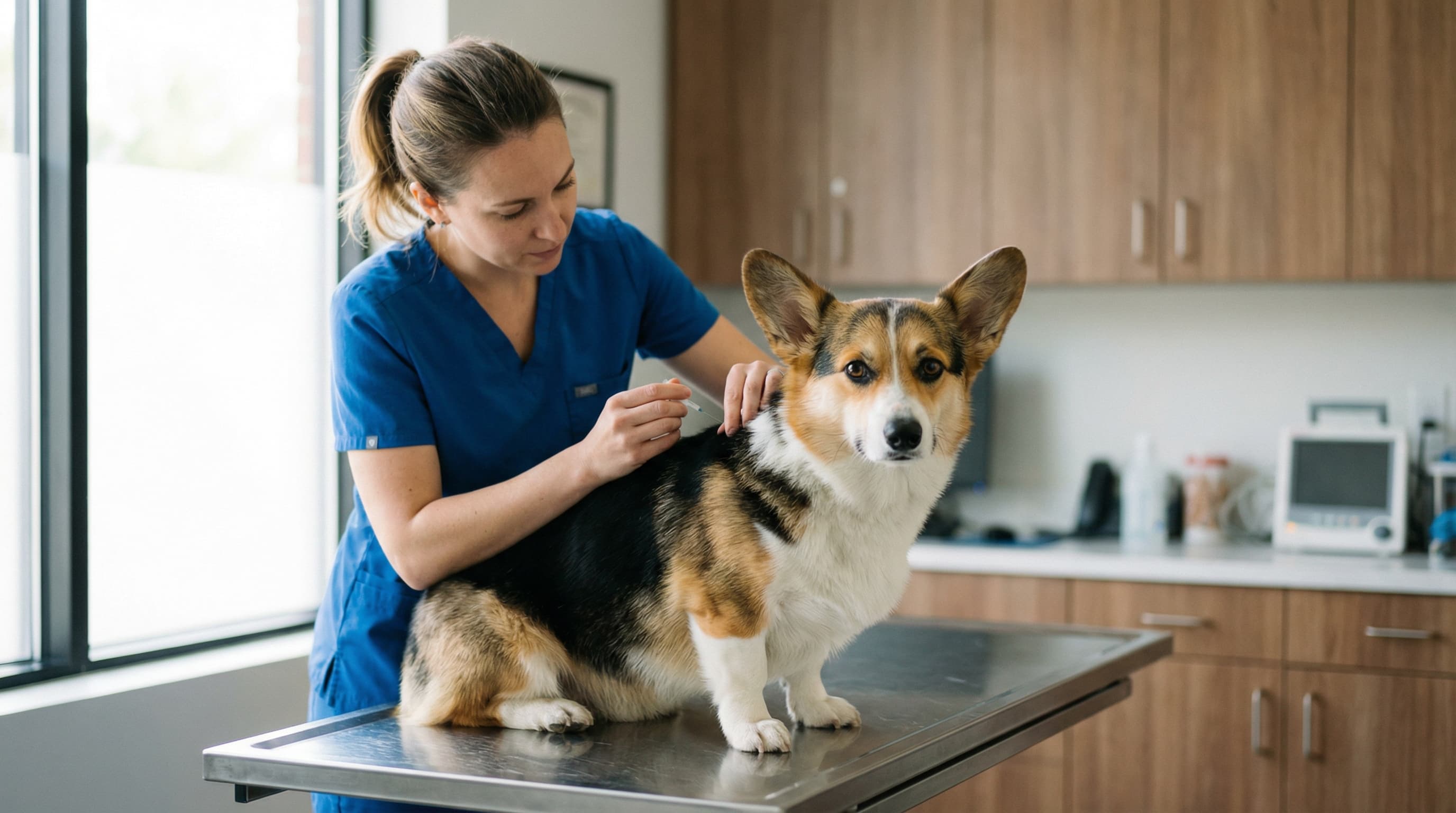
No. Mexico dropped the health certificate requirement for dogs and cats on December 16, 2019. USDA APHIS confirms this — you can fly your pet to Mexico without one.
Two reasons to consider getting one anyway:
Your airline might require it. Some airlines require a health certificate for international pet travel regardless of what the destination country says. Check your airline's policy before assuming you can skip it.
It speeds up SENASICA inspection. A recent health certificate from a USDA-accredited vet shows the inspector your pet was examined within the last 10 days and found healthy. Not required, but it eliminates questions.
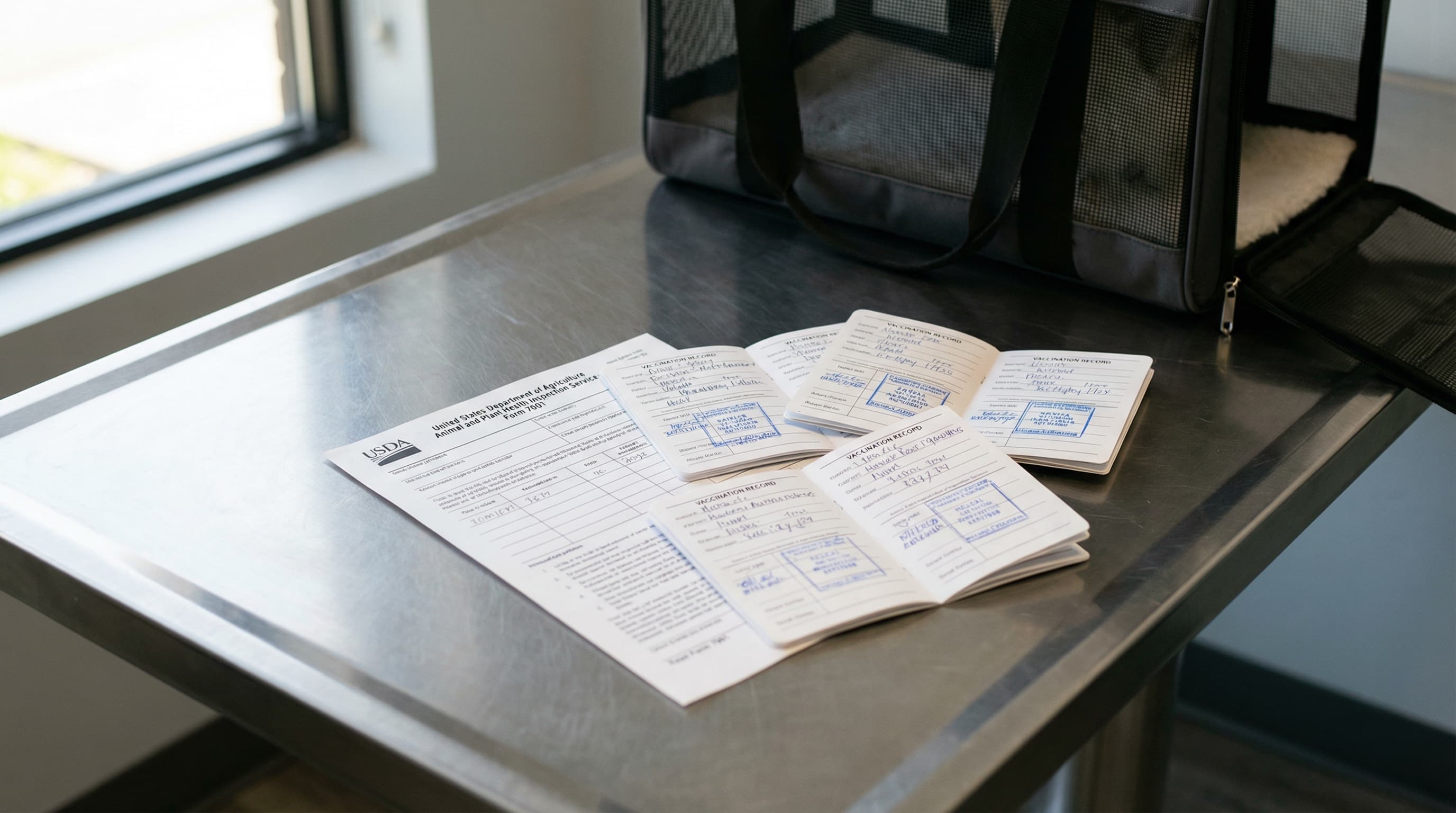
If you do get one, visit a USDA-accredited veterinarian. The exam costs $50–$150, and the certificate (APHIS Form 7001) is valid for 10 days from the exam date. This is a strict window — schedule the vet visit carefully so your certificate is still valid on travel day.
USDA Endorsement
Not required for Mexico — for either dogs or cats. This saves you $101 and 3–7 business days compared to countries that do require it (most of Europe, Japan, Australia).
For details on what USDA endorsement is and which countries require it, see our USDA endorsement guide.
Microchip Requirements
Mexico does not require a microchip for dogs or cats.
If you're traveling with a dog, get one anyway. The CDC requires all dogs entering the US to have a microchip readable by a universal scanner. No microchip means your dog can't come home.
A microchip costs $25–$75 at any vet, takes 30 seconds to implant, and should be an ISO 11784/11785 15-digit chip — the international standard that US border scanners can read.
If you're traveling with a cat, there's no federal microchip requirement for US re-entry. Still worth the $25–$75.
If your cat bolts from the carrier at Mexico City Airport, a microchip is the only way to prove ownership. It's also required by many other countries if you travel internationally again.
Airline Rules for Flying to Mexico
Airline rules apply on top of what Mexico needs. Here's what the major carriers charge for cabin pet travel to Mexico in 2026:
| American Airlines | $200 | Yes (public) |
| Delta | $200 | Military/State Dept. only |
| United | $150 | Military/State Dept. only |
| Alaska Airlines | $200 | Yes (public) |
| Southwest | Not Available | No |
Southwest Alert: Southwest Airlines does not allow pets on any international flights, including routes to Mexico. This is a common mistake for travelers used to their domestic policy.
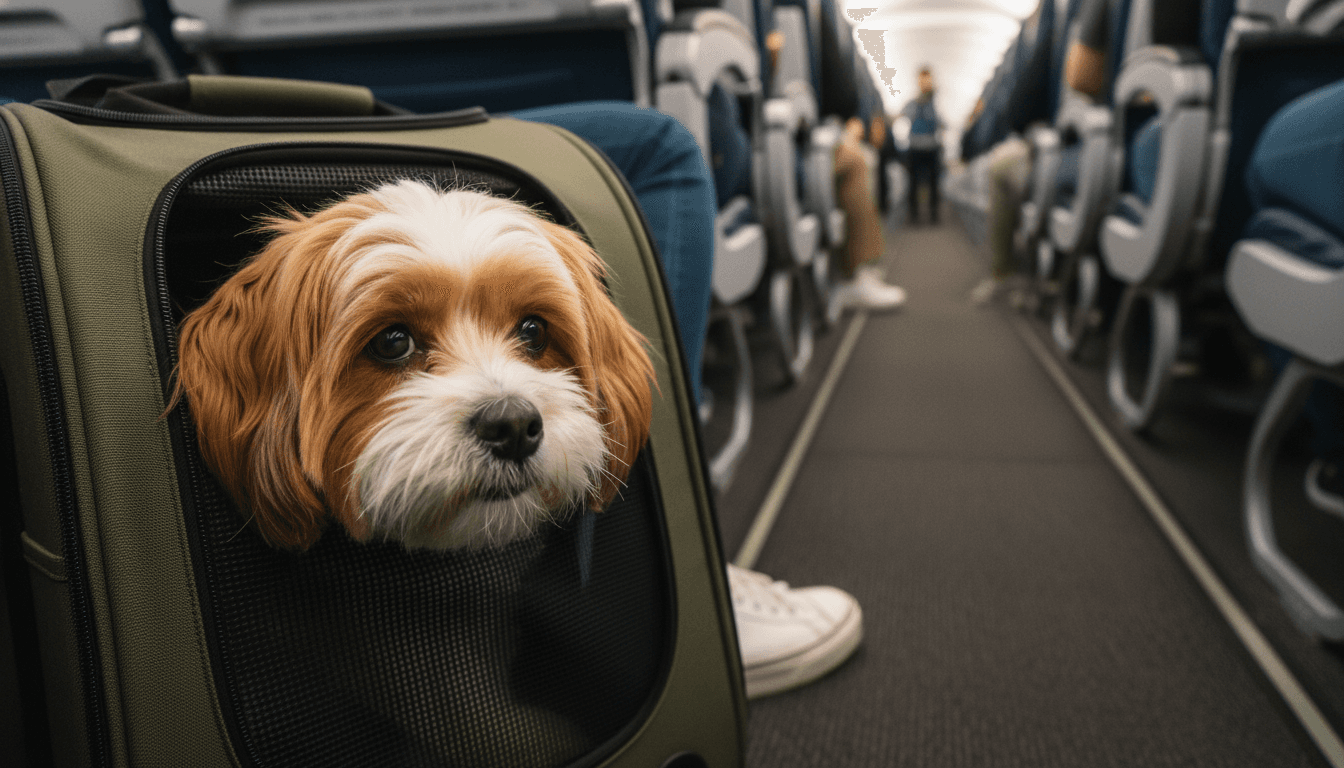
Cabin travel: Your pet must fit in a carrier under the seat. Most airlines require pets to be at least 16 weeks old for international routes.
Pet plus carrier must weigh under 20 lbs on most carriers. Call the airline as soon as you book to reserve a spot. Most flights allow only 2–4 pets in cabin.
Cargo travel: If your dog is too large for cabin, American Airlines and Alaska Airlines are currently the only major US carriers offering cargo pet transport to the general public. Delta and United restrict cargo to military and State Department staff.
Third-party pet relocation companies handle large-dog transport for $1,000–$5,000 depending on route and size.
Breed restrictions: All major US airlines ban flat-faced breeds (bulldogs, pugs, Boston terriers, Pekingese) from cargo due to breathing risks at altitude. Flat-faced cats (Persians, Himalayans, Exotic Shorthairs) face the same cargo restriction. Most airlines allow both in cabin if they fit the carrier.
Temperature embargoes: Airlines won't transport pets in cargo when ground temperatures exceed 85°F or drop below 45°F at origin, destination, or connection cities. Mexico City and beach destinations regularly hit 85°F+, so check seasonal temperatures for your route.
For a full comparison of airline pet policies, see our airline pet fee comparison.
Cost Breakdown
Dogs
| Rabies vaccine (if needed) | $15–$35 | Skip if active |
| Microchip (if needed) | $25–$75 | Required for US re-entry |
| Vet exam + health certificate | $50–$150 | Optional for Mexico, may be required by airline |
| Airline pet fee (cabin, each way) | $150–$200 | Varies by airline |
| Screwworm certificate (for return) | $30–$80 | From authorized Mexican vet |
| CDC Dog Import Form | Free | Complete online before return |
| SENASICA inspection | Free | At Mexican airport |
| Total estimate | $300–$600 | Round trip, one dog |
Cats
| Rabies vaccine (if needed) | $15–$35 | Skip if active |
| Microchip (optional) | $25–$75 | Not required, but recommended |
| Vet exam + health certificate | $50–$150 | Optional for Mexico, may be required by airline |
| Airline pet fee (cabin, each way) | $150–$200 | Varies by airline |
| SENASICA inspection | Free | At Mexican airport |
| Total estimate | $250–$500 | Round trip, one cat |
Cats cost less because there's no screwworm certificate for the return trip and no federal microchip requirement. Mexico doesn't require USDA endorsement ($101), import permits, or quarantine fees for either species.
Timeline
2–3 weeks before departure: Confirm your pet's rabies vaccine is active. If expired, schedule a vet visit now. Call your airline to reserve a pet spot — most flights allow only 2–4 pets in cabin, and this limit isn't advertised. If traveling with a dog, confirm it already has a microchip.
10 days before departure (at most): If you are getting an optional health certificate, visit your USDA-accredited vet now. The certificate is valid for 10 days from the exam date. Time it carefully.
1 week before return (dogs only): Complete the CDC Dog Import Form online. The receipt is valid for 6 months of travel between the US and Mexico. Cats don't need this form.
5 days before return (dogs only): Visit a SENASICA-authorized veterinarian in Mexico for a screwworm freedom certificate. The vet must inspect your dog and certify it's screwworm-free within 5 days of your return to the US. Find authorized vets through the MVRA Directory.
Travel day: Bring all documents in a waterproof folder. Arrive at the airport 60–90 minutes earlier than usual. Exercise your pet before heading to the airport.
Common Mistakes
Airport Tips
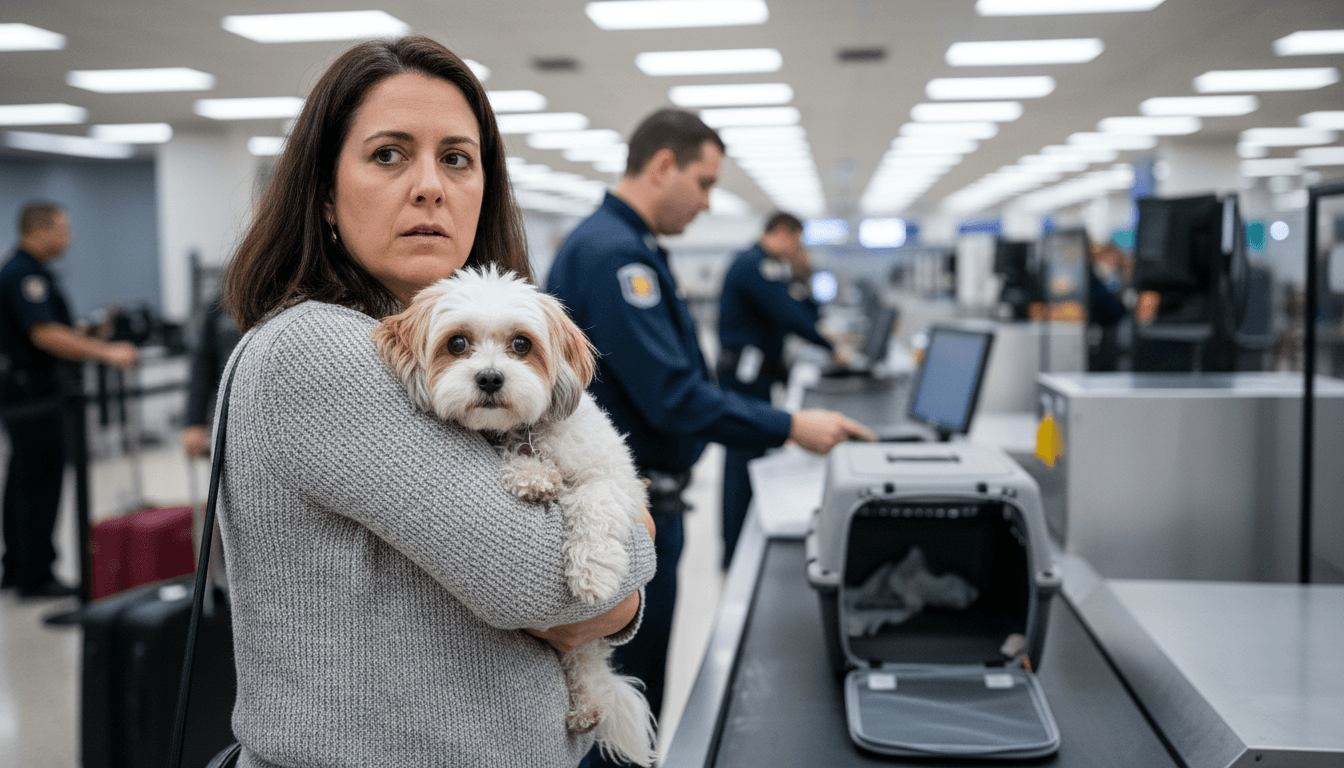
Departing the US: Check in at the airline counter (not a kiosk) with your pet. The agent will check your pet reservation, check the carrier dimensions, and collect the pet fee.
At security, remove your pet from the carrier, hold it securely (use a harness and leash for cats — they bolt), and send the empty carrier through the X-ray.
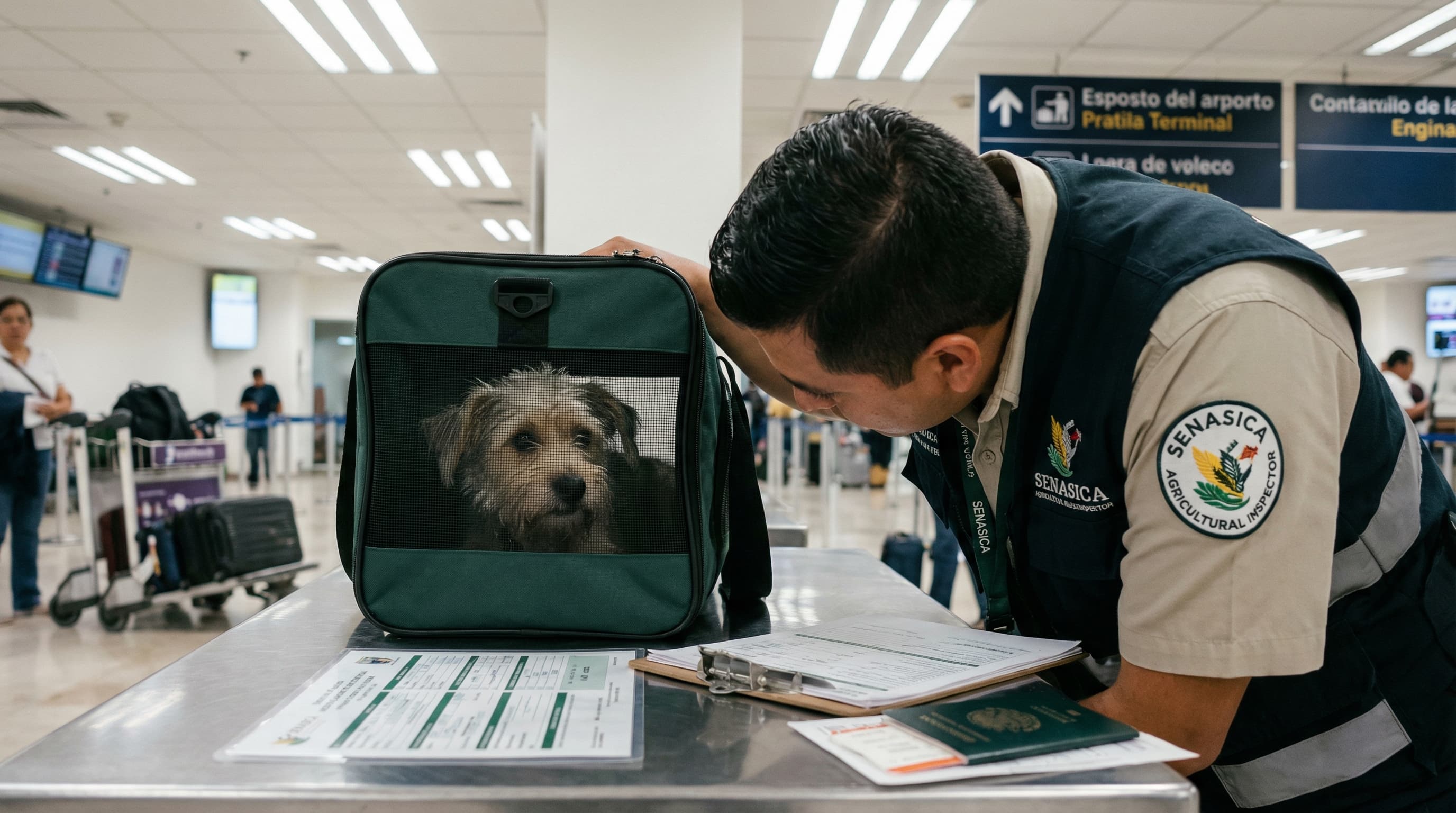
Arriving in Mexico: After clearing immigration, head to the SENASICA/OISA inspection office before leaving the customs area. An official will visually inspect your pet for signs of disease, parasites, and wounds. The inspection takes 5–10 minutes if everything looks good.
No fee. This is the same process for dogs and cats. The official will often spray the outside of your carrier with a preventive disinfectant treatment.
This is a standard agricultural pest control measure. It does not mean your pet has a problem.
Carrier rules: No bedding of any kind — not hay, straw, cloth, or newspaper. SENASICA removes all of it. Pack any extra food in your carry-on: only food for the day of arrival is allowed inside the carrier, and anything extra will be confiscated. Your carrier may be sprayed with a preventive treatment by SENASICA officials — this is standard procedure for agricultural pest control, not a sign of a problem.
Practical tips: Freeze water in the carrier bowl to prevent spills during the flight. Bring a collapsible water bowl for layovers. Attach a luggage tag with your name, phone number, and destination address to the carrier.
If your pet is under treatment: If your pet has a skin condition being treated by a vet (mites, ringworm, or similar), bring a signed vet letterhead describing the diagnosis and treatment, including the vet's license number. SENASICA officials can ask for this, and arriving without it can delay the inspection.
Frequent traveler: If you cross between the US and Mexico with your pet regularly, SENASICA offers a "Pet Program - Frequent Traveler" registration that streamlines repeated inspections. Contact SENASICA at (0155) 43130154 for details.
For cats, consider a carrier with top access — pulling a stressed cat out sideways through a front door at airport security is harder than it sounds.
Re-entry to the USA
This is where dogs and cats are very different.
Dogs
Three requirements as of 2026:
1. CDC Dog Import Form. Complete the CDC Dog Import Form before your return. The form is free, and the receipt is valid for 6 months for travel between the US and Mexico. Fill it out before you leave so it's ready.
2. Microchip. Your dog must have an ISO 11784/11785 15-digit microchip readable by a universal scanner. No microchip, no entry. Get this done before you leave the US.
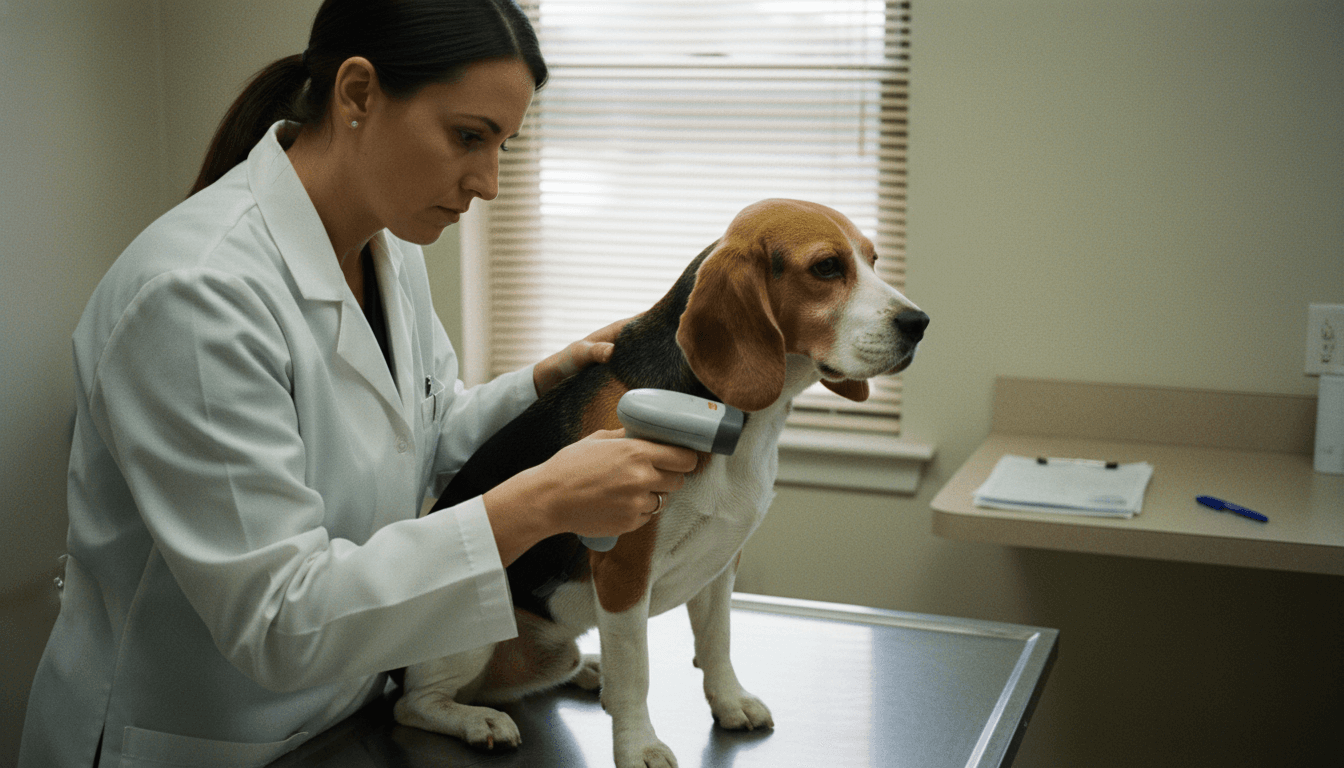
3. Screwworm freedom certificate. Mexico has been listed as screwworm-affected since November 2024, and the outbreak has spread northward — cases have been confirmed in Tamaulipas and Nuevo Leon, both bordering or near Texas.
A SENASICA-authorized veterinarian in Mexico must inspect your dog and certify it's free of screwworm within 5 days of your return. No specific form is required — a written certificate from an authorized vet works. Cost varies, typically $30–$80.
Your dog must also be at least 6 months old and appear healthy. Mexico is a low-risk country for dog rabies, so no titer test or extra rabies paperwork is needed.
Cats
Cats have very few federal re-entry rules:
1. Appear healthy. That's the main CDC requirement for cats. If your cat shows signs of illness at the border — coughing, sneezing, acting tired — officials may require a vet exam or quarantine.
2. No CDC import form. The CDC Dog Import Form is exactly what it sounds like — dogs only.
3. No federal microchip requirement. Unlike dogs, cats don't need a microchip to enter the US.
4. No screwworm certificate. The APHIS screwworm freedom requirement applies to dogs, not cats.
Check your state's rules. Many states require rabies vaccination for cats even though the federal government doesn't. Hawaii and Guam quarantine all cats, even ones coming from the US mainland. Look up your destination state's requirements before you fly.
For the full re-entry process, see our guide to returning to the USA with a pet.
FAQ
Your next step: Call your airline to reserve a pet spot. That's the only real bottleneck — most flights allow 2–4 pets in cabin, and if those spots are taken, your pet doesn't board.