Thailand is a CDC high-risk rabies country. If you're bringing a dog, plan your return trip before you leave. US-vaccinated dogs have a simpler path home, but dogs vaccinated abroad face titer tests, restricted airports, and possible quarantine. Read the Returning to the US section before booking anything.

Bringing a Dog or Cat to Thailand from the US — 2026 Requirements
18 min readinternational

Dr. Sarah Chen
Travel Veterinarian
| Applies to | Dogs and cats (different vaccine lists) |
| Documents | Import permit + USDA health certificate + endorsement |
| Vaccines | Dogs: rabies, DHPP, leptospirosis. Cats: rabies, FVRCP |
| Microchip | ISO 15-digit, implanted before rabies vaccine |
| Quarantine | None if paperwork is correct (officer can detain up to 30 days) |
| Cost | $700–$2,000 (dogs) / $600–$1,500 (cats) |
| Timeline | Start 6–8 weeks before travel |
| Difficulty | 🟠 Hard |
Bringing a dog or cat to Thailand from the US costs $700–$2,000 round trip and takes 6–8 weeks of prep.
Thailand is harder than most destinations because it adds steps other countries skip: an import permit from the Thai Department of Livestock Development (DLD), vaccines beyond rabies (dogs need DHPP and leptospirosis), and a 10-day health certificate window that's tight even by international standards.
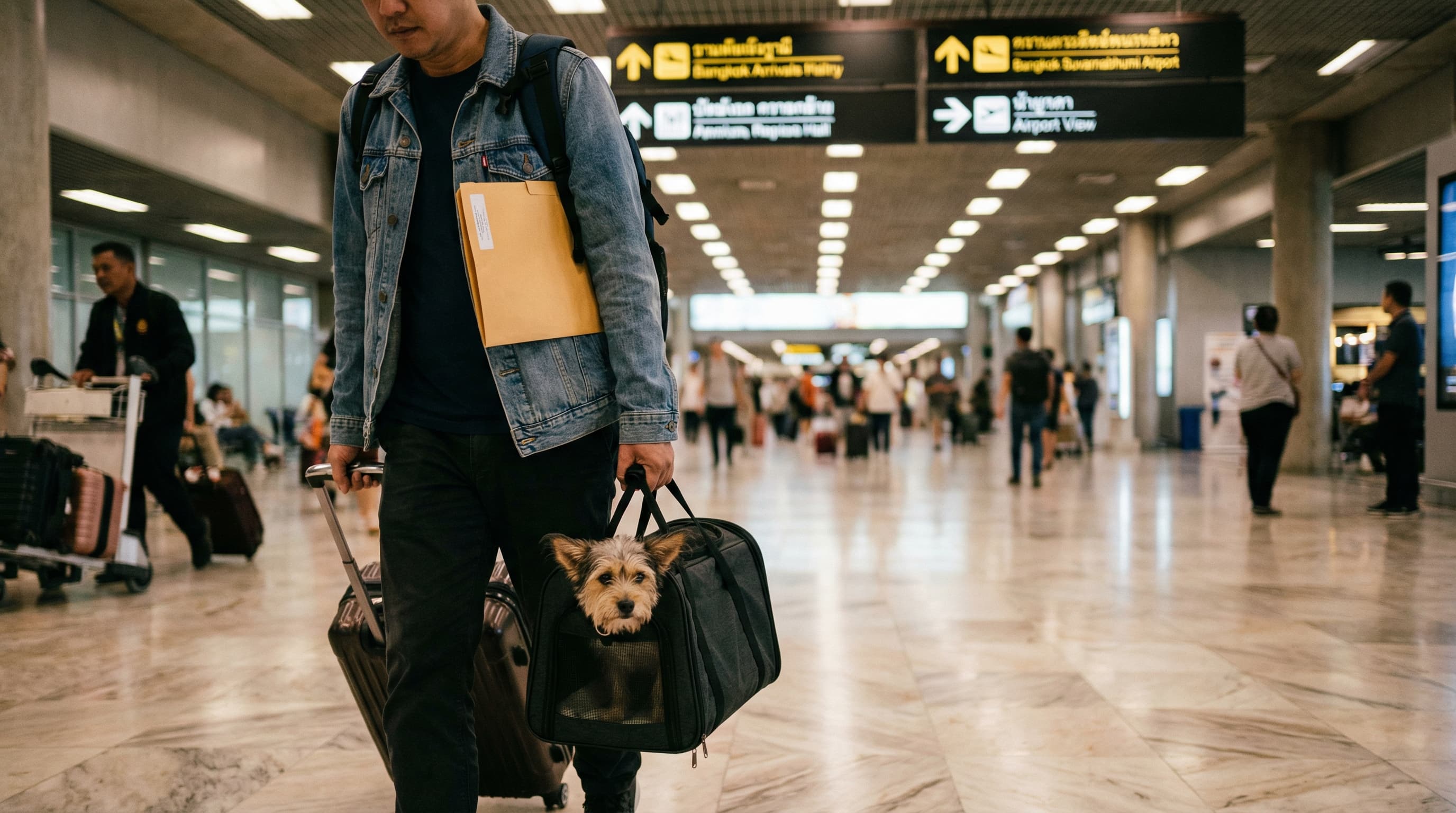
No US airline allows cabin pets on flights to Bangkok, so you'll need to connect through Seoul on Korean Air or Asiana to keep a small pet in the cabin.
And the biggest complication isn't getting there — it's coming home. Thailand is a CDC high-risk rabies country, which means returning to the US with a dog triggers stricter rules, more paperwork, and in some cases a 28-day quarantine.
The process is doable, but there's no shortcut. Start at least 6 weeks before your flight.
What You Need
Dogs and cats share most requirements, but their vaccine lists differ.
Documents
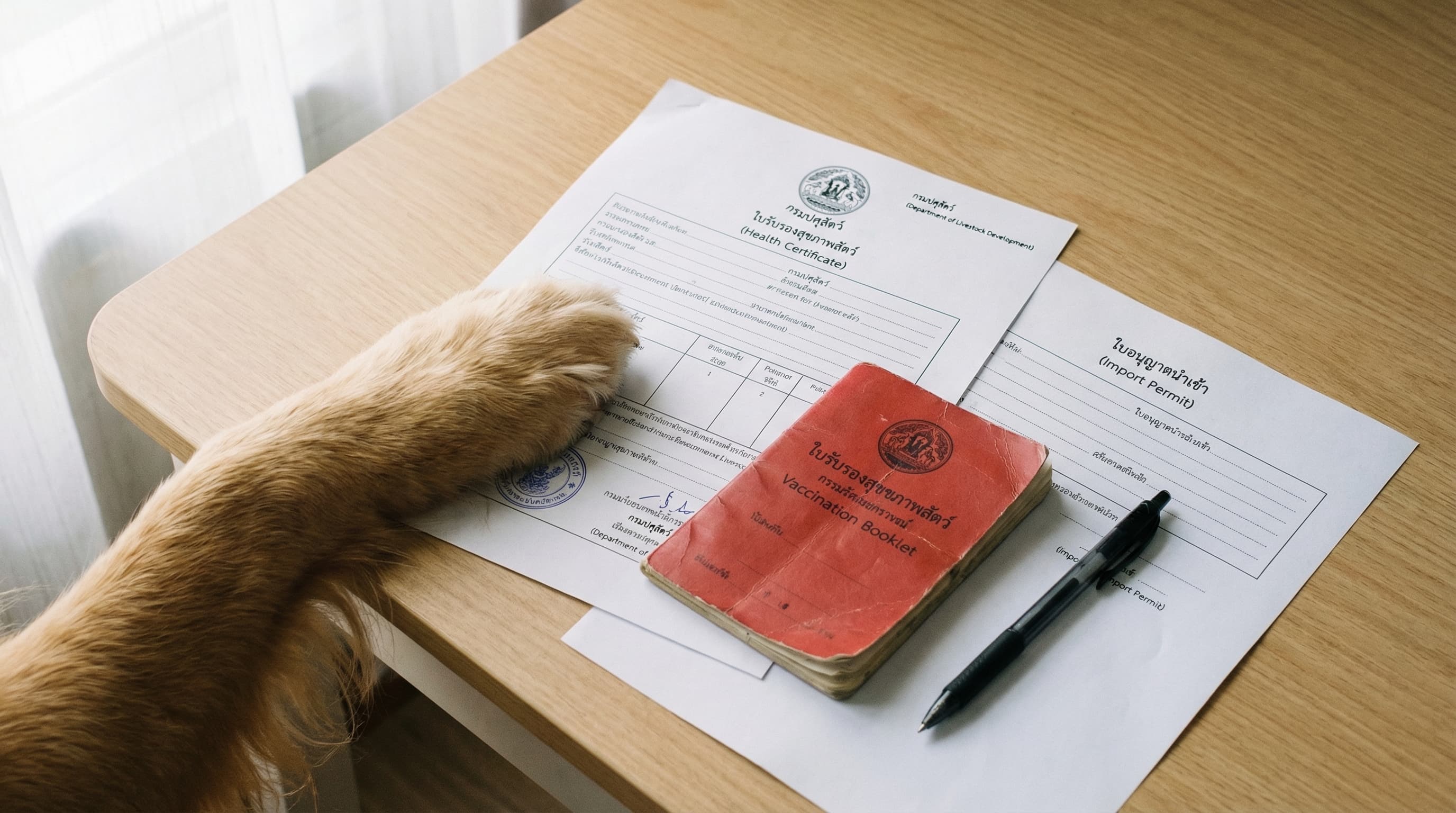
- Import permit from Thailand's Department of Livestock Development (DLD), applied 7–60 days before departure.
- USDA health certificate from a USDA-accredited vet, endorsed by USDA ($101).
- Owner's passport copy, pet color photo, vaccination records in English, and flight details.
Medical requirements
- ISO 15-digit microchip implanted before the rabies vaccine.
- Species-specific vaccines — dogs need five, cats need two (see Vaccine Rules below).
- Deworming and flea/tick treatment within 7 days of travel.
- Pet must be at least 4 months old.
Critical
Vaccine Rules
Thailand asks for more vaccines than most countries.
Dogs need five vaccines:
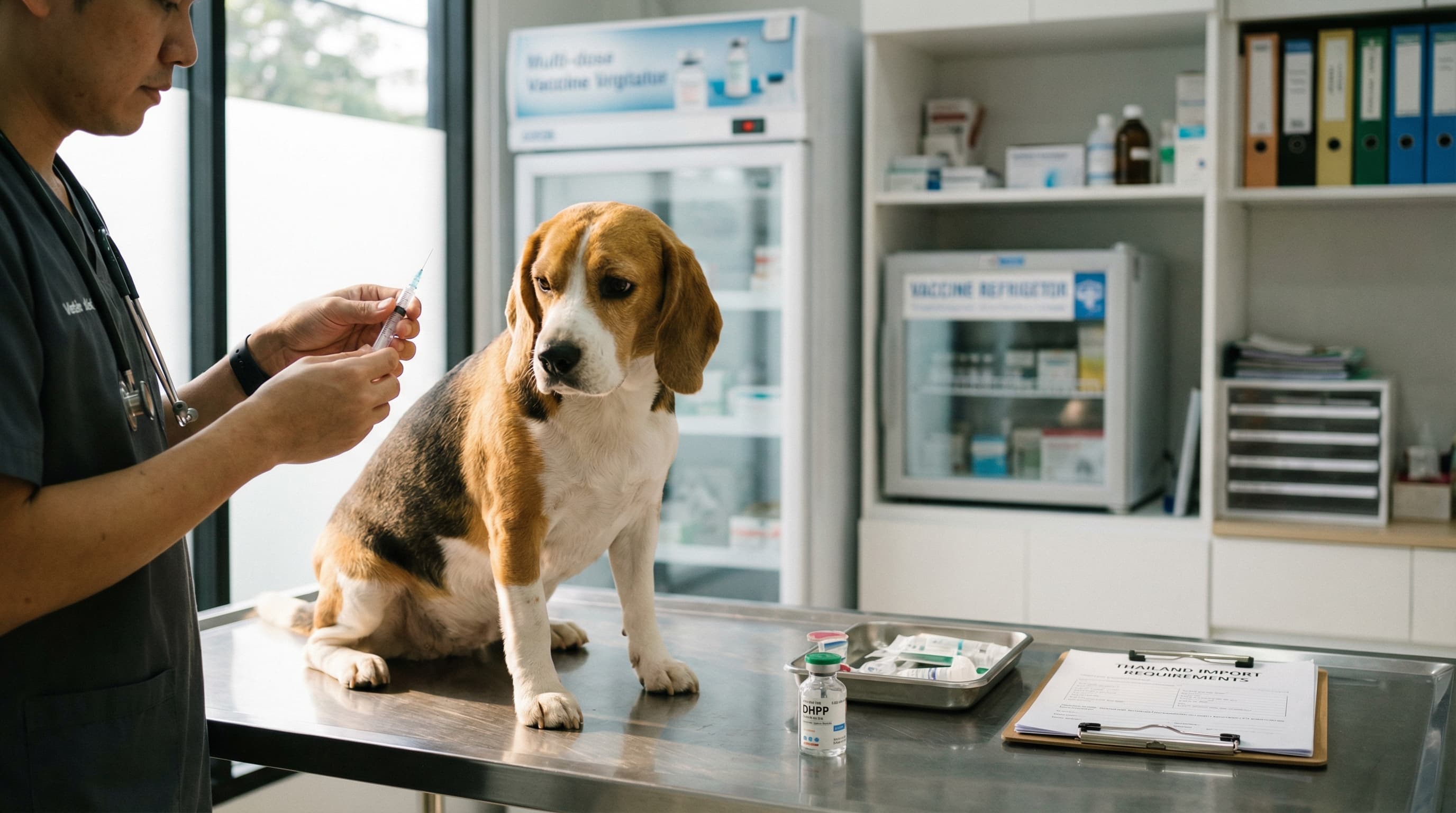
- Rabies — at least 21 days before arrival, not older than 1 year.
- Canine distemper — at least 21 days before arrival, not older than 1 year.
- Canine hepatitis — at least 21 days before arrival, not older than 1 year.
- Canine parvovirus — at least 21 days before arrival, not older than 1 year.
- Leptospirosis — vaccine at least 21 days before travel, OR a negative lepto test within 30 days of departure.
Most vets give distemper, hepatitis, and parvovirus as a single DHPP combo shot, so this is really two vet visits at most: one for the combo plus lepto, one for rabies (if not already active). The 21-day wait applies to all of them.
Cats need two:
- Rabies — at least 21 days before arrival, not older than 1 year.
- Feline panleukopenia — at least 21 days before arrival, not older than 1 year. This is part of the standard FVRCP combo shot most cats already get.
Your vet must implant the microchip before the rabies vaccine. If your pet got the rabies shot before the chip, the vaccine doesn't count and the 21-day clock restarts.
No titer test is needed to enter Thailand. The titer test issue comes up when returning to the US (see re-entry section).
Import Permit
This is the step that separates Thailand from simpler destinations. You need an import permit from Thailand's Department of Livestock Development (DLD) before your pet can enter.
How to apply:
-
Email qsap_bkk_import@dld.go.th with these documents (one animal per PDF):
- Completed Application Form R1/1
- Copy of your passport
- Color photo of your pet (face visible)
- Vaccination certificates in English with the vet's credentials
- Microchip certificate
- Flight confirmation showing travel dates
- Your Thailand address
-
DLD processes the application in up to 7 Thai business days.
-
You receive the import permit by email. It's valid for 60 days.
-
Print a hard copy. You'll show it at the Animal Quarantine Station (AQS) on arrival.
Apply at least 3 weeks before your flight to leave room for processing delays. The permit is free to apply for, but there's a 500 THB (~$14) import license fee at the airport.

Health Certificate and USDA Endorsement
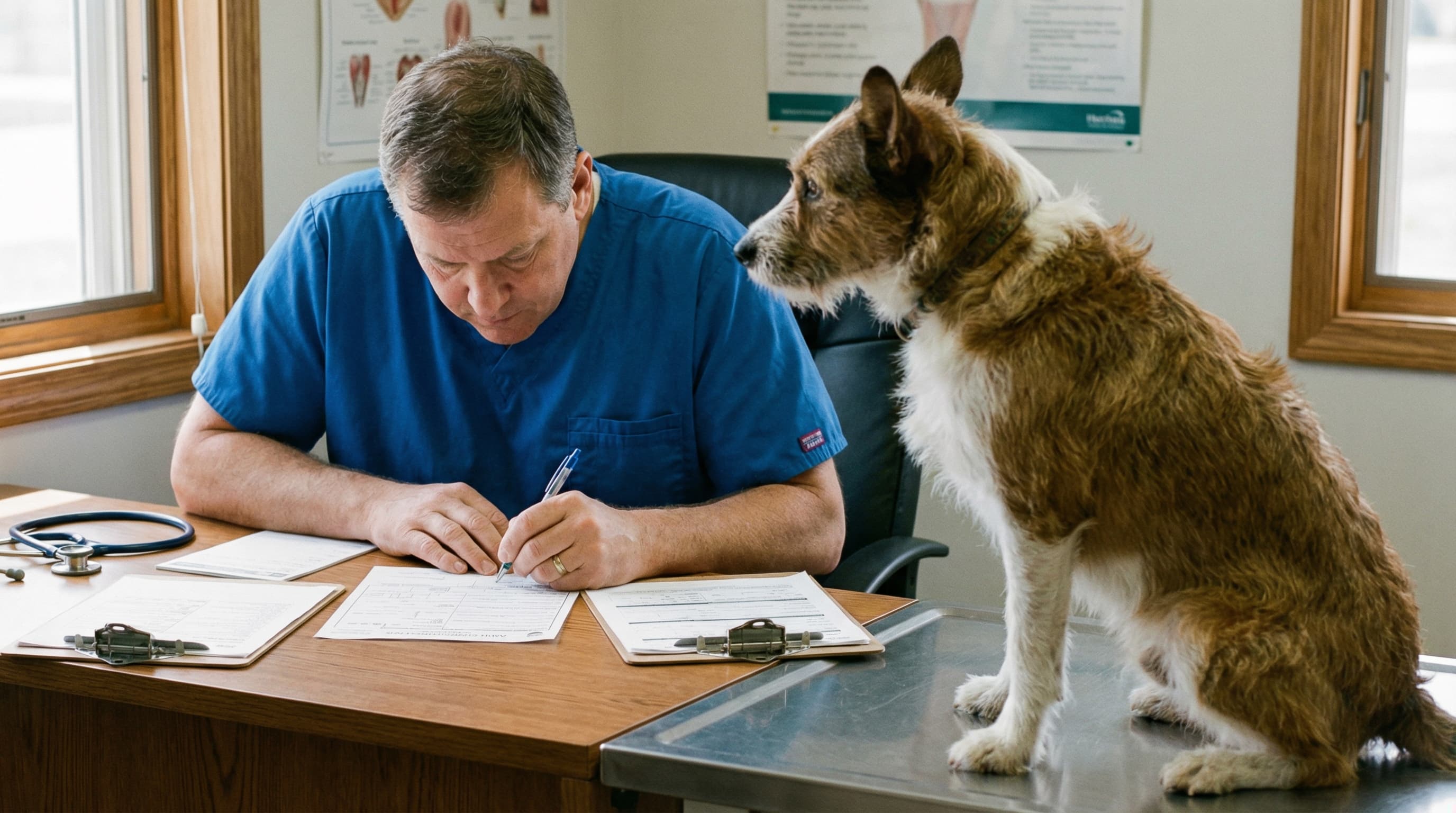
After you have the import permit, get the USDA health certificate. Your USDA-accredited vet fills it out — not every vet holds this accreditation, find one near you — and USDA endorses it with an ink-sign and emboss. The endorsement validates that your vet filled out the health certificate correctly and that the information meets Thailand's entry requirements. Without this stamp, Thailand will reject the health certificate at the border.
The process is the same as for other countries:
- Your USDA-accredited vet examines your pet and fills out the health certificate in VEHCS.
- The vet submits it to USDA APHIS for endorsement.
- USDA reviews, ink-signs and embosses the original, and mails it back.
- The physical endorsed certificate must travel with your pet. Digital copies won't work.
The endorsement costs $101 per certificate (updated January 2026). This is the flat rate when no lab tests are included.
Watch OutThe health certificate is valid for only 10 days from USDA endorsement. This is the tightest deadline in the whole process. Schedule your vet visit 7–10 days before your flight, and make sure your import permit is already approved before the vet appointment. If USDA endorsement comes back after your 10-day window closes, you start over.
For details on the endorsement process, see our USDA endorsement guide.
Microchip
Your pet needs an ISO 11784/11785 15-digit microchip. Thai quarantine officers scan it at the airport and match it against your paperwork.
The microchip must go in before the rabies vaccine. Your vet implants it under the skin between the shoulder blades ($25–$75), scans to confirm, then gives the shots. Thailand links the chip number to the vaccination record and health certificate.
If your pet has a non-ISO chip (some older US chips are 9 or 10 digits), bring your own compatible scanner or have your vet implant a second ISO chip.
Airline Rules for Flying to Thailand
Here's the hard truth: no major US airline allows cabin pets on flights to Thailand. United, Delta, and American all block cabin pets on trans-Pacific routes. Thai Airways doesn't allow cabin pets either (except service dogs).
Your options:
| Option | Details | Cost | Notes |
|---|---|---|---|
| Korean Air (cabin) | US → Seoul → Bangkok | ~$150–$300/direction | 7 kg limit with carrier |
| Asiana Airlines (cabin) | US → Seoul → Bangkok | ~$150–$300/direction | 7 kg limit with carrier |
| Thai Airways (hold) | US → Bangkok | Varies | AVIH policy starts March 2, 2026; up to 70 kg. Not available on A320. |
| JAL (cargo) | US → Tokyo → Bangkok | Varies | No French Bulldogs or Bulldogs |
| ANA (cargo) | US → Tokyo → Bangkok | $250–$400 | Flat-faced breeds banned May–Oct |
| Singapore Airlines (cargo) | US → Singapore → Bangkok | Varies | Up to 32 kg with kennel |
| Professional pet shipper | Door-to-door | $2,800–$6,000+ | Handles everything |
TipIf your pet is small enough for cabin travel (under 7 kg with carrier), Korean Air and Asiana Airlines both fly through Seoul and allow cabin pets. Book early — pet spots are limited to a few per flight. Both airlines connect through Seoul Incheon (ICN); if you stay airside during the layover, you don't need any Korean import paperwork for your pet.
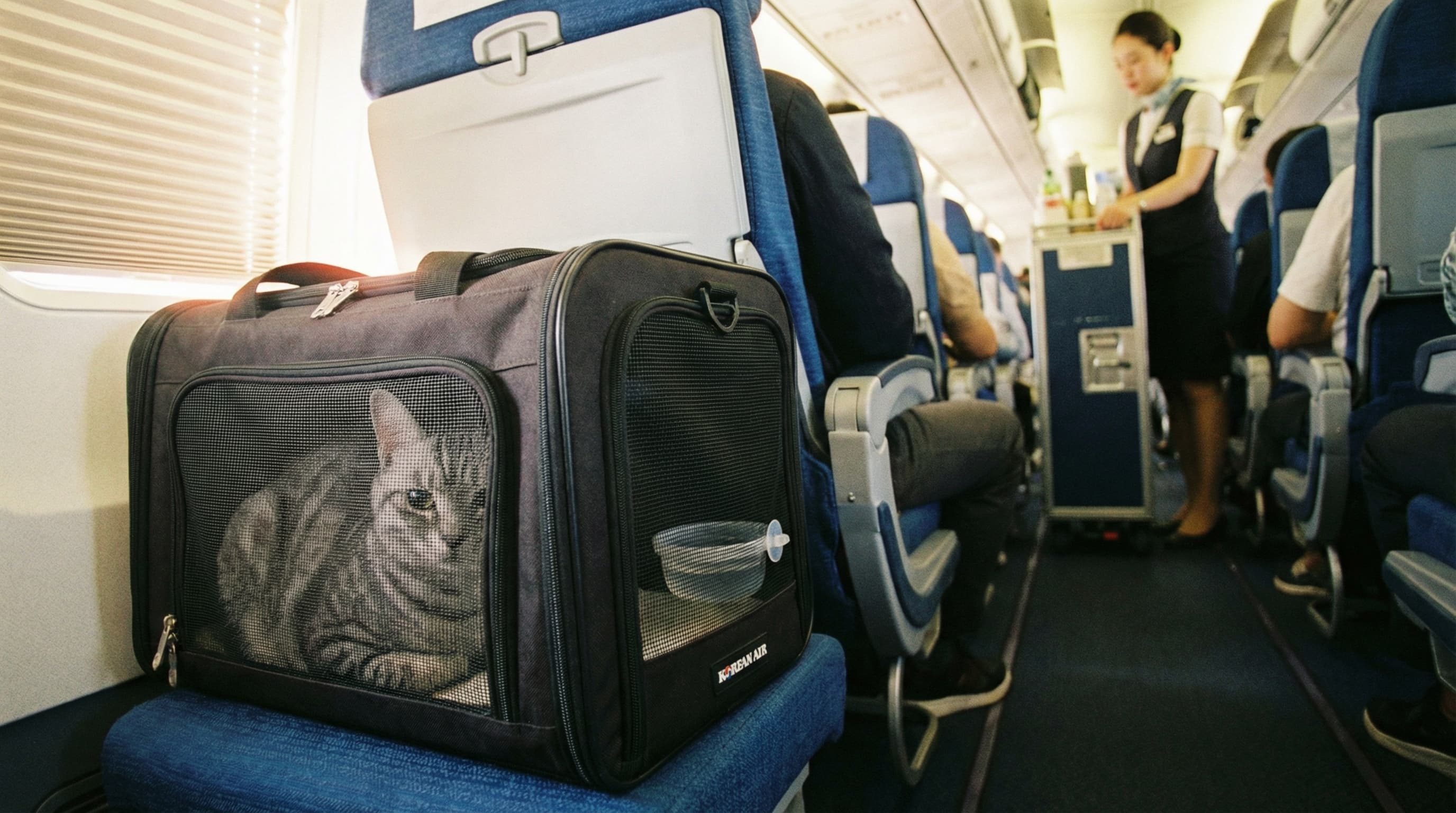
For larger pets, cargo or checked baggage is the only path. Thai Airways launching AVIH (checked baggage, temperature-controlled hold) on March 2, 2026 is a good development, but note that this service is not available on A320 aircraft, which are common on regional routes. Professional pet shipping services handle the entire process for $2,800–$6,000+ and are worth considering for large breeds or first-time international pet travelers.
Flat-faced breeds (Bulldogs, Pugs, Persians, Exotic Shorthairs) face extra restrictions. Most airlines ban them from cargo entirely or restrict them during warm months. Thailand's tropical climate (75–95°F year-round) makes temperature embargoes a real concern.
For airline pet policies, see our airline pet fee comparison.
Breed Restrictions
Thailand bans the import of five dog breeds:
- American Pit Bull Terrier
- American Bully
- American Bulldog
- Staffordshire Bull Terrier
- American Staffordshire Terrier
If you own one of these breeds, Thailand is not an option. There's no exemption process or workaround for travelers. If you're in this situation and still want to travel to Southeast Asia with your dog, neighboring countries like Vietnam and Cambodia don't have breed-specific import bans — though they come with their own entry requirements.
Bangkok has more rules (effective January 2026): Pit Bulls and Rottweilers must wear muzzles and be on short leads (50 cm max) in public. All pets in Bangkok must be registered within 30 days of arrival, with the number of pets allowed in a household now limited by property size (part of the 2026 BMA rule).
No cat breeds are restricted.

Cost Breakdown
Dogs
| Microchip (if needed) | $25–$75 | ISO 15-digit, one-time |
| Rabies vaccine (if needed) | $15–$60 | Skip if active and within 1 year |
| DHPP combo shot | $20–$50 | May already be active |
| Leptospirosis vaccine or test | $15–$45 | Vaccine or negative test within 30 days |
| Deworming + flea treatment | $15–$40 | Within 7 days of travel |
| Vet exam + health certificate | $100–$250 | USDA-accredited vet |
| USDA endorsement | $101 | Per certificate |
| Airline pet fee (each way) | $150–$400 | Korean Air cabin or cargo |
| Thailand AQS + customs fees | ~$14+ (500+ THB) | At airport on arrival |
| CDC Dog Import Form (return) | Free | Online |
| Certification form (return) | $50–$150 | USDA-accredited vet + USDA endorsement |
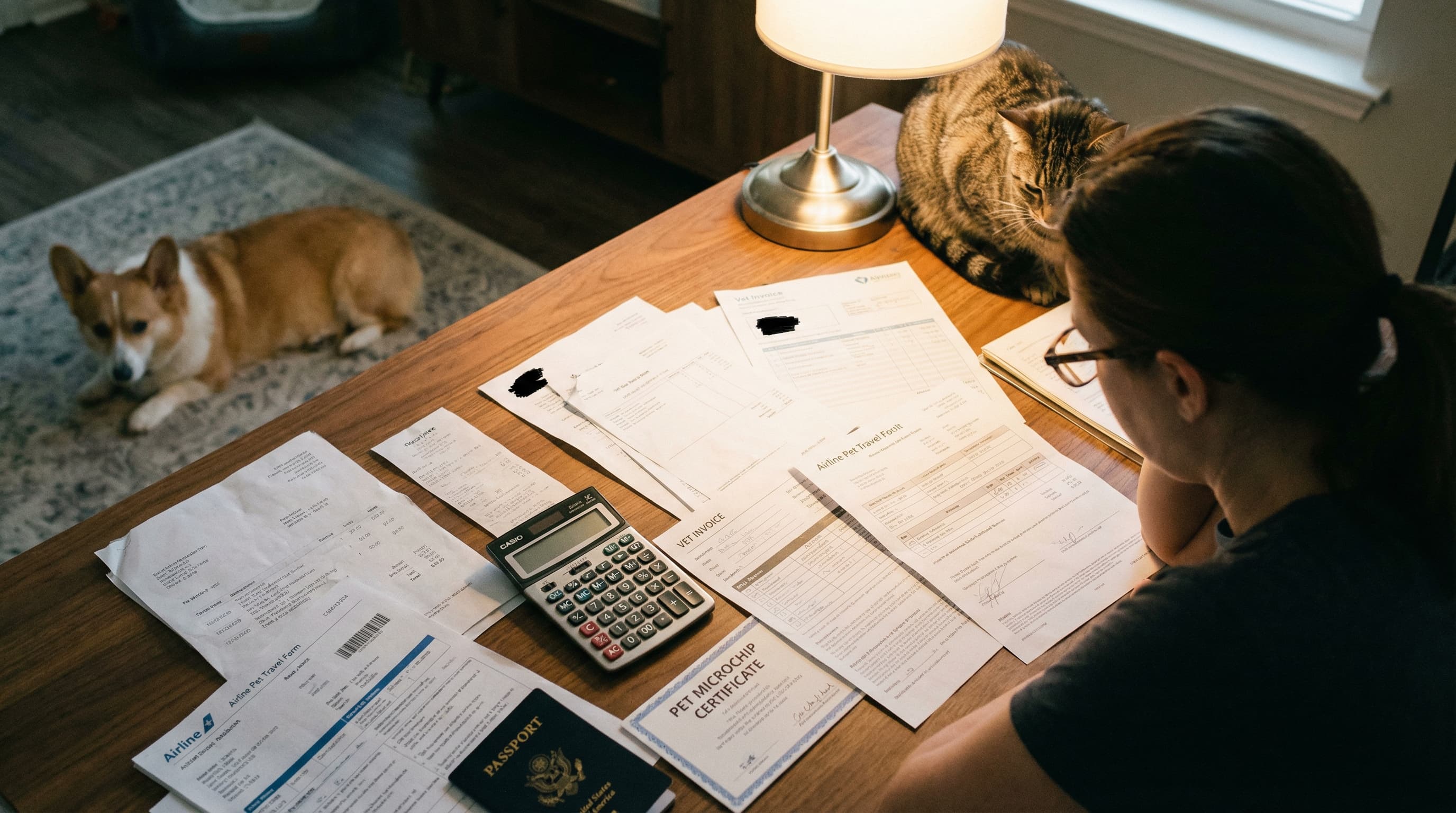
| Total estimate (round trip) | $700–$2,000 | One dog, including return prep |
Cats
| Microchip (if needed) | $25–$75 | Not needed for US re-entry, but get one anyway |
| Rabies vaccine (if needed) | $15–$60 | Skip if active and within 1 year |
| FVRCP combo shot | $20–$50 | May already be active |
| Deworming + flea treatment | $15–$40 | Within 7 days of travel |
| Vet exam + health certificate | $100–$250 | USDA-accredited vet |
| USDA endorsement | $101 | Per certificate |
| Airline pet fee (each way) | $150–$400 | Korean Air cabin or cargo |
| Thailand AQS + customs fees | ~$14+ (500+ THB) | At airport on arrival |
| Total estimate (round trip) | $600–$1,500 | One cat, including return prep |
Cats cost less because their return to the US is simpler (no CDC form, no certification, no re-entry restrictions).
Timeline
6–8 weeks before: Get the microchip implanted (if not done), then all vaccines. The 21-day waiting period starts the day after the last shot. If your pet already has active vaccines and a microchip, skip to 4–5 weeks before.
4–5 weeks before: Email qsap_bkk_import@dld.go.th with your import permit application. Processing takes 3–7 Thai business days. Don't wait on this.
3–4 weeks before: Confirm your airline's pet policy and reserve a pet spot. If using Korean Air cabin, book as early as possible.
Before the vet visit (dogs only): Have your USDA-accredited vet complete the Certification of US-issued Rabies Vaccination form for your return trip. USDA must endorse this too. Do this before your outbound health certificate appointment so you can submit both at once.
7–10 days before: Visit your USDA-accredited vet for the health exam, deworming, flea treatment, and health certificate. The vet submits through VEHCS. Budget 3–5 business days for the ink-signed original.
1–7 days before (dogs only): Complete the CDC Dog Import Form online for your return trip. Each dog needs a separate form.
Travel day: Arrive 3 hours early. Bring originals of: endorsed health certificate, import permit (printed), vaccination records, microchip paperwork, passport copy, pet photo, CDC Dog Import Form receipt (dogs), and the endorsed Certification of US-issued Rabies Vaccination (dogs). Keep everything in a waterproof folder.

Common Mistakes
Airport Tips
At your departure airport: Check in at the counter with your pet. Show the airline your endorsed health certificate, import permit, and vaccination records. If your pet is traveling as cargo, confirm the handoff process with the airline's cargo team at least 48 hours before departure.
Arriving at Suvarnabhumi Airport (BKK): After clearing immigration, go to the Animal Quarantine Station on the 1st Floor, CE-1 Building (near baggage carousel #8). Hand over your import permit (hard copy), endorsed health certificate, vaccination records, and microchip paperwork. The officer scans the microchip, reviews documents, and inspects your pet. If everything checks out, you pay 500 THB (~$14) for the import license plus a customs fee. Process takes 1–2 hours when documents are correct.
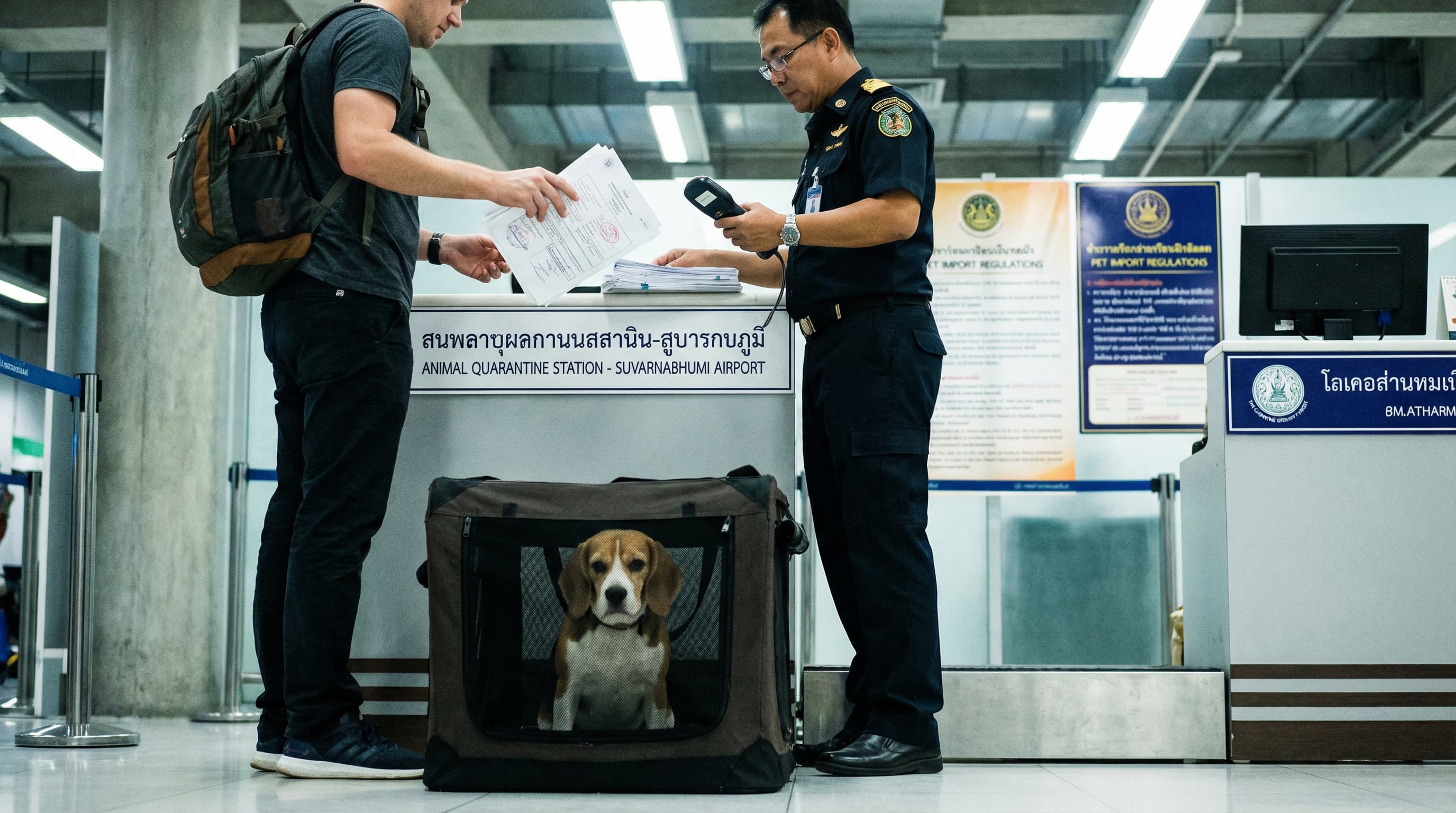
Arriving at Don Mueang Airport (DMK): Same process, but AQS is open 24 hours daily. If your flight arrives at night or on weekends, DMK is the safer choice.
Cat-specific tip: At US security, use a harness and leash when removing your cat from the carrier. A top-access carrier makes this much easier than pulling a stressed cat out the front opening.
Returning to the US
This is the most complex part of Thailand pet travel. Thailand is a CDC high-risk rabies country, so dogs face stricter re-entry rules than from EU countries.
Dogs: Two Pathways
Pathway 1: US-vaccinated dogs (simpler)
If your dog got its rabies vaccine in the US from a USDA-accredited vet before traveling to Thailand:
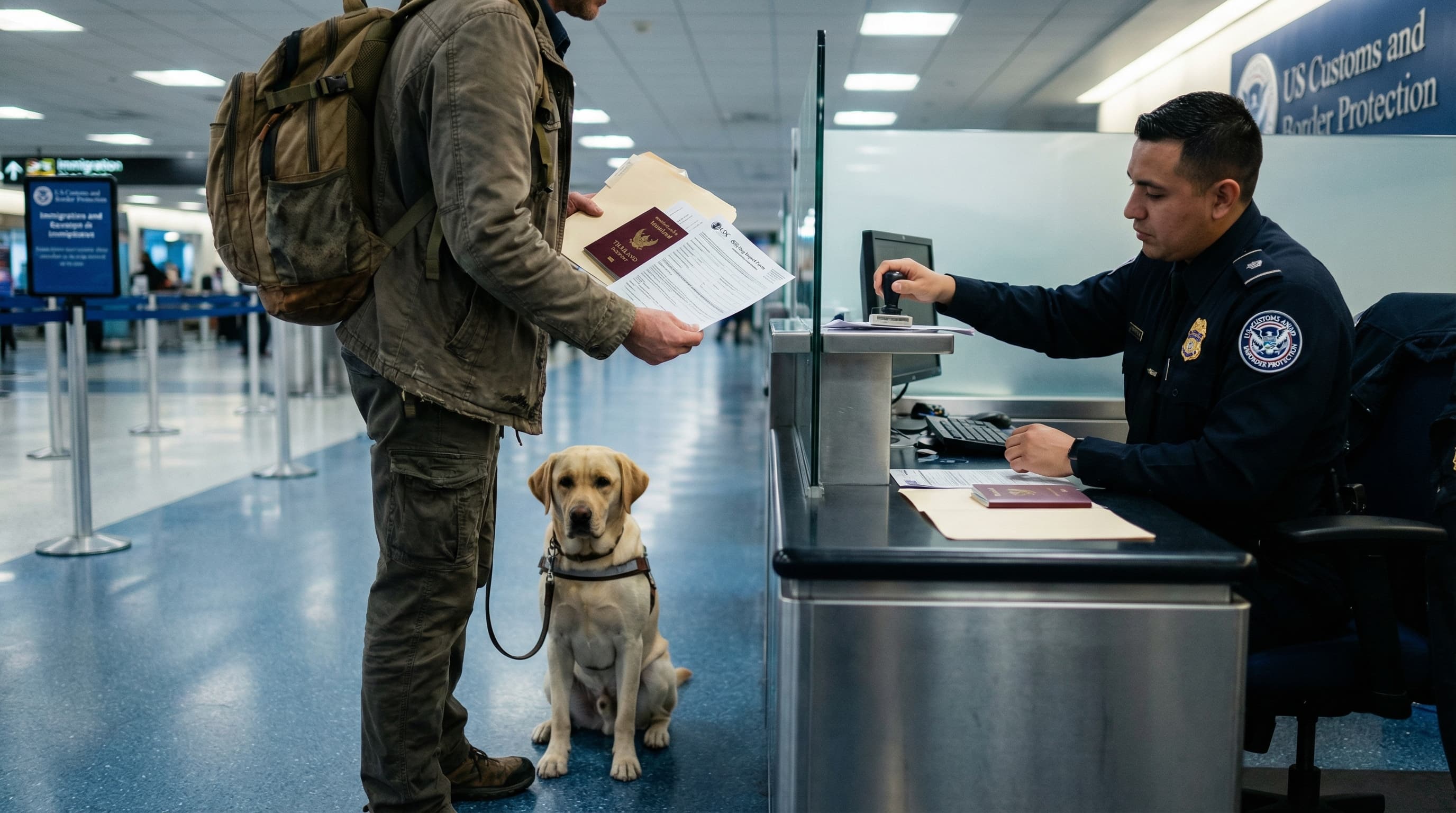
- CDC Dog Import Form — free, completed online
- Certification of US-issued Rabies Vaccination — completed by your USDA-accredited vet and endorsed by USDA before you leave the US
- Microchip (ISO 11784/11785 compliant)
- At least 6 months old
- Appears healthy on arrival
- Can enter at any US airport
- No titer test or quarantine required
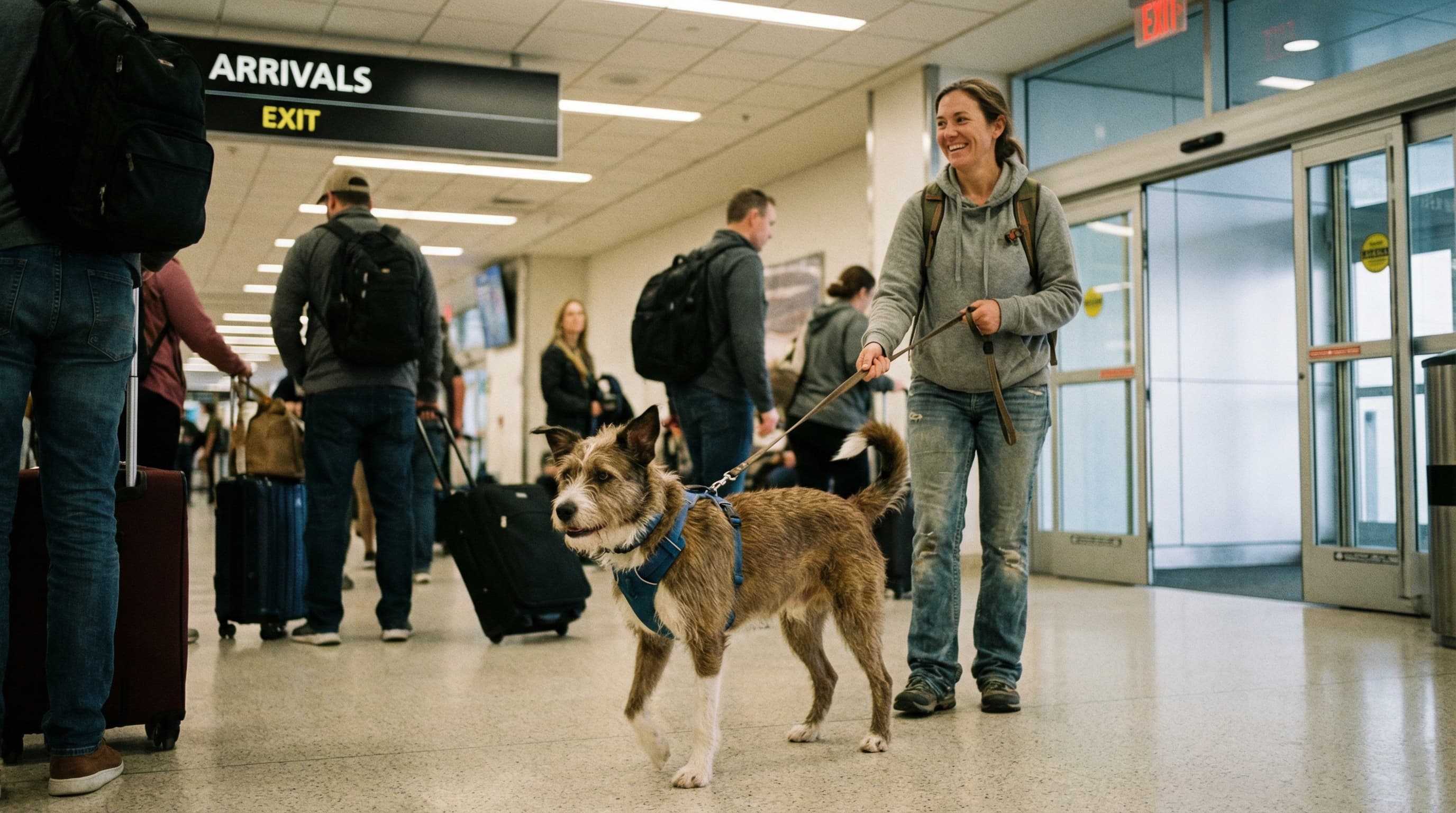
Pathway 2: Foreign-vaccinated dogs (much harder)
If your dog was vaccinated outside the US (including in Thailand):
- CDC Dog Import Form — free, completed online
- Certification of Foreign Rabies Vaccination and Microchip Form — endorsed by a Thai government vet (valid 30 days)
- Rabies serology titer from a CDC-approved lab (blood drawn at least 28 days before US entry)
- Can only enter at 6 specific US airports: ATL, JFK, LAX, MIA, IAD, or PHL
- Must book a spot at a CDC-registered animal care facility in advance
- Revaccination with a US-licensed rabies vaccine required on arrival
- 28-day quarantine at your expense if no valid titer test
Avoid this pathway if at all possible. Get your dog's rabies vaccine and Certification form done in the US before you travel.
Cats
Federal re-entry rules for cats are minimal. Your cat must appear healthy at the port of entry. That's the main federal rule.
There's no CDC import form for cats. No federal microchip rule. No titer test. No quarantine. The CDC Dog Import Form is dog-specific.
State rules may apply. Many US states need rabies vaccination for cats, and a few (Hawaii, Guam) quarantine all arriving cats. Check your home state's rules before you travel.
For the full re-entry process, see our guide to returning to the USA with a pet.
FAQ
Your bottleneck is sequencing. The import permit must be approved before the vet visit, and the USDA endorsement expires 10 days after issue. Get the import permit application in at least 4 weeks out, schedule the vet for 7–10 days before your flight, and have your return-trip Certification form ready to submit alongside the outbound health certificate.