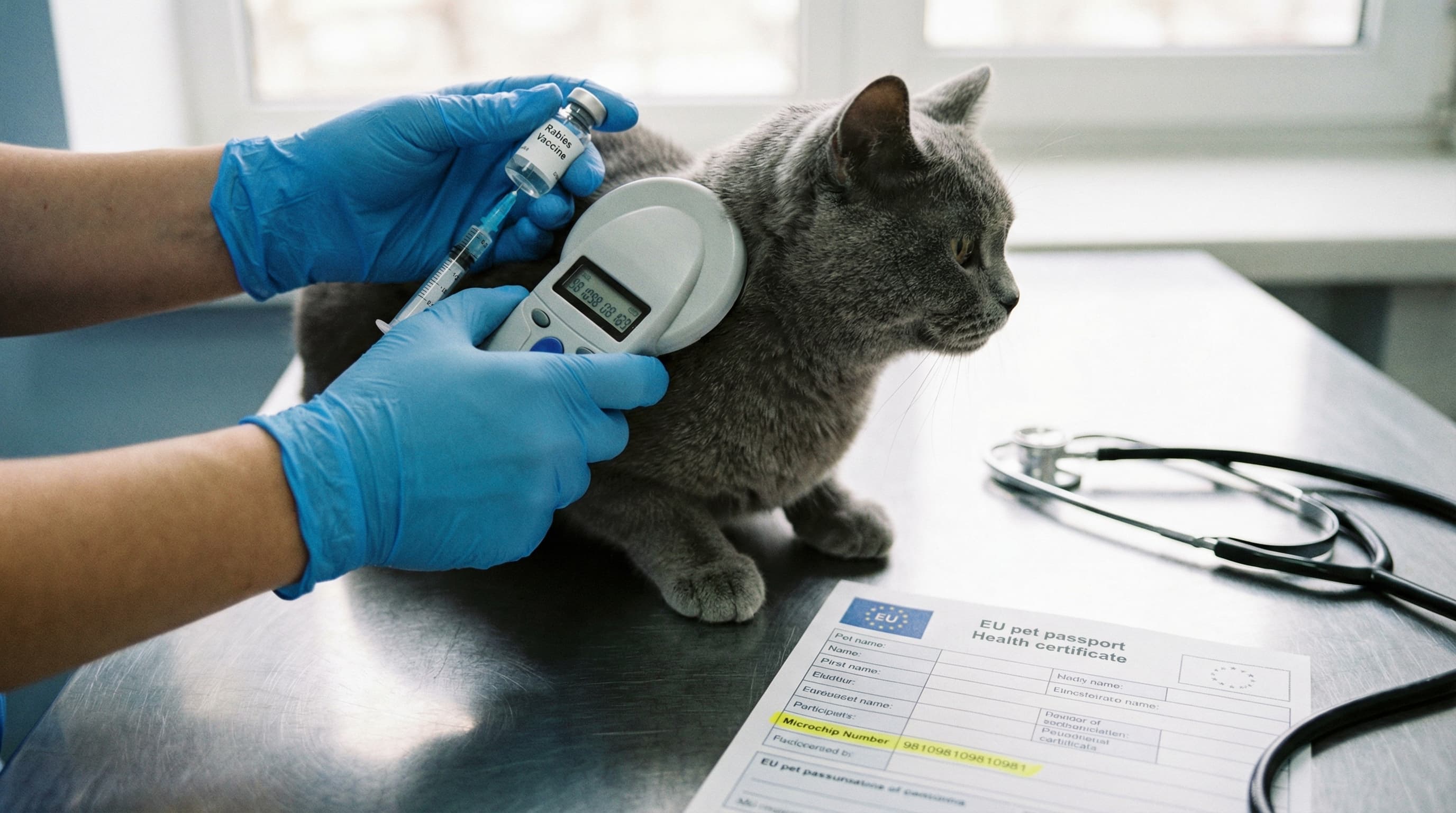
Your vet must implant the microchip before giving the rabies vaccine. They scan the chip, then give the shot. If the order is reversed, Ireland won't accept the vaccine — you'd need a new shot and a new 21-day wait.
Bringing a Dog or Cat to Ireland from the US — 2026 Requirements
20 min readinternational

Lisa Carter
International Pet Relocator
| Applies to | Dogs and cats (same entry rules except tapeworm is dogs only) |
| Documents | EU health certificate + USDA endorsement + rabies certificate |
| Vaccines | Rabies required (12+ weeks old, 21-day wait) |
| Microchip | Required (ISO 15-digit, before rabies vaccine) |
| Quarantine | None |
| Cost (Round trip) | Dogs: $700–$1,200 / Cats: $650–$1,100 |
| Timeline | Start 4–6 weeks before |
| Difficulty | 🟡 Moderate |
Flying to Ireland with your dog or cat from the US takes about 4 weeks of prep and costs $700–$1,200 round trip. You need a microchip, rabies vaccine (21-day wait for a first shot), an EU health certificate from a USDA-accredited vet, and USDA endorsement ($101).
Dogs also need tapeworm treatment 1–5 days before landing. Cats skip the tapeworm.
No blood test, no quarantine, no import permit.
The biggest surprise: Delta flies pets in cabin to Dublin at $200 each way. Most websites say no US airline allows cabin pets to Ireland. They're confusing Ireland with the UK.
Coming home is lighter on paperwork. This guide covers both directions for dogs and cats.
What You Need
Ireland is an EU member state. Pets from the US enter under EU Regulation 576/2013 with a few Ireland-specific extras.
The USA is a "listed" country under EU rules, meaning the EU considers US rabies controls reliable. That lets you skip the rabies blood test and 3-month waiting period that pets from non-listed countries (like India or Brazil) have to complete.
Here's what you need for dogs and cats (same for both unless noted):
- ISO 15-digit microchip: implanted before the rabies vaccine.
- Rabies vaccine: given after the microchip; pet must be at least 12 weeks old; first-time shots need a 21-day wait.
- EU health certificate + USDA endorsement: signed by a USDA-accredited vet and USDA-stamped within 10 days of arrival ($101).
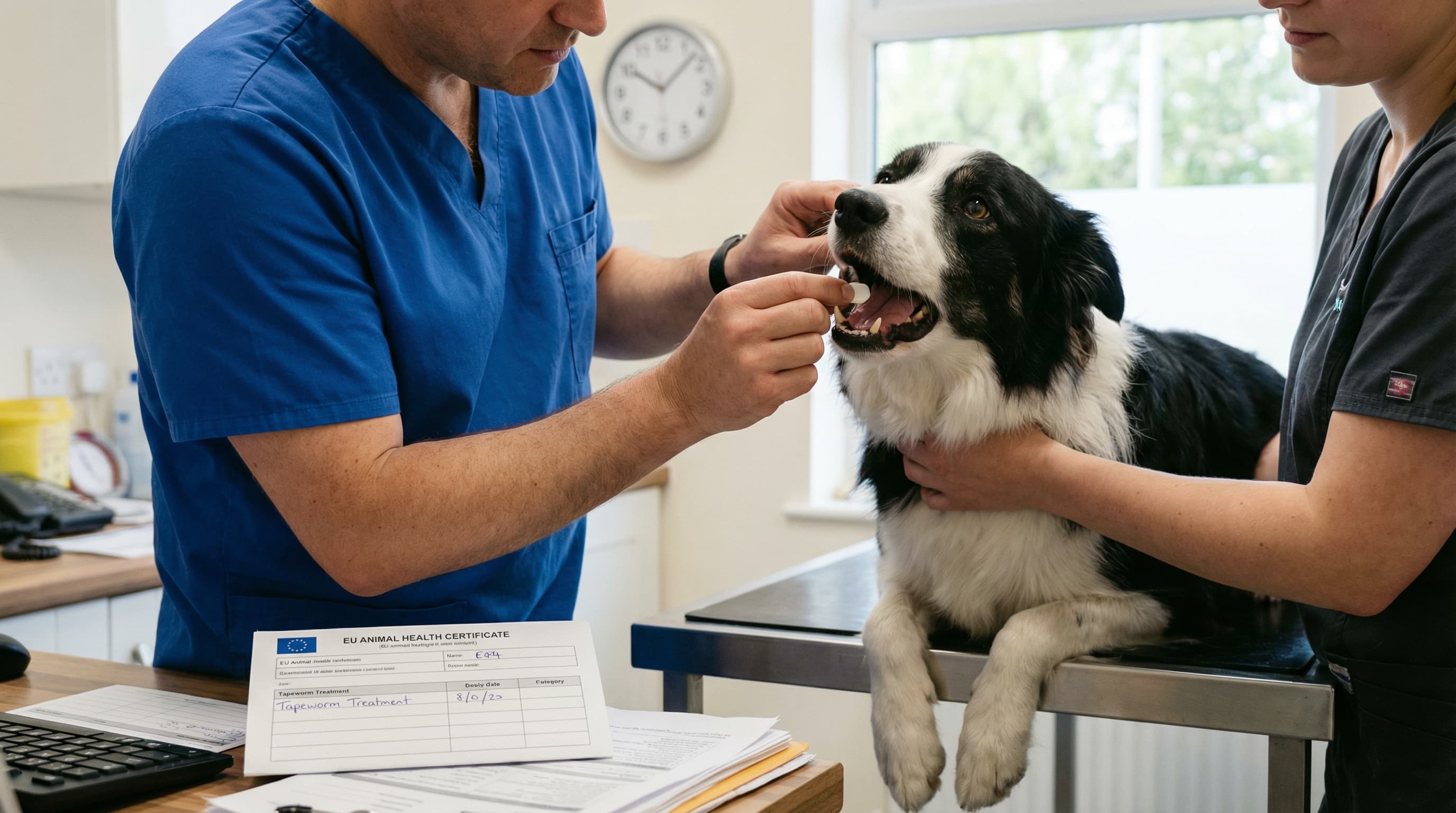
- Tapeworm treatment: 1–5 days before arrival, dogs only (praziquantel, given by a vet).
- DAFM portal registration: register your arrival at least 24 hours before landing; compliance check on arrival costs €50 per pet.
What you don't need: No quarantine, no import permit, no blood test.
Other rules: Maximum 5 pets per person. Original endorsed health certificate must travel with the pet (bring copies as backup). Owner must travel with the pet or send an authorized person within 5 days. Pets enter only through Dublin Airport, Cork Airport, Shannon Airport, Dublin Port, Ringaskiddy (Cork), or Rosslare Europort.
Critical
Vaccine Requirements
Ireland needs a current rabies vaccine for dogs and cats. Your pet has to be at least 12 weeks old for the shot.
First-time rabies (primary vaccination): Wait at least 21 days after the shot before traveling.
This means your pet has to be 15 weeks old minimum to enter Ireland (12 weeks + 21 days). For the EU health certificate, a first rabies shot is valid for 1 year only, even if your vet gave a 3-year product.
Booster (given before the previous shot expired): No waiting period. You can travel the same day. The booster lasts 1–3 years depending on the brand.
Under 15 weeks? Puppies and kittens that can't meet the 12-week + 21-day rule cannot enter Ireland under pet travel rules. There's no workaround.
Other vaccines: Ireland doesn't ask for anything beyond rabies. Airlines won't check for others either. But your vet will likely recommend core vaccines (DHPP for dogs, FVRCP for cats) since you're traveling.
A rabies vaccine costs $15–$35.
Health Certificate
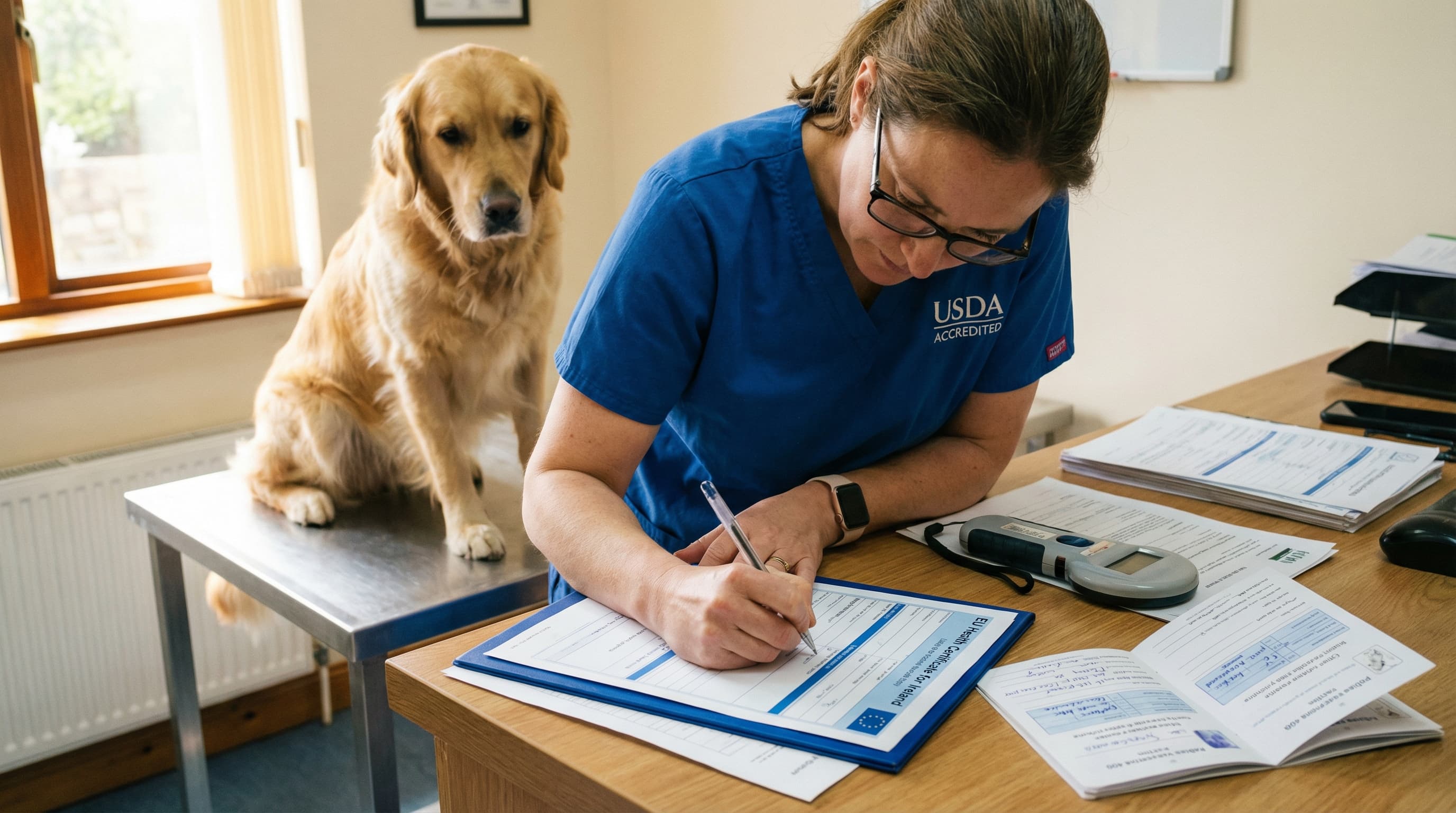
You need an EU non-commercial health certificate, not the standard APHIS 7001 used for most countries. USDA APHIS has the specific form for Ireland on their website.
What it must include:
- Animal description (breed, color, sex, age) with microchip number.
- Rabies vaccine details (dates, product, how long it lasts).
- Tapeworm treatment date and product (dogs only).
- Statement that your pet is healthy.
- Owner details, origin, and destination.
- Vet's signature and USDA accreditation number.
Timing: The certificate is valid for 30 days after the vet signs it. But USDA endorsement has to happen within 10 days of arriving in Ireland. That's the tighter deadline.
Schedule your vet visit about 7 days before departure, send the certificate to USDA the same day, and you'll have time for endorsement and travel.
After you land: Once Ireland stamps the certificate at the compliance check, it's valid for 4 months of travel within the EU. If you leave the EU and come back, you need a new one.
Cost: $150–$300 for the exam and certificate, depending on your vet. Not every vet holds USDA accreditation — find one near you. Most have filled out EU health certificates before — it's one of the more common international forms they handle.
For details on the health certificate process, see our health certificate guide.
USDA Endorsement
Required. The USDA has to stamp and sign your EU health certificate before you travel. This is a government review that says your vet filled out the form correctly.
Cost: $101 per certificate (covers all pets on that certificate).
How to get it: Submit the signed certificate to your nearest USDA APHIS Endorsement Office. In person is same-day. By mail takes 2–3 business days. Either way, it has to be done within 10 days of arriving in Ireland.
Timing tip: Get the vet exam done 7 days before departure. Mail or drop off the certificate the same day. That leaves time for endorsement plus a buffer if something needs fixing.
For details on USDA endorsement, see our USDA endorsement guide.
Microchip Requirements
Ireland needs an ISO 11784/11785 15-digit microchip. Your vet implants the chip, scans it to confirm it reads correctly, then gives the rabies shot. If the chip goes in after the vaccine, the vaccine doesn't count.
If your pet already has a non-ISO chip (like a 10-digit HomeAgain), you have two options: bring your own scanner that reads it, or have a second ISO chip implanted. Both chip numbers go on the health certificate.
Get the microchip. If your dog slips its leash on a Dublin street, a collar can come off. A microchip is the only reliable way to prove the dog is yours. Same for cats. $25–$60 at any vet, takes about 30 seconds.
Dogs also need a microchip for US re-entry (CDC rule). Cats don't have a federal microchip rule for coming home, but if your cat escapes at Dublin Airport, you'll wish you had one.
Tapeworm TreatmentDogs Only
Ireland is one of four EU countries (along with Finland, Malta, and Norway) that needs tapeworm treatment for dogs. The target parasite is Echinococcus multilocularis. Cats don't need this.
What: Praziquantel, given by a vet.
When: Between 1 and 5 days (24–120 hours) before your dog arrives in Ireland. Not before. Not after. The vet records the product name and date on the EU health certificate.
Cost: $15–$30.
Timing is tricky. If your vet visit for the health certificate falls within the 1–5 day window, the vet can do the tapeworm treatment at the same appointment.
If your vet visit is earlier (say, 7 days before departure for endorsement timing), you'll need a second vet visit closer to departure for the tapeworm treatment alone. Plan around this.
Watch OutThe tapeworm treatment window is strict. Too early and the clock runs out before you land. Too late and the treatment hasn't been given 24 hours before arrival. Miss the window and your dog could be quarantined at your expense.
Airline Rules for Flying to Ireland
Airline rules apply on top of Ireland's entry rules. Here's what works for pets flying from the US to Dublin:
| Delta | Yes | $200 | Only US airline with direct cabin option to Dublin. Must call to book. |
| KLM | Yes (via Amsterdam) | ~€75 | 8kg limit including carrier. Compliance check in Amsterdam, not Dublin. |
| Air France | Yes (via Paris) | €70–€200 | 8kg limit including carrier. Compliance check in Paris, not Dublin. |
| Aer Lingus | No (cargo only) | Varies | Book through IAG Cargo: 1-866-300-4004. |
| United | No | N/A | No cabin pets to Dublin. |
| American | No | N/A | No cabin pets to Dublin. |
| Ryanair | No | N/A | No pets at all. Not even cargo. |
TipDelta is the only US airline that flies pets in cabin to Dublin. Many websites say otherwise because they confuse Ireland with the UK (which is on Delta's ban list). Call Delta Reservations to add your pet — you can't book or check in online.
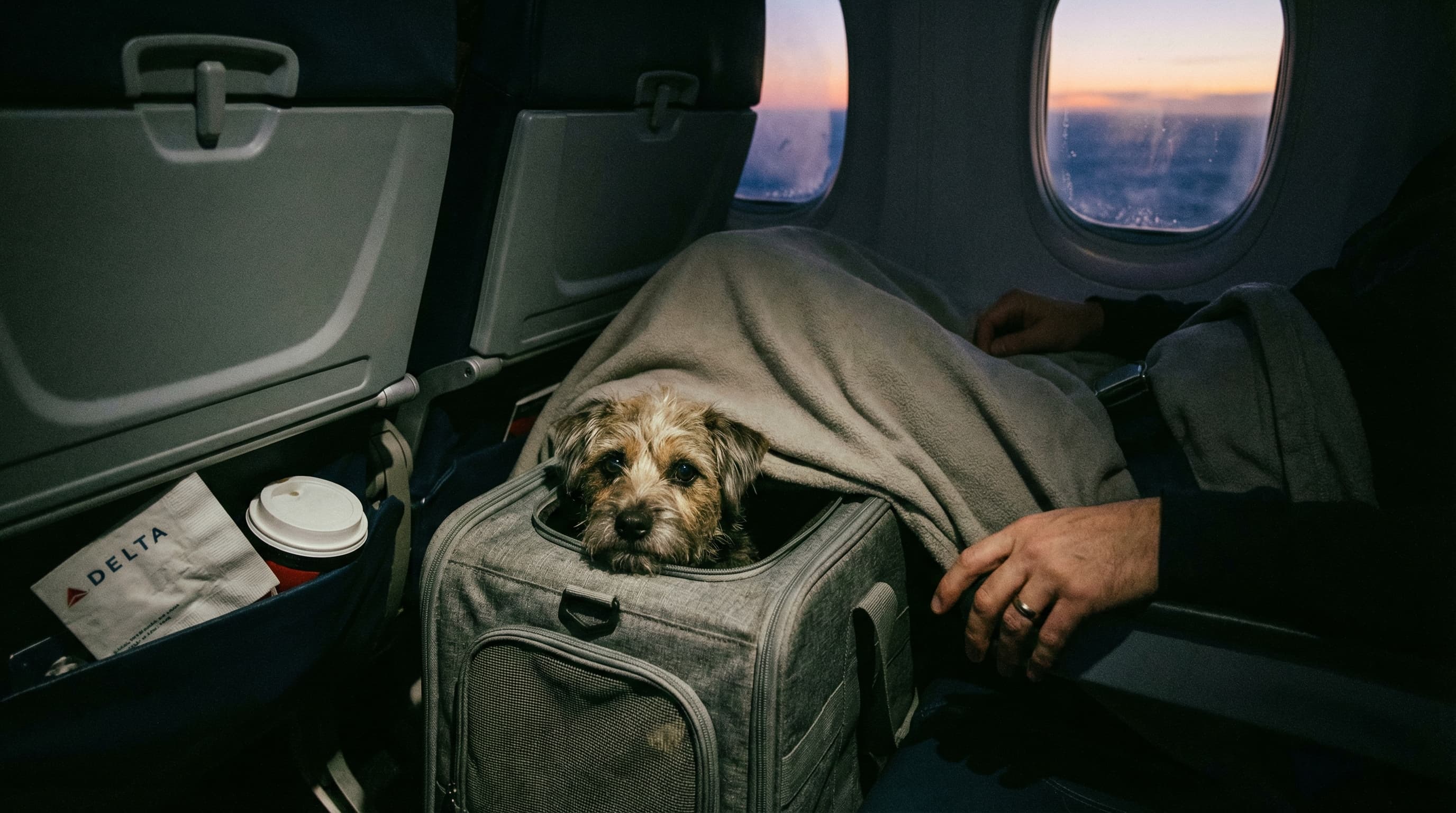
Cabin travel on Delta: Soft-sided kennel, max 18x11x11 inches, ventilation on 4 sides for international flights. Your pet must fit under the seat.
No Business Class, no Delta One, no Premium Select. Only Main Cabin and Comfort+, max 4 pets per cabin. Your pet must be at least 15 weeks old for EU travel.
European carriers (KLM, Air France): Both allow cabin pets on connecting routes through Amsterdam or Paris. Strict 8kg limit including carrier. If your pet weighs more, cabin isn't an option on these airlines.
Cargo: If your pet is too big for under-seat, cargo is the only direct option to Dublin — and yes, 8+ hours in a hold is stressful to think about. The hold is pressurized and temperature-controlled, same as the cabin.
Aer Lingus handles pet cargo through IAG Cargo. Contact the North American Pet Desk (1-866-300-4004 or petdesk@iagcargo.com) at least 2 weeks before travel.
Pricing is quote-based and starts around $1,500–$3,000+ depending on pet size and crate.
Pet transport companies: Full-service door-to-door transport to Ireland runs $3,600–$6,200 per pet through companies like Starwood Pet Travel.
They handle paperwork, vet coordination, USDA endorsement, flights, and customs on both ends.
For a full comparison of airline pet policies, see our airline pet fee comparison.
Breed Restrictions
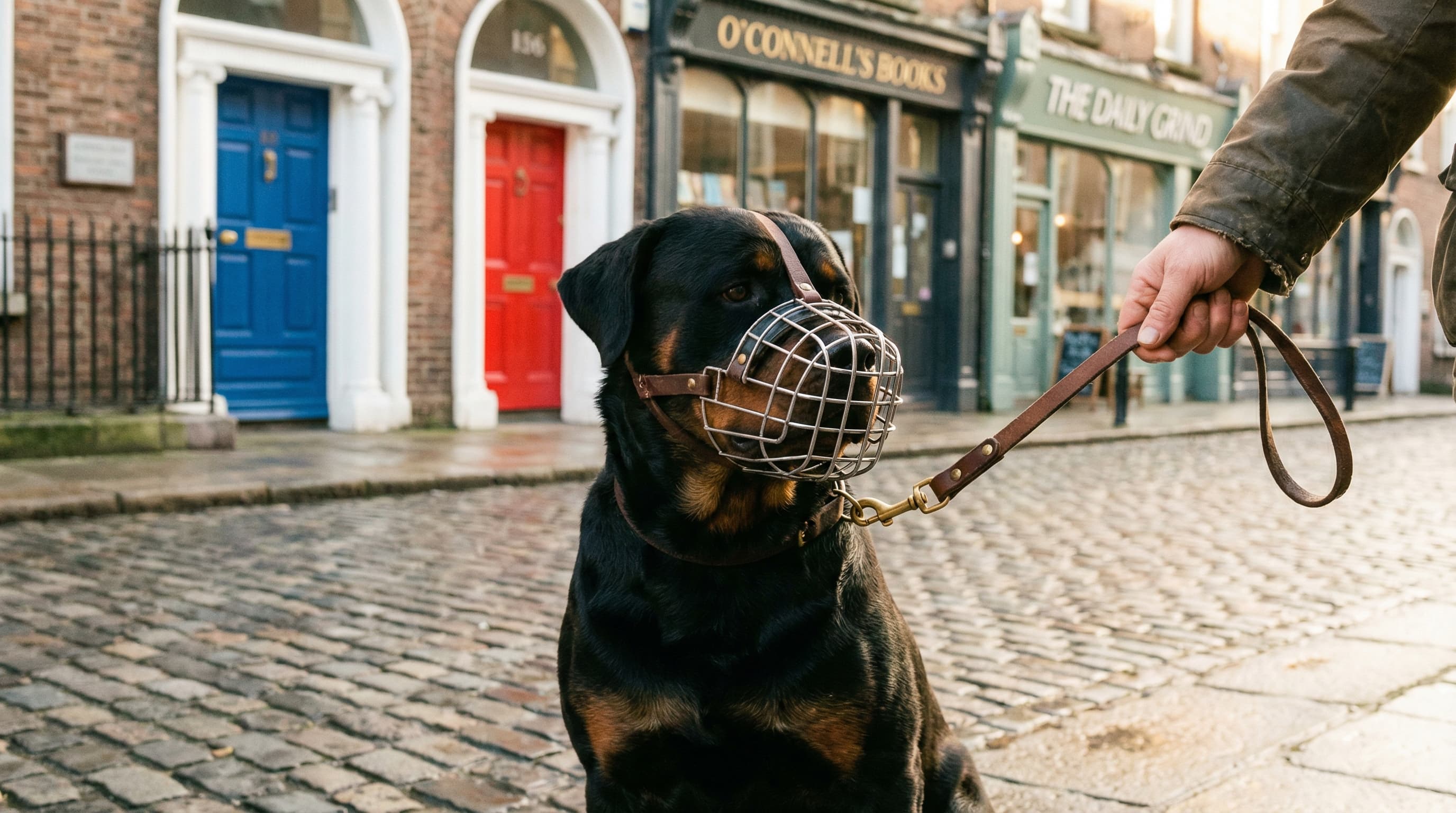
Ireland has 11 restricted dog breeds under the Control of Dogs Regulations 1998. These dogs (and their crosses) must be:
- Muzzled in public at all times.
- Kept on a short, strong lead.
- Controlled by someone 16 years or older.
Restricted breeds: American Pit Bull Terrier, Bull Mastiff, Doberman Pinscher, English Bull Terrier, German Shepherd, Japanese Akita, Japanese Tosa, Rhodesian Ridgeback, Rottweiler, Staffordshire Bull Terrier, and Bandog (or any cross of these breeds).
XL Bully: banned. As of October 1, 2024, it is illegal to import, breed, sell, or re-home XL Bully type dogs in Ireland. This is the first breed Ireland has moved from restricted to fully banned. If you have an XL Bully, you cannot bring it to Ireland.
Ear-cropped dogs: Under the 2023 Regulations, it is illegal to import a dog with cropped ears into Ireland without an advance import license from DAFM. If your dog has cropped ears, you must apply for this license before travel. Contact livetrade@agriculture.gov.ie for the application details.
If your dog is a restricted breed, that's a genuine complication, but not a ban. You can still bring them. Muzzle and a short lead are the rules, and you need to follow them from the moment you land.
Cost Breakdown
Dogs
| Vet exam + EU health certificate | $150–$300 | USDA-accredited vet, includes tapeworm treatment notes |
| USDA endorsement | $101 | Per certificate, no lab tests |
| Rabies vaccine (if needed) | $15–$35 | Skip if current and unexpired |
| Microchip (if needed) | $25–$60 | Must be implanted before rabies vaccine |
| Tapeworm treatment | $15–$30 | Praziquantel, 1–5 days before arrival |
| Compliance check (€50) | ~$55 | At Dublin/Cork/Shannon airport |
| Delta cabin fee (each way) | $200 | Only direct US cabin option |
| IAG Cargo (each way) | $1,500–$3,000+ | If too big for cabin |
| Pet transport company | $3,600–$6,200 | Door-to-door, one way |
| Total estimate (cabin, round trip) | $700–$1,200 | Small dog, Delta cabin |
| Total estimate (cargo, round trip) | $2,200–$3,800+ | Via IAG Cargo |
| Total estimate (transport company) | $4,000–$7,000+ | Door-to-door service |
Cats
| Vet exam + EU health certificate | $150–$300 | USDA-accredited vet |
| USDA endorsement | $101 | Per certificate |
| Rabies vaccine (if needed) | $15–$35 | Skip if current and unexpired |
| Microchip (if needed) | $25–$60 | Not federally needed for US re-entry, but strongly recommended |
| Compliance check (€50) | ~$55 | At Dublin/Cork/Shannon airport |
| Delta cabin fee (each way) | $200 | Only direct US cabin option |
| Total estimate (cabin, round trip) | $650–$1,100 | Cat in cabin, Delta |
Timeline
4–6 weeks before departure: If your pet's rabies vaccine is expired or this is a first shot, get it done now. The microchip goes in first (same vet visit), then the rabies shot. You need 21 days after the vaccine before you can travel.
If rabies is already current and the booster was given before the previous shot expired, skip this step.
3–4 weeks before: Call Delta to reserve a pet spot on your flight. Cabin spots are limited (max 4 per cabin on most aircraft) and you can't book online.
If you're using KLM or Air France, book the pet when you book the flight. If your dog is a restricted breed, confirm your airline's breed policy.
7–10 days before departure: Vet appointment. The vet fills out the EU health certificate, confirms the microchip reads correctly, and records all vaccination details.
If this visit falls within the 1–5 day tapeworm window, the vet does the tapeworm treatment too (dogs only). Send the signed certificate to USDA for endorsement the same day.
3–5 business days before: USDA endorsement comes back (if mailed). Pick up the endorsed certificate or receive it by mail with your prepaid return label.
1–5 days before arrival in Ireland: Tapeworm treatment for dogs, if not already done at the vet visit. A vet has to give it and record it on the health certificate.
24+ hours before arrival: Book your arrival on the DAFM portal. It's a short online form that schedules your compliance check. Do it a week before if you can.
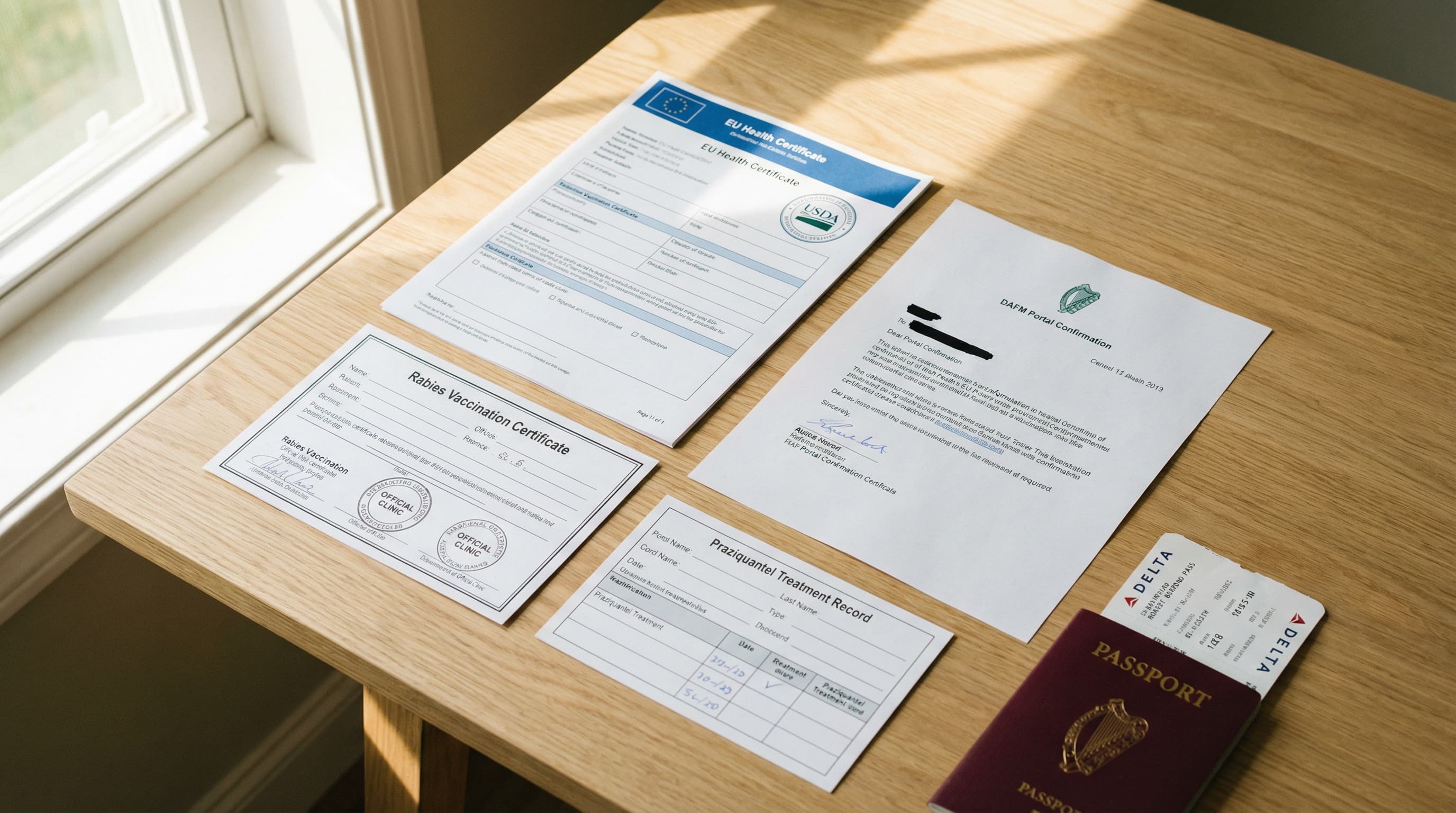
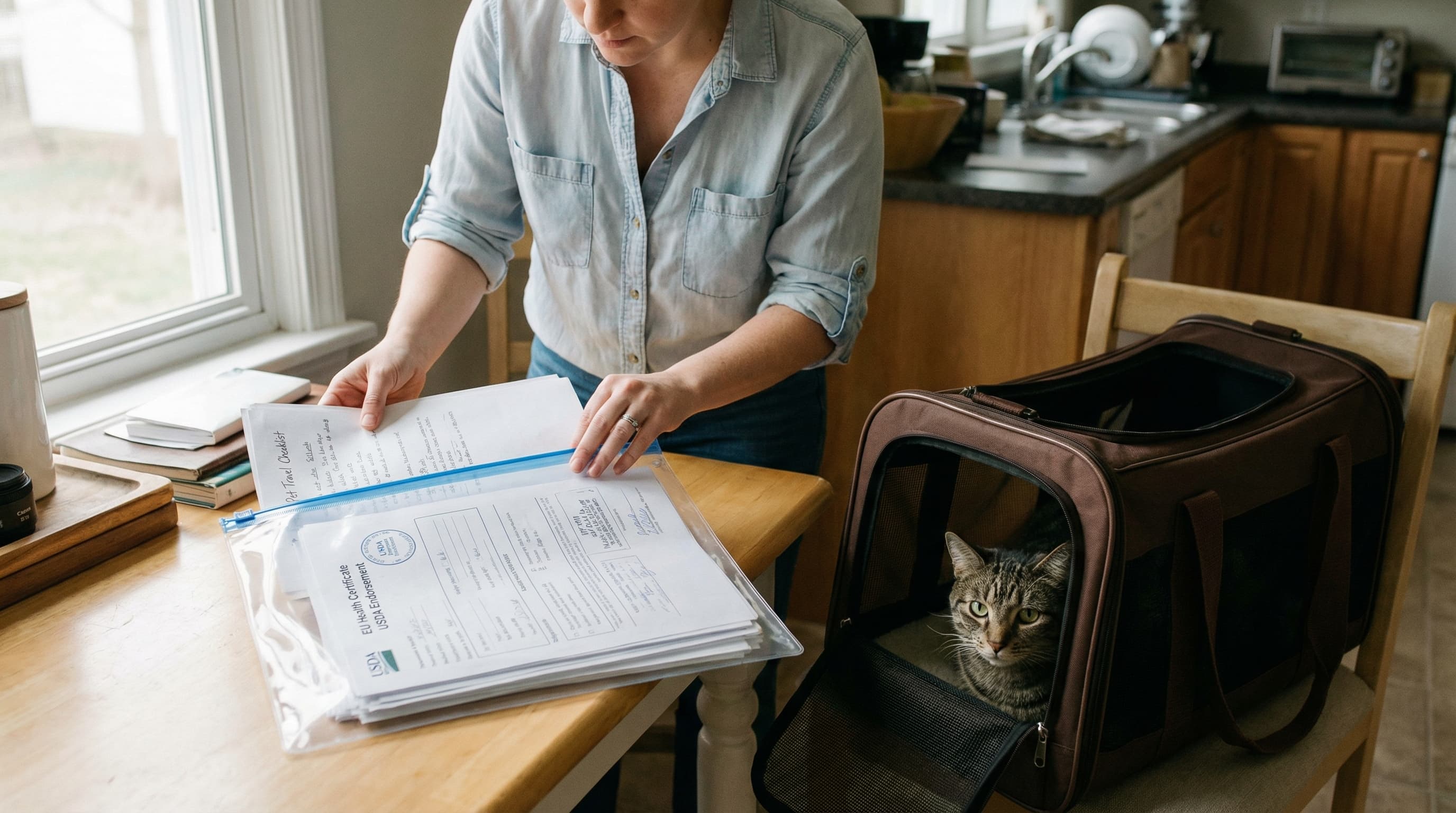
Travel day: Bring the endorsed EU health certificate (original), rabies certificate, microchip records, and tapeworm treatment records in a waterproof folder.
Arrive at the airport 90 minutes early. Exercise your pet before heading through security.
This is the same process thousands of US pet owners use to fly to Ireland every year. No quarantine, no titer test, and Dublin's inspectors handle pet arrivals daily. If your paperwork is right, you're through in 15 minutes.
Common Mistakes
Airport Tips
Departing the US (Delta): Check in at the Special Service Counter. You can't check in online when traveling with a pet. The agent checks your reservation, kennel dimensions, and collects the $200 fee.
At security, remove your pet from the carrier and hold it (use a harness and leash for cats). Send the empty carrier through the X-ray.
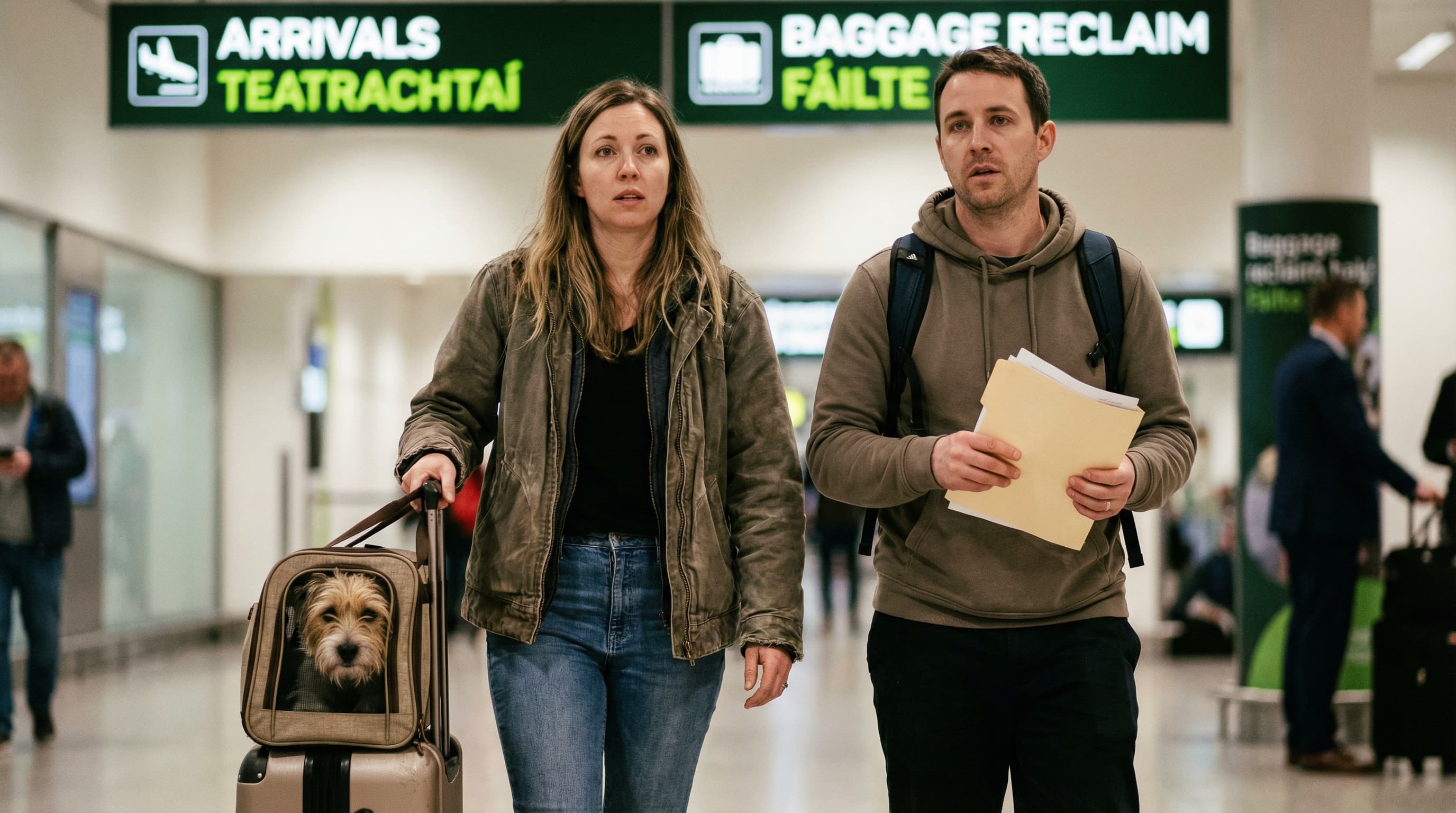
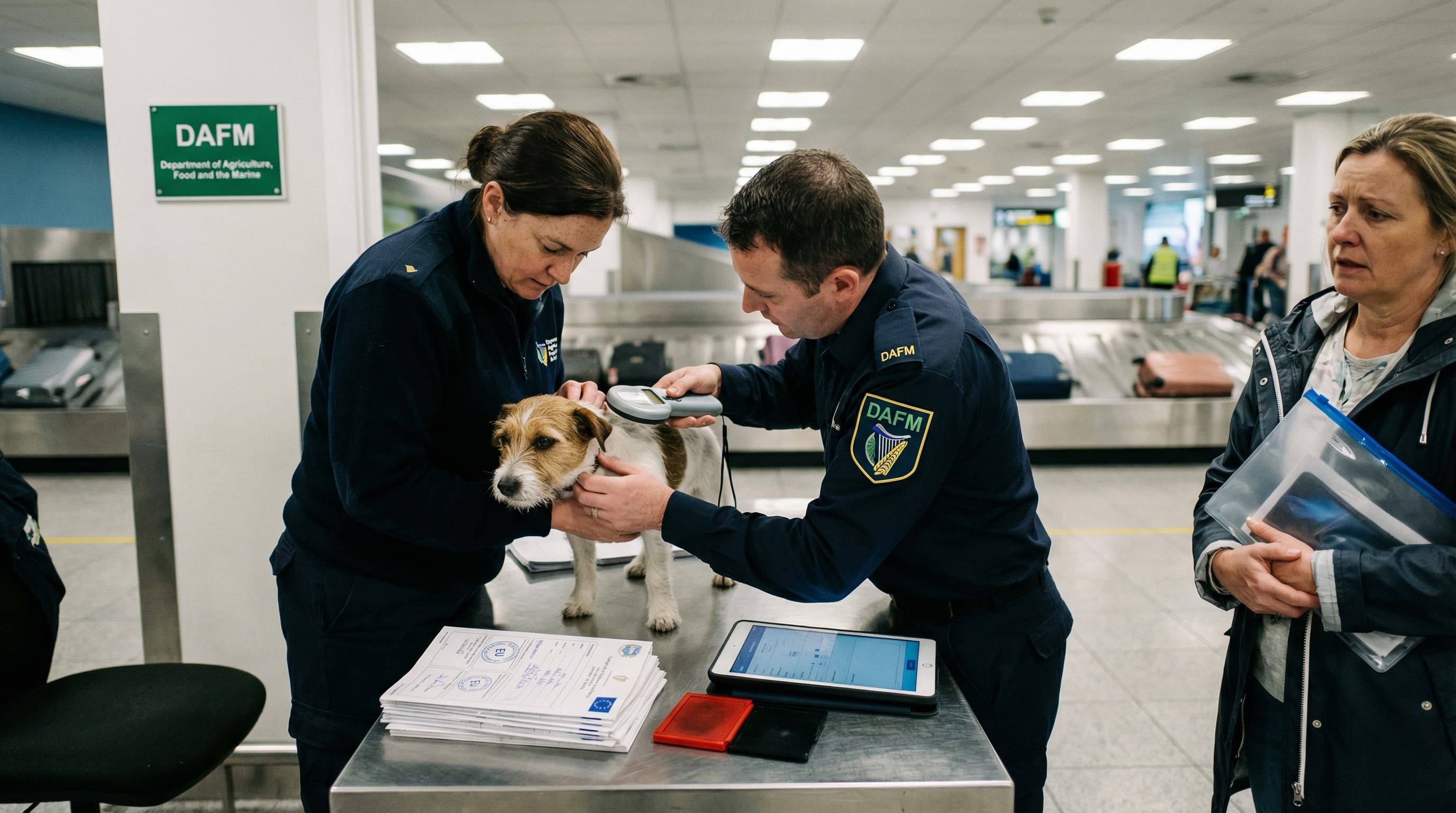
Arriving in Dublin: After you collect your bags, go to the DAFM inspection point — Terminal 1 near carousel 6, Terminal 2 near carousel 2.
Do not leave the baggage hall before the compliance check. If no inspector is waiting, press the "Duty Supervisor" button on the courtesy phone.
The inspector reviews your health certificate, vaccination records, microchip, and tapeworm treatment (dogs). If everything checks out, they stamp the certificate and you're free to go.
Dublin Airport hours: DAFM staff work 7:00–21:00 in the terminals. If your flight lands outside those hours, a third-party service (Lissenhall Kennels, +353 1 840 1776) handles the check for an extra fee. Contact them before you fly.
Shannon Airport: Inspectors are available 08:00–16:00, Monday through Friday only. If you're landing outside those hours, email PetsShannon@agriculture.gov.ie first to confirm they can handle your arrival.
Connecting through Europe: If you fly via Amsterdam (KLM) or Paris (Air France), the compliance check can happen at your first EU entry point instead of Ireland. This is optional. If you skip it there, you get checked in Ireland.
Pet relief area: Dublin Airport Terminal 2 has a pet relief area after security, across from Butler's Coffee. Terminal 1's facility is still in development.

Returning to the US
Dogs
Ireland is a low-risk rabies country, so the paperwork coming home is light.
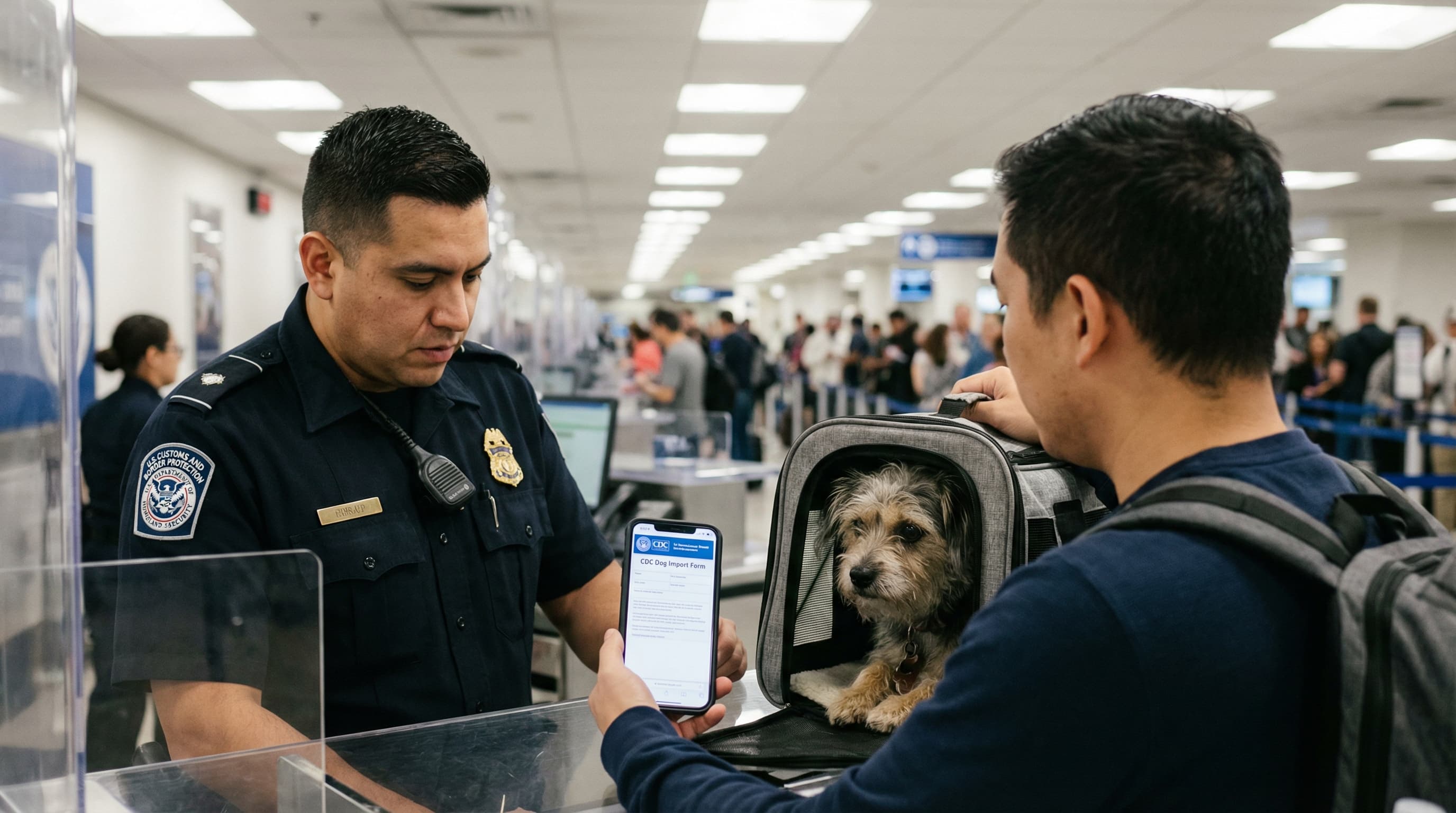
- Fill out the CDC Dog Import Form on the day of travel (or up to 6 months before). The receipt is valid for multiple entries from the same country only. Print it or show it on your phone.
- Microchip readable by a universal scanner.
- At least 6 months old.
- Appears healthy on arrival.
- No screwworm certificate needed (Ireland is screwworm-free).
- Your destination state's rules also apply. Check those separately.
Cats
- Cats must appear healthy on arrival. That's the main federal rule.
- No CDC import form (it's dog-specific).
- No federal microchip needed.
- No screwworm certificate.
- Some states need proof of rabies vaccination for cats. Check your home state's rules.
For the full re-entry process, see our guide to returning to the USA with a pet.
Your next step: Get your pet microchipped (if they aren't already) and confirm their rabies vaccine is current. Those two things have the longest lead time because of the 21-day wait after a first rabies shot. Everything else fits into the last 10 days.