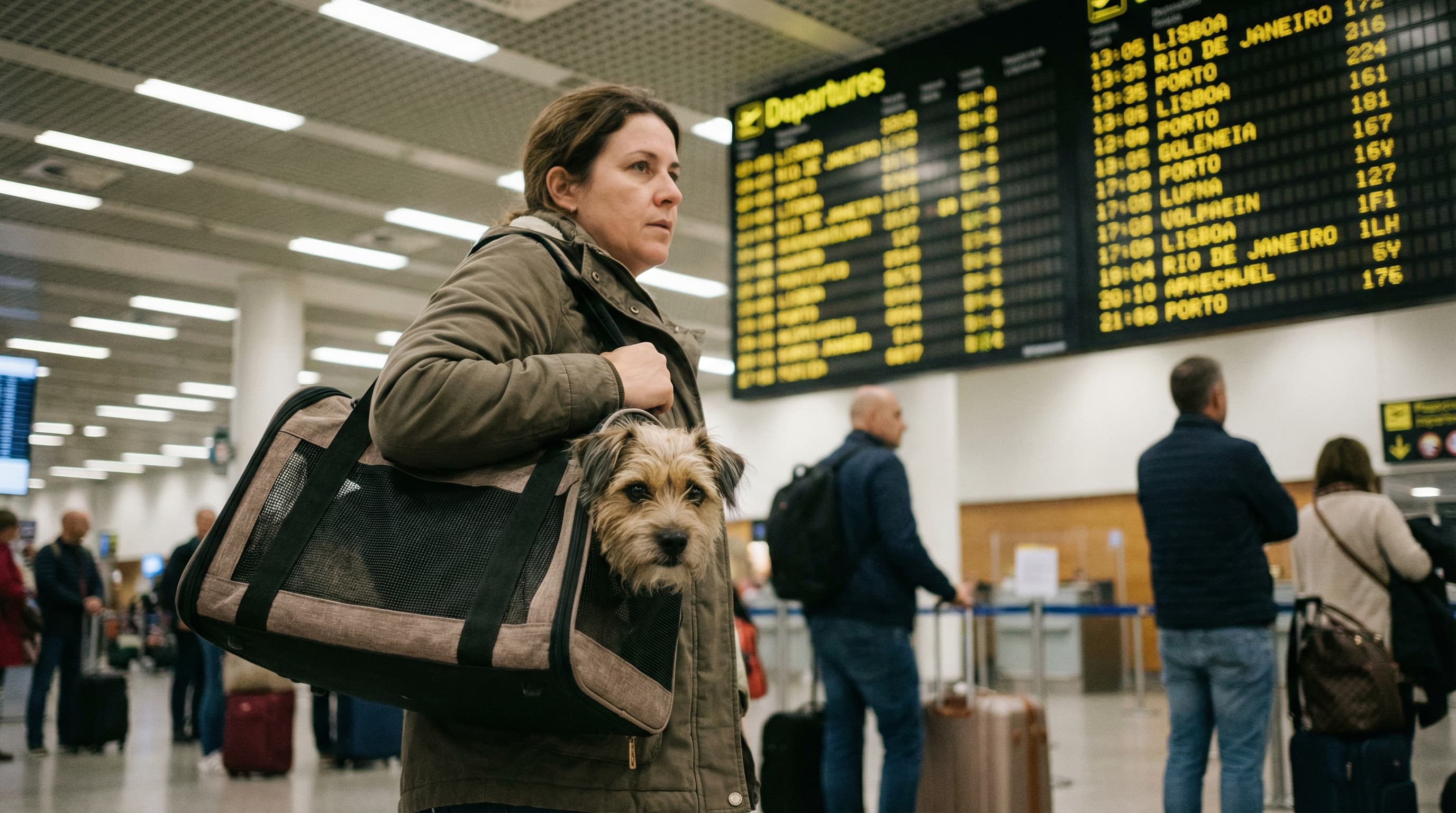
Per-flight pet limits are enforced at booking, not at the gate. If the flight is full when you try to add your pet, you'll be turned away at the counter with no recourse.
How to Fly with a Dog in 2026: Cabin, Cargo, and Costs
12 min readplanning

James Harlow
Pet Relocation Consultant
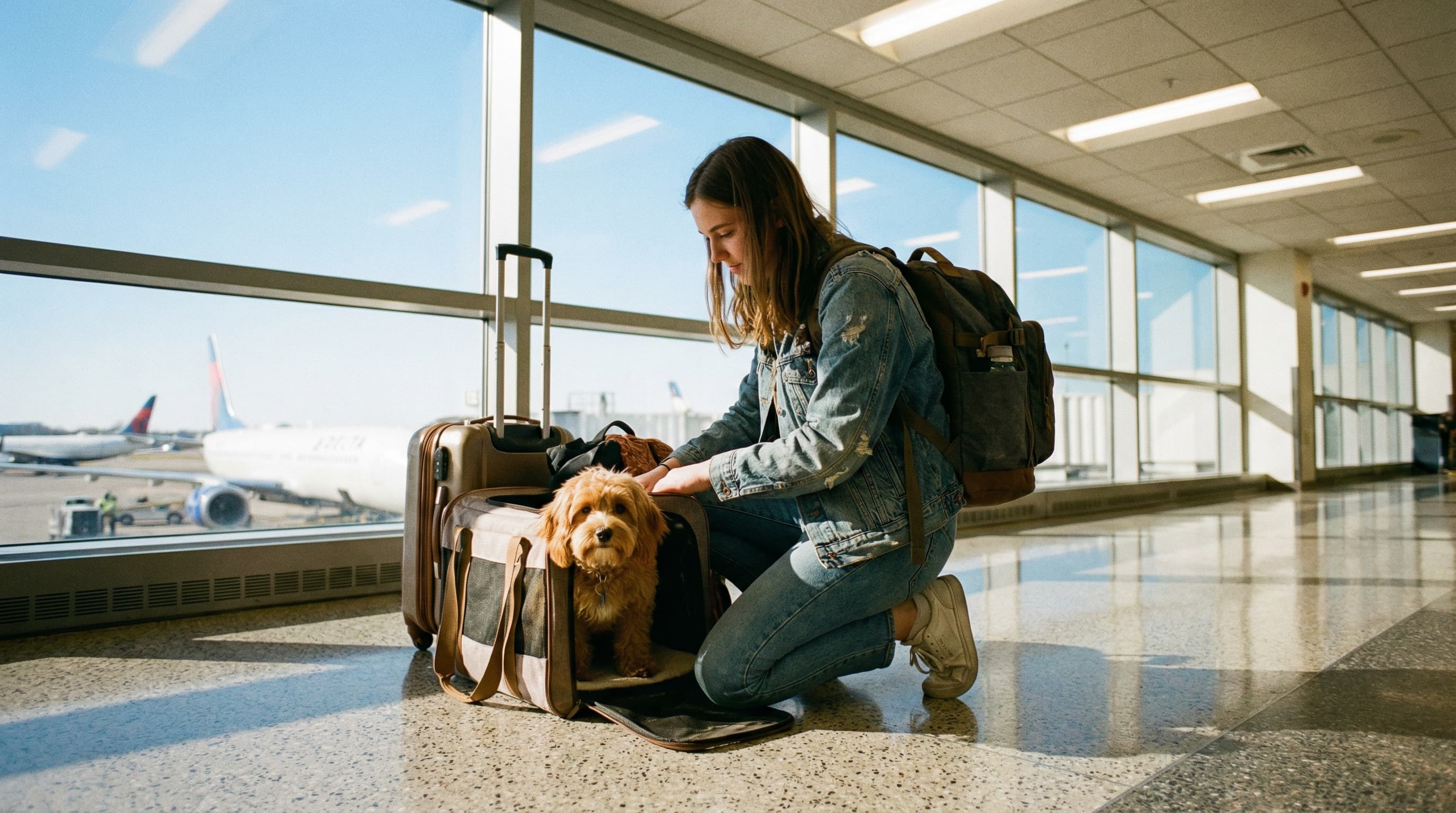
Quick answer: If your dog fits in a soft-sided carrier under the seat, they fly in the cabin with you for $100–$150 each way. Larger dogs travel in the cargo hold — a different booking process, higher costs, and more lead time required.
Flying with a dog takes some planning, but it's not complicated. Most of the work happens before the airport: book early, get the right carrier, and see your vet within 10 days of your flight.
Cabin or Cargo? Start Here
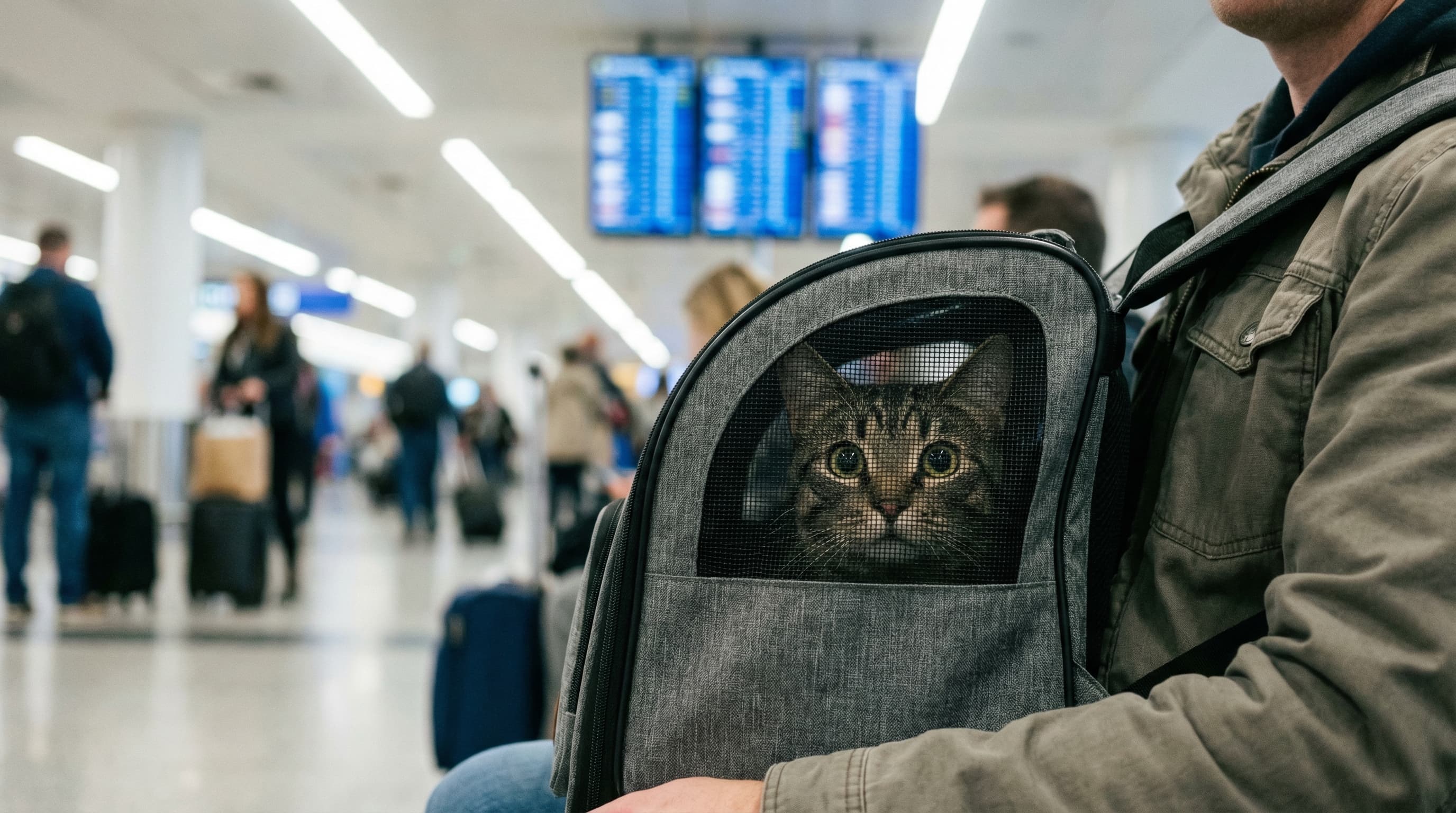
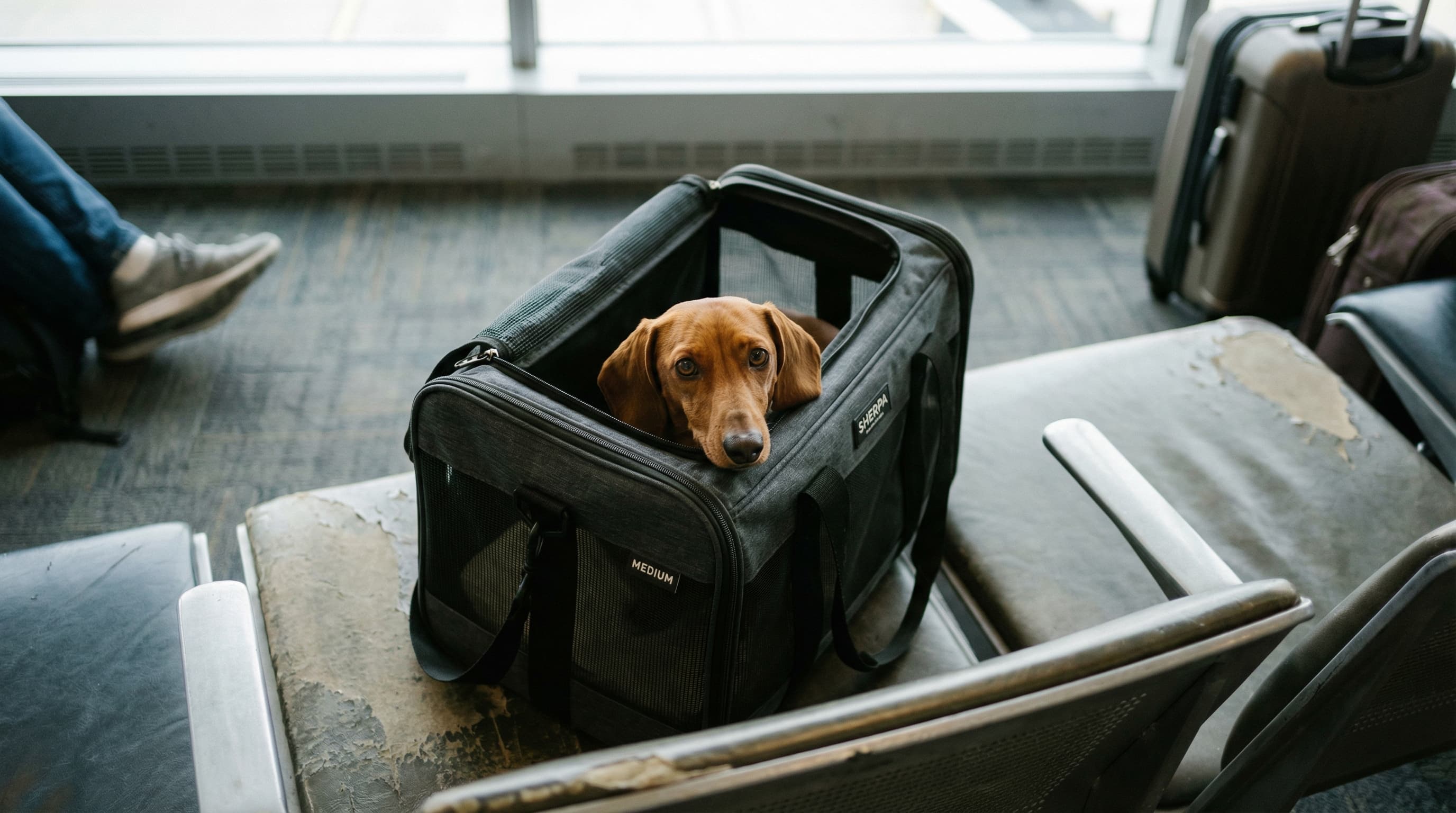
The deciding factor is your dog's size. If they fit comfortably in a carrier under the seat — typically a soft-sided bag no larger than 18" × 11" × 11" — they fly in the cabin with you. If not, cargo is the route.
Weight limits are less clear-cut than most airline sites suggest. American has a 20 lb combined limit (dog + carrier). Delta, United, and Southwest publish no official weight limit — if the carrier fits under the seat and your dog fits in the carrier, you're set.
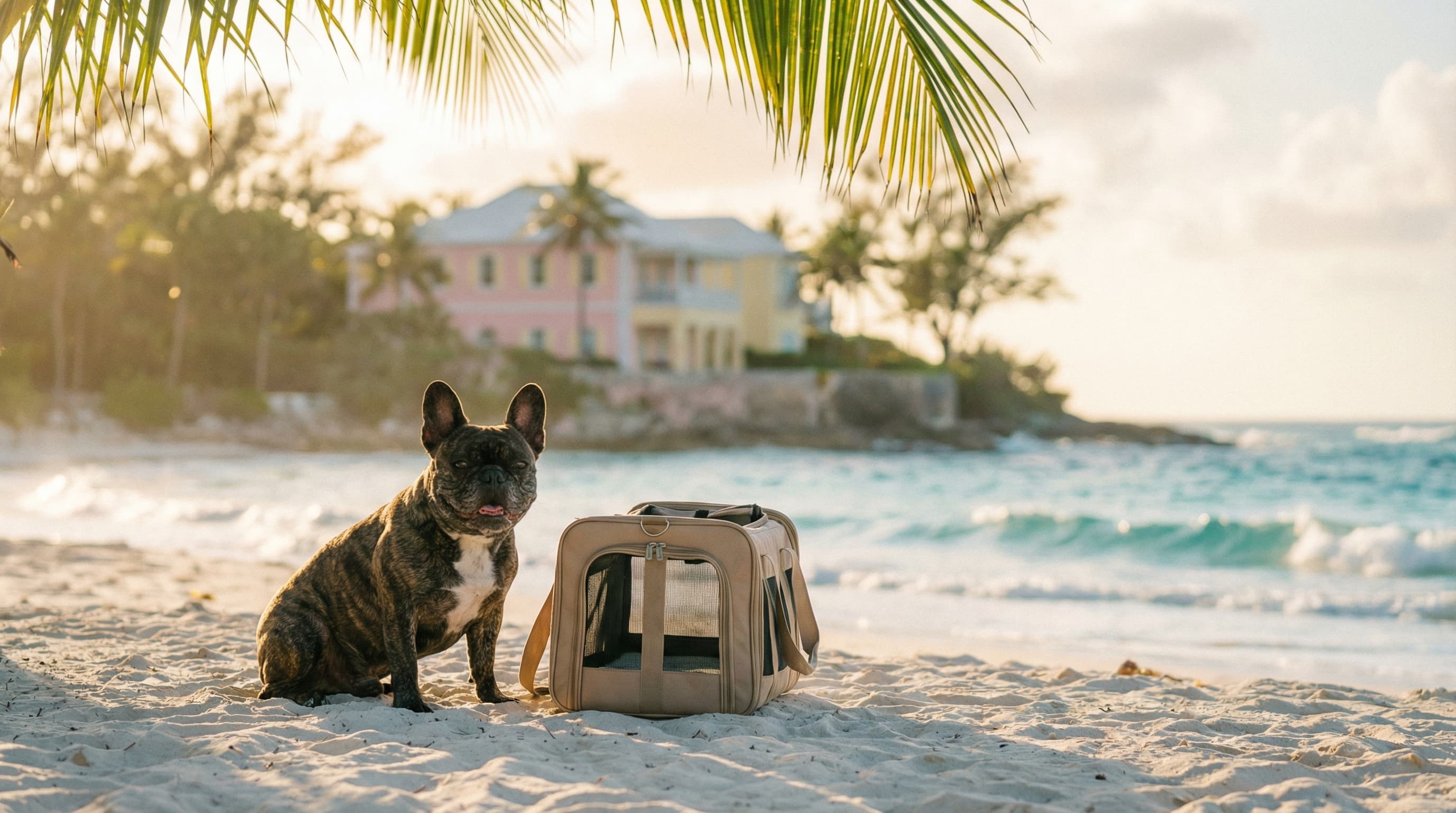
Flat-faced breeds (Bulldogs, Pugs, French Bulldogs, Boston Terriers, Boxers, Shih Tzus, and similar) are banned from cargo at most airlines. Their airways are more prone to collapse under the stress and low-oxygen conditions of a cargo hold.
If your flat-faced dog is small enough for a cabin carrier, they can usually fly that way. If not, most airlines have no cargo option for them.
How to Fly with a Dog in the Cabin
Step 1: Book your dog when you book your ticket
Each flight caps cabin pets at 4–8 depending on aircraft. Those spots fill on popular routes, sometimes weeks out.
Most airlines let you add a pet during checkout on their website or app. American and United each have an "Add Pet" step during booking. Delta requires a call or chat to reservations — you cannot add a pet online.
Southwest and Alaska also require a call or chat to reservations. Book your dog the same day you book your own ticket — not as an afterthought.
Watch Out
Step 2: Get the right carrier
Soft-sided carriers are accepted everywhere and compress slightly to fit tight seat wells. Hard-sided carriers have stricter dimension limits and don't work on all aircraft.
Current carrier limits and fees across major US airlines:
| Delta | 18" × 11" × 11" | $150 |
| American | 18" × 11" × 11" | $150 |
| United | 18" × 11" × 11" | $150 |
| Southwest | 18.5" × 13.5" × 9.5" | ~$125 |
| Alaska | 17" × 11" × 9.5" | $100 |
The 18" × 11" × 11" soft-sided carrier fits Delta, American, and United. Alaska caps height at 9.5" — the same as Southwest. If you fly different airlines on the same trip, buy for the most restrictive.
Get the carrier weeks before your flight and leave it out at home. Dogs who've never been in a carrier before boarding day are the ones who panic at the gate.
Step 3: Get a health certificate
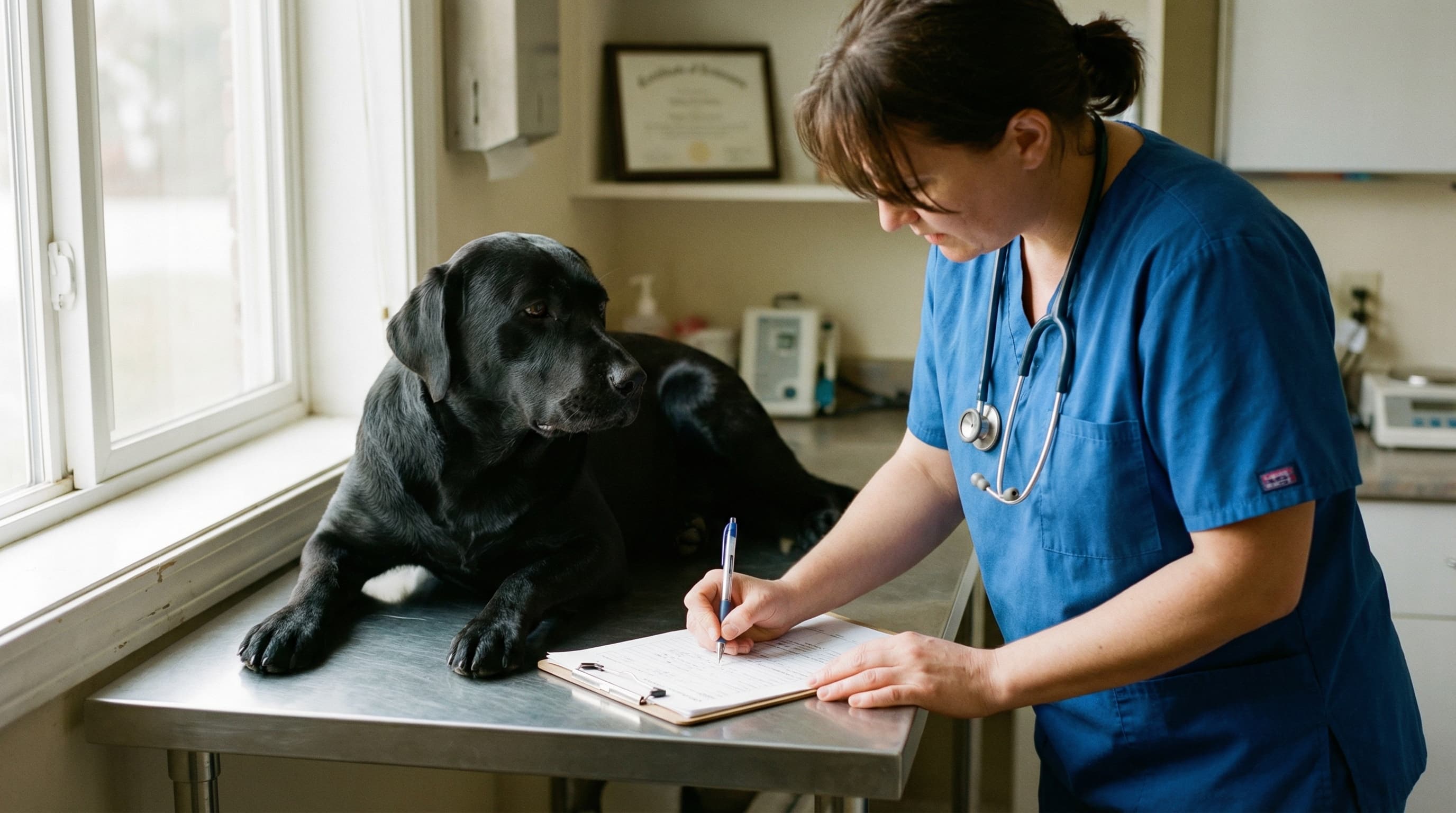
A health certificate is a vet-signed document confirming your dog is healthy and fit to fly. Most airlines require one or strongly recommend it for cabin travel — for cargo it's always required.
The certificate must be issued within 10 days of your flight date. Schedule the vet visit 5–8 days before departure to stay comfortably inside that window without cutting it too close.
The full health certificate guide walks through the vet visit, what to bring, and what the certificate needs to say.
Step 4: Check in and pay the pet fee
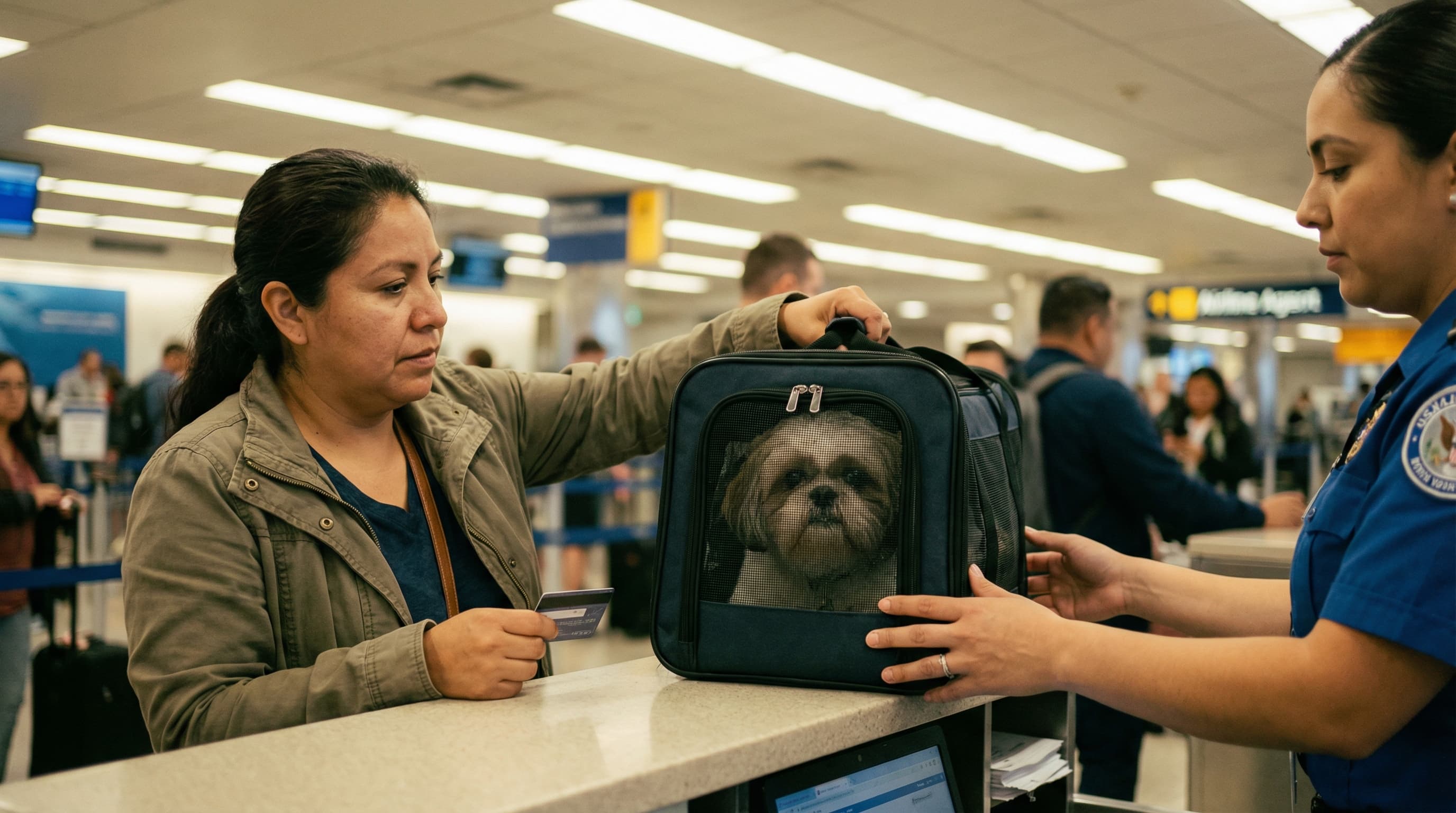
Arrive earlier than usual. Even with online check-in, you need to stop at the ticket counter to pay the pet fee and have your carrier verified in person. Airlines don't accept pet fees at the gate.
Budget an extra 20–30 minutes. Bring a credit card — most airlines don't accept cash for pet fees.
Step 5: Through TSA security
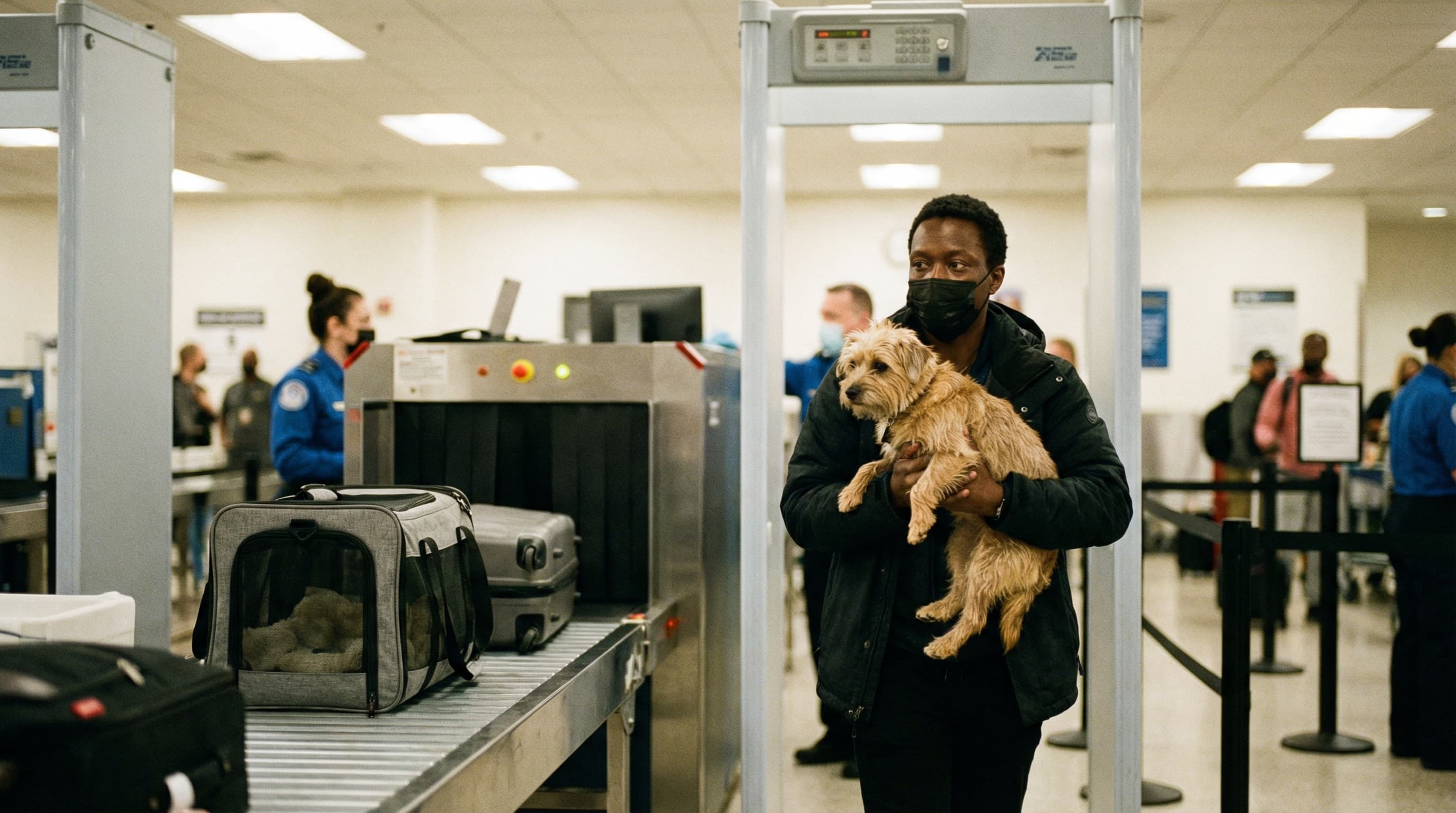
TSA's official process for traveling with a dog:
- Remove your dog from the carrier at the checkpoint
- Send the empty carrier through the X-ray machine
- Walk through the metal detector holding your dog — you can use a leash, but remove it before stepping through the detector
- TSA may do a visual or physical inspection of the carrier on the other side
Keep a firm hold at the metal detector. Busy airports and loud buzzers are the combination that sends dogs bolting.
Step 6: On the plane
Your dog stays in the carrier for the entire flight — under the seat in front of you, not on your lap, not on an empty seat. Flight attendants will remind you if it comes out.
Most dogs settle once the engine noise starts. The cabin is pressurized and temperature-controlled.
For flights over 3–4 hours, water is the main challenge. A small collapsible bowl and a water bottle work better than trying to pour through mesh. Ask a flight attendant for help if needed.
How to Fly with a Large Dog (Cargo)
Large dogs travel in the cargo hold — a pressurized, temperature-controlled section below the passenger cabin. It's not the nightmare that forum posts suggest.
The logistics are different, the costs are higher, and the process starts weeks before your flight.
Step 1: Confirm your airline still offers pet cargo
The options have narrowed. Delta suspended all civilian pet cargo indefinitely. Here's what's currently available:
| Airline | Cargo option | Domestic starting cost |
|---|---|---|
| American | PetEmbark via AA Cargo | ~$415 + $150 handling |
| Alaska | Climate-controlled hold | Varies by route |
| United | Not available | — |
| Southwest | Not available | — |
| Delta | Suspended (military only) | — |
Book cargo through the airline's cargo division — it's separate from passenger reservations. Contact them at least 2–4 weeks before travel. See our full airline comparison for more detail on each carrier's cargo policies.
Step 2: Get an IATA-compliant crate
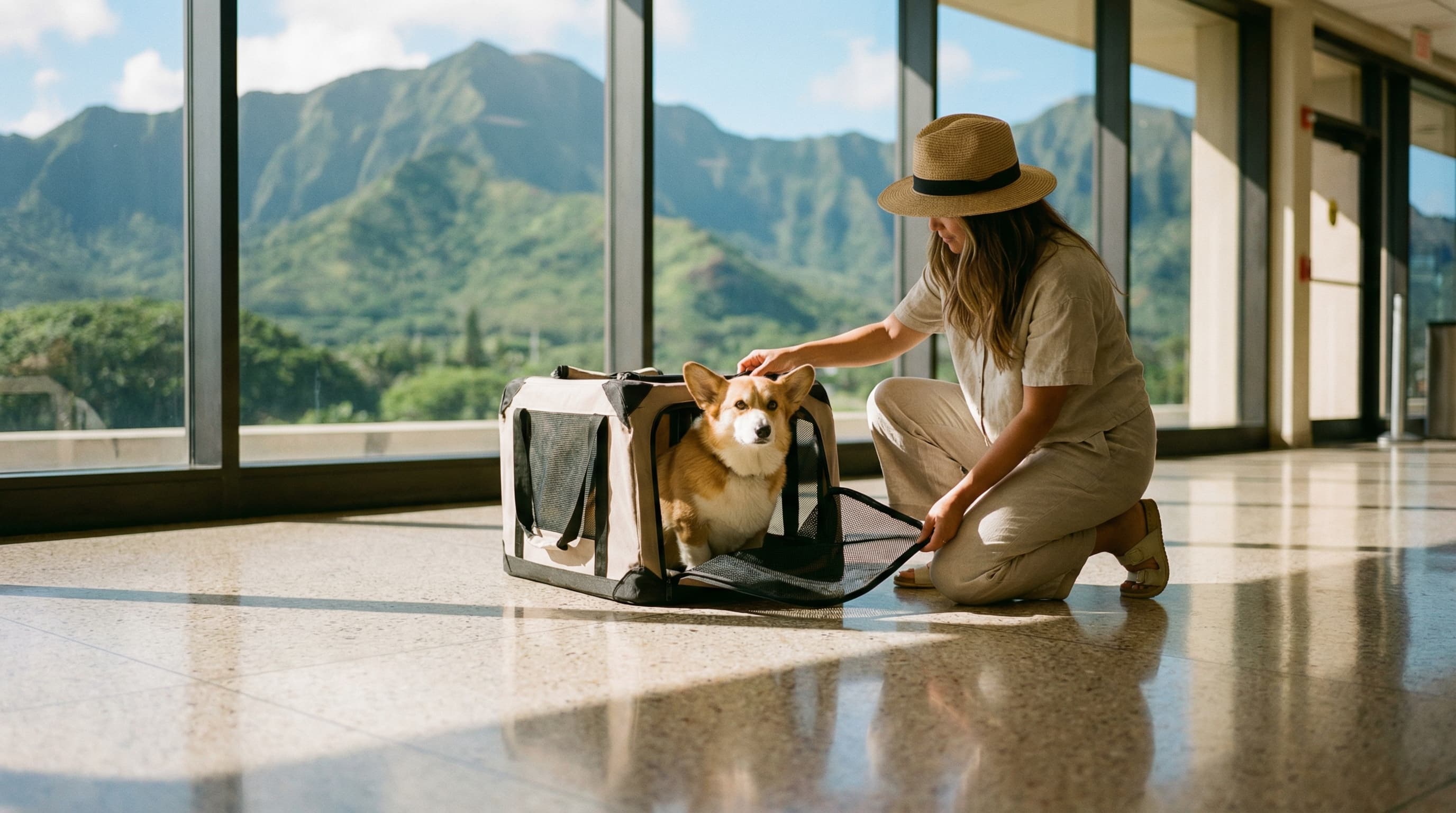
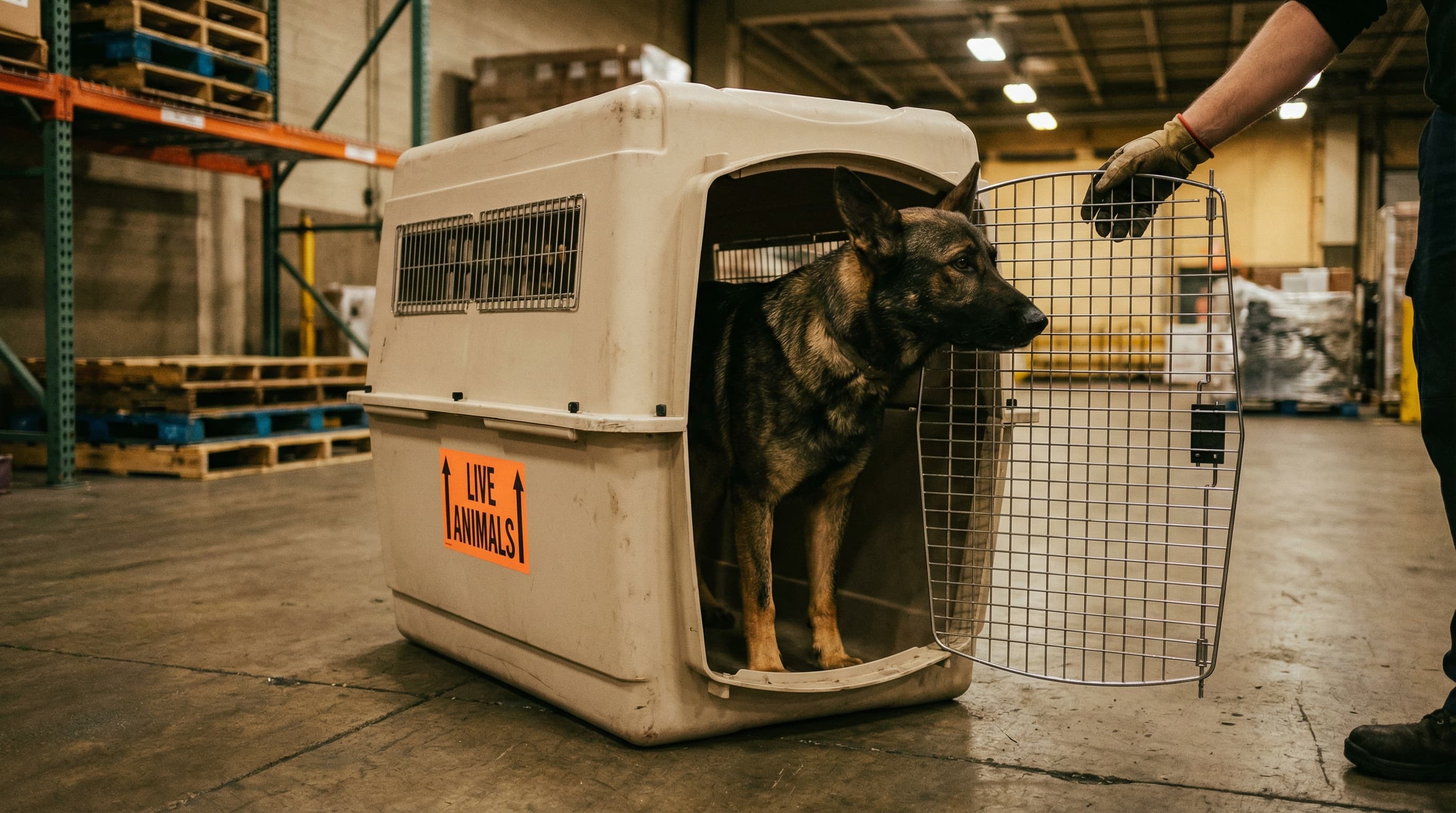
Airlines require hard-sided crates meeting IATA (International Air Transport Association) standards. Your dog must be able to stand without touching the roof, turn around completely, and lie down in a natural position.
Sizing is based on your dog's body measurements — not breed or standard size labels. The general formula: crate length should equal your dog's nose-to-tail length plus half their elbow height.
Width should be twice their shoulder width. Height should match their full standing height plus 2–3 inches.
The crate must also be labeled "LIVE ANIMAL" with upright directional arrows, your name and phone number, and your destination contact info.
Don't guess on dimensions — agents check and reject undersized crates at drop-off.
Step 3: Check the temperature window
Most airlines won't ship cargo pets if the temperature at any point on the route — departure, connection, or arrival — is above 85°F or below 45°F. Below 45°F, a vet-issued acclimation certificate can sometimes allow travel down to 20°F. Below 20°F, there are no exceptions.
In summer, routes through Phoenix, Las Vegas, or Palm Springs are often blocked entirely. Book direct flights in early morning or late evening to minimize tarmac exposure.
Step 4: Health certificate, drop-off, and pickup
The health certificate for cargo travel must be issued within 10 days of your flight — same window as cabin travel, same vet process.
Drop-off and pickup are at the cargo terminal, which is a separate building from the passenger terminal at most airports. Confirm the address and operating hours before travel day — showing up at the wrong terminal with a large dog and a crate causes problems.
CriticalDon't sedate your dog before a cargo flight. Sedation reduces muscle tone and impairs a dog's ability to keep their airway clear in an unsupervised hold — AVMA and IATA both advise against it. Pheromone sprays and calming chews are fine; prescription sedation is the problem.
What Does It Cost to Fly with a Dog?
| Item | Low | High |
|---|---|---|
| Cabin fee — domestic (each way) | $100 | $150 |
| Cabin fee — international (each way) | $150 | $200 |
| Cargo — domestic (each way) | $200 | $600+ |
| Health certificate (vet exam) | $50 | $150 |
| Soft-sided cabin carrier | $30 | $150 |
| Hard-sided cargo crate | $60 | $300 |
| Cabin trip total (one way) | $180 | $400 |
| Cargo trip total (one way) | $310 | $1,000+ |
Cabin costs are predictable. Cargo costs vary widely based on route, dog weight, and crate size — get a quote from the cargo team before you commit to a route.
Common Mistakes
Flying Internationally with Your Dog?
International flights add a layer of paperwork that domestic flights don't. Most countries require a USDA-endorsed health certificate — different from the standard domestic version — along with rabies documentation, microchipping, and sometimes mandatory waiting periods after vaccination.
A few destinations (Japan, Australia, New Zealand) require months of preparation including titer tests and quarantine. Start with your destination's country guide before booking.
- Bringing a dog or cat to Mexico
- Bringing a dog or cat to Costa Rica
- Bringing a dog or cat to Canada
- Bringing a dog or cat to the UK
- All destination guides
FAQ
Check your airline's pet policy page for the exact carrier dimensions on your specific aircraft, book your dog when you book your own ticket, and schedule the vet visit close to departure. The rest is logistics.